









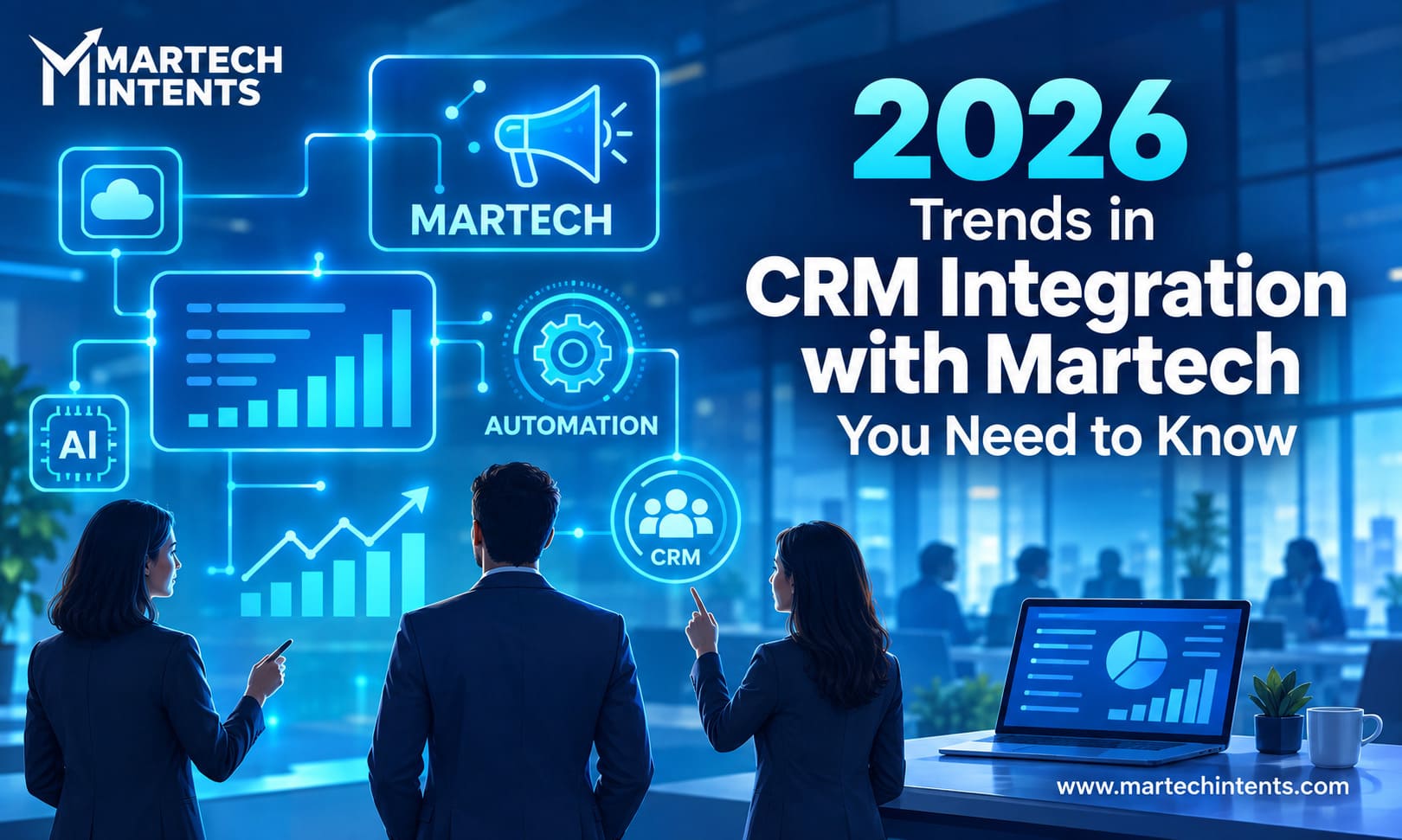
Managing customer information has become much more complicated than it used to be. A few years ago, a CRM mainly helped businesses keep track of contacts, sales opportunities, and customer conversations. Today, marketers expect much more from it.
A CRM often needs to work alongside email platforms, marketing automation systems, analytics software, advertising platforms, customer data platforms, ecommerce systems, and AI tools.
That is where CRM integration becomes important.
Instead of keeping customer information separated across different platforms, integration allows these systems to share relevant data and work together. For marketing teams, this can mean fewer manual tasks, better customer insights, and more relevant communication.
As businesses continue to expand their MarTech stacks in 2026, CRM integration is becoming less of a technical extra and more of an important part of marketing strategy.
What Is CRM Integration?
Simply put, CRM integration connects your CRM with the other software your business uses.
For example, suppose someone visits your website and fills out a contact form. With the right integration, that person’s information can automatically enter the CRM. Their activity can then trigger a lead-scoring process or an email campaign, while the sales team receives the information they need for follow-up.
Without integration, employees may have to move that information manually between systems.
That may not sound like a major problem when there are only a few leads. But when hundreds or thousands of customers are involved, manual data entry quickly becomes inefficient.
CRM integration helps create a smoother flow of information.
Why CRM Integration Matters in 2026
Customer journeys are no longer straightforward.
Someone might first discover a brand through Google, visit the website a few times, watch a video, download a guide, interact with an email, and only then speak with a salesperson.
Each interaction tells the business something useful.
The challenge is making sense of all those interactions when the information lives in different systems.
This is one reason CRM integration is becoming increasingly important. Connected systems can give marketing and sales teams a more complete understanding of customer activity.
AI is adding another layer to this trend. AI tools can make better recommendations when they have access to reliable and relevant customer information. If that information is incomplete or scattered, the results may not be as useful.
7 CRM Integration Trends to Watch in 2026
1. AI Is Becoming Part of Everyday CRM Work
AI in CRM is moving beyond simple content generation.
Businesses are now looking at ways to use AI for tasks such as summarizing customer conversations, identifying promising leads, suggesting follow-ups, analyzing account activity, and automating routine work.
For a salesperson, for example, an AI assistant could summarize a customer’s recent interactions before a meeting. A marketing team could use similar capabilities to identify customers who are showing increased engagement.
The important part is that AI becomes much more useful when it can work with information from connected systems.
CIO’s 2026 CRM analysis points to agentic AI and more action-oriented CRM capabilities as important developments in the market.
2. CRM and Customer Data Platforms Are Working Together
Customer data can come from many places.
A CRM might contain sales information, while website behavior is recorded by analytics software and campaign engagement is stored in marketing platforms.
A Customer Data Platform (CDP) can help bring information from different sources together. Connecting a CDP with a CRM can give teams a broader view of the customer.
For example, a marketer may be able to see a customer’s previous purchases alongside website activity and marketing engagement.
That additional context can make segmentation and personalization more useful.
The trend isn’t simply about collecting more data. It is about making existing data easier to understand and use.
3. Real-Time Data Sync Is Becoming More Important
Imagine that a customer has just purchased a product.
If the CRM and marketing platform aren’t properly connected, that customer might continue receiving emails telling them to buy the same product.
That creates a poor experience.
Better synchronization can help marketing systems react to important customer actions more quickly.
Depending on the business, this could mean:
- Updating customer profiles
- Changing email journeys
- Adjusting lead scores
- Notifying sales representatives
- Updating customer segments
- Stopping irrelevant campaigns
Not every piece of information needs to be updated instantly. The smarter approach is to identify which data actually needs fast synchronization.
4. Omnichannel Integration Is Becoming the Norm
Customers don’t think about a brand in terms of separate software platforms.
They simply expect the brand to understand their interactions.
Someone might contact customer support after receiving a marketing email. Another customer might speak with sales after spending several days researching products on the website.
If those systems aren’t connected, employees may not have the necessary context.
CRM integration can help bring these interactions together.
The result can be a more consistent experience across email, websites, advertising, social channels, sales, and customer service.
5. Marketing Automation and CRM Are Becoming More Closely Connected
Marketing automation becomes far more useful when it has access to CRM information.
Consider a simple example.
A potential customer downloads an ebook. Their information enters the CRM. Based on their activity, they receive a lead score. An automated email sequence begins, and the sales team is notified once the lead reaches a certain stage.
None of this requires someone to manually move information from one system to another.
This kind of workflow can save time while helping marketing and sales teams stay aligned.
In 2026, businesses are also looking at making these workflows more intelligent by combining automation with behavioral data and AI.
6. Conversational CRM Is Changing How Teams Use Data
CRM systems can contain enormous amounts of information.
The problem is that finding a specific answer can sometimes require opening reports, applying filters, and checking multiple records.
Conversational interfaces are starting to change that experience.
Instead of searching manually, a user could ask:
“Which leads haven’t been contacted recently?”
Or:
“Which customers have increased their engagement this month?”
The system can then surface relevant information.
This approach can make CRM data easier for non-technical users to work with and may reduce the time spent navigating complex dashboards.
7. Security and Data Privacy Are Getting More Attention
Connecting more systems also creates more responsibility.
Every integration can potentially create another path through which customer information moves.
That means businesses need to think carefully about permissions, data access, security, consent, and third-party applications.
Before connecting a new MarTech platform, businesses should ask a few basic questions:
- What customer data does this platform need?
- Who can access that information?
- Where is the data stored?
- How is it transferred?
- What happens if the integration stops working?
- Does the platform meet the company’s privacy requirements?
A large MarTech stack isn’t necessarily a good MarTech stack if data isn’t properly protected.
How CRM Integration Can Help Marketing Teams
When integrations are planned properly, they can make everyday marketing work easier.
Better Customer Insights
Teams can see more of the customer’s journey instead of looking at isolated interactions.
More Relevant Campaigns
Connected information can help marketers create better segments and deliver messages based on customer behavior.
Faster Lead Follow-Up
Important lead activity can automatically reach the sales team without waiting for manual updates.
Less Repetitive Work
Automated data transfers can reduce tasks such as copying contact details or updating records across several platforms.
Better Team Collaboration
Marketing, sales, and customer service teams can work with more consistent customer information.
CRM Integration Challenges to Consider
Integration isn’t always as simple as connecting two platforms and switching it on.
Poor Data Quality
If your existing data contains duplicates, missing information, or inconsistent fields, integration can spread those problems across your stack.
Too Many Tools
It can be tempting to add another platform whenever a new tool promises a useful feature. But every additional platform can increase complexity.
Older Systems
Some businesses still rely on legacy applications that weren’t designed to connect easily with modern MarTech platforms.
Integration Failures
A broken connection can prevent important information from reaching the right system. Regular monitoring is therefore important.
Privacy and Security
Customer information needs to be handled carefully whenever it moves between platforms.
How to Build a Better CRM Integration Strategy
The best approach isn’t to connect everything at once.
Start with the customer journey and identify where information is being created, stored, and used.
Then look at your existing MarTech stack.
Ask yourself:
Which integrations are actually helping the business?
Where are employees still doing manual work?
Where are customers receiving disconnected communications?
Which data needs to move between systems?
Once these areas are clear, start with the integrations that can make the biggest difference.
It’s also important to clean your customer data before connecting systems. Standardizing fields and removing duplicate records can prevent many problems later.
Finally, don’t forget to measure the results. An integration should have a purpose.
You might measure improvements in lead response time, campaign engagement, conversion rates, customer retention, or marketing efficiency.
What CRM Integration Could Look Like in the Future
CRM systems are gradually becoming more connected to the wider marketing environment.
AI, automation, customer data, analytics, and CRM platforms are increasingly working together rather than operating as separate systems.
This could eventually make CRM less about simply storing information and more about helping teams decide what to do next.
But technology alone won’t solve every marketing problem.
Businesses still need clean data, sensible processes, human oversight, and clear goals.
The companies that benefit most from CRM integration will likely be the ones that focus on useful connections rather than simply collecting more software.
Final Thoughts
CRM integration is becoming an important part of MarTech strategy in 2026.
AI-powered workflows, customer data integration, real-time synchronization, omnichannel experiences, conversational interfaces, and stronger security are all influencing how businesses connect their CRM systems with other marketing technologies.
But there is no benefit in connecting dozens of platforms simply because they offer integrations.
The better approach is much simpler:
Connect the systems that matter, keep your customer data clean, protect that data, and use the information to create a better customer experience.
When CRM and MarTech tools work together in the right way, marketing teams can spend less time managing disconnected systems and more time focusing on customers and business growth.
Frequently Asked Questions
1) What is CRM integration with MarTech tools?
CRM integration connects your CRM with marketing platforms, analytics tools, automation software, and other MarTech systems so customer data can move between them efficiently.
2) Why is CRM integration important in 2026?
CRM integration helps businesses connect customer data, automate marketing workflows, improve personalization, and give sales and marketing teams a clearer view of customer interactions.
3) Which MarTech tools can be integrated with a CRM?
A CRM can be connected with marketing automation platforms, email marketing tools, analytics systems, customer data platforms, advertising platforms, ecommerce software, and AI tools.
4) What are the main challenges of CRM integration?
Common challenges include poor data quality, duplicate records, legacy systems, integration failures, security concerns, privacy requirements, and managing too many connected platforms.