










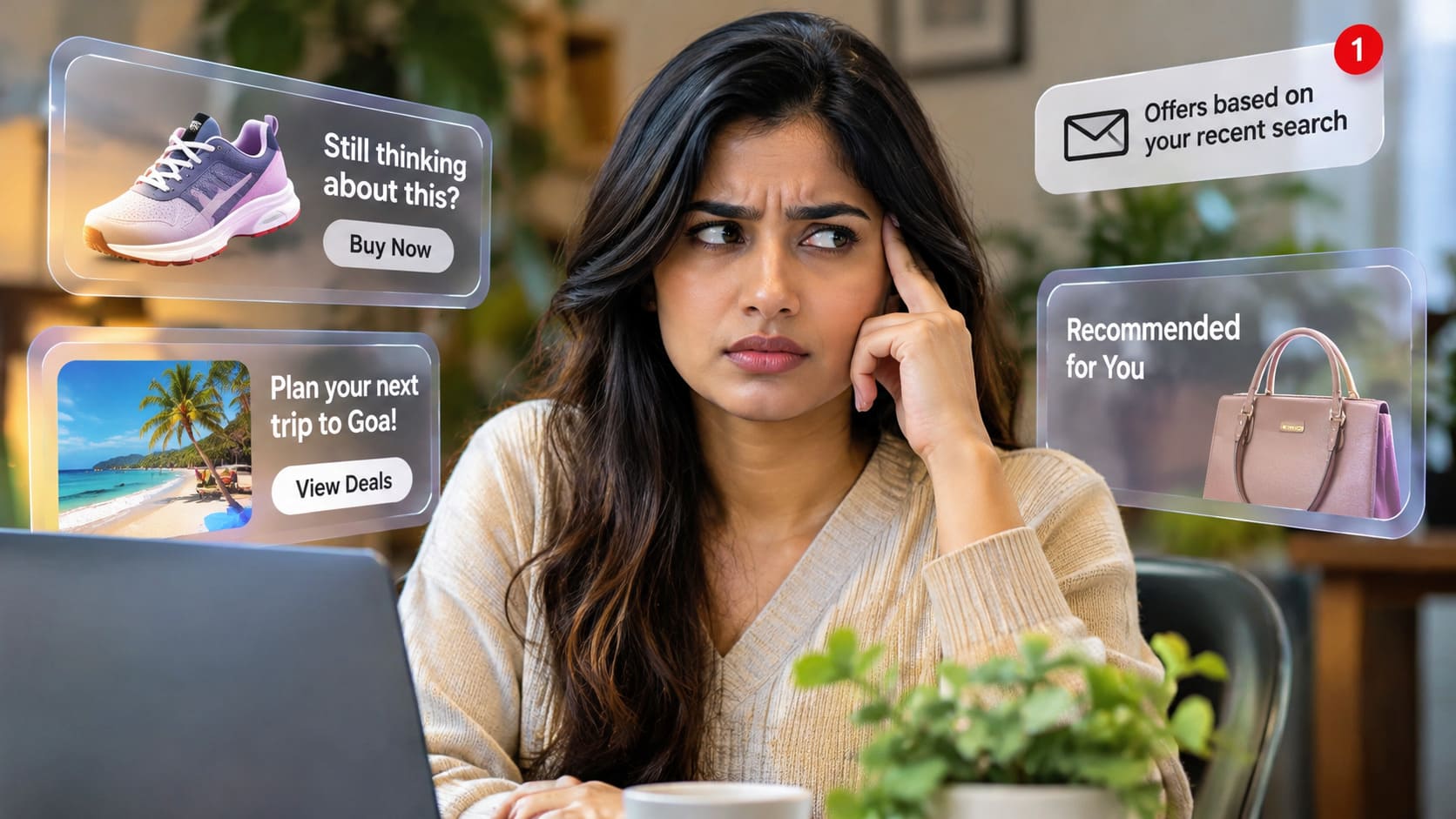
Personalized marketing has changed the way businesses communicate with customers. Instead of showing the same advertisement to everyone, brands can now recommend products, customize emails, and create marketing messages based on individual interests and online activities.
At first, this sounds like a great idea. Customers receive suggestions that match their preferences, discover products more easily, and sometimes save time when making purchasing decisions.
But there is another side to this experience.
Have you ever searched for a product online and noticed advertisements for it appearing on several other websites? Or received a marketing email that mentioned something you had only recently explored? Instead of finding these messages helpful, you might have wondered how the company knew about your activity.
This is where personalized marketing can become uncomfortable.
Customers appreciate businesses that understand their needs, but they do not necessarily want brands to know everything about their personal activities. When marketing becomes too specific or unexpected, it can create questions about privacy, trust, and personal boundaries.
For businesses, understanding this difference is important. Personalization should make customers feel understood, not make them feel monitored.
What Makes Personalized Marketing Feel Uncomfortable?
Personalized marketing uses customer information, preferences, previous interactions, and other available data to create more relevant experiences.
For example, an online shopping platform may recommend products based on previous purchases. A travel company might suggest holiday destinations based on selected preferences, while an email marketing platform may share content related to topics a subscriber has shown interest in.
These experiences can be useful when customers understand why they are receiving particular recommendations.
However, discomfort can develop when the personalization feels unexpected. Customers may start wondering where their information came from, how much the company knows about them, and whether their online activities are being tracked more closely than they realized.
The problem is not always the use of customer data. Sometimes, it is the way businesses use that information without considering how the experience feels from the customer’s perspective.
1. When Brands Appear to Know Too Much
One of the biggest reasons personalized marketing can make customers uncomfortable is the feeling that a company knows more about them than expected.
Imagine searching for a personal product online without making a purchase. A few hours later, you start seeing advertisements related to that exact search on social media and other websites.
Although this may happen through advertising technologies and tracking systems, the experience can still feel surprising.
Customers may begin asking themselves whether their browsing activities are being followed or whether information from different platforms is being combined.
For marketers, this creates an important lesson. Just because customer information is available does not mean every detail should be used in every marketing interaction.
A better approach is to focus on information that genuinely improves the customer’s experience while avoiding unnecessary personal references.
2. Personalized Messages Can Cross Personal Boundaries
There is a difference between understanding customer interests and making assumptions about someone’s personal life.
For example, recommending a fitness product to someone who has shown interest in sports may feel natural. However, sending highly specific promotional messages based on sensitive personal circumstances can create an entirely different reaction.
Customers may feel uncomfortable when brands use information related to their financial situation, family circumstances, personal concerns, or other private matters.
Even if a marketing system identifies a possible customer interest correctly, the message may still feel inappropriate.
Businesses should understand that not every available customer detail belongs in a marketing campaign.
Respecting personal boundaries is just as important as creating relevant recommendations.
3. Customers Do Not Always Understand How Their Data Is Being Used
Many customers share information with businesses for a particular reason. They may provide an email address to download a guide, create an account, receive an order confirmation, or subscribe to updates.
However, they may not fully understand how that information could influence future marketing activities.
When a company uses information in ways that customers did not expect, confusion and distrust can develop.
For instance, someone might register on a website to access a free resource and later receive promotional communication that appears unrelated to the original interaction.
This can make customers question whether their information is being shared or used beyond their expectations.
Businesses can reduce this uncertainty by explaining their data practices in simple language. Customers should understand what information is collected, why it is needed, and how it may be used.
Transparency makes marketing relationships easier to understand and helps people feel more confident about sharing their information.
4. Repeated Recommendations Can Make Customers Feel Watched
Personalized advertisements are often designed to remind customers about products they previously explored.
However, repeated exposure can create the opposite of the intended experience.
Consider someone who visits an online store to compare two mobile phones. They leave the website without purchasing anything. Over the next several days, advertisements for the same phones appear repeatedly across different platforms.
Initially, the reminders might be useful. After seeing them again and again, the customer may become frustrated.
The situation becomes even more uncomfortable when advertisements continue appearing after the person has already purchased the product.
This happens because marketing systems do not always respond quickly to changing customer interests or purchasing decisions.
Brands should introduce reasonable advertising frequency limits and update their targeting based on meaningful customer actions.
Sometimes, giving customers a break from advertisements can create a better experience than continuously reminding them about a product.
5. Incorrect Personalization Can Create the Wrong Impression
Personalization depends on understanding customer behavior, but customer behavior does not always reveal the complete story.
Someone searching for a laptop might be researching options for a colleague. A person browsing baby products could be purchasing a gift for a relative. Another customer might visit a website simply because they are comparing prices.
When marketing systems interpret these activities incorrectly, customers may receive recommendations that have nothing to do with their actual needs.
These situations can make a brand appear careless or disconnected.
For example, imagine purchasing a new washing machine and continuing to receive advertisements encouraging you to buy the same product. Instead of feeling that the company understands your needs, you may feel that it has not paid attention to your previous purchase.
Businesses should avoid treating every online activity as a permanent customer preference. Regularly updating customer records and considering the context behind interactions can make recommendations more accurate.
6. Too Much Personalization Can Reduce Customer Trust
Trust is an important part of every customer relationship. People are more likely to engage with businesses when they feel their information is handled responsibly.
However, overly specific marketing messages can sometimes create doubt.
Customers may wonder whether their information is being shared with other companies, whether their online activities are being monitored, or whether they have enough control over their personal data.
Once these questions arise, even useful marketing messages may become less appealing.
For example, a customer who previously enjoyed receiving product recommendations may become reluctant to interact with a brand after receiving an unexpectedly personal advertisement.
This is why businesses should not measure personalization only through clicks, impressions, and conversions.
They should also consider whether customers feel comfortable with the experience.
7. Customers Want Convenience Without Losing Control
People generally appreciate marketing experiences that save time and make decisions easier. However, they also want the freedom to decide what information they share and what communication they receive.
Problems can occur when customers find it difficult to manage marketing preferences, unsubscribe from unwanted emails, or understand available privacy settings.
If someone cannot easily control their marketing experience, personalized communication may begin to feel forced.
Businesses should provide straightforward options for managing subscriptions, choosing communication preferences, and understanding data usage.
Giving customers control does not reduce the value of personalization. Instead, it makes the experience more respectful.
How Businesses Can Make Personalized Marketing Feel More Natural
Personalization does not need to disappear because some customers feel uncomfortable with it. Businesses simply need to approach it more thoughtfully.
Here are some practical ways marketing teams can create a better balance.
Understand customer expectations: Before using customer information, consider why it was collected and whether people would reasonably expect it to influence a marketing message.
Avoid unnecessary personal details: A message does not become more valuable simply because it includes specific information about an individual. Use personal details only when they improve relevance.
Be transparent about data practices: Explain how customer information is collected and used. Make privacy information easy to understand instead of hiding important details in complicated language.
Control communication frequency: Avoid sending repeated emails, notifications, and advertisements that create unnecessary interruptions.
Keep customer information updated: Review customer records regularly so that previous purchases, changing interests, and updated preferences are reflected in future campaigns.
Give customers meaningful choices: Allow people to manage their communication preferences and make decisions about how they interact with a brand.
Collect customer feedback: Ask whether customers find recommendations useful and whether marketing communication feels relevant. Their feedback can reveal problems that campaign analytics may not show.
The Role of Marketing Technology in Responsible Personalization
Modern marketing technology makes it easier for businesses to understand customer interactions and deliver customized experiences.
Customer relationship management (CRM) platforms help organize customer information, while marketing automation tools manage email campaigns, follow-ups, and communication schedules.
Customer data platforms (CDPs) can also help businesses bring together information from different customer touchpoints, subject to appropriate permissions and data governance.
However, having advanced technology does not automatically mean a business understands its customers better.
If marketing systems are configured without considering customer expectations, they can create more unwanted communication instead of improving the experience.
Marketing teams should establish clear guidelines for data usage, review automated campaigns, and ensure that personalization supports genuine customer needs.
Technology should help businesses communicate more thoughtfully, not simply give them more opportunities to reach people.
The Future of Personalized Marketing Depends on Customer Trust
As artificial intelligence, automation, and customer analytics continue developing, businesses will have more opportunities to customize digital experiences.
Recommendations may become more relevant, advertisements may respond more quickly to customer interests, and marketing communication may become increasingly specific.
But greater personalization capabilities also create greater responsibility.
Customers will continue expecting useful experiences, but they will also want clarity about how their information is used. Businesses that ignore these expectations may find it difficult to maintain long-term customer relationships.
The future of personalized marketing should focus on understanding what customers actually want rather than making assumptions based on every available piece of information.
Sometimes, the most effective marketing decision is to avoid sending another message.
Conclusion
Personalized marketing can help businesses create meaningful customer experiences, but it does not always produce the reaction companies expect.
When advertisements feel too specific, messages cross personal boundaries, or customer information is used unexpectedly, people may become uncomfortable rather than interested.
The solution is not to stop using personalization. It is to understand where helpful communication ends and unwanted attention begins.
Businesses should focus on transparency, responsible data usage, accurate recommendations, and customer control. They should also remember that people are more than their browsing history, previous purchases, or online activities.
Ultimately, successful personalization is not about showing customers how much a brand knows about them. It is about using the right information to make their experience genuinely better while respecting their privacy and expectations.
Frequently Asked Questions
1. Why does personalized marketing make customers uncomfortable?
Personalized marketing can make customers uncomfortable when businesses use personal information unexpectedly, display repetitive advertisements, or make assumptions about their interests.
2. How does personalized marketing affect customer privacy?
It can raise privacy concerns when companies collect or use customer information without clearly explaining how their data is handled.
3. How can businesses make personalized marketing less intrusive?
Businesses can respect customer preferences, limit unnecessary data collection, control advertisement frequency, and maintain transparent privacy policies.
4. Can excessive personalization reduce customer trust?
Yes. Excessive personalization can make customers feel monitored, reduce brand confidence, and negatively affect long-term customer relationships.