







Chatbots have come a long way from the simple pop-up boxes that answered a few predefined questions.
Today, AI-powered chatbots can understand natural language, remember conversation context, qualify leads, recommend products, answer customer questions, and even help users complete actions. As marketing becomes more conversational, chatbots are moving from a support tool to a much broader part of the customer journey.
In 2026, that shift is becoming even more noticeable. Google is introducing conversational and agentic experiences across Search and advertising, while businesses are increasingly using AI to interact with customers in real time.
So, what does the future of chatbots look like—and what should marketers do about it?
Let’s explore.
What Are Marketing Chatbots?
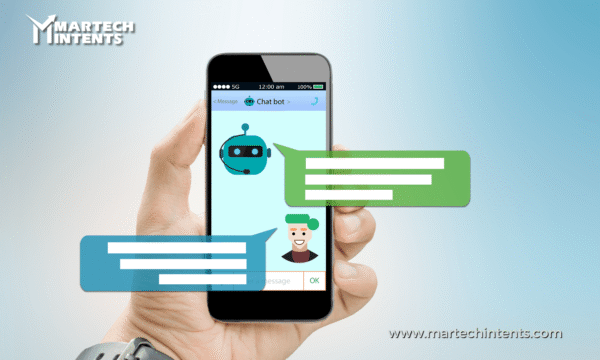
Marketing chatbots are AI-powered or rule-based software systems that communicate with customers through websites, messaging platforms, apps, and other digital channels.
Unlike traditional forms, a chatbot allows customers to have a conversation instead of filling out a long list of fields.
For example, instead of asking a visitor to:
- Enter their name
- Enter their email
- Select an industry
- Choose a service
- Submit a form
a chatbot can simply ask:
“What are you looking for today?”
The customer can respond naturally, and the chatbot can use that conversation to guide the next step.
Modern generative AI is taking this further. Chatbots are increasingly evolving into conversational AI and AI agents that can understand context, provide personalized responses, and perform tasks rather than simply displaying predefined answers.
Why Chatbots Are Becoming More Important in Marketing
Customer expectations have changed.
People don’t necessarily want to wait for an email response or navigate through several pages to find basic information. They increasingly expect businesses to respond quickly and make interactions feel relevant.
A 2026 Salesforce report found that 92% of surveyed marketers in India said customers increasingly expect brands to support two-way conversations, while 86% said they would trust AI to respond to customers to help scale engagement.
That creates a strong opportunity for marketers.
A well-designed chatbot can become the first conversational touchpoint between a brand and a potential customer.
7 Ways Chatbots Will Shape the Future of Marketing
1. Chatbots Will Become More Conversational
Older chatbots often relied on buttons and fixed scripts.
For example:
Customer: Pricing
Bot: Choose an option:
- Basic
- Professional
- Enterprise
That’s functional, but it doesn’t feel like a conversation.
AI-powered chatbots can understand questions such as:
“We’re a 50-person company looking for marketing automation. Which plan would make sense for us?”
The chatbot can interpret the intent, ask follow-up questions, and provide a more useful response.
This conversational approach will become increasingly important as customers become comfortable interacting with AI through natural language.
2. Chatbots Will Help Generate and Qualify Leads
Lead generation is one of the most valuable applications of marketing chatbots.
Instead of sending every website visitor to the same contact form, a chatbot can identify whether someone is actually interested in a product or service.
It can ask questions about:
- Company size
- Business requirements
- Budget
- Timeline
- Industry
- Current technology
- Specific challenges
The answers can then be passed into a CRM system.
This allows sales teams to spend more time with qualified prospects rather than manually sorting through every inquiry.
3. Personalization Will Become More Advanced
Personalization has traditionally depended on information such as a person’s name, location, browsing behavior, or previous purchases.
AI chatbots can potentially personalize conversations using a much broader range of signals.
For example:
Returning customer:
“Welcome back. Would you like help with your previous order?”
New visitor:
“Are you researching solutions or are you ready to speak with someone?”
The goal isn’t personalization for its own sake. The goal is to make the conversation more useful.
This is particularly important as marketers connect chatbot systems with CRM, CDP, analytics, and marketing automation platforms.
4. Chatbots Will Move From Answers to Actions
This may be one of the biggest changes ahead.
A chatbot shouldn’t always stop after answering a question.
Increasingly, AI systems are being designed to take action.
For example, a customer could ask:
“Can I schedule a product demo next Tuesday afternoon?”
Instead of simply providing a booking page, an AI-powered system could potentially check availability and help complete the booking.
Similarly, a chatbot might help customers:
- Schedule appointments
- Track orders
- Update account information
- Request documents
- Find products
- Start applications
- Connect with sales
- Complete purchases
Gartner’s 2026 research highlights this shift: among customers who use GenAI, 58% reported using it to complete a task, rising to 74% among B2B customers.
That means marketers should start thinking beyond “What can my chatbot answer?”
A better question is:
“What useful things can my chatbot help the customer accomplish?”
5. Chatbots Will Become Part of Search and Advertising
The traditional customer journey often looked something like this:
Search → Website → Landing Page → Form → Sales
AI is making that journey more conversational.
Google’s 2026 updates include conversational advertising experiences and Business Agent for Leads, which can allow users to chat with an agent trained around an advertiser’s website directly within an ad experience.
This creates an interesting future for marketers.
Instead of convincing someone to click an ad and then find information on a website, brands may increasingly be able to start the conversation immediately.
That makes the quality of the conversation part of the advertising experience itself.
6. Voice and Multimodal Chatbots Will Grow
The future of chatbots won’t necessarily be text-only.
Customers may interact through:
- Voice
- Text
- Images
- Video
- Screenshots
- Documents
- Mixed interactions
Google’s 2026 AI Search updates highlight the growth of multimodal and conversational search, with users increasingly expressing their needs through different formats.
For marketers, this means chatbot experiences need to become more flexible.
Imagine a customer uploading a picture of a product and asking:
“Do you have something similar but cheaper?”
That’s a very different experience from typing a product name into a search box.
7. AI Agents Will Extend the Role of Chatbots
The biggest evolution may be the move from chatbots to AI agents.
A traditional chatbot primarily responds.
An AI agent can potentially:
- Understand the customer’s objective.
- Gather relevant information.
- Decide what needs to happen next.
- Use connected systems.
- Complete a task.
- Report the result to the customer.
This doesn’t mean every chatbot needs to become fully autonomous.
In fact, businesses should be careful about giving AI too much control too quickly. Reliability, data quality, privacy, security, and human oversight remain important.
BCG’s 2026 CMO research illustrates the gap between AI ambition and implementation: while 96% of surveyed CMOs said AI is driving end-to-end transformation, only about one-third had actually done the work required to build that transformation.
Chatbots and the Customer Journey
Chatbots can support customers at different stages of the marketing funnel.
| Customer Stage | Chatbot Opportunity |
|---|---|
| Awareness | Answer basic questions |
| Consideration | Compare solutions |
| Evaluation | Recommend relevant products/services |
| Conversion | Qualify leads and schedule meetings |
| Purchase | Help customers complete transactions |
| Retention | Provide support and recommendations |
| Loyalty | Offer personalized engagement |
The important point is that chatbots shouldn’t be treated as a single-purpose tool.
They can become part of the broader customer experience strategy.
Chatbots + CRM: A Powerful Combination
A chatbot becomes much more useful when it can work with the rest of the marketing technology stack.
For example:
Website → Chatbot → CRM → Marketing Automation → Sales Team
A visitor starts a conversation.
The chatbot identifies the visitor’s needs.
The information goes into the CRM.
The marketing automation platform can then trigger an appropriate follow-up.
The sales team receives the conversation history and understands what the prospect actually wants.
This reduces the need for customers to repeat themselves.
For businesses building a modern marketing technology stack, chatbot integration should therefore be considered alongside CRM, customer data, analytics, and automation—not as an isolated tool.
The Role of Human Marketers Isn’t Going Away
It’s tempting to think that smarter chatbots will eliminate the need for marketing teams.
That’s unlikely.
The role of marketers is more likely to change.
AI can handle repetitive conversations, analyze information, and respond quickly. Humans remain important for strategy, creativity, empathy, complex decisions, brand positioning, and situations where customers genuinely need human assistance.
Gartner’s 2026 research also found that customers expect the option to reach a human when companies use AI in customer service.
The strongest strategy is therefore not:
AI instead of humans.
It’s:
AI + humans working together.
Challenges Marketers Need to Consider
The future of chatbots isn’t without risks.
Data Privacy
Chatbots can process customer information, so businesses need clear policies around data collection, storage, access, and usage.
Incorrect Answers
Generative AI can produce inaccurate information. Important customer-facing workflows should have appropriate safeguards and escalation paths.
Poor Customer Experience
A chatbot that repeatedly misunderstands a customer can be worse than having no chatbot at all.
Integration Problems
A chatbot disconnected from the CRM, product database, or knowledge base may provide limited value.
Lack of Human Escalation
Customers should have a clear path to human assistance when the chatbot cannot solve the problem.
Over-Automation
Not every customer interaction should be automated.
Sometimes the best experience is simply connecting the customer with the right person.
How Marketers Can Prepare for the Future of Chatbots
Businesses don’t need to completely rebuild their marketing strategy overnight.
Instead, start with a practical approach.
Step 1: Identify Repetitive Conversations
Look at the questions customers ask most frequently.
These could include:
- Pricing
- Product information
- Availability
- Delivery
- Features
- Support
- Appointment scheduling
These are potential chatbot use cases.
Step 2: Connect the Right Data
Give the chatbot access to accurate, approved information.
Your website content, product information, FAQs, CRM data, and knowledge base should be organized and maintained.
Step 3: Start With a Focused Use Case
Don’t try to automate everything at once.
Start with something measurable, such as:
“Increase qualified demo requests from website visitors.”
Then measure the result.
Step 4: Build Human Escalation
Make it easy for customers to move from AI to a human when necessary.
Step 5: Measure Business Outcomes
Don’t judge a chatbot only by the number of conversations.
Track metrics such as:
- Qualified leads
- Conversion rate
- Customer satisfaction
- Resolution rate
- Response time
- Appointment bookings
- Sales influenced
- Cost per interaction
The real question is whether the chatbot improves the customer journey and contributes to business results.
The Future of Chatbots in Marketing
The future of chatbots is much bigger than automated customer support.
We’re moving toward a world where customers can interact with brands through natural, continuous conversations across websites, search, advertising, messaging, apps, and other digital experiences.
At the same time, AI is becoming more action-oriented.
Google’s 2026 marketing developments show this direction clearly, with conversational advertising, Business Agent for Leads, AI-powered recommendations, and agentic marketing tools becoming part of the broader marketing ecosystem.
For marketers, the opportunity isn’t simply to install the newest chatbot.
It’s to rethink how customers discover, evaluate, buy from, and interact with a brand.
The businesses that succeed will likely be those that combine useful AI conversations with accurate data, strong customer experiences, thoughtful automation, and easy access to humans when needed.
Final Thoughts
Chatbots are becoming an important part of the modern marketing landscape.
But the future isn’t about creating bots that talk more.
It’s about creating systems that understand customers better and help them accomplish something useful.
As AI becomes more conversational, personalized, multimodal, and agentic, marketers have an opportunity to turn chatbots from simple website widgets into meaningful customer experience and revenue tools.
The smartest approach is to start small, connect reliable data, measure real outcomes, and keep the human experience at the center.
Frequently Asked Questions
What is the future of chatbots in marketing?
The future of chatbots is moving toward conversational AI and AI agents that can personalize interactions, qualify leads, answer questions, recommend solutions, and help customers complete tasks.
How can chatbots help generate marketing leads?
Chatbots can engage website visitors, ask qualifying questions, understand their requirements, collect relevant information, and send qualified prospects to a CRM or sales team.
Will AI chatbots replace human marketers?
AI chatbots are more likely to support marketers than replace them. They can automate repetitive interactions while humans continue to handle strategy, creativity, complex decisions, and sensitive customer conversations.
How can businesses prepare for AI-powered chatbots?
Businesses should begin with a focused use case, organize reliable customer data, connect the chatbot with relevant marketing systems, create human escalation paths, and measure business outcomes such as qualified leads, conversions, and customer satisfaction.