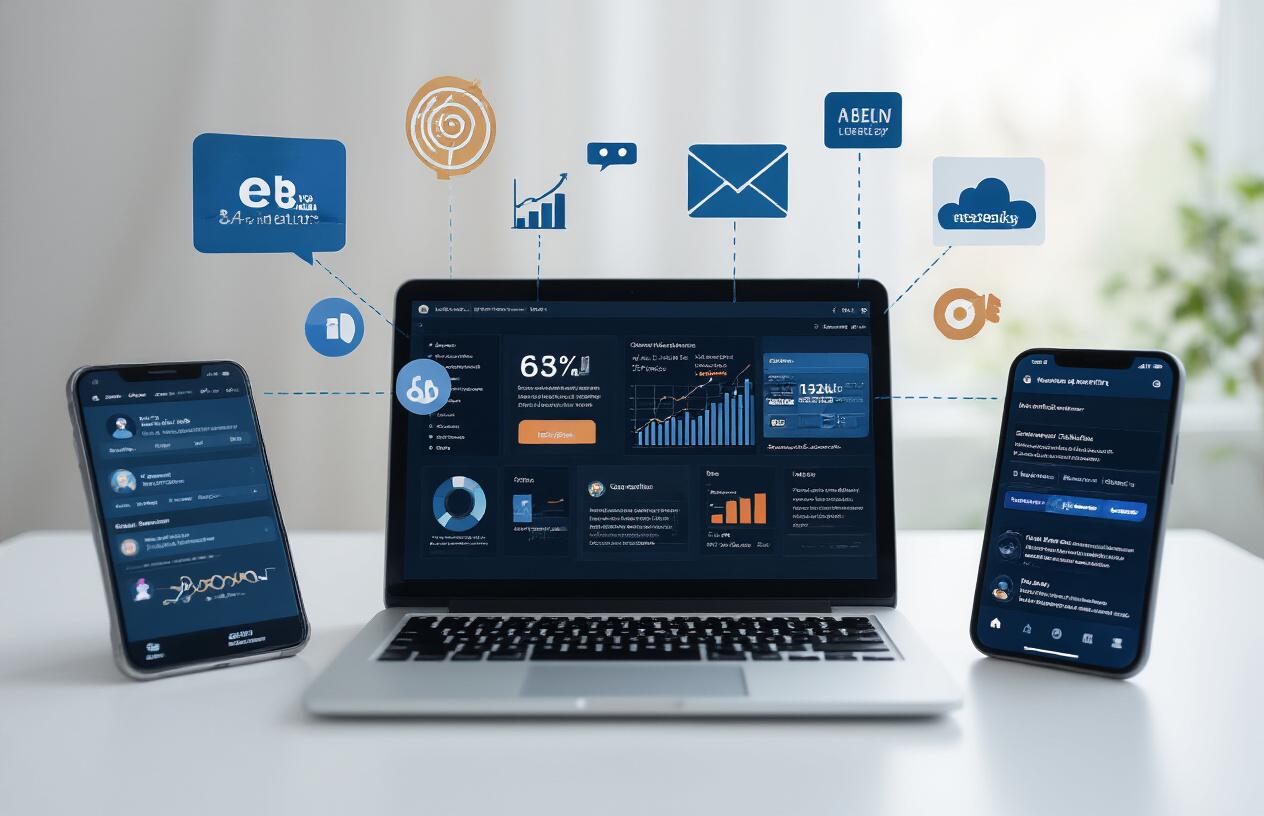









Marketing has changed dramatically in recent years. Businesses are no longer relying only on traditional advertising, email campaigns, or basic customer data to reach their audiences. New marketing technology is helping companies understand customers better, automate repetitive work, personalize experiences, and make faster decisions.
From artificial intelligence and automation to customer relationship management platforms and advanced analytics, modern marketing technology is becoming an important part of how businesses compete and grow.
But what exactly is changing, and why does it matter?
What Is New Marketing Technology?
New marketing technology refers to the latest digital platforms, software, tools, and systems that help businesses plan, execute, measure, and improve their marketing activities.
These technologies can support everything from customer data collection and campaign automation to content personalization, analytics, lead management, and customer engagement.
Some major areas include:
- Artificial intelligence in marketing
- Marketing automation
- Customer relationship management
- Customer data platforms
- Marketing analytics
- Personalization technology
- Conversational marketing
- Intent data
- Omnichannel marketing
- AI-powered content and campaign optimization
The goal is not simply to add more tools to a company’s technology stack. The real value comes from using technology to make marketing more relevant, efficient, and measurable.
1. AI Is Making Marketing More Intelligent
Artificial intelligence is one of the biggest changes happening in modern marketing.
AI can analyze large amounts of customer and campaign data much faster than manual processes. Marketers can use these insights to identify patterns, understand customer behavior, predict potential outcomes, and improve campaigns.
For example, AI can help businesses:
- Identify promising leads
- Analyze customer behavior
- Personalize content
- Generate campaign ideas
- Predict customer actions
- Optimize advertising campaigns
- Improve customer support
However, AI works best when it supports human decision-making rather than completely replacing it. Marketers still need creativity, strategic thinking, and an understanding of their audience.
2. Marketing Automation Is Reducing Repetitive Work
Marketing teams often spend significant time handling repetitive activities.
Marketing automation helps reduce this workload by allowing businesses to create automated workflows for tasks such as email follow-ups, lead nurturing, customer segmentation, and campaign notifications.
For example, when someone downloads a resource from a website, an automated workflow can send a follow-up email, update the customer’s profile, and notify the sales team when the lead becomes more engaged.
This gives marketers more time to focus on strategy and creative work.
3. Personalization Is Becoming More Important
Customers expect brands to understand their needs.
Sending exactly the same message to every customer may no longer deliver the best results. Modern marketing technology allows businesses to create more personalized experiences using customer data and behavioral signals.
Personalization can involve:
- Product recommendations
- Customized email content
- Relevant website experiences
- Audience-specific advertising
- Personalized offers
- Behavior-based messaging
When personalization is used responsibly, it can make interactions feel more useful instead of generic.
4. Customer Data Is Becoming More Valuable
Data has always been important in marketing, but businesses now have access to more customer information than ever before.
Marketing technology can bring information from different touchpoints together, including websites, email campaigns, social media, CRM systems, and advertising platforms.
A connected data environment can help marketers answer questions such as:
- Where are customers discovering the brand?
- Which campaigns generate engagement?
- What content influences conversions?
- Which customers are most likely to purchase?
- Where are prospects dropping out of the buying journey?
Better data visibility can lead to better marketing decisions.
5. Martech Integration Is Connecting the Customer Journey
One of the biggest challenges businesses face is having too many disconnected platforms.
A company might use one system for email, another for CRM, another for analytics, and additional platforms for advertising and customer engagement.
If these systems do not communicate effectively, valuable information can become fragmented.
Modern marketing technology is increasingly focused on integration. Connecting platforms can help businesses create a more consistent view of customers and reduce unnecessary manual data transfers.
This is particularly important for businesses operating across multiple marketing channels.
6. Analytics Is Changing How Businesses Measure Marketing
Marketing decisions should not depend entirely on assumptions.
Modern analytics platforms help businesses measure campaign performance and understand which activities contribute to business outcomes.
Marketers can monitor metrics such as:
- Website traffic
- Conversion rates
- Customer acquisition cost
- Engagement
- Lead quality
- Campaign revenue
- Customer retention
Advanced analytics can also help marketers identify trends and opportunities that may not be obvious from basic reports.
The result is a shift from simply asking, “How many people saw this campaign?” to asking, “What business impact did this campaign create?”
7. Conversational Marketing Is Improving Customer Engagement
Customers often want quick answers before making a decision.
Conversational marketing technologies, including AI-powered chatbots and virtual assistants, can help businesses respond to common questions and guide visitors toward relevant information.
For example, a website chatbot may help a visitor:
- Find a product or service.
- Get an answer to a common question.
- Request additional information.
- Schedule a conversation with a sales representative.
This can make the customer journey faster while reducing pressure on support and sales teams.
8. Omnichannel Marketing Is Creating More Consistent Experiences
Customers rarely interact with a brand through only one channel.
Someone might discover a company through search, visit its website, interact with an advertisement, receive an email, and eventually contact the sales team.
New marketing technology helps businesses coordinate these interactions across different channels.
An omnichannel approach aims to make the customer experience feel connected rather than treating every channel as a separate activity.
9. Martech Is Helping Businesses Make Faster Decisions
Traditional marketing reporting can sometimes take days or weeks.
Modern platforms can provide businesses with near-real-time information about campaigns, audiences, and customer behavior.
This allows marketing teams to identify underperforming campaigns and make adjustments more quickly.
For example, if a campaign is generating clicks but very few conversions, marketers can investigate the landing page, audience, messaging, or offer instead of waiting until the campaign ends.
Speed can become a competitive advantage.
10. Businesses Still Need the Right Strategy
Having the latest technology does not automatically guarantee better marketing results.
A business can invest in numerous platforms and still struggle if its systems are poorly connected or its marketing strategy is unclear.
Before adopting new technology, businesses should consider:
- What marketing problem are we trying to solve?
- Does the technology support our existing strategy?
- Can it integrate with our current systems?
- Is the data reliable?
- Will the team actually use it?
- How will success be measured?
- Does the solution provide enough value for its cost?
The best technology stack is not necessarily the largest one. It is the one that supports business goals without creating unnecessary complexity.
The Future of Marketing Technology
The future of marketing technology is likely to become even more connected, intelligent, and automated.
AI will continue influencing campaign planning, customer analysis, personalization, and content workflows. At the same time, businesses will need to pay greater attention to data quality, privacy, transparency, and responsible technology use.
The companies that benefit most will not simply adopt every new platform. They will focus on building a marketing ecosystem where technology, data, people, and strategy work together.
Final Thoughts
New marketing technology is changing the game for businesses by making marketing more data-driven, automated, personalized, and measurable.
AI can improve decision-making, automation can reduce repetitive work, analytics can reveal campaign performance, and integrated platforms can create more connected customer journeys.
But technology itself is only part of the equation. Businesses need a clear strategy and the right combination of tools to turn these capabilities into meaningful results.
As marketing continues to evolve, businesses that learn how to use technology strategically will be better positioned to adapt to changing customer expectations and an increasingly competitive digital environment.
Frequently Asked Questions
1. What is new marketing technology?
New marketing technology includes modern digital tools such as AI, marketing automation, CRM platforms, analytics, personalization systems, and customer data platforms that help businesses improve marketing performance.
2. How is AI changing business marketing?
AI helps businesses analyze customer data, personalize campaigns, identify promising leads, automate tasks, predict customer behavior, and make faster marketing decisions.
3. Why is marketing technology important for businesses?
Marketing technology helps businesses improve efficiency, understand customers, automate repetitive activities, measure campaign results, and create more relevant customer experiences.
4. How can businesses choose the right marketing technology?
Businesses should choose technology based on their marketing goals, existing systems, budget, integration requirements, data needs, team capabilities, and expected business value.