


Search engine optimisation (SEO) has evolved significantly over the past decade. While high-quality content, keyword optimisation, and backlinks remain essential, search engines now rely on structured data to better understand website content. Structured data provides additional context that helps search engines interpret information accurately, resulting in enhanced search visibility and richer search results.
As AI-powered search experiences continue to grow, structured data has become even more valuable. It enables search engines to recognise products, articles, events, FAQs, reviews, and many other types of content, making websites more accessible to both users and search algorithms.
In this guide, we’ll explore what structured data is, why it matters, and how businesses can use it to strengthen their modern SEO strategy.
What Is Structured Data?
Structured data is a standardised format used to organise and describe the content on a webpage. It helps search engines understand the meaning of your content instead of relying only on keywords.
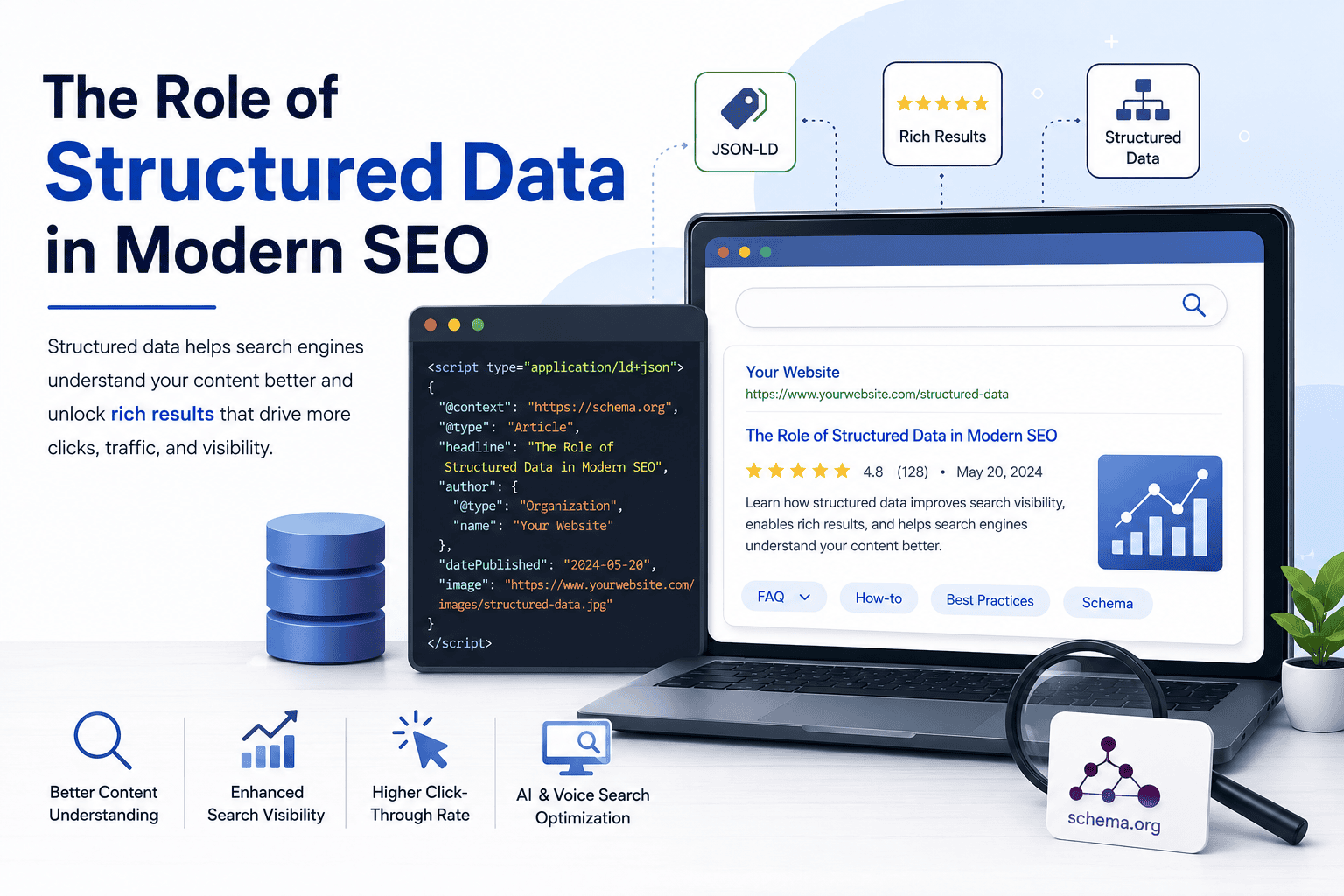
Structured data is usually added using Schema.org vocabulary in JSON-LD format, which is recommended by Google.
For example, structured data can tell search engines:
- The title of an article
- Author information
- Publication date
- Product prices
- Customer reviews
- Business details
- Frequently Asked Questions (FAQs)
- Events and locations
This additional information helps search engines display more informative search results.
Why Structured Data Matters for SEO
Structured data improves communication between your website and search engines. Instead of guessing what your content represents, search engines receive clear information about each page.
Some key benefits include:
- Better understanding of page content
- Improved indexing
- Enhanced search appearance
- Rich results eligibility
- Better user experience
- Increased credibility
- Stronger visibility in AI-powered search
Although structured data is not a direct ranking factor, it helps search engines interpret content more accurately, which can improve visibility and click-through rates.
Types of Structured Data
Different websites use different schema types depending on their content.
Article Schema
Perfect for blog posts, news articles, and educational content.
Includes:
- Headline
- Author
- Date Published
- Featured Image
- Publisher
FAQ Schema
Displays frequently asked questions directly in search results.
Ideal for:
- Product pages
- Service pages
- Blog posts
Organization Schema
Provides information about your business.
Includes:
- Company name
- Logo
- Website
- Social profiles
- Contact information
Breadcrumb Schema
Helps search engines understand website hierarchy.
Example:
Home → SEO → Technical SEO → Structured Data
Product Schema
Useful for eCommerce websites.
Includes:
- Product name
- Price
- Availability
- Rating
- Reviews
Local Business Schema
Perfect for businesses serving specific locations.
Includes:
- Address
- Phone number
- Opening hours
- Maps location
How Structured Data Improves Search Results
When implemented correctly, structured data allows search engines to display enhanced search results called Rich Results.
Rich results may include:
- Star ratings
- FAQs
- Product prices
- Images
- Recipes
- Events
- Business details
- Breadcrumb navigation
These additional elements make your listing more attractive and encourage users to click.
Structured Data and AI-Powered Search
Modern search is increasingly powered by artificial intelligence. AI systems analyse web content to provide direct, conversational answers to users.
Structured data helps AI understand:
- Content topics
- Page purpose
- Relationships between entities
- Business information
- Author credibility
As AI-powered search becomes more common, websites with well-structured content are better positioned to appear in AI-generated responses.
Best Practices for Using Structured Data
To get the most value from structured data:
Use JSON-LD Format
Google recommends JSON-LD because it is easier to implement and maintain.
Match Structured Data to Visible Content
The information in your structured data should accurately reflect the content users see on the page.
Use Appropriate Schema Types
Choose the schema that best represents your content.
For example:
- Blog → Article Schema
- Product → Product Schema
- FAQ → FAQ Schema
- Company → Organization Schema
Keep Information Updated
Regularly review structured data to ensure details such as prices, dates, and business information remain accurate.
Test Your Markup
Before publishing, validate your structured data using Google’s Rich Results Test or Schema Markup Validator to identify and fix any issues.
Common Structured Data Mistakes
Avoid these common errors:
- Using incorrect schema types
- Adding misleading information
- Missing required properties
- Duplicate structured data
- Not updating outdated information
- Marking up content that is not visible on the page
Proper implementation improves trust and reduces the risk of errors in search results.
Structured Data and Technical SEO
Structured data supports several aspects of technical SEO by helping search engines better understand website architecture and content.
It complements:
- XML Sitemaps
- Robots.txt
- Canonical Tags
- Internal Linking
- Mobile Optimisation
- Page Speed
- HTTPS Security
Together, these elements contribute to a stronger SEO foundation.
The Future of Structured Data
As search engines continue integrating artificial intelligence, structured data will become increasingly important.
Future trends include:
- AI-generated search experiences
- Voice search optimisation
- Visual search
- Personalised search results
- Enhanced knowledge graphs
- Richer search experiences
Businesses that implement structured data today will be better prepared for the next generation of search.
Final Thoughts
Structured data has become an essential part of modern SEO. It helps search engines understand content more effectively, enhances search visibility, and improves the overall user experience through rich results.
While structured data alone does not guarantee higher rankings, it strengthens your website’s technical SEO and supports AI-powered search experiences. Businesses that combine high-quality content with accurate structured data are more likely to build trust, improve click-through rates, and achieve long-term search success.
Investing in structured data today is an investment in the future of search.
Frequently Asked Questions (FAQs)
1. What is structured data in SEO?
Structured data is a standardised format that helps search engines understand the content and context of a webpage. It improves content interpretation and enables rich search results.
2. Does structured data improve SEO rankings?
Structured data is not a direct ranking factor, but it improves how search engines understand your content. This can increase visibility, click-through rates, and eligibility for rich results.
3. Which structured data format is recommended?
JSON-LD is the recommended format because it is easy to implement, maintain, and supported by major search engines.
4. Why is structured data important for AI-powered search?
Structured data provides clear information about your content, making it easier for AI systems and search engines to understand, organise, and present accurate answers to users.