






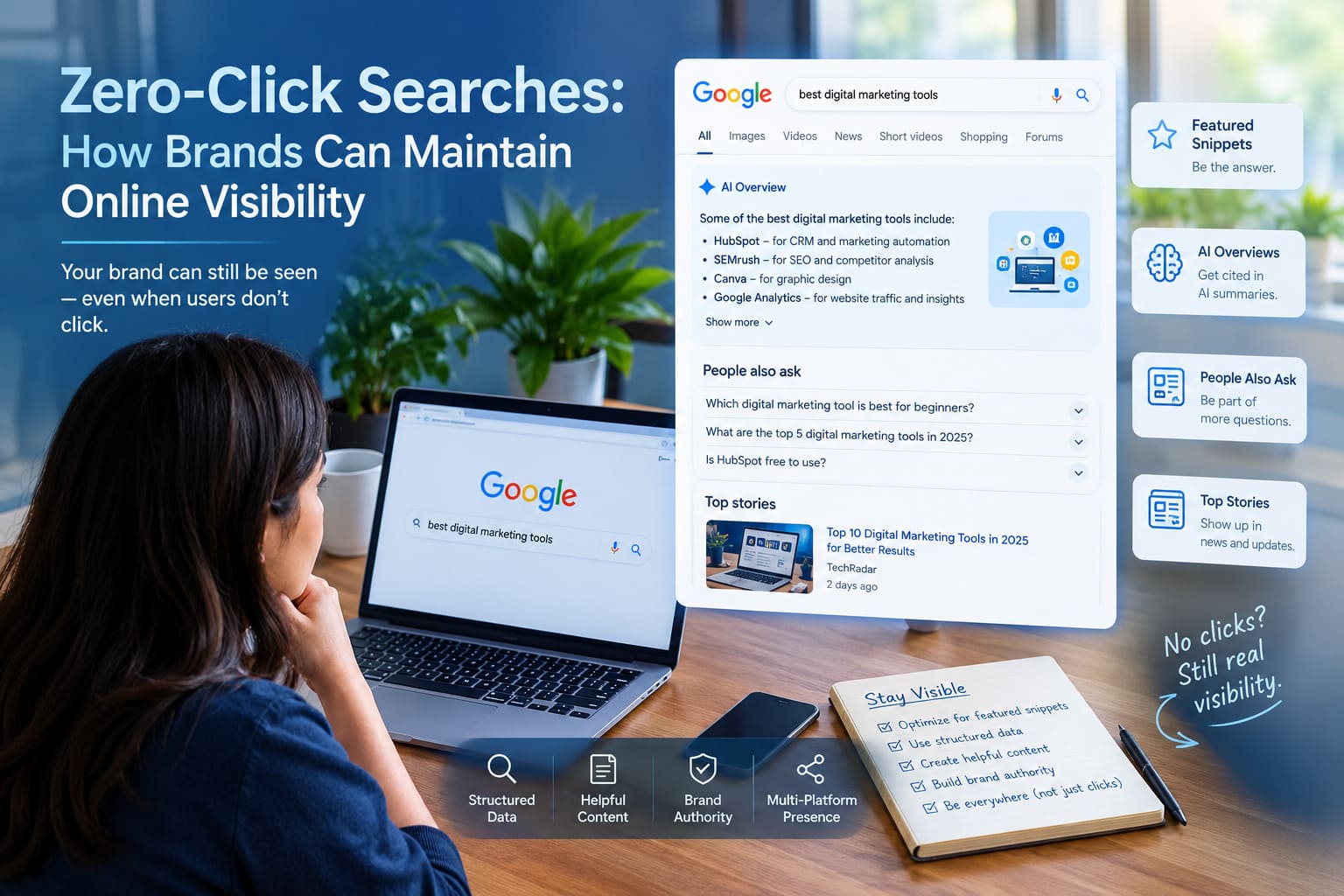
Search engines are changing the way people discover information online. Instead of clicking through several websites to find an answer, users can now get quick responses directly from search results. Featured snippets, knowledge panels, local business listings, and AI-generated summaries allow people to find information without visiting another webpage. This behavior is known as a zero-click search.
For brands, this shift creates a new challenge. Even when a website ranks well on Google, it may not receive as many visitors as expected because users find the information they need directly on the search results page.
However, zero-click searches do not mean that online visibility is becoming less important. They mean brands need to rethink how they build recognition, communicate expertise, and attract potential customers. By creating useful content and optimizing for search visibility beyond website clicks, businesses can continue reaching their target audiences.
What Are Zero-Click Searches?
A zero-click search occurs when a user searches for information and finds a satisfactory answer directly on the search engine results page without clicking an external website.
For example, someone searching for the meaning of marketing automation might see a short definition immediately in the search results. Similarly, a user looking for a nearby marketing agency may find business details, reviews, and contact information without opening the company’s website.
Common examples of zero-click search features include:
- Featured snippets: Short answers displayed prominently in search results.
- Knowledge panels: Information about brands, people, organizations, and other entities.
- Local search results: Business listings with addresses, ratings, hours, and contact details.
- People Also Ask: Expandable questions with brief answers.
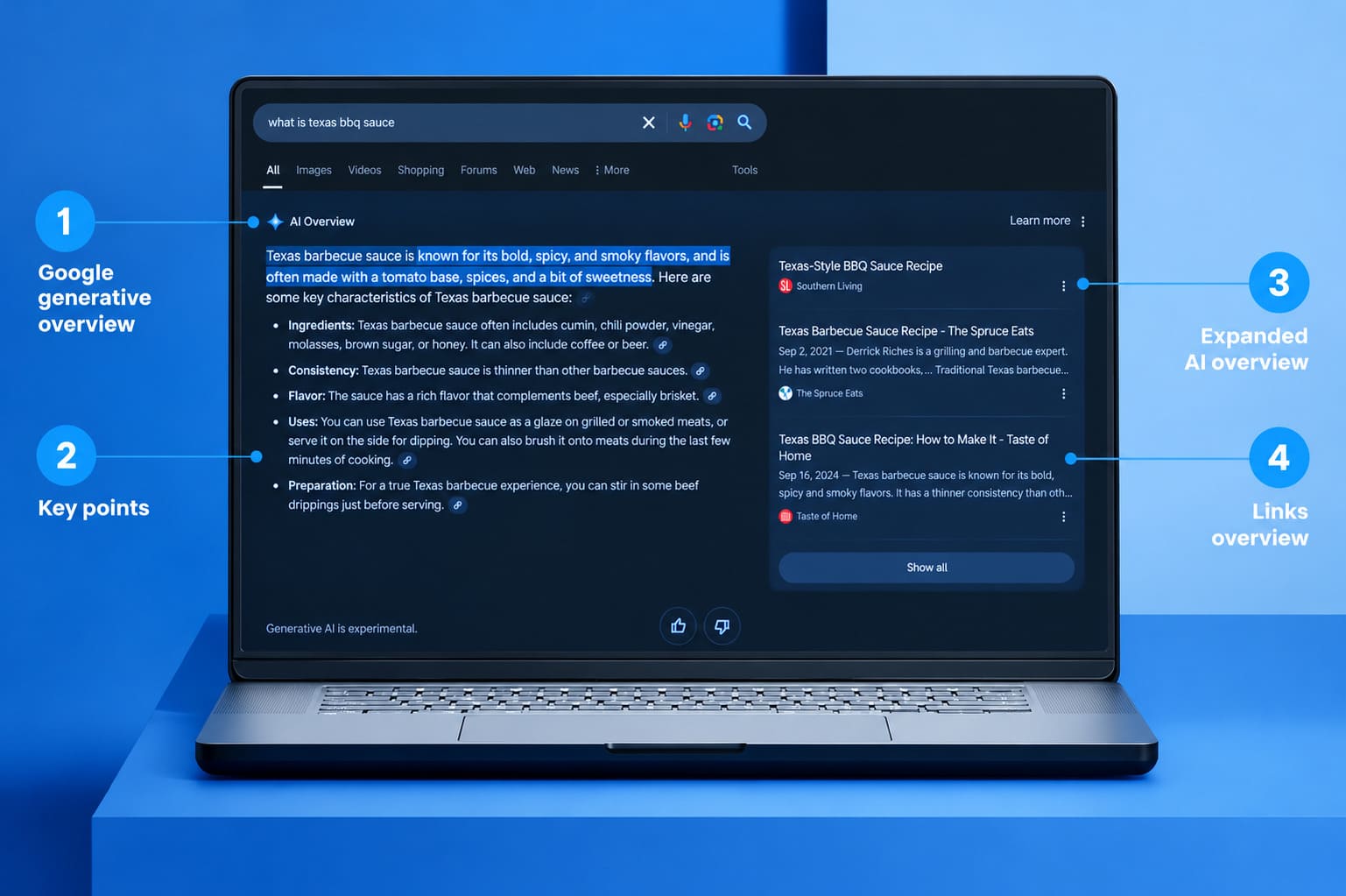
- AI-generated search summaries: Responses that combine information from multiple sources.
- Instant answers: Quick results for definitions, calculations, dates, and similar queries.
These features help users find information faster. For brands, they create opportunities to become visible even when a search does not lead directly to a website visit.
Why Are Zero-Click Searches Increasing?
Several developments have contributed to the growth of zero-click searches. Search engines increasingly aim to provide relevant information quickly, reducing the effort users need to find answers.
1. Changing User Expectations
People often want immediate answers rather than having to browse multiple pages. A clear definition, business address, or short explanation may be enough to satisfy their search intent.
Brands that publish accessible, well-organized information are better positioned to meet these expectations.
2. Growth of AI-Powered Search
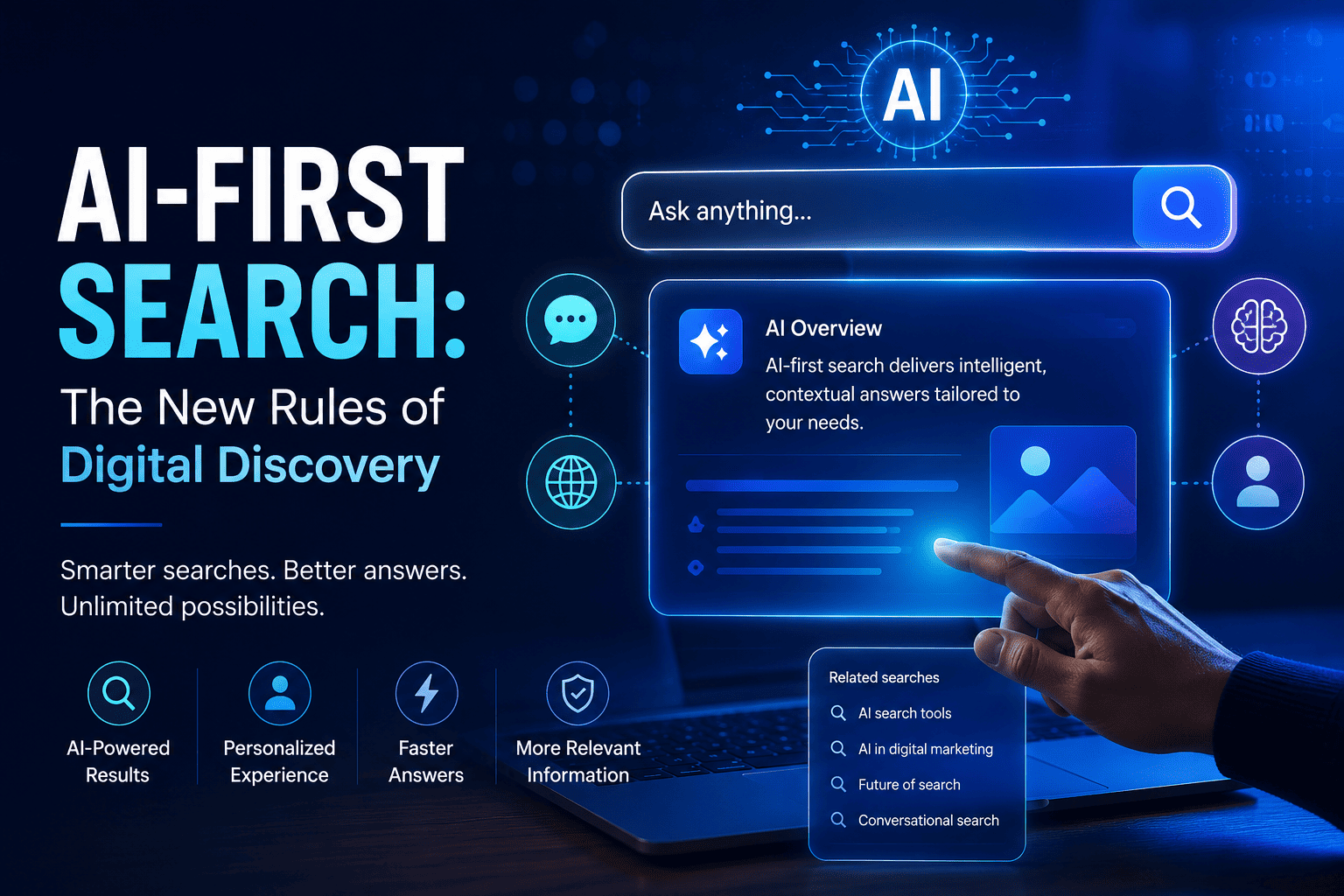
AI-powered search experiences can summarize information, answer complex questions, and suggest related topics. Users may receive an overview before deciding whether they need to visit a source website.
This makes accurate information, clear explanations, and demonstrated expertise increasingly important for brands seeking online visibility.
3. More Informative Search Results
Search results now offer more than traditional blue links. Images, videos, product information, reviews, and business profiles can answer questions before users open a webpage.
Businesses must therefore optimize their broader digital presence instead of focusing exclusively on traditional rankings.
How Zero-Click Searches Affect Brand Visibility
Zero-click searches can create both challenges and opportunities for businesses.
One major challenge is the potential loss of organic website traffic. When users find an answer directly in search results, they may not visit the page that supplied the information. This can affect page views, lead generation, and advertising opportunities.
At the same time, appearing in prominent search features can introduce a brand to people who may not have discovered it otherwise. A brand mentioned in a relevant answer can build familiarity, demonstrate expertise, and become part of a user’s consideration process.
The important distinction is between visibility and website traffic. Website visits remain valuable, but they are not the only indicator of successful search marketing. Brand mentions, branded searches, qualified leads, and conversions can also help measure performance.
7 Strategies to Maintain Online Visibility in Zero-Click Searches
1. Create Content That Answers Questions Clearly
Start by understanding what your audience wants to know. Searchers may be looking for definitions, comparisons, instructions, recommendations, or solutions to specific problems.
Organize articles around these questions and provide a direct, useful answer near the beginning of each relevant section. Follow the answer with examples, explanations, and practical details that help readers understand the subject more deeply.
For example, a MarTech article about customer data platforms could begin with a concise definition before explaining their uses, benefits, limitations, and implementation considerations.
Clear answers improve the user experience and make content easier for search engines to interpret. They do not guarantee a featured snippet, but they give your content a stronger foundation.
2. Optimize Content for Search Intent
Search intent refers to the reason behind a user’s query. Someone searching for a definition needs different information from someone comparing software or evaluating a purchase.
Identify the primary intent behind each target keyword and structure your content accordingly.
- Informational intent: Explain concepts, answer questions, and provide educational resources.
- Commercial investigation: Compare approaches, technologies, and available options.
- Transactional intent: Make relevant product or service information easy to find.
- Navigational intent: Help users locate a specific brand or website.
When your content matches the user’s actual needs, it has a better chance of being useful across different search experiences.
3. Strengthen Brand Authority and Credibility
Search visibility is not only about individual keywords. Brands should build a recognizable and trustworthy digital presence.
Publish accurate information, support important claims with reliable sources, keep business details consistent, and demonstrate knowledge of your subject area. Use clear author information and maintain content that reflects genuine expertise.
For marketing technology brands, this might include publishing detailed articles about marketing automation, customer relationship management, analytics, personalization, and AI-powered marketing.
A consistent focus on relevant topics can help readers understand what your brand knows and why its content is worth exploring.
4. Use Structured Content and Relevant Schema Markup
Well-organized pages are easier for people to navigate and for search engines to interpret. Use descriptive headings, short paragraphs, lists, tables where appropriate, and clear explanations of technical terms.
Structured data, also known as schema markup, can help search engines understand specific information about a page or organization. Depending on eligibility and implementation, it may support certain enhanced search appearances.
Choose schema types that accurately reflect the page, such as Article, Organization, or BreadcrumbList. Validate the markup and follow Google’s current guidelines.
Remember that structured data does not guarantee a rich result or placement in an AI-generated answer. Its purpose is to provide additional context, not to promise rankings.
5. Build a Strong Brand Presence Beyond Your Website
Your website is important, but it is only one part of your digital footprint. Potential customers may discover your brand through professional networks, industry publications, online communities, video platforms, and business directories.
Maintain accurate profiles on platforms relevant to your audience. Share original insights, contribute meaningful commentary, and make sure your brand description remains consistent across channels.
For local businesses, keeping business profiles accurate is particularly important. For B2B marketing brands, industry publications and professional communities may provide additional opportunities to reach decision-makers.
The goal is to make your brand recognizable and easy to verify wherever people encounter it.
6. Develop Original Insights Instead of Repeating Existing Content
Basic definitions are often easy for search engines to summarize. Brands can offer additional value by publishing information that goes beyond a surface-level answer.
Consider including:
- Original research and survey findings.
- Practical examples based on real business scenarios.
- Expert explanations of emerging trends.
- Comparisons that clarify trade-offs and limitations.
- Frameworks and checklists that support decision-making.
- Case studies with transparent methods and measurable outcomes.
For example, instead of publishing only a general explanation of marketing automation, explore how businesses can evaluate automation workflows, identify implementation problems, or measure campaign performance.
Distinctive information gives readers a stronger reason to seek out the original source.
7. Measure Visibility Beyond Clicks
Traditional SEO reporting often emphasizes rankings, impressions, organic traffic, and click-through rates. These metrics remain useful, but they do not tell the complete story.
Track a broader set of indicators to understand whether your brand is reaching the right audience.
Useful metrics include:
- Search impressions and click-through rate.
- Organic traffic to important landing pages.
- Branded search impressions and clicks.
- Qualified leads and conversions from organic search.
- Referral traffic from relevant external websites.
- Brand mentions in industry publications.
- Engagement with content that supports buying decisions.
Use Google Search Console and website analytics to identify changes over time. Where possible, compare performance by query, page type, and search intent.
Do not assume that every decline in clicks is caused by zero-click searches. Ranking changes, seasonality, search demand, and changes in search result layouts can also affect performance.
Common Mistakes Brands Should Avoid
Trying to gain visibility in zero-click searches can lead to ineffective tactics if brands focus on shortcuts instead of useful content.
Avoid these common mistakes:
- Writing only for search engines: Content should answer real questions rather than repeat keywords unnaturally.
- Expecting every search to generate a click: Some queries are naturally satisfied by a quick answer.
- Publishing generic AI-generated articles at scale: Content without meaningful value or editorial oversight may struggle to distinguish the brand.
- Using irrelevant schema markup: Structured data must accurately describe the content on the page.
- Ignoring conversions: High impressions alone do not prove that a marketing strategy is producing business results.
- Neglecting brand consistency: Conflicting company details or outdated information can weaken trust.
A sustainable strategy prioritizes accuracy, usefulness, consistency, and measurable business outcomes.
The Future of SEO in a Zero-Click Search Environment
Zero-click searches are part of a broader shift toward search experiences that provide answers, recommendations, and summaries directly within the platform. As AI-assisted search develops, brands will need to consider how their information is discovered, understood, and represented across different environments.
This does not make traditional SEO obsolete. Technical accessibility, relevant keywords, helpful content, internal linking, and authoritative references continue to support discoverability.
What changes is the definition of success. A strong search strategy should help people find accurate information, recognize the brand, and move toward the next step when they need more detail.
Businesses that combine traditional SEO with clear answers, original insights, consistent brand information, and broader performance measurement will be better prepared to adapt.
Conclusion
Zero-click searches are changing the relationship between search visibility and website traffic. Although users may find answers without visiting a website, brands can still build awareness and demonstrate expertise through useful, well-structured information.
The most effective approach is to answer audience questions clearly, match content to search intent, strengthen brand credibility, maintain a consistent digital presence, and measure outcomes beyond clicks.
For MarTech brands, this is an opportunity to move beyond traffic-focused SEO and build a more complete strategy for online discovery. The objective is not simply to appear in search results, but to become a credible and recognizable source when people need information.
Frequently Asked Questions
1. What Are Zero-Click Searches?
Zero-click searches occur when users find answers directly on search engine results pages without visiting an external website. Examples include featured snippets, knowledge panels, and AI-generated summaries.
2. How Do Zero-Click Searches Affect Brand Visibility?
Zero-click searches can reduce website visits for certain queries, but they also give brands opportunities to build awareness, demonstrate expertise, and reach audiences directly through search results.
3. How Can Brands Improve Visibility in Zero-Click Searches?
Brands can improve their visibility by answering user questions clearly, matching search intent, using relevant structured data, publishing original insights, and maintaining consistent business information online.
4. How Can Businesses Measure Zero-Click Search Performance?
Businesses can monitor search impressions, click-through rates, branded searches, organic traffic, qualified leads, and conversions using tools such as Google Search Console and website analytics platforms.