






Today’s customers expect brands to understand their needs, preferences, and behaviors. Generic marketing messages are no longer enough to capture attention in a highly competitive digital environment. Businesses are now using advanced technologies to deliver personalized experiences across websites, emails, apps, advertisements, and customer support channels.
Personalization engines have become an important part of modern marketing technology (MarTech), helping businesses analyze customer data and deliver relevant content, product recommendations, and experiences in real time.
From personalized shopping recommendations to customized email campaigns, personalization engines help brands improve customer engagement, increase conversions, and build stronger relationships.
In this guide, we will explore what personalization engines are, how they work, their benefits, key use cases, and why they are becoming essential for modern businesses.
What Is a Personalization Engine?
A personalization engine is a technology platform that uses customer data, artificial intelligence (AI), machine learning, and analytics to create customized experiences for individual users.
Instead of showing the same content to every visitor, personalization engines analyze customer behavior and deliver experiences based on:
- User preferences
- Browsing history
- Purchase behavior
- Demographic information
- Location
- Previous interactions
- Real-time actions
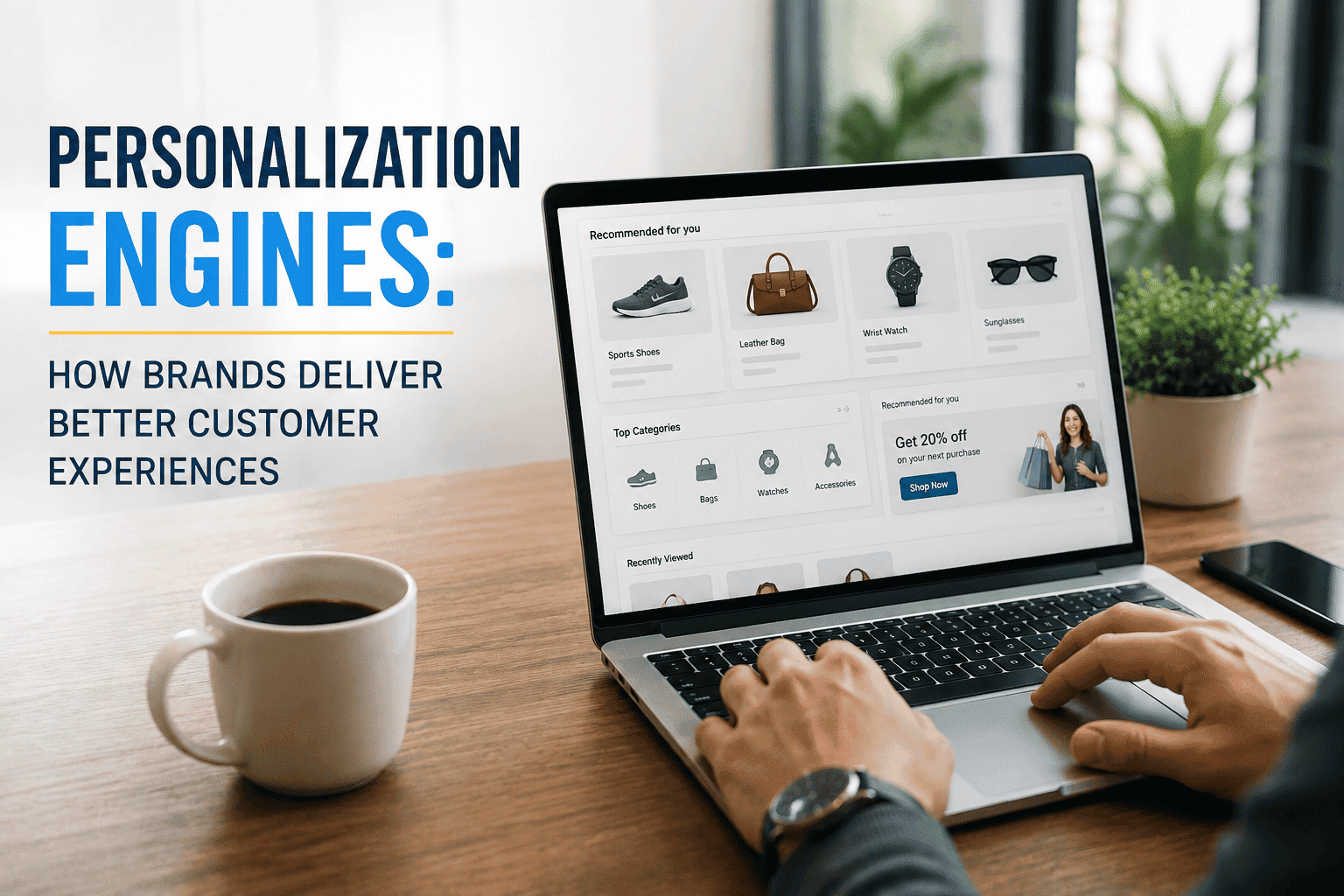
For example, an online retailer may recommend products based on a customer’s previous searches and purchases. Similarly, a streaming platform may suggest movies based on viewing history.
The main goal of a personalization engine is to deliver the right message, to the right customer, at the right time.
How Do Personalization Engines Work?
Personalization engines work by collecting customer data, analyzing patterns, and delivering customized experiences. The process usually includes four major steps.
1. Data Collection
The first step is collecting information from different customer touchpoints, including:
- Website interactions
- Mobile applications
- CRM systems
- Purchase history
- Social media activity
- Email engagement
- Customer feedback
This data helps businesses understand customer interests and behaviors.
2. Data Analysis Using AI and Machine Learning
After collecting data, personalization engines use artificial intelligence and machine learning algorithms to identify patterns.
AI analyzes:
- Customer preferences
- Buying behavior
- Content engagement
- Product interests
- Customer journey stages
Machine learning models continuously improve recommendations by learning from new customer interactions.
3. Customer Segmentation
Personalization engines divide customers into different groups based on their behavior and characteristics.
Common segmentation methods include:
- New visitors
- Returning customers
- High-value customers
- Interested buyers
- Customers at risk of leaving
This allows marketers to create more targeted campaigns.
4. Delivering Personalized Experiences
After analyzing customer data, the personalization engine delivers customized experiences through multiple channels:
- Website content
- Product recommendations
- Email campaigns
- Mobile notifications
- Advertisements
- Customer support
This creates a consistent and relevant customer experience.
Key Features of Personalization Engines
Modern personalization platforms include several advanced features:
AI-Powered Recommendations
AI recommendation systems analyze customer behavior to suggest relevant products, services, or content.
Examples:
- E-commerce product suggestions
- Video recommendations
- Related article suggestions
Real-Time Personalization
Real-time personalization allows brands to adjust experiences instantly based on customer actions.
For example:
A visitor searching for smartphones may immediately see mobile-related offers, reviews, and recommendations.
Predictive Analytics
Personalization engines use predictive analytics to forecast customer needs and future behavior.
Businesses can predict:
- Products customers may purchase
- Content they may engage with
- Customers likely to churn
Omnichannel Personalization
Customers interact with brands across multiple channels. Personalization engines help businesses deliver consistent experiences across:
- Websites
- Apps
- Social media
- Physical stores
Benefits of Personalization Engines for Businesses
1. Improved Customer Engagement
Personalized experiences make customers feel understood. Relevant content increases interaction and keeps users engaged.
2. Higher Conversion Rates
When customers receive relevant recommendations and offers, they are more likely to complete purchases.
Personalization helps businesses:
- Improve sales
- Reduce purchase barriers
- Increase customer confidence
3. Better Customer Retention
Customers are more likely to stay connected with brands that provide valuable and personalized experiences.
Personalization improves:
- Customer satisfaction
- Brand loyalty
- Repeat purchases
4. Increased Marketing Efficiency
Instead of sending generic campaigns, marketers can create targeted messages for specific audiences.
This improves:
- Campaign performance
- Marketing ROI
- Resource efficiency
5. Better Customer Understanding
Personalization engines provide deeper insights into customer behavior, helping businesses make data-driven decisions.
Real-World Examples of Personalization Engines
E-commerce Personalization
Online retailers use personalization engines to recommend products based on:
- Previous purchases
- Search history
- Customer preferences
Example:
A customer searching for running shoes may receive recommendations for sportswear, accessories, and related products.
Streaming Platforms
Entertainment platforms personalize content recommendations based on:
- Viewing history
- Ratings
- User preferences
This improves content discovery and engagement.
Email Marketing Personalization
Brands use personalization engines to send customized emails based on:
- Customer interests
- Previous interactions
- Purchase behavior
Examples:
- Personalized product recommendations
- Birthday offers
- Abandoned cart reminders
Personalization Engines vs Traditional Marketing
| Traditional Marketing | Personalization Engines |
|---|---|
| Same message for all customers | Customized experiences for individuals |
| Limited customer insights | Data-driven customer understanding |
| Manual segmentation | AI-powered segmentation |
| Generic campaigns | Personalized campaigns |
| Lower engagement | Higher engagement |
Challenges of Implementing Personalization Engines
Although personalization provides many benefits, businesses need to consider some challenges.
Data Privacy Concerns
Businesses must handle customer data responsibly and follow privacy regulations such as GDPR and other data protection laws.
Data Quality Issues
Poor-quality or incomplete customer data can affect personalization accuracy.
Technology Integration
Personalization engines need to integrate with existing systems such as:
- CRM platforms
- Customer Data Platforms (CDPs)
- Marketing automation tools
- Analytics platforms
Maintaining Human Connection
Automation should support customer relationships, not replace authentic human interactions.
The Future of Personalization Engines
The future of personalization will be driven by advanced AI technologies, including:
- Generative AI
- Predictive analytics
- AI agents
- Real-time customer intelligence
- Privacy-focused personalization
Businesses will move from basic personalization toward hyper-personalized experiences that understand customer needs before they express them.
AI-powered personalization will help brands create smarter, faster, and more meaningful customer interactions.
Conclusion
Personalization engines are transforming how businesses connect with customers. By using AI, machine learning, and customer data, brands can deliver relevant experiences that improve engagement, conversions, and loyalty.
As customer expectations continue to grow, personalization will become a critical component of successful MarTech strategies. Businesses that invest in personalization engines will be better positioned to build stronger relationships and deliver exceptional customer experiences.
Frequently Asked Questions (FAQs)
1. What is a personalization engine?
A personalization engine is a technology that uses AI and customer data to deliver tailored content, product recommendations, and marketing experiences.
2. How do personalization engines improve customer experience?
They analyze customer behavior to provide relevant content, personalized offers, and recommendations, making interactions more engaging and valuable.
3. What are the main benefits of personalization engines?
Personalization engines increase customer engagement, improve conversion rates, enhance customer loyalty, and boost marketing ROI.
4. Which businesses can benefit from personalization engines?
Businesses across e-commerce, retail, healthcare, finance, travel, media, SaaS, and B2B industries can use personalization engines to improve customer experiences.