







Email marketing has always been an important way for businesses to connect with customers. Whether a company wants to introduce a new product, share useful information, announce an offer, or maintain customer relationships, email provides a direct communication channel.
However, creating effective email campaigns takes more than writing a good message and pressing the send button. Marketers need to understand their audience, choose relevant content, decide when to send emails, and make sure every communication provides value.
This is where Generative AI is beginning to make a difference.
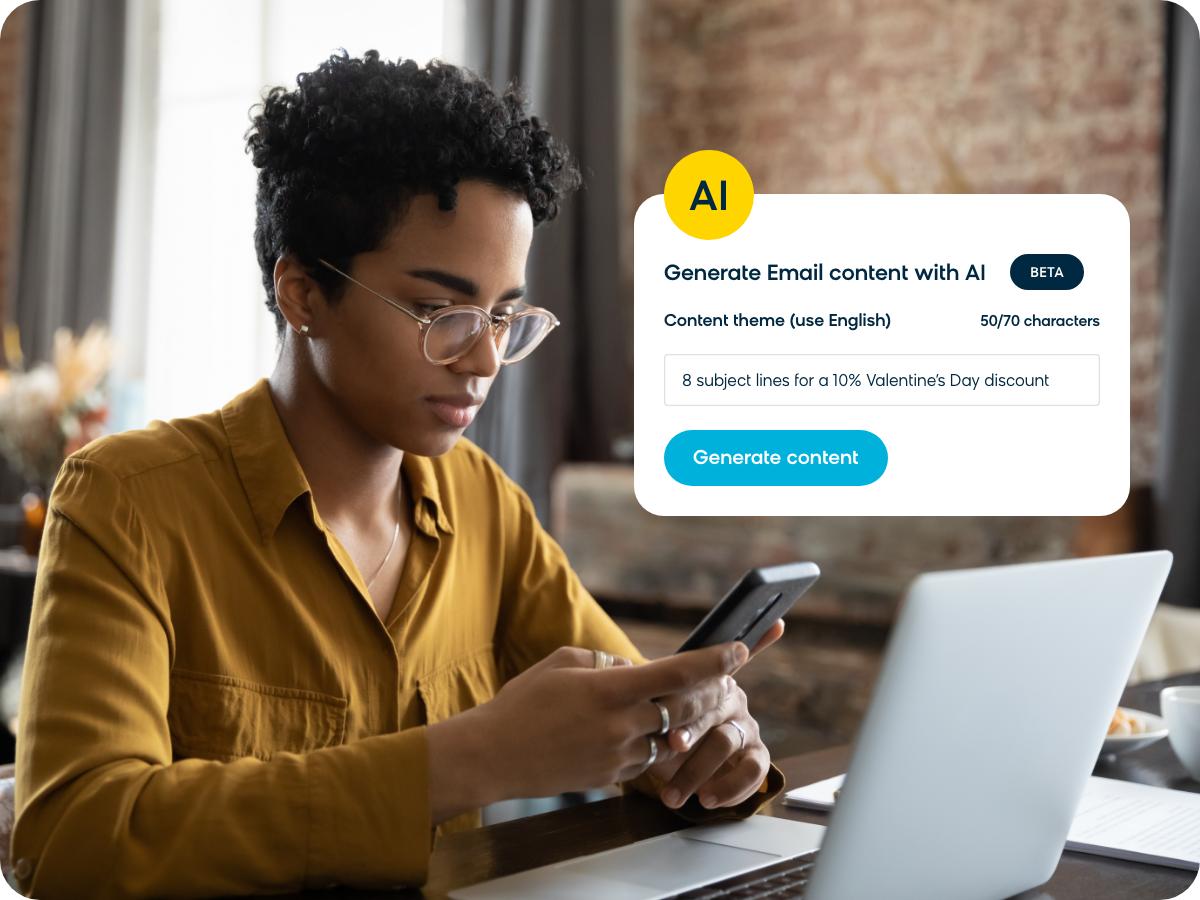
Many businesses initially explored AI for simple tasks such as generating email subject lines, correcting grammar, and rewriting promotional messages. While these features are helpful, the potential of Generative AI goes much further.
It can help marketers develop personalized email content, create different versions of campaigns, understand customer interests, support automated communication, and improve the overall email experience.
The real opportunity is not simply sending emails faster. It is creating messages that feel more relevant to the people receiving them.
What Is Generative AI in Email Marketing?
Generative AI in email marketing refers to using artificial intelligence models to create, adapt, and improve email content based on marketing goals and available customer information.
Traditional email marketing usually depends on predefined templates and manually written messages. Marketers create campaign content, divide subscribers into groups, and schedule emails according to their marketing plans.
Generative AI introduces another layer of flexibility.
It can help marketing teams generate email copy, recommend content variations, adapt messaging for different audience segments, and support campaign planning.
For example, an online business promoting a new product might have several types of subscribers. Some people may be interested in product features, while others may care more about pricing, practical benefits, or customer experiences.
Instead of preparing only one general email, marketers can use Generative AI to develop different message variations for these audiences.
The marketer still decides which messages are appropriate, checks the information, and ensures that the final communication reflects the brand’s identity.
How Generative AI Is Changing Email Marketing Beyond Subject Lines
Generative AI is becoming useful across several stages of email campaign development. Its value comes from supporting the complete communication process rather than focusing on one small task.
1. Creating Personalized Email Content
Personalization has become an important part of modern email marketing. However, adding a subscriber’s first name to an email is no longer enough to make the communication meaningful.
Customers have different interests, preferences, and expectations. A message that is useful to one subscriber may not be relevant to another.
Generative AI can help marketers create content variations based on available information, such as previous purchases, browsing interests, subscription preferences, and interactions with earlier campaigns.
For example, a technology company may send different email content to subscribers interested in cybersecurity, artificial intelligence, and cloud computing.
Each subscriber receives information connected to their interests rather than receiving exactly the same promotional message.
This approach can make email communication more relevant while reducing the manual effort involved in preparing multiple versions.
2. Developing Different Email Campaign Versions
Creating multiple email campaigns for different audiences can become time-consuming, particularly for businesses managing large subscriber lists.
Generative AI can help marketers produce several versions of an original email while maintaining the campaign’s main message.
Consider a business announcing a new marketing software product.
The marketing team could create different versions for:
- Small business owners who need affordable marketing solutions.
- Marketing professionals interested in campaign performance.
- Business managers looking for improved workflow efficiency.
- Existing customers who want to understand new product features.
The main announcement remains consistent, but the language, examples, and benefits can change according to the audience.
This makes it easier for marketers to develop targeted communication without writing every email completely from the beginning.
3. Generating Relevant Email Recommendations
Email campaigns do not always need to focus on promotions.
Sometimes, subscribers are more interested in educational content, helpful resources, industry updates, or recommendations connected to their previous interests.
Generative AI can help marketers suggest relevant content for different subscriber groups.
For example, a digital marketing platform may identify subscribers who regularly interact with articles about SEO. Its marketing team could use AI to prepare email recommendations featuring new SEO guides, useful resources, or related educational content.
Similarly, subscribers interested in marketing automation could receive information about workflow improvements and campaign management.
The objective is to make each email more useful instead of filling inboxes with unrelated promotional messages.
4. Supporting Smarter Email Timing
Sending an email at the right time can influence whether someone notices and interacts with it.
However, subscribers do not all follow the same daily routine. Some check their inbox during the morning, while others may be more active during lunch breaks or evenings.
AI-powered email platforms can analyze available engagement patterns and help marketers identify suitable sending times.
Generative AI can complement this process by helping prepare communication strategies and adapting campaign content for different audience groups.
For example, a company might discover that one subscriber segment regularly interacts with emails during the morning, while another responds more often in the evening.
Instead of relying entirely on a single sending schedule, marketers can use these insights to plan more relevant campaigns.
It is important to remember that AI recommendations should be tested against actual campaign results rather than treated as guaranteed improvements.
5. Improving Automated Email Journeys
Email automation allows businesses to communicate with customers after specific activities or events.
Common examples include welcome emails, abandoned cart reminders, purchase confirmations, product updates, and follow-up messages.
Traditional automation generally follows predefined conditions. For instance, when someone subscribes to a mailing list, the system automatically sends a welcome email.
Generative AI can make the content within these workflows more flexible.
It can help marketers create different follow-up messages depending on customer interests, previous interactions, or the purpose of the communication.
Imagine someone downloading a guide about marketing analytics. Instead of sending a completely generic follow-up, the business could prepare an email introducing related educational resources.
This creates an opportunity to make automated communication feel more connected to the subscriber’s original interest.
6. Supporting A/B Testing and Campaign Improvement
Email marketing requires continuous experimentation. A campaign that performs well with one audience may not produce the same results with another.
Marketers often test different headlines, email layouts, calls to action, and message formats to understand what works.
Generative AI can help prepare alternative versions for these experiments.
For example, a marketing team could create:
- A short and direct email introduction.
- A more conversational opening.
- A benefit-focused promotional message.
- An educational message highlighting a common customer problem.
These variations can then be tested with suitable audience groups.
AI can also assist with summarizing campaign feedback and identifying possible areas for improvement when connected to relevant performance data.
However, marketers should evaluate actual results carefully. Generating more variations does not automatically mean a campaign will perform better.
Practical Examples of Generative AI in Email Marketing
Understanding the technology becomes easier when we look at how businesses might use it in everyday marketing activities.
Example 1: E-commerce Business
An online clothing store wants to reconnect with customers who previously purchased seasonal products.
Generative AI can help create different email messages featuring relevant collections, product information, and styling suggestions.
Example 2: B2B Marketing Company
A business offering marketing software wants to communicate with potential customers from different industries.
AI can help develop separate email content for technology companies, retail businesses, and professional service providers.
Example 3: Educational Platform
An online learning platform wants to encourage subscribers to explore additional courses.
Generative AI can help prepare recommendations based on previously selected subjects and learning interests.
Example 4: SaaS Company
A software company wants to improve communication with existing customers after introducing new features.
AI can help prepare different explanations, product announcements, and educational emails depending on the customer’s familiarity with the software.
In each example, the technology supports content creation and communication planning. Human marketers remain responsible for accuracy, relevance, and the overall customer experience.
Benefits of Using Generative AI in Email Marketing
When implemented thoughtfully, Generative AI can offer several advantages to marketing teams.
Faster Content Development
Writing multiple email variations can take considerable time. AI can help create initial drafts, suggest alternative wording, and organize campaign content more efficiently.
More Relevant Communication
AI-assisted content generation can support different messaging approaches for different subscriber groups, helping businesses move beyond generic campaigns.
Greater Creative Flexibility
Marketers can experiment with different writing styles, email structures, storytelling approaches, and calls to action.
Better Campaign Consistency
AI can help teams maintain consistent messaging across multiple campaign variations when provided with clear brand guidelines and suitable instructions.
Reduced Repetitive Work
Marketing professionals can spend less time on repetitive writing tasks and more time understanding customer needs, planning campaigns, and improving communication strategies.
Challenges Businesses Should Consider
Although Generative AI offers useful opportunities, adopting it without proper planning can create problems.
Accuracy of Generated Content
AI-generated messages may contain incorrect information, unsupported claims, or misleading product details. Every email should be checked before distribution.
Customer Data Privacy
Personalized email campaigns often depend on customer information. Businesses must collect and use data responsibly, respect consent requirements, and follow applicable privacy regulations.
Loss of Brand Personality
If every email is generated using similar prompts and templates, the communication may begin to sound repetitive or generic.
Companies should provide clear brand guidelines and review AI-generated content to maintain their unique voice.
Over-Personalization
Using too much customer information can make emails feel intrusive. Personalization should improve the subscriber experience rather than create discomfort.
Dependence on Automation
AI can support marketing decisions, but it cannot always understand emotions, cultural context, or sensitive customer situations.
Human involvement remains essential when communication requires judgment and empathy.
How Businesses Can Start Using Generative AI for Email Marketing
Companies do not need to transform their entire email marketing process immediately. A gradual approach can help teams understand where the technology provides genuine value.
Step 1: Identify Repetitive Marketing Tasks
Start by identifying activities that consume significant time, such as drafting campaign emails, preparing content variations, or writing follow-up messages.
Step 2: Understand Your Audience
Review available subscriber information and identify meaningful audience segments. Use only appropriately collected and permitted customer data.
Step 3: Select Suitable AI Features
Explore email marketing platforms that offer AI-assisted content generation, personalization, campaign recommendations, or automation support.
Step 4: Create Clear Brand Guidelines
Define your preferred writing style, tone, vocabulary, and communication standards. This helps AI-generated messages remain consistent with your brand.
Step 5: Review Before Sending
Check every generated email for factual accuracy, relevance, grammar, privacy considerations, and brand consistency.
Step 6: Measure Campaign Performance
Monitor meaningful indicators such as click-through rates, conversions, unsubscribe rates, and customer feedback. Use these findings to improve future campaigns.
The Future of Generative AI in Email Marketing
Generative AI is likely to become more closely connected with customer data platforms, CRM systems, analytics tools, and marketing automation software.
This could allow businesses to develop more connected email experiences.
For example, an AI-assisted marketing system may help identify customer interests, suggest relevant content, prepare campaign variations, and support communication throughout different stages of the customer journey.
Another important development is the growing use of AI agents in marketing workflows. These systems may eventually support more complex activities, including campaign preparation, performance analysis, and workflow recommendations.
However, the future of email marketing should not be measured only by how much communication businesses can automate.
Customer trust, privacy, transparency, and meaningful content will remain important.
The brands that use AI effectively will be those that understand when automation is useful and when a human perspective makes a difference.
Final Thoughts
Generative AI is changing email marketing in ways that go far beyond writing attractive subject lines.
It can support personalized content, create multiple campaign versions, recommend relevant resources, improve automated journeys, and help marketing teams experiment with different communication approaches.
But technology alone cannot create a meaningful customer relationship.
A well-written email still needs a clear purpose, useful information, appropriate timing, and an understanding of the person receiving it.
The best approach is to combine the speed and flexibility of Generative AI with human creativity, careful judgment, and responsible customer data practices.
Ultimately, successful email marketing is not about sending more messages. It is about sending messages that people actually want to read.
Frequently Asked Questions
1. What is the role of Generative AI in modern email marketing?
Generative AI helps marketers create engaging email content, personalize messages, develop campaign variations, and improve automated communication based on customer interests.
2. How does Generative AI improve email personalization?
It helps businesses create relevant messages using customer preferences, previous interactions, purchase history, and engagement patterns, making email communication more meaningful.
3. Can Generative AI create complete email marketing campaigns?
Yes. Generative AI can assist with email copy, campaign ideas, promotional messages, calls to action, and content variations. However, marketers should review everything before launching a campaign.
4. What are the risks of using Generative AI in email marketing?
Common risks include inaccurate information, data privacy concerns, repetitive content, excessive personalization, and inconsistent brand messaging. Human supervision is important to address these challenges.