








Marketing decisions often involve a lot of uncertainty. A new landing page might attract more visitors, a different email subject line could improve open rates, or a personalized offer might encourage more customers to make a purchase. However, marketers cannot always predict which changes will deliver the best results. This is where marketing experimentation platforms become valuable.
Traditional A/B testing has helped businesses compare two versions of a webpage, advertisement, email, or call-to-action button. While this approach remains useful, modern marketing teams need to understand more than which of two options performs better. They also want to learn how different audiences respond, which combinations of changes work together, and whether an improvement leads to meaningful business outcomes.
Marketing experimentation platforms are expanding these possibilities by bringing testing, analytics, audience segmentation, personalization, and performance measurement into a more connected process.
What Are Marketing Experimentation Platforms?
Marketing experimentation platforms are software solutions that help teams plan, run, and measure controlled tests across digital marketing activities. Instead of relying entirely on assumptions or past campaign performance, marketers can use real customer interactions to evaluate their ideas.
For example, an online retailer might want to understand why visitors browse products but leave without completing a purchase. The team could test different product descriptions, page layouts, recommendations, or checkout experiences to identify which changes encourage customers to continue.
Depending on the platform, marketers may be able to experiment with website content, email campaigns, advertising creatives, audience segments, product experiences, and customer journeys. The goal is not simply to collect more data. It is to turn that data into useful decisions.
Why Traditional A/B Testing Is No Longer Enough on Its Own
A/B testing remains an important part of conversion optimization. It allows marketers to compare a control version with an alternative and measure the difference against a defined objective.
However, a basic test may not answer every question a marketing team needs to explore.
1. Customer Behavior Is Not the Same for Everyone
A headline that attracts first-time visitors might not have the same effect on returning customers. Similarly, a discount could encourage one audience to purchase while another responds better to product information or customer reviews.
When marketers evaluate only an overall result, they may overlook meaningful differences between audience groups.
2. Testing One Change at a Time Can Be Limiting
Changing a headline is useful, but the headline may work differently depending on the accompanying image, offer, or landing page design. Testing related elements together can help marketers understand how these combinations influence performance.
Multivariate testing can evaluate several elements and their combinations, although it generally requires more traffic and careful experiment design.
3. Clicks Do Not Always Represent Business Success
An advertisement may generate many clicks without attracting qualified leads. A landing page may increase form submissions while producing fewer sales-ready prospects.
Marketing teams therefore need to look beyond surface-level engagement and connect experiments with meaningful outcomes, such as qualified leads, purchases, customer retention, and revenue.
4. Disconnected Tools Make Learning More Difficult
When campaign data, website analytics, customer records, and testing results sit in separate systems, it can be difficult to understand the complete customer journey.
An experimentation platform with suitable integrations can help teams connect these insights and make more informed decisions.
Key Capabilities That Take Marketing Experiments Further
Modern experimentation platforms can support several approaches beyond simple two-version testing. The exact capabilities depend on the product and its integrations.
Multivariate Testing
Multivariate testing examines multiple page or campaign elements within the same experiment. A marketing team might compare different headlines, images, and calls to action to understand which combinations perform best.
This approach can reveal interactions that a series of isolated tests might miss. However, teams need sufficient traffic to evaluate the combinations reliably.
Audience-Based Experimentation
Audience-based experimentation helps marketers examine whether a campaign performs differently across customer groups.
For instance, a software company could compare a product-focused message with an educational message for new visitors, existing customers, and returning prospects. The results may reveal that different groups respond to different types of communication.
Segmentation should be planned carefully rather than introduced only after looking for interesting patterns in the results.
Personalization Experiments
Personalization experiments test whether adapting content to a customer’s interests, behavior, or stage in the buying journey improves the experience.
A travel website might compare a general destination recommendation with one based on a visitor’s previously viewed destinations. The experiment can measure whether the personalized experience improves meaningful engagement or completed bookings.
Multi-Armed Bandit Optimization
Multi-armed bandit methods take a different approach to distributing traffic among variations. Instead of allocating traffic equally throughout the entire test, an algorithm can direct more traffic toward options that appear to be performing better.
This can be useful for short-lived promotions, headlines, or campaign creatives where immediate performance matters. However, bandit optimization is not a universal replacement for traditional A/B testing. It may be less suitable when a team needs a rigorous comparison to understand why a change works or whether it creates longer-term benefits.
Cross-Channel Experimentation
Customers often interact with brands through multiple touchpoints, including search advertisements, email, websites, and mobile applications.
Cross-channel experimentation helps teams evaluate how changes across these touchpoints affect the customer journey. For example, a company might test whether a different combination of advertising messages and follow-up emails produces more qualified leads.
Such experiments require consistent measurement and careful planning to avoid attributing the same conversion to multiple activities.
How Marketing Experimentation Platforms Work in Practice
A successful experiment starts with a clear business question, not simply a desire to test something new.
Consider a company that receives plenty of landing-page traffic but struggles to generate qualified leads.
Step 1: Identify the problem. The marketing team notices that many visitors leave without completing the lead form.
Step 2: Develop a hypothesis. The team believes that a shorter form and a clearer explanation of the offer could encourage more relevant visitors to submit their details.
Step 3: Design the experiment. The existing page becomes the control, while the alternative page contains the proposed changes. The team defines its target audience and primary success metric before launching the test.
Step 4: Measure the results. The platform tracks form completion alongside lead quality and other relevant metrics. The team allows sufficient data to accumulate before drawing conclusions.
Step 5: Evaluate the outcome. If the alternative generates more submissions but substantially reduces lead quality, the team should not automatically declare it the winner.
Step 6: Apply the learning. The team uses the results to decide whether to implement the change, conduct another experiment, or investigate a different hypothesis.
This process turns experimentation into a repeatable way of learning rather than a series of disconnected marketing activities.
Important Metrics to Track
Choosing the right metrics helps ensure that experiments support business objectives.
- Conversion rate: Measures the proportion of visitors who complete a defined action.
- Click-through rate: Shows how often people click a link or advertisement after seeing it.
- Qualified lead rate: Helps determine whether a campaign attracts prospects who meet the business’s qualification criteria.
- Revenue per visitor: Connects visitor activity with the revenue generated.
- Customer acquisition cost: Helps assess the cost of acquiring new customers.
- Customer retention: Indicates whether an experience contributes to continued customer engagement.
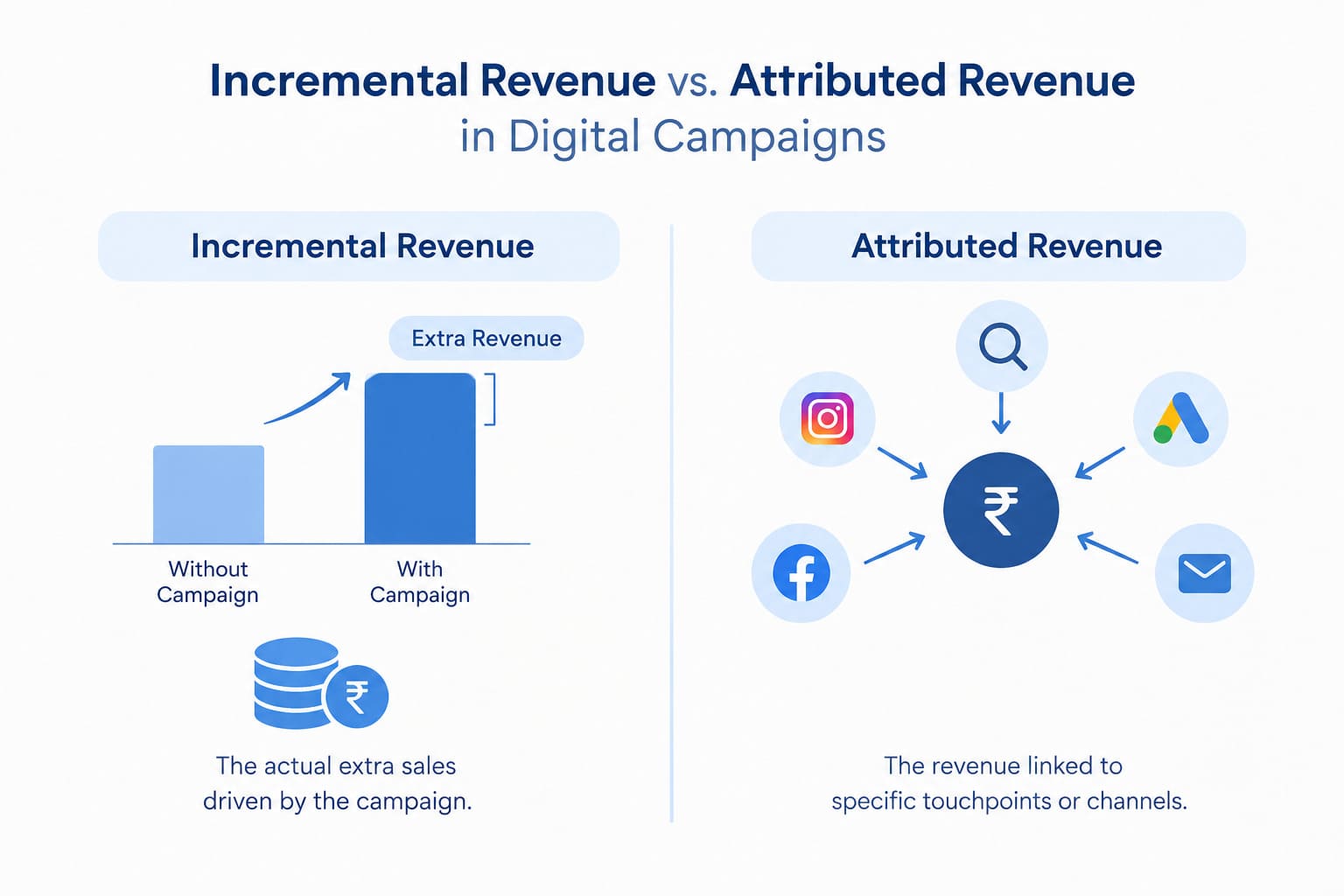
- Incremental lift: Estimates the improvement attributable to a change compared with an appropriate control.
Teams should select a primary metric before the experiment begins and monitor guardrail metrics to identify unintended consequences. For example, an increase in conversions should not come at the expense of customer satisfaction or lead quality.
How to Choose the Right Marketing Experimentation Platform
The right platform depends on a company’s marketing maturity, technical resources, budget, and testing requirements.
Before selecting a solution, consider the following factors.
Ease of Use
Marketing teams should be able to create and manage suitable experiments without unnecessary technical complexity. Visual editors and straightforward reporting can help non-technical users participate more actively.
Integration With Existing Tools
Check whether the platform works with the organization’s analytics tools, customer relationship management system, content management system, advertising platforms, and data infrastructure.
Integration requirements should be assessed before implementation rather than after a team has committed to a solution.
Statistical Reliability
Look for clear explanations of experiment design, sample requirements, confidence or uncertainty measures, and result interpretation. A platform should help teams avoid declaring winners based on incomplete or misleading data.
Personalization and Segmentation
If audience-specific experiences are important, evaluate how the platform handles segmentation, targeting, and personalization. Also consider whether the organization has the data quality and consent processes needed to support these activities.
Reporting and Business Impact
Reports should connect experiment results with relevant business goals. Teams need to understand not only which variation performed better but also how reliable the result is and whether it justifies implementation.
Privacy and Governance
Marketing experiments must respect applicable privacy requirements, consent choices, access controls, and data-retention policies. Clear governance becomes particularly important when experiments use customer-level data or involve several teams.
Common Mistakes to Avoid
Even sophisticated software cannot compensate for weak experimentation practices.
One common mistake is running tests without a specific hypothesis. Without a clear question, teams may collect results that are difficult to interpret.
Another is stopping experiments as soon as one variation appears to be ahead. Repeatedly checking results and stopping opportunistically can increase the risk of false conclusions.
Teams should also avoid testing too many variations without enough traffic, changing experiment conditions midway without a plan, and focusing exclusively on short-term engagement.
Finally, a successful result in one audience or campaign should not automatically be assumed to work everywhere. Customer behavior, seasonality, traffic sources, and market conditions can all influence outcomes.
The Future of Marketing Experimentation
Marketing experimentation is moving toward more connected workflows in which testing, analytics, personalization, and decision-making work together.
Artificial intelligence can help teams identify potential test ideas, generate content variations, analyze patterns, and prioritize experiments. Automated optimization can also help allocate traffic or personalize experiences when the use case and safeguards support it.
However, automation does not eliminate the need for human judgment. Marketing teams still need to define meaningful objectives, evaluate data quality, protect customer privacy, and determine whether a measured improvement supports the wider business strategy.
The most effective experimentation programs will not necessarily be those that run the largest number of tests. They will be the ones that consistently turn reliable evidence into better customer experiences and stronger business decisions.
Conclusion
Marketing experimentation platforms are expanding the role of testing beyond basic A/B comparisons. By supporting multivariate testing, audience segmentation, personalization, optimization, and connected measurement, these platforms help marketers investigate more complex questions about customer behavior.
The technology alone does not guarantee better results. Success depends on asking the right questions, choosing appropriate metrics, designing reliable experiments, and applying the findings responsibly.
For marketing teams that want to make decisions with greater confidence, moving beyond basic A/B testing is less about adopting every new feature and more about building a disciplined culture of continuous learning.
Frequently Asked Questions
1. What are marketing experimentation platforms?
Marketing experimentation platforms help businesses test different marketing strategies, website experiences, and campaign variations. They provide data-driven insights that help marketers understand customer behavior and improve campaign performance.
2. How are experimentation platforms different from basic A/B testing?
Basic A/B testing compares two versions of an element, while marketing experimentation platforms may support multivariate testing, audience segmentation, personalization, and automated optimization. These capabilities help teams investigate more complex marketing questions.
3. What metrics should marketers track during experiments?
Marketers can track conversion rates, click-through rates, qualified leads, revenue per visitor, and customer retention. The most appropriate metrics depend on the experiment’s objective and the business outcome the team wants to improve.
4. How can businesses choose the right marketing experimentation platform?
Businesses should evaluate ease of use, integration capabilities, reporting features, statistical reliability, personalization options, privacy controls, and pricing. The best platform aligns with the team’s goals, technical resources, and experimentation needs.