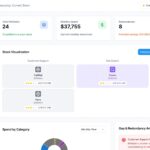










Creating a marketing plan is exciting until you reach the budget section. You may have plenty of ideas—SEO, paid advertising, content, social media, email campaigns, events—but there is only so much money available.
A well-planned budget for a marketing plan helps you decide where your money should go, what deserves more investment, and which activities are not producing enough value. The goal is not simply to spend less. It is to spend intelligently and connect marketing expenses to measurable business results.
Why a Marketing Budget Matters
Without a defined budget, marketing spending can quickly become reactive. A campaign performs well, so you increase spending. Another channel looks promising, so you invest there too. Before long, it becomes difficult to understand where the money is actually going.
A marketing budget gives your team a financial framework. It can help you:
- Prioritize high-value marketing activities
- Control unnecessary spending
- Plan campaigns in advance
- Set realistic performance expectations
- Measure return on marketing investment
- Adjust spending when business priorities change
More importantly, a budget creates accountability. Instead of asking whether a campaign was busy or popular, you can ask whether it contributed to meaningful business outcomes.
How Much Should You Spend on Marketing?
There is no universal marketing budget that works for every company.
A business should consider factors such as industry, company size, growth stage, revenue, competition, customer acquisition costs, and business objectives.
For example, a startup trying to build awareness may invest more aggressively in customer acquisition, while an established company may focus on retention, brand visibility, and improving existing customer relationships.
Rather than choosing a percentage simply because another company uses it, start with your goals and work backward.
How to Build a Marketing Budget Step by Step
1. Start With Your Business Goals
Your marketing budget should support your broader business objectives.
Ask:
- Are we trying to generate more leads?
- Do we want to increase online sales?
- Are we launching a new product?
- Do we need stronger brand awareness?
- Are we focused on customer retention?
- Do we want to enter a new market?
Your answer will influence where the budget should be allocated.
For example, a company focused on lead generation may prioritize search engine optimization, paid search, landing pages, and content marketing. A company focused on retention may put more resources into email marketing, customer experience, and CRM activities.
2. Review Previous Marketing Performance
Before creating a new budget, look at what happened with the previous one.
Review metrics such as:
- Leads generated
- Conversion rates
- Customer acquisition cost
- Revenue generated
- Cost per lead
- Website traffic
- Email engagement
- Paid advertising performance
- Customer retention
Do not automatically increase spending on a channel just because it generated traffic. Look deeper into whether that traffic contributed to business results.
3. Divide the Budget by Marketing Channels
Once you understand your goals and past performance, divide the available budget among relevant channels.
A marketing budget might include:
- SEO
- Content marketing
- Paid advertising
- Social media
- Email marketing
- Marketing automation
- Events and webinars
- Influencer or partnership marketing
- Design and creative services
- Marketing technology
- Analytics and reporting
The exact mix will depend on your audience and business model.
4. Separate Fixed and Flexible Costs
Not every marketing expense behaves the same way.
Fixed costs may include software subscriptions, marketing platforms, website hosting, or recurring agency fees.
Flexible costs can include advertising spend, sponsored campaigns, events, freelance work, and promotional activities.
Keeping these categories separate makes it easier to respond when priorities or market conditions change.
Example of a Marketing Budget Allocation
Suppose a company has a monthly marketing budget of $10,000.
A possible allocation could look like this:
| Marketing Activity | Example Allocation |
|---|---|
| SEO & Content | $2,500 |
| Paid Advertising | $3,000 |
| Social Media | $1,000 |
| Email & Marketing Automation | $1,000 |
| Design & Creative | $750 |
| Analytics & Reporting | $500 |
| Testing & Experiments | $750 |
| Contingency Reserve | $500 |
This is only an example—not a fixed formula.
The right allocation depends on which channels are producing the strongest results for the business.
Keep Part of the Budget Flexible
One common budgeting mistake is assigning every dollar before the year or quarter begins.
Marketing rarely goes exactly according to plan. A new advertising opportunity may appear, a campaign may outperform expectations, or a channel may suddenly become less effective.
Keeping a small portion of the budget available for testing and unexpected opportunities gives your team room to adapt.
For example, you might reserve funds for:
- Testing a new advertising channel
- Scaling a successful campaign
- Experimenting with new content formats
- Responding to seasonal demand
- Testing new marketing technology
Flexibility can be just as valuable as careful planning.
Invest in Marketing Technology Carefully
Marketing technology can make campaigns easier to manage, but adding more tools does not automatically improve marketing performance.
Before purchasing a platform, ask:
- What problem does this tool solve?
- Does the team actually need it?
- Does it integrate with existing systems?
- Can its impact be measured?
- Are we already paying for similar functionality?
A well-connected MarTech stack can improve efficiency, but unnecessary subscriptions can quietly consume a significant part of the marketing budget.
Measure ROI, Not Just Marketing Activity
A campaign can generate thousands of clicks and still produce little business value.
That is why marketing teams should connect spending with meaningful outcomes.
Useful metrics include:
Return on Investment (ROI)
ROI can help compare the financial return from marketing against the cost of the investment.
Customer Acquisition Cost (CAC)
CAC shows how much it costs, on average, to acquire a new customer.
Cost Per Lead (CPL)
CPL helps determine how efficiently campaigns generate potential customers.
Conversion Rate
Conversion rate shows the percentage of users who complete a desired action, such as submitting a form or making a purchase.
Looking at these metrics together provides a much clearer picture than traffic or engagement alone.
Review Your Marketing Budget Regularly
A marketing budget should not be created once and forgotten.
Review it monthly or quarterly depending on the size and speed of your business.
During each review, ask:
- Which channels are exceeding expectations?
- Which campaigns are underperforming?
- Where are we spending too much?
- Where could additional investment generate more results?
- Have business priorities changed?
- Are there new opportunities worth testing?
This process turns the budget into a living plan rather than a static spreadsheet.
Common Marketing Budget Mistakes to Avoid
Spending Without Clear Goals
If you do not know what you are trying to achieve, it becomes difficult to determine whether spending was successful.
Copying Competitors
A competitor’s budget may work for their audience and business model but not yours.
Focusing Only on Short-Term Results
Some marketing activities, particularly SEO and content marketing, may take time to produce results. Cutting them too quickly can undermine long-term growth.
Ignoring Hidden Costs
Software, creative production, agency fees, training, analytics, and maintenance can all affect the real cost of a campaign.
Never Testing New Approaches
A budget that only funds existing activities can make marketing predictable but stagnant. Reserve some resources for controlled experiments.
How to Make Your Marketing Budget More Effective
A smart marketing budget is ultimately about prioritization.
Start with business goals, identify the audiences that matter most, evaluate historical performance, and allocate money to activities that have a reasonable path to measurable results.
Then keep reviewing the numbers.
You do not need to predict the perfect allocation from day one. You need a system that allows you to learn, adjust, and invest more confidently over time.
Final Thoughts
A strong budget for a marketing plan gives your team more than financial control—it provides direction.
Instead of spreading money across every available channel, focus on the activities that align with your business goals and have the strongest potential to generate value. Track performance, keep some budget flexible, and regularly move resources toward what is working.
The best marketing budget is not necessarily the biggest one. It is the one that is planned carefully, measured consistently, and adjusted when the data shows a better opportunity.
Frequently Asked Questions
What is a marketing budget?
A marketing budget is a financial plan that outlines how much a business will spend on marketing activities over a specific period.
How should a marketing budget be allocated?
A marketing budget should be allocated according to business goals, target audiences, past performance, and expected returns.
Should every marketing channel receive the same budget?
No. Businesses should invest more in channels that support their goals and consistently deliver strong results.
How often should a marketing budget be reviewed?
A marketing budget should generally be reviewed monthly or quarterly to adjust spending based on campaign performance.