








Digital marketing is no longer changing one step at a time. New technologies are arriving quickly, customer expectations are shifting, and marketers are finding new ways to connect with audiences.
At the center of this change is Martech.
Marketing technology has moved far beyond email platforms and basic analytics. Today, businesses are bringing together artificial intelligence, customer data, automation, analytics, CRM systems, and content platforms to create more connected marketing experiences.
In 2026, some of these developments are becoming especially important. They are not just adding new features to existing tools. They are changing how marketing teams plan campaigns, understand customers, and measure performance.
Let’s look at the Martech trends that could have a major impact on digital marketing in 2026.
1. AI Is Moving From Assistance to Action
AI has already become part of everyday marketing work.
Marketers use it to brainstorm ideas, create content, analyze customer information, summarize reports, and automate repetitive tasks. But the next stage is more advanced.
AI systems are increasingly being designed to handle multiple steps within a workflow instead of completing just one task at a time.
For example, an AI-powered system could identify a change in customer behavior, suggest a campaign adjustment, organize the required information, and trigger the next stage of a workflow based on predefined rules.
This does not mean marketers will disappear from the process.
Human involvement is still important for brand decisions, approvals, customer privacy, and strategic direction. The bigger change is that marketers may spend less time handling repetitive activities and more time deciding what the technology should accomplish.
2. First-Party Data Will Take Center Stage
Customer data is becoming more valuable, but collecting data is only part of the challenge.
Businesses need information they can understand, manage, and use responsibly.
First-party data comes directly from a company’s interactions with its customers. Website activity, CRM records, email engagement, purchases, preferences, and product interactions are common examples.
This information can give marketers a clearer picture of customer behavior without relying entirely on external sources.
The challenge is keeping that data accurate.
A database filled with outdated or disconnected information will not suddenly become useful because a company adds AI. Marketers need clean data and a clear understanding of where that information comes from and how it can be used.
That is why first-party data is becoming an important foundation for modern Martech strategies.
3. Martech Platforms Will Need to Work Better Together
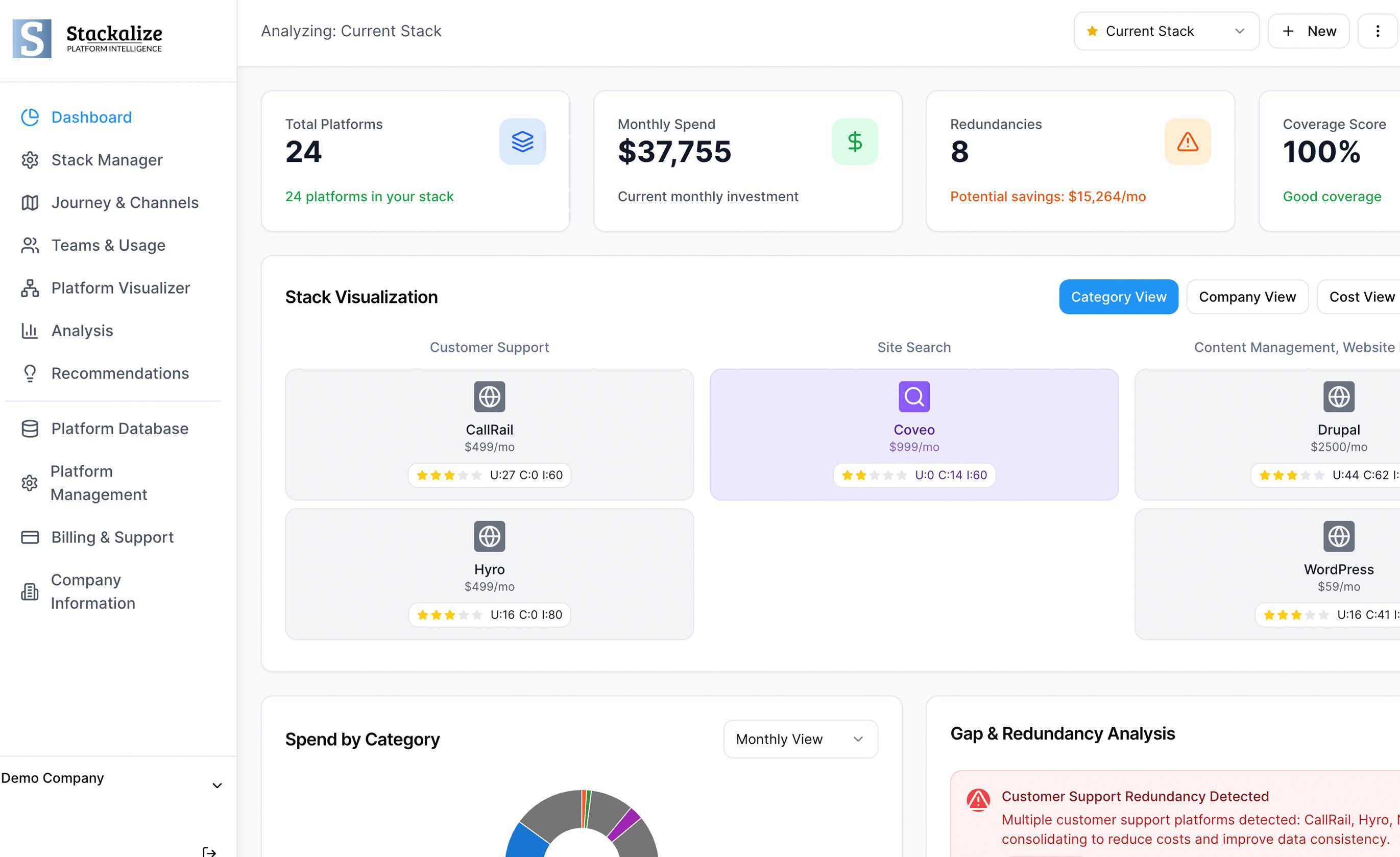
One of the biggest problems with a growing Martech stack is fragmentation.
A business might have one platform for CRM, another for email, another for advertising, another for analytics, and several more for content and automation.
Each tool may work well on its own, but problems appear when the systems cannot communicate properly.
A sales team may have information that the marketing team cannot easily access. An analytics platform may show customer activity that is not connected to the CRM. A campaign may therefore be planned using incomplete information.
In 2026, integration is becoming just as important as individual features.
Businesses are looking more closely at APIs, data synchronization, customer profiles, workflow connections, and platform compatibility.
The goal is simple: make the technology stack work like one connected system instead of a collection of separate tools.
4. AI Search Is Changing the Content Game
Search is changing.
People are no longer relying only on traditional search results to find answers. AI-powered search and conversational platforms are becoming another way to discover information.
That creates a new consideration for content marketers.
A page should not simply contain a target keyword. It should actually answer the question behind that keyword.
Useful content needs to be:
- Easy to understand
- Well organized
- Original
- Helpful
- Relevant to the reader
- Supported by trustworthy information
This does not mean traditional SEO has become irrelevant.
Instead, marketers need to think about search more broadly. Content should work for people first while also being structured clearly enough for modern search and AI systems to understand.
5. Personalization Will Become More Context-Aware
Personalization has been part of digital marketing for years.
The difference now is the amount of information Martech systems can process.
A customer who regularly reads articles about CRM software, for example, may be interested in content about customer data and automation rather than a completely general marketing message.
AI can help marketers identify these patterns and adjust communication accordingly.
But there is a fine line between useful personalization and excessive personalization.
Customers generally want relevant experiences, not messages that make them feel like every action they take is being watched.
The future of personalization is therefore likely to focus more on context and usefulness than simply using as much customer data as possible.
6. Marketing Automation Will Become More Flexible
Marketing automation has traditionally relied on fixed rules.
A customer performs an action, a trigger fires, and the system sends a predetermined response.
That approach is still useful, but customer behavior is rarely predictable enough to fit perfectly into one sequence.
Modern automation is becoming more adaptive.
For example, someone who downloads a beginner’s guide may enter an educational journey. Another visitor who repeatedly checks pricing information may receive a completely different follow-up.
Instead of treating every customer the same way, automation can respond to changing signals.
This can help marketing teams build journeys that feel more natural while reducing the amount of manual work required behind the scenes.
7. Privacy Will Become a Martech Priority
Marketing technology depends heavily on data, which makes privacy an important part of the technology strategy.
Companies need to think about how customer information is collected, stored, shared, and used.
Consent management, access controls, data security, retention policies, and responsible AI usage are becoming important considerations when building marketing systems.
This is particularly relevant as data-protection requirements continue to develop in different markets.
For marketers, privacy should not be treated as an afterthought.
It needs to be considered when selecting technology, connecting platforms, creating customer journeys, and designing personalization strategies.
A Martech system should help a company use information effectively while maintaining appropriate controls over that information.
8. Analytics Will Focus More on What Happens Next
Marketing reports have traditionally focused on explaining past performance.
How many people clicked?
How many leads were generated?
Which campaign produced the most conversions?
Those questions are still important, but marketers increasingly want analytics to help them decide what to do next.
Modern Martech can bring together campaign data, customer behavior, and performance signals to give teams faster visibility into what is happening.
This can make it easier to identify a campaign that is losing momentum or recognize an audience segment that is responding particularly well.
The shift is from reporting performance to supporting decisions.
That difference may seem small, but it can significantly change how marketing teams use analytics.
9. Martech Stacks May Become Simpler and Better Connected
More tools do not necessarily mean better marketing.
In some organizations, the Martech stack has become so complicated that teams spend significant time moving information between platforms or learning how different systems work.
This creates another trend for 2026: simplification.
Businesses may increasingly look for platforms that cover multiple needs or integrate smoothly with the tools they already use.
Instead of asking, “What new tool should we add?” marketers may start asking:
“Does this technology solve a real problem, and will it work with the rest of our stack?”
That change in thinking can help reduce unnecessary complexity.
10. Human Creativity Will Still Have a Place
AI can create content quickly.
But marketing is not only about speed.
A successful campaign still needs a strong idea, a clear message, a recognizable voice, and an understanding of the audience.
AI can help with research, ideation, production, and analysis. It can save marketers considerable time on repetitive work.
But humans still bring experience, creativity, judgment, emotion, and context to the process.
That balance is important.
The future is unlikely to be simply “AI versus humans.” A more realistic direction is AI supporting people while people remain responsible for the ideas and decisions that matter most.
How These Trends Connect
The interesting part of Martech in 2026 is that these trends do not exist separately.
First-party data supports personalization.
Personalization depends on reliable customer information.
Automation uses customer signals to determine what happens next.
Analytics measures the results.
AI can help connect and interpret these processes.
Privacy provides the boundaries for how the information should be used.
This creates a connected marketing cycle:
Data → Insight → Action → Customer Experience → Measurement
The better these pieces work together, the more useful the Martech environment can become.
What Should Marketers Focus on in 2026?
Marketers do not necessarily need to adopt every new technology they see.
Instead, they can start with the fundamentals.
Improve Data Quality
Before adding sophisticated AI or automation, make sure customer data is accurate, organized, and usable.
Strengthen Integrations
Look for gaps between the CRM, analytics, automation, advertising, and content systems.
Use AI Where It Adds Real Value
AI can be particularly useful for repetitive tasks, analysis, content support, and workflow assistance. It should not be introduced simply because it is trending.
Prepare for Changing Search Behavior
Create content that answers real questions and provides useful information instead of focusing only on keyword placement.
Build Privacy Into the Strategy
Consider consent, data handling, security, and governance when planning Martech workflows.
Keep Humans Involved
Technology can improve efficiency, but marketers still need to provide direction, creativity, judgment, and brand understanding.
Conclusion
The Martech landscape in 2026 is becoming more connected, automated, and intelligent.
AI agents, first-party data, integrated platforms, adaptive automation, AI search, contextual personalization, privacy-focused systems, and faster analytics are all influencing the way digital marketing works.
But adopting technology is not the real objective.
The real objective is to use technology to understand customers better, improve marketing experiences, reduce unnecessary manual work, and make better-informed decisions.
For businesses, the next stage of Martech will not necessarily be about having the largest technology stack.
It will be about having a smarter, better-connected, and more purposeful one.
As digital marketing continues to evolve, the brands that combine technology with human creativity and thoughtful strategy will be better prepared to adapt to whatever comes next.
Frequently Asked Questions
What are the emerging Martech trends in 2026?
Key Martech trends in 2026 include agentic AI, hyper-personalization, AI-powered automation, real-time customer data, privacy-first marketing, and advanced marketing analytics.
How will AI disrupt digital marketing in 2026?
AI will transform digital marketing by automating campaigns, creating personalized customer experiences, analyzing large datasets, optimizing content, and helping marketers make faster data-driven decisions.
Why is hyper-personalization becoming important in Martech?
Hyper-personalization uses customer data, AI, and real-time behavior insights to deliver more relevant content, offers, and experiences across different marketing channels.
What role will marketing automation play in 2026?
Marketing automation will help businesses streamline repetitive tasks, manage customer journeys, trigger personalized campaigns, improve lead nurturing, and measure marketing performance more efficiently.