







Customers today expect more than generic advertisements and promotional emails. They want brands to understand their interests, respect their preferences, and recommend products or services that genuinely match their needs. At the same time, people are becoming more careful about how businesses collect and use their personal information.
This shift is encouraging marketers to rethink traditional data collection methods. Instead of relying entirely on browsing behavior, tracking technologies, and assumptions, businesses are beginning to ask customers directly what they want. This is where zero-party data becomes important.
Zero-party data allows customers to voluntarily share information about their preferences, interests, expectations, and purchasing intentions. It gives businesses a clearer understanding of their audiences while allowing customers to have more control over their information.
As marketing becomes increasingly customer-focused, zero-party data is creating new opportunities for meaningful personalization. It is helping brands move beyond general targeting and build experiences around what customers actually want.
What Is Zero-Party Data?
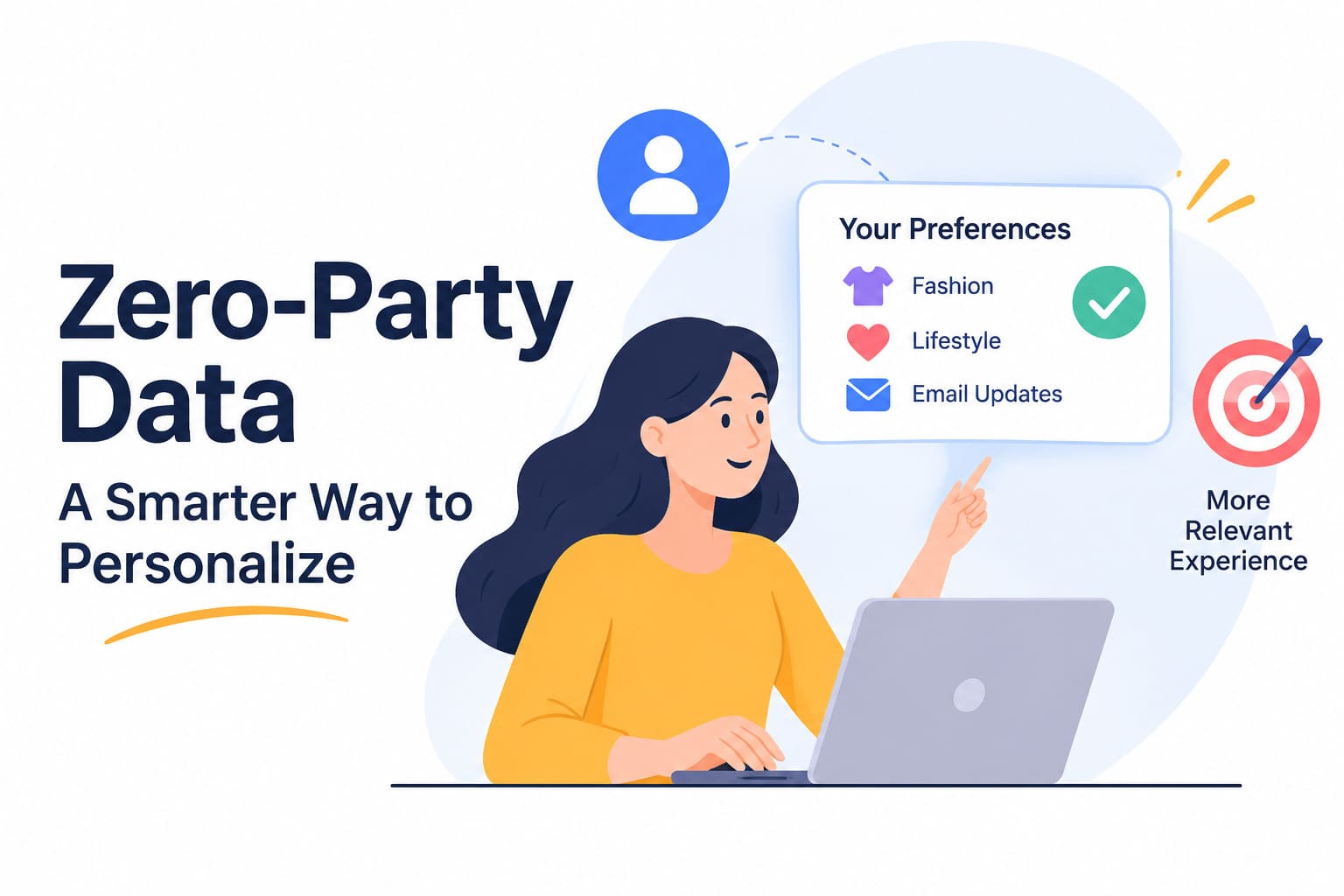
Zero-party data refers to information that customers intentionally and proactively share with a brand. This information can include their product preferences, personal interests, communication choices, shopping intentions, and the types of content they would like to receive.
For example, imagine visiting an online clothing store. Instead of analyzing your browsing history to guess your style, the website asks you about your preferred clothing categories, favorite colors, and shopping interests. When you voluntarily provide those details, the business receives zero-party data.
Unlike information collected through tracking technologies, zero-party data comes directly from the customer’s willingness to share.
Businesses commonly collect this information through:
- Customer preference centers
- Online quizzes and interactive surveys
- Product recommendation questionnaires
- Registration and sign-up forms
- Customer feedback forms
- Shopping preference questions
- Loyalty program profiles
The main advantage is that brands can understand customer expectations without depending entirely on assumptions about their online behavior.
Why Customer Personalization Needs a Different Approach
Personalization has become an important part of modern marketing. Customers often receive product recommendations, promotional emails, website suggestions, and advertisements based on their previous interactions with a brand.
However, traditional personalization methods do not always deliver relevant experiences.
A customer might visit a product page simply to compare prices, but the business may interpret that activity as strong purchasing interest. As a result, the customer could continue receiving advertisements for a product they never intended to buy.
This creates a gap between what businesses assume and what customers actually want.
Zero-party data helps address this challenge by allowing people to communicate their preferences directly. Rather than making decisions based only on digital activity, marketers can use information customers have willingly provided.
This creates an opportunity to make personalization more relevant, transparent, and customer-focused.
How Zero-Party Data Is Transforming Customer Personalization
1. Creating More Relevant Product Recommendations
Product recommendations are more useful when they reflect genuine customer interests.
For example, an online skincare store can ask visitors about their skin type, preferred product categories, and skincare goals. Based on their answers, the business can suggest products that better match their preferences.
This approach reduces irrelevant recommendations and helps customers discover products that suit their needs.
It also makes the shopping experience feel more helpful rather than overly promotional.
2. Making Email Marketing More Meaningful
Email marketing becomes less effective when every subscriber receives the same promotional message.
Zero-party data gives marketers an opportunity to organize subscribers according to their interests and communication preferences.
For example, a marketing technology company might ask subscribers whether they are interested in SEO, marketing automation, customer data platforms, or artificial intelligence in marketing.
The company can then share relevant articles, product updates, and educational resources based on those interests.
Instead of filling inboxes with unrelated messages, businesses can create email experiences that provide more value to each subscriber.
3. Improving Customer Segmentation
Traditional customer segmentation often depends on demographic information, purchasing history, or website activity.
Although these methods remain useful, they do not always explain why customers make particular decisions.
Zero-party data adds another layer of understanding by revealing what customers explicitly say about their interests and intentions.
For instance, two customers may purchase the same software product but have completely different goals. One may want to improve team productivity, while the other may be interested in automating repetitive tasks.
By understanding these differences, marketers can create more meaningful audience segments and deliver content that addresses specific needs.
4. Building Trust Through Transparency
Customers are more likely to engage with brands when they understand why information is being requested and how it will be used.
Zero-party data supports a more transparent relationship because customers actively decide what information to share.
However, simply asking questions does not automatically create trust. Businesses should clearly explain the purpose of collecting information, avoid unnecessary questions, and respect customer preferences.
For example, if someone chooses to receive educational content instead of promotional emails, the brand should respect that choice.
When businesses handle shared information responsibly, personalization can become part of a stronger customer relationship.
5. Supporting More Personalized Website Experiences
A website does not need to display identical content to every visitor.
With zero-party data, businesses can adjust certain website experiences according to customer preferences.
For example, a visitor interested in marketing automation could see relevant articles, educational resources, and software-related content. Another visitor interested in SEO could receive recommendations focused on search visibility and content performance.
These experiences help customers find useful information without navigating through unrelated content.
Zero-Party Data vs. First-Party Data: Understanding the Difference
Zero-party data and first-party data are closely related, but they are not the same.
First-party data is information a business collects directly through its own interactions with customers. It can include website activity, purchase history, account information, and engagement with marketing campaigns.
Zero-party data, on the other hand, is information customers intentionally share with a business.
For example:
- Zero-party data: A customer tells a brand that they prefer eco-friendly products.
- First-party data: The brand records that the customer purchased an eco-friendly product from its website.
Both types of information can support customer personalization. When used together responsibly, they can help marketers understand not only what customers do but also what they say they want.
Practical Ways Businesses Can Collect Zero-Party Data
Collecting useful customer information does not require complicated technology. Businesses can begin with simple, relevant interactions.
Use Short Preference Surveys
Ask customers about their interests, preferred products, or communication choices. Keep surveys short so that people can complete them without feeling overwhelmed.
Create Interactive Quizzes
Quizzes can make information sharing more engaging. For example, a beauty retailer might offer a product-matching quiz that helps customers discover suitable skincare options.
Offer Preference Centers
Allow customers to manage their interests, email frequency, and content preferences. This gives people greater control over their interactions with a brand.
Ask Relevant Questions During Registration
Registration forms can include optional questions about customer interests. Businesses should avoid collecting information that is not necessary for the experience.
Collect Feedback After Purchases
Post-purchase questions can help brands understand customer satisfaction, product expectations, and future interests.
The goal should not be to collect as much information as possible. It should be to collect information that genuinely improves the customer experience.
Challenges Businesses Should Consider
Although zero-party data offers several advantages, implementing it effectively requires careful planning.
Customer participation: People may not always want to complete surveys or share personal preferences. Businesses should make the process simple and explain the benefits of participating.
Data accuracy: Customer interests can change over time. A preference shared several months ago may no longer reflect what someone wants today.
Data management: Businesses need suitable systems to organize customer responses and make relevant information available to marketing teams.
Privacy and consent: Brands should explain how information will be used, collect only what is necessary, and provide appropriate ways for customers to update or withdraw their preferences.
Personalization balance: Using every available customer detail can make marketing feel uncomfortable. Personalization should be helpful without becoming intrusive.
Addressing these challenges helps businesses build a more sustainable approach to customer data.
The Future of Zero-Party Data in Marketing
As customer expectations continue to evolve, zero-party data is likely to become an increasingly valuable part of digital marketing strategies.
Artificial intelligence and marketing automation can help businesses organize customer preferences, identify relevant content, and deliver more personalized experiences. However, these technologies are most useful when the underlying information is meaningful and responsibly collected.
For example, an AI-powered marketing platform could use a customer’s stated interest in email automation to recommend relevant guides, webinars, or product updates. Marketing automation could then deliver those resources through the customer’s preferred communication channel.
Businesses may also develop more interactive experiences, where customers can update their preferences and receive recommendations as their needs change.
The future of personalization will not simply be about collecting more customer information. It will be about understanding people better, communicating clearly, and using shared information in ways that provide genuine value.
Conclusion
Zero-party data is changing the way businesses approach customer personalization. Instead of depending entirely on browsing activity or assumptions, brands can learn directly from customers who willingly share their interests, preferences, and expectations.
This approach can support more relevant product recommendations, meaningful email campaigns, better audience segmentation, and stronger customer relationships.
However, successful personalization requires more than collecting customer preferences. Businesses must respect privacy, explain how information is used, and make sure every interaction offers something useful in return.
As digital marketing continues to evolve, brands that listen to their customers and use their preferences responsibly will be better positioned to create personalized experiences that feel genuinely valuable.
Frequently Asked Questions
1. What is zero-party data in customer personalization?
Zero-party data is information customers willingly share with brands, including their interests, preferences, shopping habits, and expectations. It helps businesses create more relevant and personalized experiences.
2. Why is zero-party data important for modern marketing?
Zero-party data helps marketers understand what customers actually want instead of relying only on browsing behavior. This allows brands to deliver relevant recommendations, personalized emails, and meaningful content.
3. How can businesses collect zero-party data?
Businesses can collect zero-party data through online surveys, interactive quizzes, preference forms, customer feedback, and registration questionnaires. These methods allow customers to share their preferences voluntarily.
4. How does zero-party data improve customer trust?
It gives customers more control over the information they share. When businesses explain why they collect information and use it responsibly, they can build transparent relationships and improve customer confidence.