







Marketing has always involved a lot of moving parts. A marketer may start the morning by checking campaign performance, spend the afternoon creating content, and finish the day reviewing customer data or planning the next campaign.
AI is changing how much of this work gets done.
Today, marketers can use AI to brainstorm campaign ideas, analyze customer behavior, create content, improve advertising campaigns, automate repetitive tasks, and find useful patterns in large amounts of data. The challenge is no longer finding an AI tool. There are hundreds of them.
The real challenge is deciding which AI marketing tools are actually useful for your business.
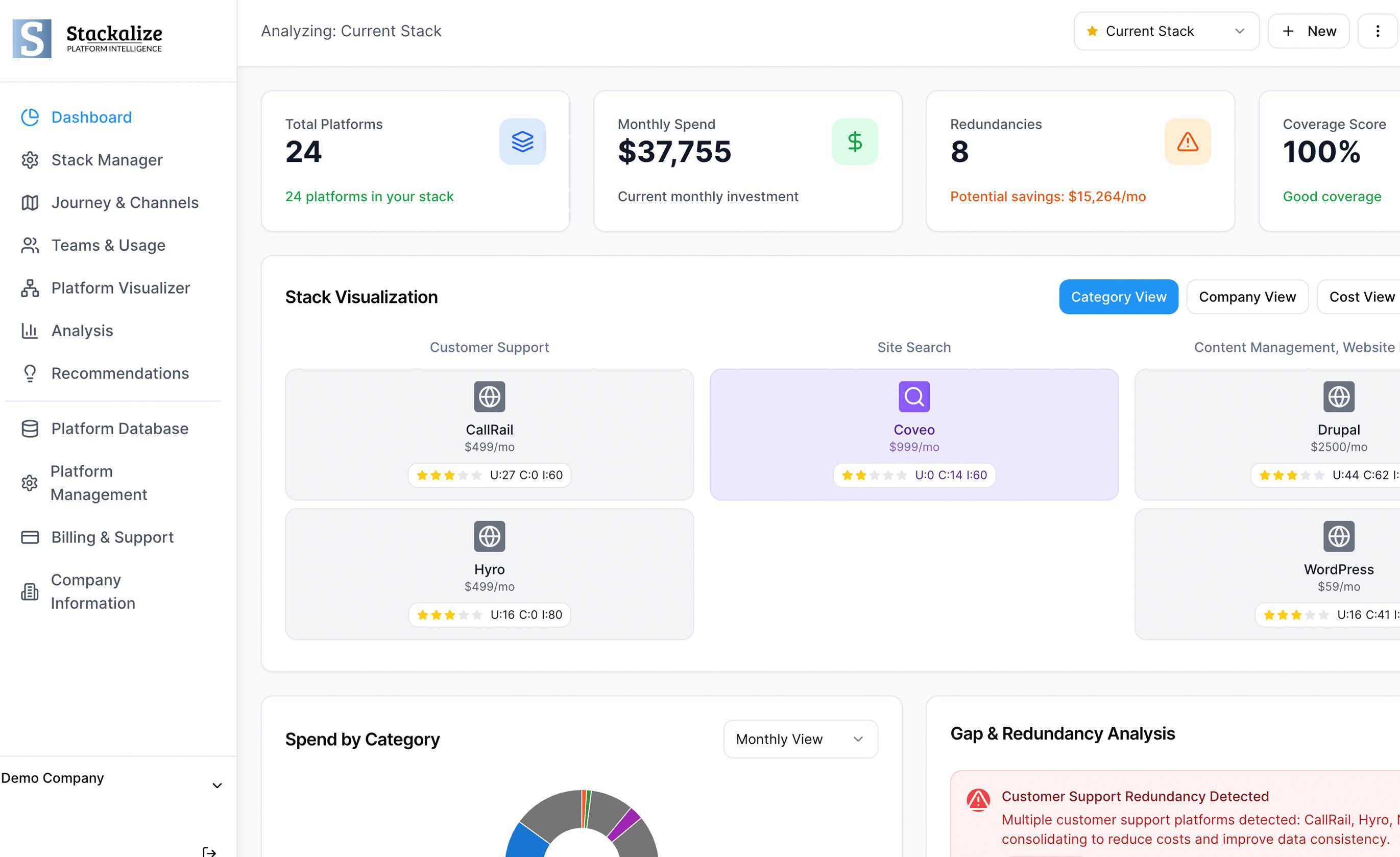
In 2026, AI has become part of many everyday marketing platforms rather than something completely separate from the marketing stack. Marketers are using it across content creation, personalization, automation, advertising, SEO, analytics, and customer engagement.
This guide looks at some of the most useful AI marketing tools and, more importantly, explains where they can fit into a modern marketing workflow.
What Are AI Marketing Tools?
AI marketing tools are software applications that use artificial intelligence to help marketers complete tasks that would otherwise require considerable manual effort.
Some tools focus on one particular area, while others cover several marketing functions.
For example, an AI platform might help you:
- Write a first draft of a blog post
- Generate social media ideas
- Analyze campaign performance
- Research keywords
- Create advertising variations
- Personalize customer messages
- Automate marketing workflows
- Identify potential customer segments
- Create images or other creative assets
- Summarize large amounts of marketing data
The important word here is help.
AI can make marketing work faster, but it does not automatically understand your customers, your brand personality, or your business priorities. Those decisions still need human input.
Why Are AI Marketing Tools Important in 2026?
The volume of marketing work has increased significantly.
Customers expect relevant messages. Businesses need content for multiple channels. Advertising campaigns require constant testing. Customer data keeps growing, and marketers are expected to turn that data into useful decisions.
Trying to manage everything manually can quickly become overwhelming.
AI can take care of some repetitive tasks and give marketers more time to focus on the work that requires experience and judgment.
For example, instead of spending an hour creating several basic headline variations, a marketer can use AI to generate starting points and then spend that saved time deciding which message actually fits the audience.
This distinction matters.
The goal isn’t to let AI do everything. The goal is to let AI handle more of the repetitive work while people remain responsible for strategy, creativity, and important decisions.
Research from HubSpot’s 2026 State of Marketing report similarly shows that marketers are using AI across content creation, media production, advertising optimization, automation, brainstorming, and strategic planning.
Best AI Marketing Tools of 2026
There isn’t one tool that can be called the best AI marketing platform for every company.
A small business may need a simple content and automation solution, while a larger organization may need AI connected to its CRM, advertising platforms, analytics systems, and customer data.
Here are several tools worth considering based on different marketing needs.
1. ChatGPT for Marketing Ideas and Content Support
ChatGPT can be useful at almost every stage of the marketing process.
Marketers can use it to brainstorm campaign ideas, create content outlines, develop social media concepts, organize research, draft emails, generate customer questions, and explore different messaging angles.
One of its biggest strengths is flexibility.
Instead of being restricted to one specific marketing task, it can support different activities depending on how it is used.
But there is an important catch. The first AI-generated answer should rarely be treated as the final version.
A marketer should add brand knowledge, verify important information, remove generic language, and make sure the final content sounds like the company rather than a machine.
2. Jasper for Marketing Content
Jasper is built with marketing teams in mind and focuses heavily on content creation and brand communication.
It can be useful when a company regularly needs marketing copy for campaigns, advertisements, emails, landing pages, and other channels.
For larger teams, maintaining consistency can be difficult. Different people may describe the same product in completely different ways.
A platform that supports brand voice and structured content workflows can help reduce that problem.
Still, the tool should be treated as a writing assistant rather than an automatic publishing machine.
3. HubSpot for AI-Powered Marketing and CRM
HubSpot combines CRM, marketing, sales, customer service, and automation capabilities.
That makes it interesting for businesses that want customer information and marketing activity to work together.
AI can support different parts of the HubSpot ecosystem, including content, customer communication, automation, and data analysis.
The biggest advantage of this type of platform is connectivity.
Instead of having one tool for email, another for customer records, another for automation, and another for reporting, businesses can bring several functions into one broader system.
For companies already using HubSpot, its AI capabilities can therefore be more useful than adopting another standalone AI application.
4. Semrush for SEO and Marketing Research
SEO is another area where AI has become increasingly useful.
Semrush provides tools for keyword research, competitor analysis, content planning, SEO monitoring, and other digital marketing activities.
AI can make research faster, but it shouldn’t replace basic SEO judgment.
For example, a keyword may have a large search volume but still be irrelevant to your audience. Another keyword may have lower traffic but bring visitors who are much more likely to become customers.
Good SEO is not simply about finding popular keywords.
It is about understanding what people are searching for and why.
5. Canva for AI-Assisted Visual Content
Not every marketing team has an in-house designer.
That is where platforms such as Canva can be helpful.
AI-assisted design features can help marketers create visual concepts, adapt designs, generate content ideas, and prepare assets for different channels.
This can be particularly useful for social media posts, presentations, advertisements, blog graphics, and other everyday marketing materials.
However, AI-generated design still needs human direction.
A business should maintain consistent colors, typography, imagery, messaging, and branding instead of allowing every AI-generated asset to look completely different.
6. Mailchimp for Email Marketing
Email remains an important marketing channel, particularly for businesses that need to nurture leads or stay connected with existing customers.
Mailchimp combines email marketing, automation, audience management, analytics, and AI-assisted features.
AI can help marketers work on areas such as campaign ideas, email copy, subject lines, audience segmentation, and performance analysis.
But there is a simple rule worth remembering:
Personalization is more than adding someone’s first name to an email.
A useful email should reflect what the recipient actually needs or is likely to care about.
7. Zapier for Marketing Automation
Marketing often involves moving information between different applications.
Someone fills out a form.
That information goes into a CRM.
A notification is sent to a salesperson.
An email sequence starts.
A record is added to another system.
Doing this manually can waste a surprising amount of time.
Zapier helps connect different applications and automate these kinds of workflows. Its AI capabilities can make it easier for users to create or manage some automations.
For small marketing teams in particular, removing repetitive administrative work can have a noticeable impact.
AI Marketing Tools by Marketing Function
Instead of asking, “Which AI tool is the best?” it is often better to ask, “Which part of my marketing process needs improvement?”
| Marketing Goal | Suitable AI Tool Category |
|---|---|
| Blog and copywriting | AI writing tools |
| Keyword research | SEO platforms |
| Graphic creation | AI design tools |
| Email campaigns | Email marketing platforms |
| Customer management | CRM platforms |
| Workflow automation | Automation platforms |
| Advertising optimization | Advertising platforms |
| Reporting | Analytics platforms |
| Social media | Social media platforms |
| Customer conversations | AI chatbot platforms |
This approach can prevent businesses from buying several tools that essentially perform the same job.
What Makes an AI Marketing Tool Worth Using?
A tool can have dozens of impressive features and still be a poor choice.
Before adding an AI platform to your MarTech stack, consider a few practical questions.
Does It Solve a Real Problem?
Don’t purchase a tool simply because everyone is talking about it.
Identify the problem first.
Maybe your team spends too much time creating content. Perhaps campaign reporting takes too long. Maybe customer data is spread across several platforms.
Once the problem is clear, it becomes much easier to find the right solution.
Does It Work With Your Existing Tools?
Integration matters more than many businesses realize.
If an AI platform cannot communicate with your CRM, website, analytics system, email platform, or advertising tools, it may create more work instead of reducing it.
AI tools that fit naturally into existing workflows tend to be easier for teams to adopt.
Is It Easy for Your Team to Use?
A sophisticated platform isn’t useful if nobody wants to use it.
Consider training requirements, usability, available support, and how easily the tool fits into your team’s existing routine.
Can You Measure the Results?
AI adoption should have a purpose.
Depending on the use case, you might measure:
- Time saved
- Leads generated
- Conversion rate
- Customer engagement
- Advertising performance
- Content production
- Marketing costs
- Revenue
- Customer retention
If you cannot connect the tool to a meaningful outcome, reconsider whether you actually need it.
The Biggest Mistake: Using AI Without a Human Voice
This is one of the most important issues in AI marketing today.
When everyone has access to the same technology, producing content becomes easier.
That does not mean producing good content becomes easier.
Large volumes of generic AI-written material can make brands sound remarkably similar.
HubSpot’s 2026 research highlights this challenge, noting that marketers are increasingly concerned about differentiation in an AI-saturated content environment.
The solution isn’t to stop using AI.
Instead, businesses should use AI for speed while adding something AI cannot provide on its own: real experience, opinions, customer understanding, brand personality, and original perspective.
For example, AI can help create the first draft of an article.
A human can then add:
- Personal observations
- Real examples
- Original research
- Industry experience
- Customer questions
- Brand-specific insights
- A natural writing style
That combination is much more valuable than simply publishing whatever an AI system produces.
Common AI Marketing Mistakes to Avoid
1. Publishing Everything AI Generates
Not every AI output is accurate, useful, or appropriate for your audience.
Review everything before publishing.
2. Buying Too Many Tools
A complicated MarTech stack can become difficult and expensive to manage.
Choose tools based on actual needs.
3. Ignoring Data Privacy
AI marketing systems may process customer and business information.
Before connecting sensitive data, understand the platform’s privacy policies, permissions, security practices, and data controls.
4. Focusing Only on Content
AI has applications far beyond writing.
Marketing teams can use it for analysis, personalization, automation, forecasting, customer service, advertising, and workflow management.
5. Forgetting the Customer
It is easy to become excited about new technology and forget why the technology exists.
Marketing should ultimately make it easier for businesses to understand and serve their customers.
How to Build a Smarter AI Marketing Stack
You don’t need to introduce ten AI tools at once.
Start small.
First, identify one repetitive task that takes too much time. Introduce a suitable AI solution and measure the result.
Then look for the next opportunity.
For example:
Step 1: Identify a repetitive marketing task.
Step 2: Choose one tool that can improve it.
Step 3: Test the tool with a limited workflow.
Step 4: Check the quality and business results.
Step 5: Train the team.
Step 6: Expand its use only if it provides real value.
This approach is much safer than buying a large collection of AI platforms and trying to implement everything simultaneously.
What Does the Future of AI Marketing Look Like?
AI marketing is moving toward more connected and automated workflows.
Instead of using AI only to write a paragraph or generate an image, marketers are beginning to use AI for broader processes involving research, analysis, personalization, campaign optimization, and automation.
That shift is often described as agentic marketing, where AI systems can handle multiple steps of a workflow rather than completing only one isolated task.
Research from BCG’s 2026 CMO survey shows that AI is already driving major transformation discussions in marketing, although many organizations are still at an early stage of turning those ambitions into fully developed workflows.
The future therefore isn’t simply about having more AI tools.
It is about having better-connected tools that solve real problems.
Final Thoughts
The best AI marketing tools of 2026 are not necessarily the newest or most advanced platforms.
The right tool is the one that makes your marketing process better.
It might help your team produce content faster. It might reduce repetitive work. It might uncover customer insights that would otherwise be missed. Or it might help your team personalize campaigns at a scale that would be difficult to manage manually.
But AI should remain part of the marketing strategy, not become the strategy itself.
The most effective approach is a combination of AI efficiency and human thinking.
Use AI to save time.
Use data to make better decisions.
Use automation to remove unnecessary work.
And use human creativity and customer understanding to make the final marketing experience genuinely useful.
That balance will matter even more as AI becomes a normal part of the MarTech stack throughout 2026 and beyond.
Frequently Asked Questions
1) What are AI marketing tools?
AI marketing tools are software platforms that use artificial intelligence to help marketers with tasks such as content creation, customer analysis, automation, advertising, SEO, and campaign optimization.
2) Which AI marketing tools are useful in 2026?
Useful AI marketing tools in 2026 include platforms for content creation, SEO, CRM, email marketing, design, analytics, advertising, and workflow automation. The right choice depends on your marketing goals and existing technology stack.
3) How can AI marketing tools help businesses?
AI marketing tools can reduce repetitive work, speed up content production, analyze large amounts of data, personalize customer experiences, and help marketing teams make faster and more informed decisions.
4) Should businesses rely completely on AI for marketing?
No. AI should support marketing teams rather than replace human judgment. Marketers should review AI-generated content, verify information, protect customer data, and use their own strategy and creativity to guide marketing decisions.