










Digital marketing is changing at a pace that can be difficult to keep up with. New technologies, changing customer expectations, artificial intelligence, and evolving search behavior are influencing how businesses attract, engage, and retain customers.
For marketing teams, 2026 is not simply about adding more technology to the existing Martech stack. The bigger opportunity is to use technology more intelligently. Businesses are looking for ways to connect customer data, automate repetitive activities, improve personalization, and understand campaign performance more clearly.
This is where the latest Martech trends for 2026 become important.
From AI-powered marketing and conversational search to first-party data, customer data platforms, automation, and real-time analytics, Martech is becoming more connected and customer-focused.
Let’s explore the key trends shaping digital marketing in 2026 and how businesses can prepare for them.
What Are Martech Trends?
Martech trends are emerging technologies, strategies, and practices that influence how businesses plan, execute, measure, and improve their marketing activities.
The modern Martech ecosystem can include:
- Customer Relationship Management (CRM) platforms
- Marketing automation systems
- Customer Data Platforms (CDPs)
- Analytics and reporting tools
- Content management platforms
- Artificial intelligence solutions
- Advertising technology
- Personalization platforms
- Customer experience technology
- Search and content optimization tools
The important change in 2026 is that these technologies are increasingly expected to work together instead of operating as isolated systems.
1. Artificial Intelligence Is Becoming Part of Everyday Marketing
Artificial intelligence is no longer limited to experimental projects. Marketing teams are using AI across many everyday activities.
AI can help marketers research audiences, generate content ideas, analyze customer behavior, identify patterns, personalize communications, and automate repetitive tasks.
However, successful AI adoption is not simply about generating large amounts of content.
Businesses are becoming more focused on using AI where it can solve genuine marketing problems.
For example, a marketing team could use AI to identify customer segments, recommend relevant content, summarize campaign performance, or help sales and marketing teams understand customer intent.
The role of marketers is also changing. Instead of doing every task manually, marketers can increasingly focus on strategy, creativity, decision-making, and customer understanding while AI assists with repetitive work.
2. AI Search Is Changing the Way Customers Find Information
Search behavior is evolving.
People are increasingly using conversational interfaces and AI-powered search experiences to find answers instead of relying only on traditional keyword searches.
This creates a new consideration for digital marketers: content needs to be useful not only for search engines but also for people looking for direct, reliable answers.
Businesses can prepare by creating content that:
- Answers real customer questions
- Uses clear headings and logical sections
- Provides original insights
- Demonstrates subject knowledge
- Supports important claims with reliable information
- Gives readers practical answers
Traditional SEO still matters, but marketers now need to think more broadly about how their content can appear across different search and discovery experiences.
3. First-Party Data Is Becoming a Marketing Priority
Customer data is one of the most valuable assets in a modern marketing strategy.
Businesses can collect first-party data through websites, purchases, CRM interactions, forms, email engagement, customer accounts, surveys, and other direct interactions.
Unlike relying entirely on external audience data, first-party data gives businesses a direct understanding of their own customers.
But collecting data is only the beginning.
The real challenge is making sure the data is accurate, organized, accessible, and used responsibly.
Marketing teams should regularly check for duplicate records, outdated information, inconsistent customer details, and disconnected data sources.
Better data creates a stronger foundation for personalization, analytics, automation, and AI.
4. Customer Data Platforms Are Helping Connect Customer Information
Many businesses have customer information spread across several systems.
Website activity may exist in one platform. Sales information may sit inside a CRM. Email interactions may be stored somewhere else, while purchase information is managed through a commerce platform.
This fragmentation can make it difficult to understand the complete customer journey.
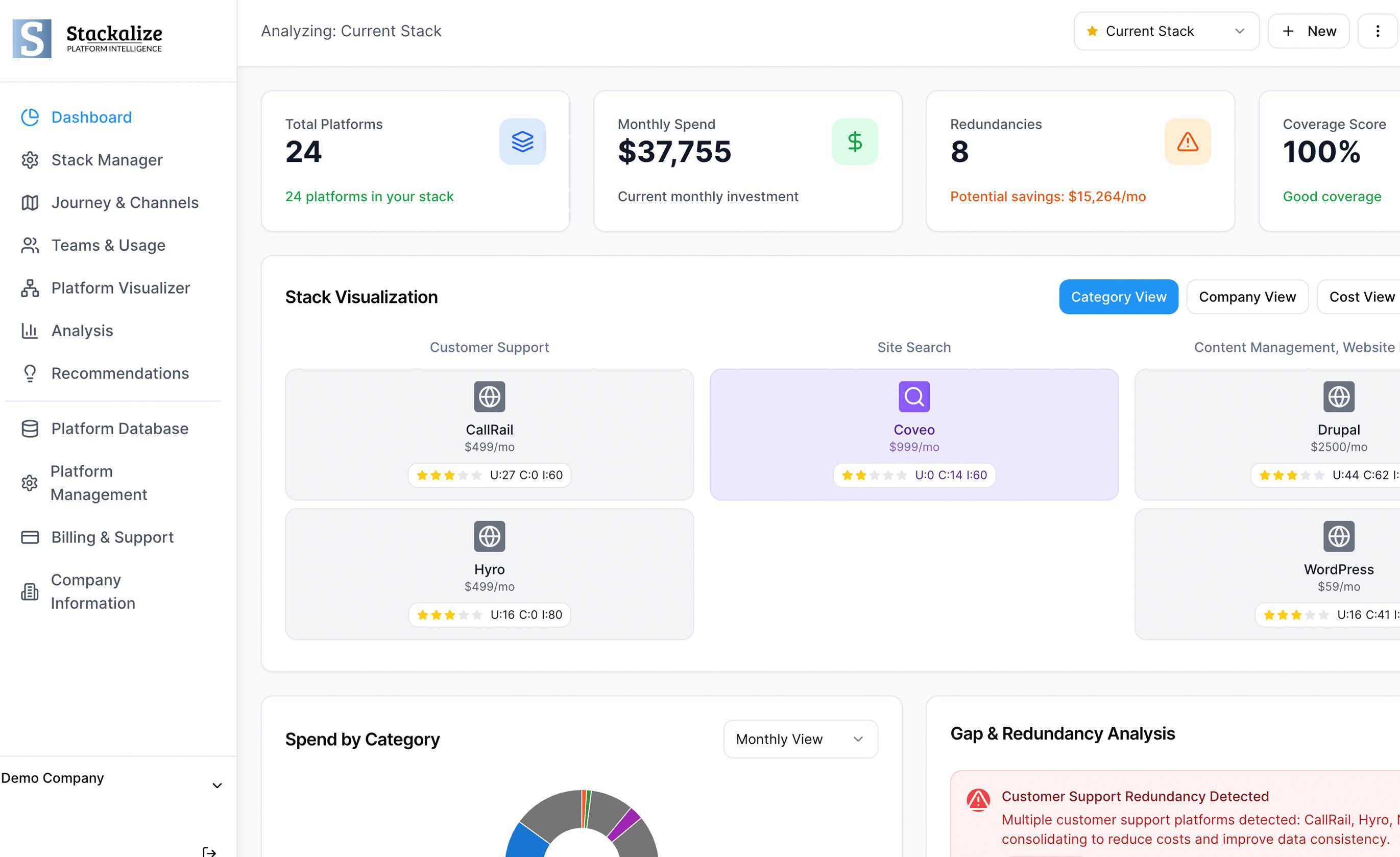
Customer Data Platforms, or CDPs, are becoming increasingly relevant because they can help organizations bring customer information together and create more unified customer profiles.
A connected customer-data environment can support activities such as:
- Audience segmentation
- Personalized campaigns
- Customer journey analysis
- Behavioral insights
- Marketing automation
- Cross-channel engagement
The goal is not simply to have another platform. The goal is to make customer information more useful across the marketing ecosystem.
5. Personalization Is Moving Beyond Basic Recommendations
Customers expect brands to understand their needs.
Personalization has therefore moved beyond simply using someone’s name in an email.
Modern marketing technology can use behavioral information, customer preferences, previous interactions, and other signals to create more relevant experiences.
For example, businesses can personalize:
- Website experiences
- Email campaigns
- Product recommendations
- Offers
- Content
- Advertising audiences
- Follow-up communication
AI can make this process more scalable by helping marketers identify patterns and determine which content or experience may be relevant to different customer segments.
At the same time, personalization needs to feel helpful rather than intrusive. Businesses should use customer information responsibly and maintain appropriate privacy practices.
6. Marketing Automation Is Becoming More Intelligent
Marketing automation has been around for years, but its role is expanding.
Instead of using automation only for scheduled email campaigns, businesses can now connect multiple marketing activities into broader customer journeys.
A simple automated journey might look like this:
Customer Interaction → Data Collection → Audience Segmentation → Automated Action → Measurement → Optimization
For example, when a customer interacts with specific content, the marketing system can record the behavior, place the customer into an appropriate segment, trigger a relevant communication, and measure what happens next.
This can reduce repetitive manual work while helping teams create more consistent customer experiences.
7. Real-Time Marketing Analytics Is Becoming More Important
Marketing teams need to understand what is happening while campaigns are running, not only after they have finished.
Real-time or near-real-time analytics can help marketers monitor important signals such as:
- Website engagement
- Lead activity
- Campaign performance
- Conversion rates
- Customer behavior
- Advertising performance
- Revenue-related metrics
With better visibility, marketers can identify problems earlier and make adjustments before a campaign runs its full course.
This also changes the role of marketing dashboards. A dashboard should not simply display numbers. It should help teams understand what those numbers mean and what action may be required.
8. Martech Integration Is Becoming a Business Requirement
One of the biggest problems with a growing Martech stack is disconnected technology.
A company may have excellent individual tools, but if those tools cannot exchange information effectively, marketers can still face fragmented data and inefficient workflows.
For example, a CRM, marketing automation platform, analytics system, and customer data platform may all contain different pieces of the same customer’s journey.
Integration helps bring those pieces together.
Before purchasing another Martech platform, businesses should ask:
- Does it integrate with our existing systems?
- Will it reduce or create another data silo?
- Can our team actually use it?
- Does it support our customer journey?
- Can we measure its business impact?
- Will it scale as the organization grows?
A smaller connected stack can sometimes be more useful than a large collection of disconnected tools.
9. Privacy and Responsible Data Use Are Becoming More Important
Technology gives marketers access to more customer information than ever before.
That creates an important responsibility.
Businesses need to consider privacy, consent, data security, governance, and transparency when collecting and using customer information.
This becomes especially important as AI and personalization become more deeply integrated into marketing systems.
A responsible Martech strategy should therefore consider privacy from the beginning rather than treating it as an afterthought.
Customers want relevant experiences, but they also expect businesses to handle their information carefully.
10. Customer Experience Is Connecting the Entire Martech Strategy
Marketing technology is increasingly being viewed through the lens of customer experience.
A customer does not think about which Martech platform is being used behind the scenes. They simply experience the website, email, advertisement, product interaction, support conversation, and other touchpoints as part of one relationship with a brand.
This means businesses need to think about the entire customer journey.
A connected Martech environment can help marketing teams create more consistent experiences across multiple channels.
The objective is not to automate every customer interaction. It is to remove unnecessary friction and make relevant interactions easier.
11. Human Creativity Still Has an Important Role
With AI becoming more capable, some marketers may wonder whether technology will eventually replace traditional marketing roles.
The reality is more nuanced.
AI can process information quickly and assist with repetitive activities, but human marketers still bring creativity, context, strategic thinking, empathy, and brand understanding to the process.
The strongest approach is often a combination of technology and human expertise.
AI can help with the workload.
People can focus on the decisions that require judgment and creativity.
How Can Businesses Stay Ahead of Martech Trends in 2026?
Keeping up with every new Martech product is not a practical strategy.
Instead, businesses can focus on building a strong foundation.
Audit the Existing Martech Stack
Start by reviewing the tools already being used.
Identify platforms that overlap, are underused, or create unnecessary complexity.
Improve Customer Data Quality
Clean and organize customer information before expanding AI, automation, or personalization initiatives.
Choose AI Use Cases Carefully
Instead of adopting AI simply because it is popular, identify specific marketing problems where AI can provide meaningful assistance.
Strengthen Integration
Connect important systems so that customer information can move efficiently between marketing, sales, analytics, and customer experience workflows.
Create Useful Content
Focus on content that genuinely answers customer questions instead of producing large quantities of generic material.
Measure Business Outcomes
Track metrics that connect marketing activity with meaningful outcomes rather than focusing only on surface-level engagement numbers.
Keep Privacy in Mind
Build appropriate data governance and privacy considerations into every major Martech initiative.
What Does the Future of Martech Look Like?
The future of Martech is moving toward greater connectivity.
AI, customer data, automation, analytics, personalization, and content are increasingly becoming parts of one larger marketing ecosystem.
Instead of asking, “Which new Martech tool should we buy?” businesses may increasingly need to ask:
“How can our technology work together to create a better customer experience and stronger business results?”
That shift in thinking can help marketing teams avoid unnecessary technology complexity while making better use of the platforms they already have.
Conclusion
The Martech trends for 2026 reflect a broader transformation in digital marketing.
Artificial intelligence is becoming part of everyday workflows. Search is becoming more conversational. First-party data is gaining importance. CDPs are helping businesses connect customer information. Automation is becoming more intelligent, while analytics and personalization are becoming increasingly central to marketing decisions.
But technology alone does not create better marketing.
Businesses still need clear strategies, reliable data, useful content, responsible data practices, and people who understand their customers.
The companies preparing for the next stage of Martech are not necessarily those using the largest number of tools. They are the ones learning how to connect technology with customer needs, business objectives, and meaningful marketing outcomes.
In 2026, staying ahead in digital marketing is less about chasing every new trend and more about building a smarter, connected, and customer-focused Martech strategy.
Frequently Asked Questions
1. What are the major Martech trends for 2026?
Major Martech trends for 2026 include AI-powered marketing, AI-driven search, first-party data, customer data platforms, marketing automation, personalization, real-time analytics, Martech integration, and privacy-focused data management.
2. How is AI changing digital marketing in 2026?
AI is helping marketers automate repetitive tasks, analyze customer behavior, personalize campaigns, generate content ideas, support customer interactions, and improve marketing workflows. Human strategy and oversight remain important when using AI.
3. Why is first-party data important for Martech?
First-party data gives businesses information collected directly from their customers and audiences. When properly organized, it can support personalization, audience segmentation, marketing automation, analytics, and more relevant customer experiences.
4. How can businesses stay ahead of Martech trends in 2026?
Businesses can stay prepared by auditing their Martech stack, improving data quality, choosing practical AI use cases, strengthening system integration, creating useful content, measuring business outcomes, and maintaining responsible data and privacy practices.