








Technology has changed the way people research markets, communicate with audiences, manage information, and make business decisions. For trading-related businesses, this shift has created new opportunities to use technology beyond traditional trading platforms.
One area gaining attention is Martech, or marketing technology.
Martech is generally associated with marketing campaigns, customer data, automation, analytics, and digital experiences. However, many of these capabilities can also be useful for trading websites, financial education platforms, trading communities, fintech companies, and businesses that operate around the financial markets.
In 2026, the focus is moving away from simply collecting more software. Businesses are increasingly looking at how different systems can work together, how data can be used effectively, and whether technology investments actually create measurable value. Current MarTech research also highlights integration, data activation, AI readiness, and ROI as important priorities.
What Is Martech?
Martech is short for marketing technology. It covers the software and digital platforms that help businesses plan, execute, automate, analyze, and improve their marketing activities.
Common examples include:
- CRM platforms
- Marketing automation software
- Analytics platforms
- Email marketing systems
- Content management systems
- SEO tools
- Customer data platforms
- Attribution software
- AI-powered marketing applications
The MarTech ecosystem has become extremely large. The 2026 landscape includes more than 15,000 marketing technology products, while the market is also experiencing significant changes as AI reshapes existing categories.
For trading-related businesses, the important question is not how many tools can be added to a stack. The real question is how technology can make research, communication, customer engagement, and measurement more organized.
Why Martech Matters for Trading Businesses
Trading businesses operate in an environment where information moves quickly. At the same time, audiences expect relevant content, fast communication, and convenient digital experiences.
This creates a natural connection between trading-related operations and marketing technology.
For example, a trading education website may need to:
- Understand what its readers are interested in
- Track which articles receive engagement
- Send relevant educational content
- Organize subscribers
- Measure campaign performance
- Automate repetitive communication
- Understand the customer journey
Martech can help bring these activities into a more organized system.
It is important to remember that Martech is not a substitute for a trading platform, market-data system, risk-management solution, or professional financial analysis.
1. Use Analytics to Understand Your Audience
Analytics can help trading-related businesses understand how people interact with their digital platforms.
Instead of guessing what an audience wants, marketers can examine actual behavior.
For example, analytics may show that visitors are particularly interested in:
- Technical analysis
- Trading technology
- AI in finance
- Market research
- Trading automation
- Financial education
- Investment technology
This information can influence future content and marketing decisions.
Analytics can also identify pages with strong engagement and areas where visitors frequently leave. Over time, these insights can help businesses improve their websites and create more useful experiences.
2. Automate Repetitive Marketing Activities
Not every marketing task needs to be completed manually.
Automation can handle repetitive activities while allowing teams to concentrate on strategy and content.
A simple example could be:
New Visitor → Content Engagement → Registration → Welcome Message → Relevant Content → Follow-Up
Automation can also support:
- Email sequences
- Lead nurturing
- Event reminders
- Content recommendations
- User onboarding
- Campaign reporting
- Audience segmentation
The advantage is not simply saving time. A well-designed automated workflow can also make communication more consistent.
3. Use AI Carefully and Strategically
AI is one of the biggest technology developments influencing MarTech in 2026.
AI can help marketing teams organize information, summarize research, analyze customer behavior, personalize content, and automate selected workflows.
For a trading-related business, AI could assist with activities such as:
- Summarizing financial content
- Organizing large amounts of information
- Identifying content trends
- Segmenting audiences
- Improving content recommendations
- Creating marketing reports
- Supporting customer communication
However, there is an important distinction between using AI to improve business workflows and using AI to predict profitable trades.
AI can support analysis and productivity, but it should not be presented as a guaranteed way to generate trading profits.
4. Connect CRM Data With Customer Journeys
A CRM can provide a central place for managing customer and audience information.
For example, a financial education company could categorize users based on their interests and interactions.
One person may regularly read beginner trading guides, while another may be interested in advanced technology and automation.
A CRM can help marketers understand these differences and create more relevant communication.
This can make the customer journey feel less generic.
Instead of sending identical messages to everyone, businesses can develop communication based on user interests and engagement.
5. Personalize Trading-Related Content
People do not all consume financial content for the same reason.
Some visitors may be learning the basics. Others may be researching advanced strategies or technology.
Personalization allows businesses to respond to these differences.
For example, someone who repeatedly reads about trading automation could be shown additional content related to:
- Algorithmic workflows
- Trading APIs
- Automation technology
- AI applications
- Data analytics
Someone interested in beginner education could instead receive introductory guides.
The objective is to make information more relevant without overwhelming the user.
6. Measure Marketing Attribution
A customer rarely discovers a business through one interaction.
A typical journey might look like this:
Search → Blog Article → Social Media → Email → Website → Registration
If a business only measures the final interaction, it may overlook the earlier touchpoints that helped create interest.
Attribution technology can help marketers understand how different channels contribute to conversions.
This becomes particularly valuable when businesses are investing in several channels at the same time.
Modern MarTech reporting increasingly emphasizes analytics, attribution, and connecting marketing activity with business outcomes.
7. Build a Connected Martech Stack
A good technology stack does not necessarily need dozens of platforms.
In fact, adding too many disconnected tools can create new problems.
A simple structure might include:
Website → CRM → Automation → Analytics → Reporting
Each system should have a clear responsibility.
For example:
- The website attracts visitors.
- The CRM organizes customer information.
- Automation manages repetitive workflows.
- Analytics measures behavior.
- Reporting turns data into useful insights.
Integration is becoming especially important in 2026 because businesses are dealing with more data and increasingly complex technology environments.
8. Make Data Part of the Decision-Making Process
Data becomes valuable when it helps a team make a better decision.
A trading-related business can monitor metrics such as:
- Website traffic
- Content engagement
- Email opens and clicks
- Lead conversions
- Customer retention
- Campaign performance
- Acquisition costs
- Revenue attribution
These numbers can help identify which marketing activities deserve more attention.
The goal should not be to create impressive dashboards filled with numbers. The goal is to find information that can actually improve decisions.
9. Combine Martech With Specialized Trading Technology
Martech and trading technology have different jobs.
A professional trading environment may use systems for:
- Market data
- Order execution
- Portfolio management
- Risk monitoring
- Trading algorithms
- Backtesting
- Financial analysis
Martech operates around the broader marketing and customer ecosystem.
For example, a fintech company could use specialized trading technology for its financial operations while using Martech for website management, customer engagement, email communication, analytics, and content distribution.
Keeping these roles clear can prevent technology teams from expecting one platform to solve every problem.
10. Prioritize Integration Over Tool Quantity
One of the easiest mistakes to make is assuming that a larger technology stack automatically means better performance.
It does not.
A company may have several powerful platforms but still struggle if those systems do not communicate with each other.
Before adding another tool, ask:
- What problem does it solve?
- Does it integrate with existing systems?
- Will it reduce manual work?
- Can its impact be measured?
- Does it improve the customer experience?
- Is the cost justified?
Research in 2026 suggests that the MarTech conversation is increasingly shifting from simply expanding the stack toward making existing technology work more effectively.
Common Martech Mistakes to Avoid
Choosing Too Many Tools
More software can create more complexity. Start with the tools that solve the most important problems.
Ignoring Data Quality
Incorrect or incomplete data can affect reporting, segmentation, and personalization.
Treating AI as a Trading Guarantee
AI can assist with research and workflows, but it cannot guarantee profitable trading outcomes.
Forgetting About Integration
Disconnected platforms can result in duplicated information and unnecessary manual work.
Measuring Only Traffic
Traffic is useful, but it does not tell the entire story. Engagement, conversions, retention, and business outcomes also matter.
How to Create a Martech Strategy for Trading
A practical strategy can be built in a few stages.
Step 1: Define Your Objective
Decide what you want technology to improve.
It could be audience growth, customer engagement, content performance, lead generation, or operational efficiency.
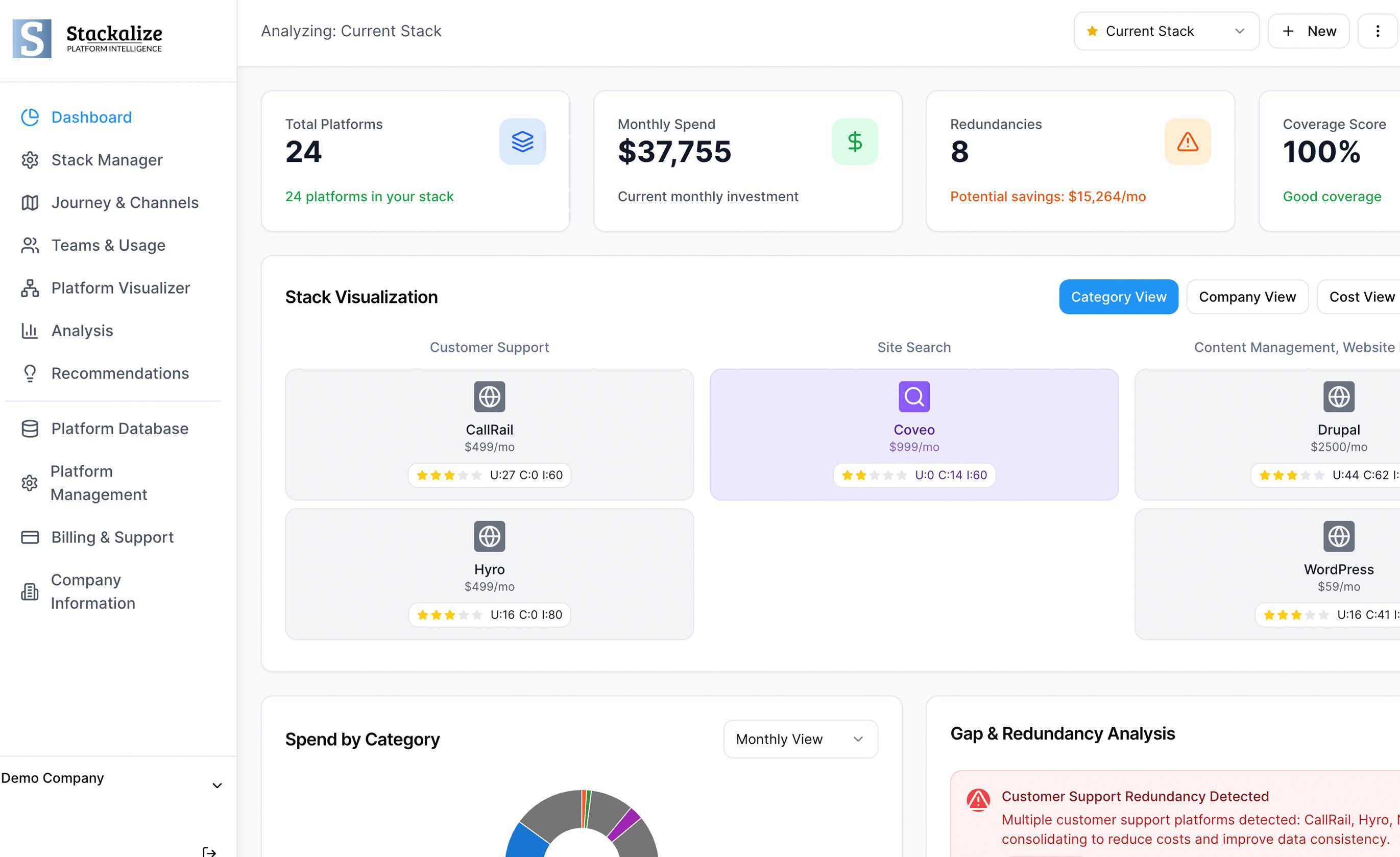
Step 2: Review Your Current Stack
List the platforms you already use.
Look for overlapping functions, unused software, and gaps between systems.
Step 3: Organize Your Data
Determine where customer, website, campaign, and engagement data are stored.
Good data organization makes later automation and analysis much easier.
Step 4: Connect the Important Platforms
Focus first on integrations that remove repetitive work or improve visibility.
Step 5: Automate Repetitive Tasks
Identify activities that happen regularly and determine whether automation can handle them.
Step 6: Introduce AI Where It Makes Sense
Use AI for appropriate research, analysis, personalization, and productivity tasks rather than adopting it simply because it is a trend.
Step 7: Measure the Outcome
After implementing a technology or workflow, check whether it actually improved performance.
If the results cannot be measured, it becomes difficult to know whether the investment is worthwhile.
What Does Martech Mean for Trading Success in 2026?
Trading success involves many factors, and technology is only one part of the picture.
Martech can contribute indirectly by helping trading-related businesses understand their audiences, improve communication, organize data, automate repetitive work, and measure marketing performance.
The biggest opportunity in 2026 is not simply having more technology. It is creating a smarter connection between data, automation, AI, analytics, content, and customer experience.
A well-planned MarTech strategy can help a trading-focused business operate more efficiently and make better-informed marketing decisions.
Final Thoughts
The role of technology in the trading ecosystem continues to evolve.
Martech may not execute trades or replace specialist financial systems, but it can play an important supporting role. Analytics can reveal audience behavior, automation can simplify repetitive work, CRM platforms can organize customer relationships, and AI can assist with research and marketing workflows.
The strongest strategy is therefore not to collect every new tool available.
Instead, choose technology based on clear business needs, connect the systems that matter, protect data quality, and measure the results.
In 2026, smarter technology use matters more than simply having more technology.
When Martech is planned around real objectives, it can become a useful part of a modern trading-related business ecosystem—helping teams work more efficiently, understand their audiences better, and build stronger digital experiences.
Disclaimer: This article is for informational purposes only. It discusses marketing technology and business workflows related to trading. It is not financial advice or a recommendation to buy or sell any financial instrument.
Frequently Asked Questions
1. How can Martech support trading businesses?
Martech can support trading businesses through analytics, automation, CRM, personalization, content management, and marketing performance tracking.
2. Can AI and Martech guarantee trading profits?
No. AI and Martech can support research, analysis, communication, and business workflows, but they cannot guarantee profitable trading results.
3. Why is Martech integration important in 2026?
Martech integration helps connect data, CRM systems, analytics, automation, and other platforms so businesses can reduce manual work and make better-informed decisions.
4. How should a business build a Martech strategy for trading?
A business should first define its objectives, review its existing technology, organize its data, connect important platforms, automate repetitive tasks, and measure the results.