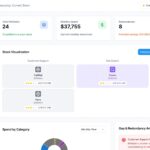










Marketing is no longer about simply launching campaigns and hoping they work. Today, businesses need to know where their marketing budget is going, what results it is producing, and which channels are actually contributing to growth.
This is where Marketing ROI Tools become valuable. They help marketers connect spending with measurable outcomes such as leads, sales, conversions, customer acquisition, and revenue.
Instead of relying on assumptions, businesses can use data to understand what is working and make smarter marketing decisions.
What Are Marketing ROI Tools?
Marketing ROI tools are software platforms that help businesses measure the financial impact of their marketing activities.
They can collect and analyze information from different channels, including:
- Search engine optimization
- Paid advertising
- Social media
- Email marketing
- Content marketing
- Marketing automation
- CRM systems
- Website conversions
The goal is simple: understand how much a campaign costs and how much value it generates.
For example, if a company spends $5,000 on a campaign and generates $15,000 in attributable revenue, the marketing team has a much clearer picture of the campaign’s financial performance.
Why Marketing ROI Matters
Marketing budgets are under constant pressure to deliver results. Simply reporting impressions, clicks, or website traffic is often not enough.
ROI analysis helps marketing teams answer important questions:
- Which campaigns generate the most revenue?
- Which channels deserve more budget?
- How much does it cost to acquire a customer?
- Which leads are most valuable?
- Where are marketing dollars being wasted?
- Which campaigns should be scaled or stopped?
When these questions are supported by reliable data, marketing decisions become more strategic.
Key Features to Look for in Marketing ROI Tools
Not every ROI platform offers the same capabilities. The right solution depends on your business size, marketing channels, and reporting requirements.
1. Campaign Attribution
Attribution helps businesses understand which marketing interactions contributed to a conversion.
A customer might discover a brand through organic search, interact with an email, click a paid advertisement, and finally make a purchase. A good attribution system helps marketers understand this journey instead of giving all credit to the final interaction.
2. Multi-Channel Reporting
Modern campaigns often run across several channels. A useful ROI tool should bring data together in one place.
This makes it easier to compare channels and identify where marketing investments are producing the strongest returns.
3. Revenue Tracking
Revenue-based reporting provides a stronger picture of marketing performance than surface-level metrics.
By connecting marketing activities with sales or CRM data, businesses can better understand how campaigns influence actual revenue.
4. Customer Acquisition Cost
Customer acquisition cost, or CAC, measures how much a business spends to acquire a customer.
Tracking CAC alongside revenue and customer lifetime value can help companies determine whether their acquisition strategy is sustainable.
5. Custom Dashboards
Different teams need different information. Marketing managers may want campaign performance, while executives may focus on revenue and overall ROI.
Custom dashboards make it easier to present the right metrics to the right audience.
Popular Types of Marketing ROI Tools
There is no single category of software that fits every marketing team. Businesses often use several tools together.
Marketing Analytics Platforms
Analytics platforms provide insights into website activity, traffic sources, conversions, and user behavior.
They are particularly useful for understanding what visitors do after arriving at a website.
CRM Platforms
CRM systems connect customer information with sales activity. When integrated with marketing platforms, they can help businesses connect campaigns with leads, opportunities, and closed deals.
Attribution Platforms
Attribution tools focus specifically on the customer journey. They help marketers determine how different touchpoints contribute to conversions.
Marketing Automation Platforms
Automation platforms can track campaign interactions such as email opens, clicks, form submissions, and lead activity.
They are useful for measuring the performance of automated customer journeys.
Business Intelligence Tools
Business intelligence platforms can combine information from multiple systems and turn it into customized reports and dashboards.
They are especially useful for organizations with large or complex datasets.
How to Choose the Right Marketing ROI Tool
Choosing an ROI platform should start with your business objectives rather than a long list of software features.
Consider these factors:
Define Your Goals
First, decide what you need to measure. Your priorities could include lead generation, ecommerce revenue, customer acquisition, campaign profitability, or lifetime customer value.
Review Your Data Sources
Check where your marketing and sales data currently lives. Your ROI tool should integrate with the platforms your team already uses.
Consider Attribution Needs
If customers interact with multiple channels before converting, basic reporting may not be enough. Look for attribution capabilities that match your customer journey.
Check Reporting Flexibility
Your team should be able to create reports that clearly communicate important metrics without requiring extensive manual work.
Think About Scalability
Your marketing operation may grow over time. Choose a platform that can handle additional campaigns, channels, users, and data as your business expands.
Common Marketing ROI Metrics
Marketing ROI tools can track dozens of metrics, but some are especially useful for understanding financial performance.
Marketing ROI: Measures the return generated from marketing investment.
Customer Acquisition Cost: Shows the average cost of acquiring a customer.
Customer Lifetime Value: Estimates the total value a customer can generate during the relationship with a business.
Conversion Rate: Measures the percentage of users who complete a desired action.
Cost Per Lead: Shows how much marketing spend is required to generate a lead.
Return on Ad Spend: Compares advertising revenue with advertising costs.
Looking at these metrics together provides a more complete view of performance.
Challenges of Measuring Marketing ROI
Marketing ROI sounds straightforward, but measuring it accurately can be difficult.
One challenge is fragmented data. Marketing information may be stored across advertising platforms, analytics systems, CRMs, email platforms, and other tools.
Another challenge is attribution. Customers rarely follow a simple path from advertisement to purchase. They may interact with a brand several times before converting.
Data quality is another important factor. Incomplete tracking, duplicate records, inconsistent campaign naming, or missing conversion data can produce misleading reports.
For this reason, successful ROI measurement requires both good technology and disciplined data management.
How to Improve Your Marketing ROI
Technology alone does not automatically improve ROI. Teams need to use the insights generated by their tools.
Start by identifying campaigns that consistently produce strong results. Then examine the channels, audiences, messaging, and offers behind that performance.
At the same time, investigate campaigns that consume budget without generating meaningful outcomes.
Regularly reviewing performance can help marketing teams shift resources toward higher-value opportunities.
It is also important to connect marketing metrics with business outcomes. A campaign that generates thousands of clicks may look impressive, but if those visitors rarely become customers, its financial value may be limited.
The Future of Marketing ROI Measurement
Marketing measurement is becoming more connected and data-driven. As businesses use more channels and customer touchpoints, marketers need better ways to connect activity with business outcomes.
AI and advanced analytics can also make it easier to identify patterns, forecast performance, and uncover opportunities hidden in large datasets.
However, the fundamental principle remains the same: marketing teams need reliable data that helps them understand where investment creates value.
Final Thoughts
Marketing ROI Tools give businesses a clearer way to understand the relationship between marketing investment and business results.
The best solution is not necessarily the platform with the largest number of features. It is the one that connects your marketing data, supports your measurement goals, and gives your team actionable insights.
When marketers consistently measure performance, identify what works, and allocate budgets based on evidence, marketing becomes more than an expense. It becomes a measurable contributor to business growth.
Frequently Asked Questions
What are Marketing ROI Tools?
Marketing ROI Tools help businesses measure the financial results of their marketing campaigns by connecting marketing spending with leads, conversions, customers, and revenue.
Why are Marketing ROI Tools important?
They help marketers understand which campaigns and channels generate the best results, making it easier to allocate budgets and improve overall marketing performance.
What metrics can Marketing ROI Tools track?
Common metrics include marketing ROI, customer acquisition cost, customer lifetime value, conversion rate, cost per lead, and return on ad spend.
How do I choose the right Marketing ROI Tool?
Choose a tool based on your goals, data sources, attribution requirements, reporting needs, integrations, and ability to scale with your business.