









Marketing technology is entering a different phase.
For years, businesses focused on adding more software to their marketing stack. They adopted CRMs, email platforms, analytics tools, advertising systems, automation software, customer data platforms, and dozens of smaller applications.
But having more tools does not necessarily make marketing better.
In 2026, the conversation is changing. Marketers are paying more attention to how their technology works together, whether customer data can actually be used, how AI can improve everyday workflows, and whether technology investments are producing measurable results.
AI is certainly at the center of this transformation. However, AI is only one part of the story. Data quality, search behavior, privacy, customer expectations, automation, content operations, and marketing measurement are changing alongside it.
Recent research from Gartner highlights the growing importance of agentic AI, AI-driven discovery, data governance, and changes to marketing operating models. Meanwhile, Salesforce reports that Indian marketers are increasingly adopting AI but continue to face challenges caused by disconnected customer data.
Here are 13 MarTech trends that deserve attention in 2026—and practical ways businesses can respond.
1. Marketing Is Moving From AI Assistance to AI Execution
The first generation of marketing AI mostly helped people work faster.
It suggested headlines, summarized reports, generated campaign ideas, or created first drafts.
Now, AI is beginning to move further into execution.
AI-powered systems can increasingly coordinate multiple steps in a workflow rather than simply completing one isolated task. This is one reason agentic AI has become such an important topic in modern MarTech.
Imagine a campaign where an AI system notices that a particular audience is losing engagement. Instead of only reporting the problem, it could identify the audience, suggest an appropriate message, prepare variations, and trigger the next step after approval.
How businesses can use it
Start with repetitive workflows rather than giving AI control over everything.
Good starting points include:
- Lead follow-up
- Campaign monitoring
- Content repurposing
- Customer segmentation
- Reporting
- Internal marketing operations
The objective is not to remove marketers from the process. It is to give them more time for strategy and creative decisions.
2. AI Search Is Changing What “Visibility” Means
Search is no longer limited to a list of blue links.
Customers are increasingly using AI-powered experiences to research products, compare companies, understand topics, and find recommendations.
This means marketers need to think beyond traditional rankings.
A brand may be visible in an AI-generated answer even when the customer never clicks through to the website.
Research from Salesforce and HubSpot shows that marketers are actively adapting SEO strategies to changing AI-mediated search behavior.
How businesses can respond
Create content that answers real questions clearly.
Focus on:
- Original expertise
- Useful explanations
- Structured information
- Strong topical coverage
- Author credibility
- Relevant supporting evidence
- Clear answers to specific customer questions
The goal is to become a reliable source of information—not simply to insert keywords into an article.
3. Customer Data Is Becoming the Real AI Advantage
There is a temptation to believe that the most advanced AI model will automatically produce the best marketing results.
In reality, customer data can make a much bigger difference.
If customer information is scattered across CRM systems, websites, commerce platforms, email tools, and support systems, AI may not have enough context to produce useful results.
Salesforce’s 2026 India research specifically points to fragmented customer data as a major barrier to effective personalization and AI adoption.
How businesses can respond
Before buying another AI product, examine your data foundation.
Ask:
- Are customer records duplicated?
- Can sales and marketing access the same information?
- Are customer preferences updated?
- Is behavioral data connected to profiles?
- Can teams identify consent status?
- Can systems exchange information reliably?
Better data can make existing MarTech tools significantly more useful.
4. Personalization Is Becoming More Contextual
Personalization is no longer simply about using a customer’s first name.
Customers expect businesses to understand why they are interacting with a brand.
Someone researching a product for the first time should not necessarily receive the same experience as an existing customer who has already purchased twice.
AI is making it easier to create experiences based on behavior, intent, context, and previous interactions. HubSpot’s 2026 marketing research identifies AI-enabled personalized content as one of the leading marketing trends.
How businesses can respond
Start with important moments in the customer journey.
For example:
- New visitor → educational content
- Returning visitor → deeper product information
- High-intent visitor → comparison or pricing content
- Existing customer → onboarding or retention content
Useful personalization should feel relevant rather than intrusive.
5. Marketing Automation Is Becoming More Adaptive
Traditional automation depends heavily on predefined rules.
You create a workflow, establish conditions, and determine what happens next.
That approach is still useful, but modern automation is becoming more flexible.
AI can help systems interpret customer signals and determine which action is most appropriate.
How businesses can respond
Connect automation with meaningful customer signals such as:
- Website engagement
- Email interactions
- Purchase activity
- CRM information
- Content consumption
- Customer service interactions
Then build workflows that respond to those signals.
Instead of asking, “What email should we send every Tuesday?” marketers can start asking, “What does this customer need next?”
That is a much more useful way to think about automation.
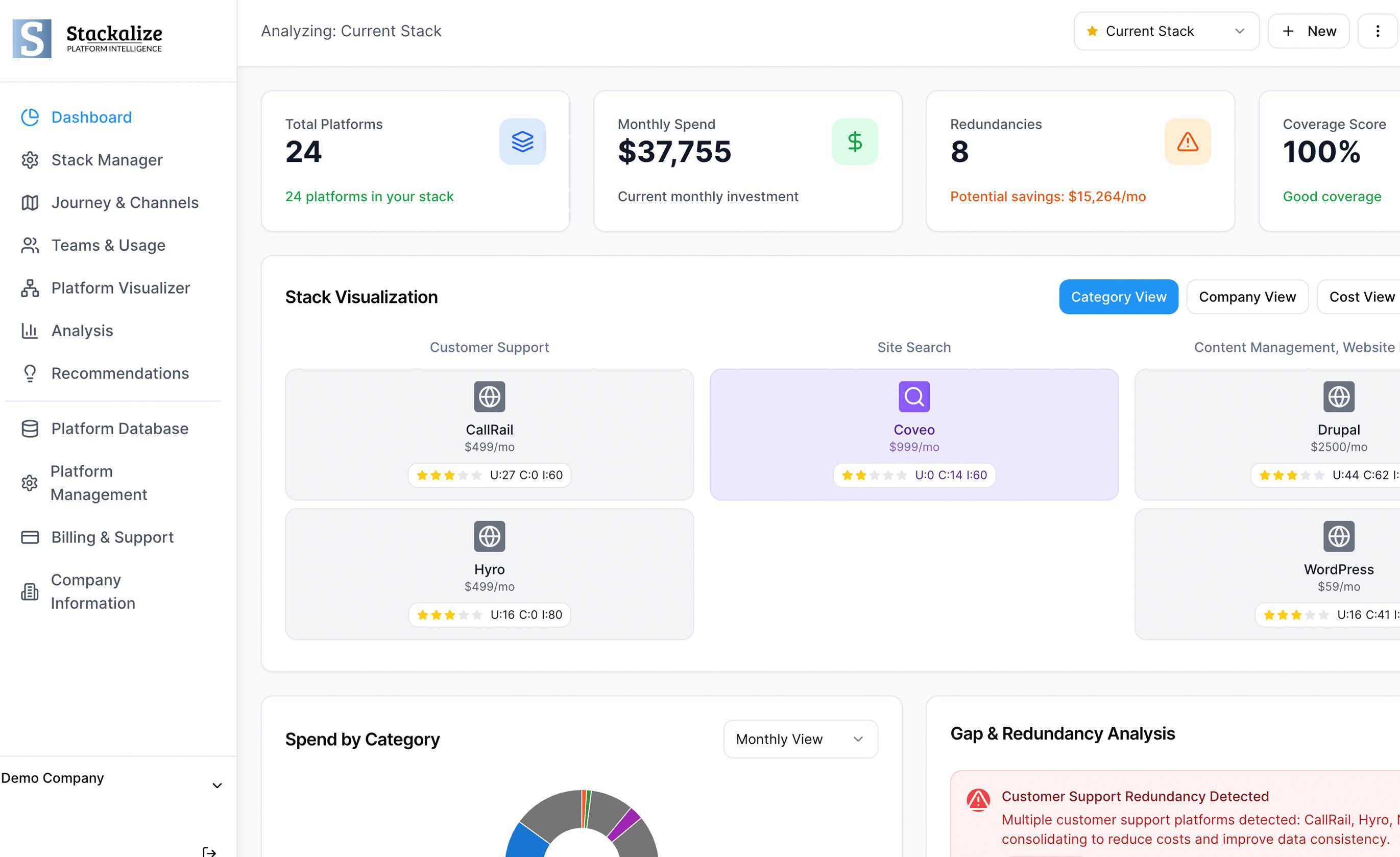
6. MarTech Stacks Are Being Evaluated More Carefully
Marketing teams have accumulated software quickly.
The problem is that every additional tool can introduce another integration, subscription, data source, security requirement, and training need.
In 2026, businesses are becoming more interested in whether their existing stack actually delivers value. Gartner reports that CMOs are examining AI, automation, and opportunities to consolidate MarTech environments.
How businesses can respond
Conduct a MarTech audit.
For every platform, ask:
- What problem does this tool solve?
- Who actually uses it?
- Does it integrate with the rest of the stack?
- Does it duplicate another tool?
- Can its contribution be measured?
Sometimes the best MarTech investment is removing software rather than buying more.
7. Content Operations Are Becoming AI-Assisted
Marketing teams are under constant pressure to produce more content.
AI can help with this workload, but the strongest use of AI is not simply publishing huge volumes of automatically generated articles.
Instead, AI can support the entire content workflow.
It can help teams:
- Research topics
- Organize ideas
- Create outlines
- Repurpose existing content
- Generate variations
- Identify content gaps
- Summarize customer feedback
The human team remains responsible for expertise, originality, accuracy, and brand voice.
The important shift
AI should help marketers create better content more efficiently, rather than encouraging brands to publish more content simply because they can.
8. Zero-Party and First-Party Data Are Becoming More Valuable
Customers can tell brands things directly.
They can choose their interests, answer preference questions, complete quizzes, select communication preferences, or provide feedback.
This information can be particularly valuable because it comes directly from the customer.
Instead of guessing what someone wants, marketers can ask.
How businesses can respond
Use simple interactive experiences such as:
- Preference centers
- Product quizzes
- Surveys
- Customer feedback forms
- Account preferences
- Content-interest selections
The key is to give customers a clear reason to share information.
Better data collection should create a better customer experience in return.
9. Privacy Is Becoming a Marketing Technology Requirement
Privacy is no longer something marketers can leave entirely to legal teams.
Marketing platforms increasingly process customer identities, behavioral information, preferences, and AI-generated insights.
That creates a responsibility to understand how information moves through the MarTech ecosystem.
Current industry research emphasizes the importance of governance, data controls, and trust as organizations scale AI across marketing.
How businesses can respond
Build privacy into your MarTech strategy.
Review:
- Consent management
- Data retention
- User permissions
- Third-party integrations
- AI data access
- Customer preferences
- Security controls
Customers are more likely to trust personalization when they understand how their information is being handled.
10. Marketing Analytics Is Moving Closer to Revenue
Marketing dashboards can contain hundreds of numbers.
But more data does not automatically mean better decision-making.
Marketing leaders increasingly need to understand whether technology is contributing to actual business outcomes.
That means connecting MarTech performance with metrics such as:
- Revenue
- Qualified pipeline
- Conversion rate
- Customer acquisition cost
- Retention
- Customer lifetime value
- Marketing ROI
Industry research in 2026 reflects this broader move toward proving value from technology investments rather than simply measuring adoption.
How businesses can respond
Choose a small set of business metrics and connect marketing activity to them.
A simple dashboard that supports decisions is often more valuable than a complicated dashboard nobody uses.
11. Conversational Experiences Are Becoming Part of the Customer Journey
Customers increasingly expect brands to respond quickly.
They don’t always want to fill out a form and wait for someone to contact them.
AI-powered conversational tools can help customers find information, explore products, qualify themselves, and receive support.
But the experience needs context.
A chatbot that knows nothing about the customer’s previous interaction can quickly become frustrating.
How businesses can respond
Connect conversational tools with relevant information such as:
- Product information
- CRM records
- FAQs
- Previous conversations
- Support information
- Customer preferences
The best conversational experience should feel like a continuation of the customer journey—not a separate technology layer.
12. Predictive Insights Are Becoming Part of Everyday Marketing
Marketers have traditionally looked backward.
They studied what happened last month and used that information to plan the next campaign.
Predictive technology allows teams to think more proactively.
AI and analytics can help identify patterns associated with:
- Customer churn
- Purchase intent
- Lead quality
- Engagement
- Conversion probability
- Customer value
How businesses can respond
Pick one prediction that could influence an actual decision.
For example:
If your business struggles with customer retention, start by identifying customers who appear likely to disengage.
Then create a specific retention action around that insight.
Prediction becomes valuable when it changes what the team does next.
13. Human Expertise Is Becoming More Valuable, Not Less
One of the biggest misunderstandings about AI-driven MarTech is that technology will eliminate the need for human marketing expertise.
The opposite can happen.
As software becomes better at repetitive execution, human skills become more important in areas such as:
- Strategic thinking
- Brand positioning
- Creativity
- Customer empathy
- Storytelling
- Ethical judgment
- Business decision-making
AI can produce five campaign ideas in seconds.
It cannot automatically determine which idea is right for your audience, your brand, and your business situation.
That remains a human responsibility.
What These MarTech Trends Mean for Businesses
These trends may look different on the surface, but they share one important theme:
Marketing technology is becoming more connected.
AI needs data.
Personalization needs customer context.
Automation needs reliable signals.
Analytics needs connected information.
Privacy needs governance.
And all of these capabilities need to work together.
This is why simply purchasing another marketing platform is unlikely to solve a fragmented MarTech strategy.
Businesses should instead build a technology environment around their actual customer journey and business objectives.
A Practical Way to Start
You don’t need to implement all 13 trends immediately.
Start with three questions:
1. Where are marketers wasting the most time?
Look for repetitive work that could be automated or AI-assisted.
2. Where is customer information fragmented?
Identify systems that don’t communicate properly.
3. Which marketing activity has the weakest connection to business results?
Use that area to improve measurement.
Once these problems are clear, technology decisions become much easier.
The Future of MarTech Is Not About More Tools
The next stage of MarTech will not necessarily belong to companies with the biggest technology stack.
It will belong to companies that know how to connect their technology effectively.
AI agents, personalized experiences, conversational interfaces, predictive analytics, first-party data, automation, and AI-powered search are changing the way customers discover and interact with brands.
But technology alone is not the strategy.
The strongest marketing organizations will combine intelligent software with clean data, thoughtful customer experiences, strong governance, and human creativity.
In other words, the future of MarTech is not simply about doing more marketing.
It is about making every marketing decision more relevant, connected, measurable, and useful.
And that is where the real opportunity lies in 2026.
Frequently Asked Questions
1. What are the most important MarTech trends in 2026?
Some of the most important MarTech trends in 2026 include AI-powered automation, agentic AI, first-party data, personalized customer experiences, AI-driven search, predictive analytics, conversational marketing, and privacy-focused technology.
2. How can businesses use AI in their MarTech strategy?
Businesses can use AI to automate repetitive marketing tasks, analyze customer behavior, personalize content, identify potential leads, improve campaign performance, support customers, and generate useful insights from marketing data.
3. Why is customer data important for modern MarTech?
High-quality customer data helps marketing platforms understand customer behavior and deliver more relevant experiences. Connecting data from CRM, websites, email, sales, and customer service systems can also create a more consistent customer journey.
4. How should a business start adopting new MarTech trends?
Businesses should first identify a specific marketing problem rather than immediately purchasing new software. Review existing tools, improve data quality, choose a high-value use case, test the solution, and measure its business impact before expanding the technology.