








Marketing has changed dramatically over the last decade. Businesses no longer rely on a single tool to reach customers or measure campaign success. Instead, they use a connected ecosystem of marketing technologies to manage customer relationships, automate repetitive tasks, analyze performance, and deliver personalized experiences across multiple channels.
This collection of technologies is known as the Martech Stack. Whether you’re a startup, a growing business, or an enterprise, having the right Martech stack helps improve efficiency, streamline workflows, and make data-driven marketing decisions.
In this guide, we’ll explore what a Martech stack is, why it matters, its essential components, and how businesses can build a future-ready marketing technology ecosystem.
What Is a Martech Stack?
A Martech stack is a collection of software applications and digital tools that marketers use to plan, execute, manage, and measure marketing activities. Rather than relying on disconnected platforms, businesses integrate multiple technologies to create a seamless marketing process.
These technologies help organizations attract potential customers, nurture leads, personalize communication, measure campaign performance, and improve the overall customer experience.
A well-structured Martech stack ensures that marketing teams spend less time on manual tasks and more time developing strategies that drive business growth.
Why Is a Martech Stack Important?
Modern customers interact with businesses through websites, email, search engines, social media, webinars, mobile apps, and digital advertising. Managing these interactions manually can be difficult and inefficient.
A Martech stack helps businesses:
- Improve marketing efficiency by automating repetitive processes.
- Deliver personalized experiences based on customer behavior.
- Collect and organize customer data in one place.
- Improve collaboration between marketing and sales teams.
- Measure campaign performance using real-time analytics.
- Scale marketing activities as the business grows.
By integrating different technologies, businesses can create a consistent and connected customer journey from the first interaction to long-term customer loyalty.
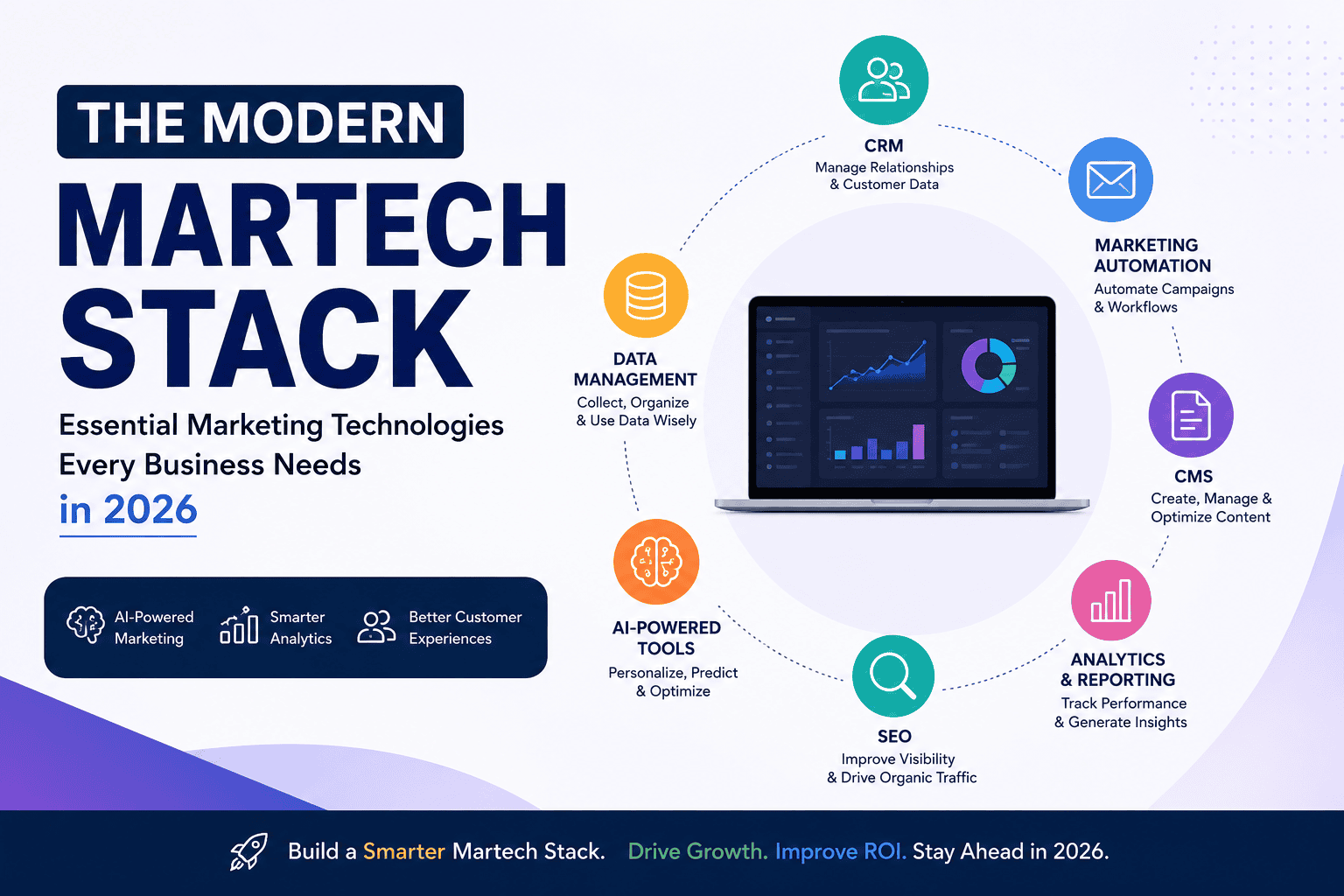
Key Components of a Modern Martech Stack
Customer Relationship Management (CRM)
A CRM platform stores customer information, tracks interactions, and helps businesses build stronger relationships. It provides marketing and sales teams with a unified view of every customer, enabling better communication and more informed decision-making.
Marketing Automation
Marketing automation platforms reduce manual work by automating tasks such as email campaigns, lead nurturing, customer onboarding, and follow-up communication. Automation allows marketers to engage customers at the right time with relevant messages.
Content Management System (CMS)
A CMS enables businesses to create and manage website content without requiring advanced technical skills. It supports blog publishing, landing pages, website updates, and search engine optimization, making it an essential part of any content marketing strategy.
Analytics and Reporting
Analytics tools help marketers understand website traffic, campaign performance, audience behavior, and conversion rates. These insights support data-driven decision-making and continuous improvement.
Search Engine Optimization (SEO)
SEO technologies help businesses improve online visibility by optimizing website content, technical performance, keyword targeting, and user experience. Strong SEO practices increase organic traffic and attract qualified visitors.
AI-Powered Marketing Tools
Artificial intelligence is becoming an integral part of modern marketing. AI-powered tools assist with content recommendations, audience segmentation, predictive analytics, campaign optimization, and customer engagement. By combining automation with intelligent insights, marketers can create more relevant and efficient campaigns.
How to Build the Right Martech Stack
Building a Martech stack starts with understanding your business goals rather than selecting tools based on popularity.
Define Your Marketing Objectives
Identify what you want to achieve, whether it’s generating leads, improving customer retention, increasing website traffic, or enhancing customer engagement.
Understand Your Audience
Learn about your customers’ needs, preferences, and behaviors. This information helps you choose technologies that support personalized experiences.
Choose Scalable Solutions
Select tools that can grow with your business and integrate well with other platforms. Avoid creating disconnected systems that make data difficult to manage.
Focus on Integration
Ensure that your CRM, marketing automation platform, analytics tools, and content management system work together to provide a unified marketing ecosystem.
Continuously Evaluate Performance
Regularly review how your marketing technologies contribute to business goals. Remove unnecessary tools and optimize existing processes based on performance data.
Common Challenges
While Martech provides significant benefits, businesses often face challenges such as managing multiple platforms, maintaining data quality, integrating systems, and training teams to use new technologies effectively.
Organizations that invest in proper planning, employee training, and ongoing optimization are more likely to achieve long-term success.
Future Trends in Martech
Marketing technology continues to evolve rapidly. Some of the key trends shaping the future include:
- AI-driven personalization
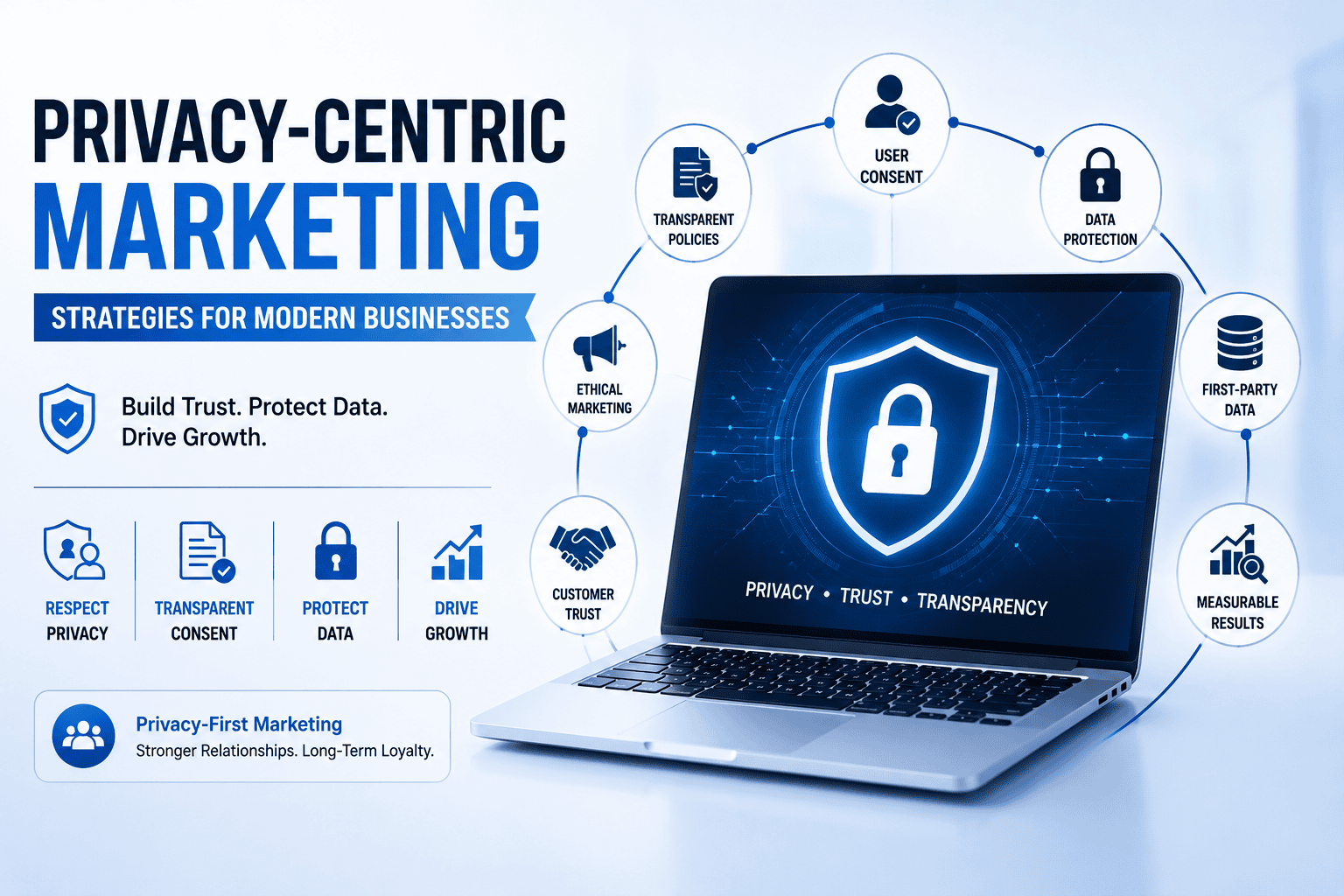
- Privacy-focused marketing
- First-party data strategies
- Predictive analytics
- Conversational AI
- Omnichannel customer experiences
- Intelligent marketing automation
Businesses that embrace these innovations will be better prepared to meet changing customer expectations and remain competitive in the digital marketplace.
Conclusion
A modern Martech stack is the foundation of effective digital marketing. By combining technologies such as CRM, marketing automation, content management, analytics, SEO, and AI, businesses can improve efficiency, deliver personalized customer experiences, and make informed decisions based on reliable data.
Rather than investing in every available tool, organizations should focus on building a Martech stack that aligns with their goals, integrates seamlessly, and supports long-term growth. As marketing technology continues to advance, businesses that adapt strategically will be better positioned for success.
Frequently Asked Questions
What is a Martech stack?
A Martech stack is a collection of marketing technologies that businesses use to manage campaigns, automate tasks, analyze performance, and improve customer engagement.
Why is a Martech stack important?
It helps businesses streamline marketing operations, improve efficiency, personalize customer experiences, and make data-driven decisions.
What are the main components of a Martech stack?
A modern Martech stack typically includes CRM, marketing automation, CMS, analytics tools, SEO solutions, and AI-powered marketing technologies.
Can small businesses benefit from a Martech stack?
Yes. Small businesses can use scalable marketing technologies to automate workflows, improve customer communication, and compete more effectively in the digital marketplace.
How often should businesses review their Martech stack?
Businesses should evaluate their Martech stack regularly to ensure technologies remain aligned with business goals, integrate effectively, and continue delivering value.