







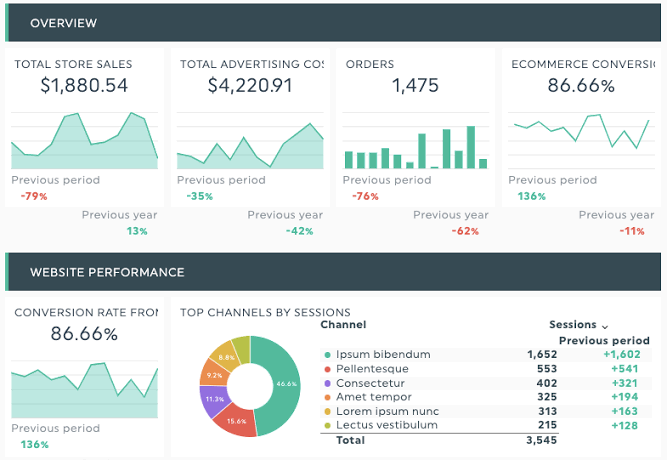
Imagine that your marketing dashboard reports 500 new leads from a recent campaign. Your CRM, however, shows only 360 new contacts, while your sales team says that just 90 of those leads are genuinely worth pursuing.
Which number should you trust?
For many marketing teams, this situation is more common than it seems. One platform reports strong campaign performance, another shows fewer conversions, and a third provides a completely different picture of customer activity. Instead of helping marketers make confident decisions, these conflicting numbers create confusion.
The problem is not always that a platform is broken or that someone has made a mistake. Different marketing systems often collect information in different ways, follow different reporting rules, and measure different stages of the customer journey.
The real challenge is understanding why these differences exist and determining which information is reliable enough to guide the next decision.
When customer data tells two different stories, marketers need more than another dashboard. They need a clear process for connecting information, investigating discrepancies, and understanding what the numbers actually mean.
Why Different Marketing Platforms Report Different Numbers
Modern marketing teams rarely depend on a single platform. Website analytics, customer relationship management (CRM) software, advertising accounts, email marketing systems, and marketing automation tools all contribute information about customers.
Although these platforms may appear to measure the same activity, they do not necessarily measure it in the same way.
Different Platforms Measure Different Events
Consider a visitor who clicks a paid advertisement, explores a website, downloads a guide, and later submits a contact form.
The advertising platform may record an ad click. Website analytics may count a session. The marketing automation platform may register a form submission, while the CRM creates a new contact record.
All four systems may report activity associated with the same person, but each is measuring a different event.
Confusion begins when marketers compare these numbers as if they represent the same thing.
Before investigating a discrepancy, teams should establish exactly what each metric measures. A click, a session, a lead, a qualified lead, and a customer are different outcomes, even when they belong to the same journey.
Reporting Windows Can Change the Results
The timing of a report can also influence the numbers.
An advertising platform might attribute a conversion to an earlier campaign interaction, while the CRM records the contact on the day the form was submitted. If one report covers the last seven days and another covers the last thirty days, the totals may differ even when both systems are functioning correctly.
Time zones, delayed data processing, and reporting cut-off times can introduce additional differences.
Marketers should therefore compare reports using the same date range, time zone, and reporting cut-off wherever possible.
One Customer Can Appear as Multiple Records
Customer identity is another common source of conflicting information.
A person may visit a website using a personal device, register for a webinar with a work email address, and later speak to a salesperson who creates a separate CRM record.
If the systems cannot confidently connect these interactions, one individual may appear as several visitors, contacts, or leads.
This can inflate audience counts and fragment the customer’s history. It can also make campaign performance look stronger or weaker than it really is.
The solution is not to merge every similar-looking record automatically. Marketers need appropriate identity-matching rules that distinguish genuine duplicates from different people with similar information.
The Difference Between Conflicting Data and Incorrect Data
When two platforms disagree, it is tempting to assume that one of them must be wrong. However, a difference in reported numbers does not automatically indicate an error.
For example, an advertising platform may report 120 conversions, while the CRM contains 95 new contacts from the same campaign. Some conversions might belong to existing contacts, some might not create a new CRM record, and others might be attributed differently by the two systems.
In this case, the numbers could both be correct according to their respective definitions.
Incorrect data is different. It might include a duplicated conversion event, a form submission that was never completed, an outdated customer status, or a campaign assigned to the wrong source.
Marketers need to determine whether the discrepancy comes from different measurement rules, incomplete tracking, identity problems, or genuinely inaccurate information.
That distinction prevents teams from spending time fixing data that was never actually broken.
How Marketers Can Investigate Conflicting Customer Data
Finding the truth requires a structured investigation rather than choosing whichever dashboard looks most convincing.
1. Start With the Business Question
Before comparing reports, identify the decision the team is trying to make.
Are you measuring the number of people who submitted a form? Evaluating how many qualified leads a campaign generated? Calculating revenue influenced by marketing? Or determining which channel contributed to a purchase?
Each question requires different evidence.
For example, a campaign manager evaluating lead quality should not rely on clicks alone. Clicks may indicate interest, but CRM qualification records and subsequent sales outcomes provide additional information about whether that interest became commercially valuable.
Starting with the business question helps teams select the appropriate metrics instead of comparing unrelated totals.
2. Identify Where Each Number Comes From
Once the question is clear, trace each reported figure back to its source.
Document which platform produced the number, which event it measures, how the event is recorded, and whether the report includes new or existing customers.
A simple comparison table can make the differences easier to understand.
| Data source | What it may measure | What to investigate |
|---|---|---|
| Advertising platform | Clicks or attributed conversions | Attribution rules and conversion settings |
| Website analytics | Sessions and tracked events | Tracking configuration and duplicate events |
| Marketing automation | Form submissions and campaign responses | Contact matching and workflow rules |
| CRM | Contacts, qualified leads, and opportunities | Record creation, deduplication, and lifecycle stages |
| Sales system | Opportunities and closed deals | Qualification criteria and revenue recording |
The purpose is not to declare one system universally correct. It is to understand which system is appropriate for each question.
3. Compare the Same Reporting Conditions
A reliable comparison requires consistent reporting conditions.
Check whether both reports use the same dates, time zones, filters, campaign identifiers, and conversion definitions. Also confirm whether the figures represent total events, unique people, or unique records.
Suppose an email platform reports 200 clicks while website analytics records 150 sessions from the email campaign. This difference does not automatically mean that 50 clicks were lost. Multiple clicks may belong to the same visitor, some users may not complete a page load, and tracking restrictions may prevent certain visits from being recorded.
Understanding these possibilities gives the team a more useful starting point than assuming the website analytics system is inaccurate.
4. Trace Individual Records Instead of Comparing Totals Alone
Aggregate reports can show that a problem exists, but they rarely explain the entire cause.
When appropriate and permitted, investigate a small sample of individual records or conversion events. Follow the available identifiers and timestamps through the relevant systems.
Look for missing events, duplicate submissions, inconsistent campaign tags, unmatched contacts, and unexpected changes in customer status.
For example, if several form submissions appear in website analytics but not in the CRM, check whether the CRM integration received those submissions, whether validation rules rejected them, or whether existing contacts were updated rather than creating new records.
A small, carefully selected sample can reveal a recurring problem that would otherwise remain hidden in a large dashboard.
5. Establish Which System Owns Each Metric
A major improvement comes from agreeing on a primary reporting source for each business metric.
The CRM might be the preferred source for lead qualification and sales pipeline status. Website analytics might be used for website engagement, while the advertising platform provides information about its own delivery and campaign activity.
This does not mean ignoring other platforms. It means defining which source is used for a particular decision and documenting why.
Teams should also establish common definitions for terms such as lead, qualified lead, conversion, opportunity, and customer.
Without these agreements, two departments can produce different reports from the same underlying business activity and both believe their results are correct.
6. Record the Cause and Monitor the Fix
Once the discrepancy is understood, document its cause, the corrective action, and the person responsible for resolving it.
If the issue comes from inconsistent campaign naming, standardize the naming convention. If duplicate events are inflating conversion counts, review the tracking implementation. If customer records are fragmented, improve identity-matching procedures.
After the correction, compare subsequent reports to confirm whether the discrepancy has decreased.
This final step matters because a temporary adjustment may hide the symptom without correcting the underlying problem.
How Customer Data Conflicts Affect Marketing Decisions
Conflicting information is not merely a reporting inconvenience. It can influence decisions about spending, targeting, customer experience, and business growth.
Marketing Budgets May Be Allocated Incorrectly
If one channel appears to generate more conversions than it actually contributes, the team may increase its budget based on misleading evidence.
Meanwhile, another channel that supports early customer discovery could receive less investment because its contribution is not clearly visible in the reporting model.
Marketers should examine conversion definitions and attribution assumptions before using conflicting reports to make major budget decisions.
Customer Segments Can Become Unreliable
Customer segmentation depends on understanding who people are, what they do, and where they are in the buying journey.
If a customer is marked as a prospect in one system and an existing customer in another, the business could send an acquisition offer to someone who has already purchased.
Similarly, inconsistent product-interest information can place customers into irrelevant segments.
Connecting customer records and keeping lifecycle stages consistent can help reduce these mistakes.
Personalization Can Lose Its Relevance
Personalized communication works best when it reflects a customer’s actual situation.
When information is fragmented, marketers may repeat offers, recommend products a customer already owns, or send messages that ignore recent interactions.
Before using customer data to trigger automated communications, teams should check whether the relevant information is sufficiently current, consistent, and appropriate for that use.
Performance Reports Become Harder to Trust
Repeated disagreements between dashboards can weaken confidence in marketing reporting.
Teams may begin maintaining separate spreadsheets, manually adjusting figures, or debating which report is correct instead of investigating campaign performance.
Clear metric definitions, documented data ownership, and repeatable reconciliation processes reduce the need for these workarounds.
The Role of Marketing Technology in Finding the Truth
Marketing technology can help teams connect information across platforms, but technology alone does not resolve every discrepancy.
Customer data platforms can bring together information from multiple sources. Integration tools can transfer records between systems, while analytics platforms can help identify differences in campaign performance.
Data-quality monitoring can also flag missing fields, unexpected changes, and duplicate records.
However, connected systems still need clear rules. If two platforms use different definitions of a qualified lead, integrating them will not automatically make those definitions consistent.
For a broader understanding of the relationship between connected platforms and marketing operations, explore MarTech Strategy: Unlocking Success in the Digital Landscape.
Teams can also learn how to bring multiple marketing data sources into a more useful reporting process through Martech Reporting: 5 Strategies for Smarter Marketing Decisions.
The objective is to create a connected reporting environment in which discrepancies can be explained, rather than expecting every platform to produce identical numbers.
Can Artificial Intelligence Help Resolve Data Discrepancies?
Artificial intelligence can support the investigation of conflicting customer information by identifying unusual patterns, suggesting potential duplicate records, and highlighting inconsistencies across datasets.
For example, an AI-assisted analysis might flag a sudden increase in campaign conversions that is not accompanied by a corresponding increase in CRM contacts. This can prompt the marketing operations team to investigate a tracking change, integration delay, or difference in reporting definitions.
AI can also help summarize discrepancies and prioritize records for further investigation.
However, its recommendations still depend on the quality of the information it receives. Similar names do not always represent the same customer, and an unusual pattern is not automatically evidence of an error.
Human review remains important when merging identities, changing customer records, or making consequential decisions. Privacy requirements and access permissions should also be respected when customer data is combined or analyzed.
AI is most useful when it helps marketers investigate evidence faster, not when it replaces the need to understand that evidence.
A Practical Checklist for More Trustworthy Marketing Reports
Before using customer data to make an important marketing decision, review the following questions:
- Do the reports measure the same event or business outcome?
- Are the reporting periods, time zones, and filters consistent?
- Are unique customers being distinguished from total events?
- Could duplicate records or repeated tracking events explain the difference?
- Are campaign identifiers and tracking parameters consistent?
- Can important customer interactions be connected across platforms?
- Is there an agreed primary source for each key metric?
- Have discrepancies been investigated and documented?
- Are data-quality issues monitored after corrections?
- Is customer information being used appropriately and securely?
Not every discrepancy requires a major technical project. Sometimes, a clear definition or a reporting adjustment is enough. More complex problems may require changes to tracking, integrations, identity resolution, or data governance.
The important thing is to understand the cause before changing the numbers.
Conclusion
When customer data tells two different stories, marketers should resist the urge to choose the more attractive number or assume that one platform is automatically wrong.
Different systems often describe different parts of the customer journey. Their reports become useful when marketers understand what each number represents, how it was collected, and which business question it can answer.
By standardizing metric definitions, comparing consistent reporting conditions, investigating individual records, and establishing clear data ownership, marketing teams can turn confusing reports into more dependable evidence.
The goal is not to make every dashboard display the same number. It is to understand why the numbers differ and know which information is appropriate for the decision at hand.
In modern marketing, trustworthy decisions begin when teams stop asking which dashboard looks right and start investigating what the data actually says.
Frequently Asked Questions
1. Why do different marketing platforms show different customer data?
Different marketing platforms may use different tracking methods, attribution models, reporting periods, and customer identification rules. Comparing these settings helps marketers understand why the reported numbers do not match.
2. How can marketers identify conflicting customer data?
Marketers can compare reports, verify tracking events, review duplicate records, check integration settings, and examine individual customer journeys to identify missing, inconsistent, or incorrectly recorded information.
3. Which data source should marketers trust when reports disagree?
The most appropriate source depends on the metric being measured. For example, a CRM may be suitable for lead qualification, while website analytics can measure website activity. Businesses should define a primary source for each key metric.
4. Can AI help resolve conflicting customer data?
Yes. AI can identify unusual patterns, flag possible duplicate records, and highlight inconsistencies across datasets. However, marketers should validate its findings before correcting customer records or making important business decisions.