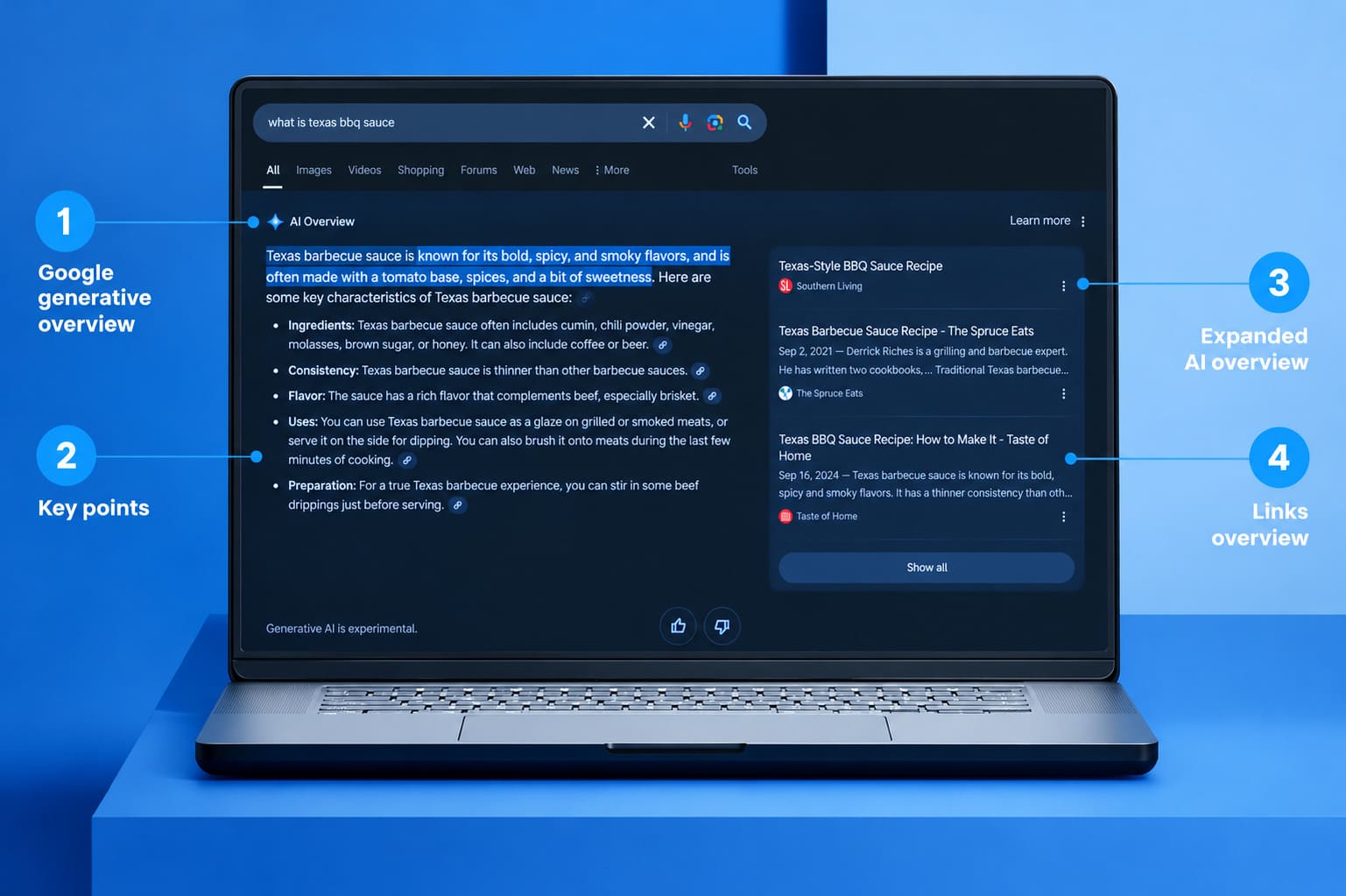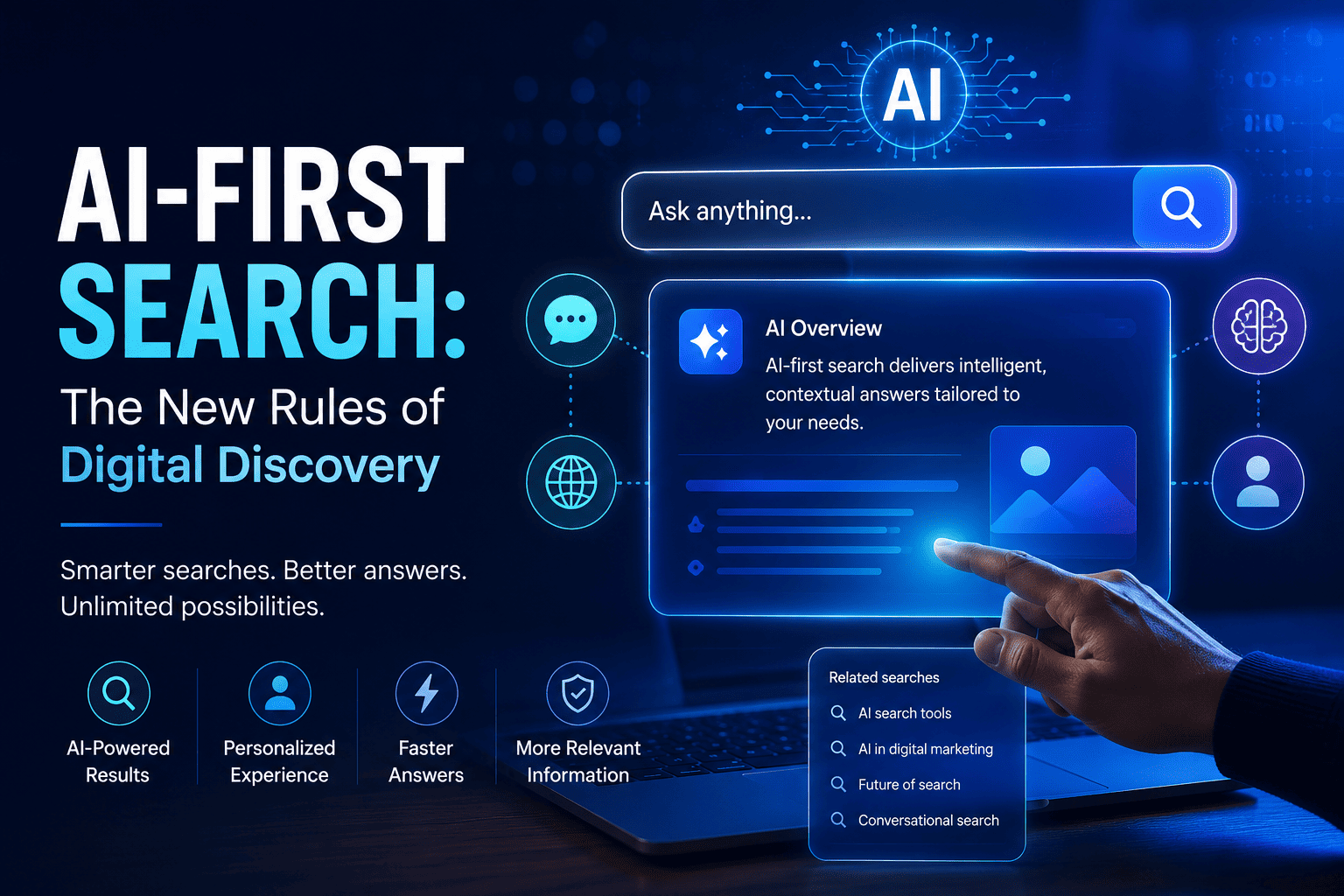








The way people find information online is changing faster than ever. Not long ago, most people searched Google, opened a few websites, and compared the information they found. Today, many users simply ask an AI tool a question and expect a clear answer within seconds.
Platforms such as ChatGPT, Google AI Overviews, Microsoft Copilot, and Perplexity are changing how people discover companies, research products, and make business decisions.
For businesses, this creates an important question: Are people discovering your brand when they search for answers through AI?
This question matters for companies working in industrial automation, smart manufacturing, robotics, and business technology. Imagine a factory manager looking for ways to reduce equipment downtime. Instead of visiting several websites, the manager might ask an AI assistant to explain predictive maintenance solutions or recommend technologies that improve production efficiency.
If your company is mentioned in that answer, a potential customer may become aware of your brand. If competing companies appear instead, you could miss an opportunity to connect with that customer.
This is why measuring brand visibility across AI search and answer engines is becoming an important part of digital marketing. It helps businesses understand where their brands appear, how AI platforms describe them, and where there may be opportunities to improve their online presence.
What Does Brand Visibility Mean in AI Search?
Brand visibility in AI search refers to how often and in what context a company appears in answers generated by AI-powered platforms.
Traditional search engine optimization mainly focuses on keyword rankings, website traffic, impressions, and clicks. AI search introduces another aspect of visibility. A company may be mentioned in an answer even when a user never visits its website.
For example, someone researching factory automation might ask an AI assistant, “How can manufacturers improve product quality while reducing inspection time?”
The answer could explain automated inspection, machine vision, and AI-powered quality control. It might also mention companies that provide relevant technologies or link to useful technical resources.
If your brand appears in that response, you have an opportunity to reach someone who may be interested in your products, services, or expertise.
However, visibility is about more than simply seeing your company name in an answer. Businesses should also consider whether the information is accurate, whether their website is cited, and whether they appear in responses to questions that matter to their target audience.
Some useful indicators include:
- Brand mentions: How frequently your company appears in relevant AI-generated answers.
- Citation visibility: How often AI answers link to your website or published content.
- Competitor visibility: How often competing brands appear in similar responses.
- Brand accuracy: Whether AI platforms correctly describe your company and its capabilities.
- Answer relevance: Whether your brand appears in conversations related to your actual products, expertise, and industry.
Together, these indicators provide a more complete picture of how your business is represented in AI-driven search.
Why AI Search Visibility Matters for Automation Businesses
Automation businesses often sell technologies that require careful research before a customer makes a decision. A manufacturer may compare several solutions before investing in industrial robots, predictive maintenance software, machine vision systems, or connected production equipment.
During this process, buyers increasingly have opportunities to use AI tools to understand technical concepts and explore available options.
When an automation company understands how it appears in these answers, it can make better decisions about its content and digital marketing strategy.
1. Understand How Potential Customers Discover Your Brand
A potential customer might ask an AI assistant how to reduce production delays or improve the accuracy of a manufacturing process. The answer may introduce technologies, explain different approaches, or identify relevant vendors.
Tracking these types of questions helps businesses understand whether their brands appear during the research process.
It can also reveal which topics deserve more attention. If your company frequently appears in answers about predictive maintenance but rarely appears in discussions about machine vision, you may have an opportunity to strengthen your content around the second topic.
2. Find Gaps in Your Existing Content
Publishing blog posts regularly is useful, but creating content that genuinely answers customer questions is even more important.
Suppose your website explains the benefits of industrial automation but offers little information about implementation costs, integration challenges, maintenance requirements, or expected returns.
Potential customers may need these details before they can evaluate a solution. If other websites provide clearer answers, their content may be more useful during the research process.
Reviewing AI-generated answers can help you identify missing topics and questions that your existing articles do not address adequately.
The goal is not to publish content simply to increase the number of pages on your website. It is to provide practical, trustworthy information that helps readers make informed decisions.
3. Keep an Eye on Competitors
Your competitors may appear in AI-generated answers even when your website performs reasonably well in traditional search results.
For example, when someone asks for ways to automate quality inspections, an AI platform might mention several companies and explain their different capabilities.
By comparing these answers over time, you can identify which competitors appear frequently, what topics they are associated with, and which of your own content areas may need improvement.
This does not mean every competitor mention represents a lost customer. However, it gives your marketing team a clearer understanding of the competitive landscape.
4. Connect AI Visibility With Real Business Results
A brand mention does not automatically lead to a website visit, inquiry, or sale. It is important to look beyond visibility numbers and understand whether they are associated with meaningful customer activity.
Businesses can monitor AI visibility alongside referral traffic, branded search impressions, product-page visits, demo requests, and qualified leads.
For example, if your technical guides begin receiving more AI citations while relevant referral traffic also increases, that may indicate an encouraging trend.
It is still important to consider other factors before attributing the improvement to a specific marketing activity.
Important Metrics for Measuring AI Search Visibility
Before measuring results, businesses need to decide what success looks like. The following metrics provide a practical starting point.
1. Brand Mention Frequency
Brand mention frequency measures how often your company appears in responses to a selected group of relevant questions.
An automation company might test questions such as:
- How can factories reduce unexpected equipment failures?
- What should manufacturers know about automated quality inspection?
- Which technologies help improve production efficiency?
The marketing team can record whether the company appears in each answer and repeat the process over time.
Using a consistent set of questions makes it easier to identify changes in visibility. Since AI answers can vary, testing several relevant prompts is more useful than drawing conclusions from a single response.
2. Share of Voice in AI Answers
Share of voice helps businesses understand how their visibility compares with competing brands.
For example, imagine that your company and its competitors receive 100 combined brand mentions across a defined set of AI responses. If your company accounts for 20 of those mentions, its share of voice is 20%.
The calculation is:
AI Share of Voice = (Your Brand Mentions ÷ Total Brand Mentions) × 100
This metric can help you see whether your company is gaining or losing visibility relative to competitors.
However, the results depend on how you select your prompts, competitors, and platforms. Use the same methodology each time, and do not treat the figure as a direct measure of market share or sales performance.
3. Website Citation Frequency
A mention and a citation are not the same thing. An AI assistant may name your company without providing a link to your website. In other cases, it may use your article as a source or provide a link to a relevant technical page.
Tracking citations helps you understand which pages are being referenced and what subjects they support.
For example, an article explaining predictive maintenance might be cited when users ask about equipment monitoring, while a guide to machine vision could appear in answers about automated inspection.
Review these citations to identify which pages provide useful information and where your website could offer clearer explanations or stronger supporting evidence.
4. Brand Position and Context
Where your brand appears in an answer can influence how noticeable it is to readers.
A company mentioned near the beginning of a relevant recommendation may receive more attention than one briefly referenced in a long explanation.
When reviewing answers, note whether your brand appears in an opening recommendation, a comparison, a list of examples, or a supporting reference.
Also consider the surrounding information. A mention is less valuable if the answer describes your products incorrectly or associates your business with an unrelated topic.
5. Accuracy and Sentiment
AI platforms do not always describe companies perfectly. They may use outdated information, misunderstand a product capability, or combine details from different sources.
Businesses should regularly check how their brands are represented.
Look for incorrect descriptions, outdated product information, misleading comparisons, and unsupported claims. You can also record whether the language surrounding your brand is positive, neutral, or negative when that distinction is meaningful.
For automation companies, accuracy is especially important because customers may rely on technical information when evaluating equipment, software, and integration options.
How to Measure Your Brand Visibility Across AI Search Engines
You do not need to build a complicated measurement system on the first day. A simple, consistent process can help your business establish a baseline and improve its approach over time.
Step 1: Choose the Topics That Matter to Your Business
Start with the subjects your company wants to be known for.
For SmartAutomationStech, relevant areas may include industrial automation, robotics, predictive maintenance, smart manufacturing, machine vision, and workflow automation.
Choose topics that match your website’s existing content and the questions your intended audience is likely to ask.
Step 2: Prepare a List of Realistic Questions
Think about the questions customers ask before choosing a technology or solving a business problem.
For example:
- How does predictive maintenance help prevent equipment failures?
- What should a manufacturer consider before automating quality inspection?
- How can robotics improve efficiency on a production line?
- What challenges arise when integrating new automation systems with existing equipment?
Include both general educational questions and more specific questions related to comparing technologies or evaluating investments.
This approach helps you measure visibility across different stages of customer research.
Step 3: Test Your Questions Across AI Platforms
Use your selected prompts across the AI search and answer engines relevant to your audience.
For each test, record the platform, date, question, brand mentions, citations, competitor names, and relevant context.
Try to keep the wording consistent between measurement periods. AI responses can change from one attempt to another, so repeating selected tests can help you understand whether a pattern is persistent.
Step 4: Record Your Starting Performance
Once you have collected the initial results, use them to establish a baseline.
For instance, you could start with 50 questions and record how many responses mention your brand, how many cite your website, and how often competitors appear.
These figures are examples of a measurement approach, not universal performance benchmarks. Your actual results will depend on your industry, chosen platforms, prompts, and competitive environment.
A spreadsheet is often sufficient for an initial tracking process.
Step 5: Improve Content Where It Is Needed
The results should help you decide what to improve rather than simply produce another report.
If your brand rarely appears in answers about automation costs, review whether your website explains the main cost factors, integration requirements, maintenance needs, and potential business benefits.
If AI answers contain incorrect information about your company, review your own published pages and make sure important details are clear, consistent, and up to date.
You can also improve the organization of existing articles, add relevant internal links, support technical claims with reliable sources, and answer common questions directly.
There is no guarantee that these changes will lead to more AI mentions, but they can make your content more useful to both readers and search systems.
Step 6: Review Results Regularly
Repeat your tests monthly or at another interval that suits your marketing activities.
Compare the results with your baseline and look for changes in mention frequency, citation visibility, competitor presence, and brand accuracy.
Keep notes about major website updates or newly published articles so you can investigate possible connections with changes in visibility.
Over time, this process can help your team understand which topics deserve further attention and where additional measurement may be needed.
Tools That Can Help With AI Visibility Tracking
Several tools can support different parts of this process.
Google Search Console helps you monitor your website’s traditional search impressions, clicks, queries, and indexing. It provides useful context for understanding organic search performance, although it is not a complete tracker of brand mentions across AI answers.
Semrush offers SEO research and competitive analysis features, along with AI visibility capabilities in applicable products and plans. It may help businesses compare traditional search performance with selected AI visibility indicators.
Profound focuses on AI search visibility analytics and can be considered by businesses looking for dedicated monitoring and reporting capabilities.
Before choosing a paid platform, check which AI engines it supports, whether it tracks citations and competitors, how frequently results are updated, and whether its reporting meets your needs.
Smaller businesses can begin with manual testing and a spreadsheet before deciding whether dedicated software would save enough time to justify the cost.
Common Mistakes to Avoid
Measuring AI visibility is useful only when the results are interpreted carefully.
Testing too few questions: A small set of prompts may not represent the full range of customer interests. Include different topics and search intentions.
Focusing only on mentions: A company name appearing in an answer does not automatically mean the mention is useful. Review the context, accuracy, and relevance.
Changing the methodology every month: Different questions, platforms, or testing conditions can make comparisons unreliable. Keep your process as consistent as possible.
Ignoring traditional SEO: AI visibility should complement, not replace, useful website content, technical SEO, and organic search monitoring.
Expecting immediate results: AI-generated responses change, and improvements to a website do not guarantee inclusion in future answers. Use repeated measurements to understand longer-term patterns.
The Future of AI Search Visibility for Automation Businesses
AI-powered search is creating new ways for people to research products, understand technical subjects, and discover businesses. For automation companies, this makes it increasingly useful to understand how their brands appear beyond traditional search rankings.
A company may rank well for a keyword but remain absent from some AI-generated answers. Another company may receive citations because its content explains a particular technical subject clearly. These differences make it worth examining both traditional SEO performance and AI visibility.
The best starting point is not to chase every new platform or publish content simply to attract mentions. Instead, understand the questions your customers ask, provide accurate and practical information, and measure how your brand appears in relevant answers.
With a consistent process, businesses can identify content gaps, monitor competitors, and develop a clearer understanding of their digital presence.
Ultimately, measuring brand visibility across AI search and answer engines is about more than counting how often a company name appears. It is about understanding whether the right audience can discover your brand, find reliable information about your expertise, and take the next step when they need a solution.
Frequently Asked Questions
1. What Is Brand Visibility in AI Search?
Brand visibility in AI search refers to how often a business appears in AI-generated answers, recommendations, and citations when users search for relevant information.
2. How Can Businesses Measure AI Search Visibility?
Businesses can measure AI search visibility by tracking brand mentions, website citations, competitor appearances, and the accuracy of information across selected AI platforms.
3. Why Is AI Search Visibility Important for Automation Companies?
AI search visibility helps automation companies understand whether potential customers can discover their expertise when researching robotics, smart manufacturing, predictive maintenance, and industrial automation.
4. How Often Should Businesses Track AI Brand Visibility?
Businesses can start with monthly tracking to identify changes in brand mentions, citations, and competitor visibility. Consistent prompts and testing methods make the results easier to compare.