









Marketing technology has changed a lot in the last few years. New platforms appear almost every week, AI is being added to existing tools, and marketing teams are expected to do more with less.
But there is a problem.
Having more marketing tools does not automatically mean better marketing.
In 2026, businesses are becoming more selective about the technology they use. Instead of collecting dozens of platforms, marketing teams are looking for tools that actually work together, make everyday tasks easier, improve customer experiences, and contribute to measurable business results.
That is where the biggest Martech Trends 2026 come in.
AI is certainly a major part of the story, but it is not the whole story. Better customer data, smarter automation, personalization, AI-powered search, analytics, and simpler technology stacks are also changing the way marketing teams work.
Let’s take a closer look at the trends that are likely to matter most.
1. AI Is Becoming Part of Everyday Marketing
A few years ago, marketers were still experimenting with AI. Today, it is becoming part of normal marketing work.
AI can help marketers write content, analyze customer behavior, find patterns in data, personalize campaigns, score leads, and automate repetitive tasks.
The important change in 2026 is that AI is moving beyond individual experiments.
Marketing teams are starting to connect AI with the tools they already use, including CRMs, customer data platforms, email systems, advertising platforms, analytics tools, and automation software.
For marketers, this means less time spent on repetitive work and more time available for strategy and creative thinking.
The goal shouldn’t be to use AI everywhere.
The better question is:
Where can AI genuinely make our marketing better?
That is the approach businesses should take when evaluating new AI-powered martech tools.
2. Agentic AI Is Taking Marketing Automation Further
Marketing automation has always been about saving time. But traditional automation usually depends on rules that marketers create in advance.
For example:
If a customer downloads an ebook → send a follow-up email.
Agentic AI takes this idea further.
Instead of simply following one predefined instruction, AI agents can work through a series of tasks based on a specific goal. They can analyze information, decide what action makes sense, and move the workflow forward within the limits set by the business.
Imagine a potential customer visiting your website several times.
An intelligent system could recognize the increased interest, review available customer information, identify relevant content, personalize the next interaction, and notify the sales team when the lead becomes more qualified.
There is still an important role for people.
Marketers need to set the objectives, review important decisions, protect customer data, and make sure automated actions fit the brand.
The future of automation isn’t about removing people from marketing. It’s about removing unnecessary manual work.
3. First-Party Data Matters More Than Ever
Good marketing depends on good information.
That sounds obvious, but many companies still have customer information scattered across different systems.
Website activity might be stored in one platform. Sales information sits in the CRM. Email engagement is somewhere else. Customer support has another database.
This makes it difficult to understand the customer as a whole.
That is why first-party data is becoming increasingly valuable in 2026.
First-party data comes directly from your relationship with customers and prospects. It can include website interactions, purchases, subscriptions, form submissions, email engagement, and other customer activity.
When this information is accurate and connected, marketers can make better decisions.
But there is one thing worth remembering:
More data isn’t always better data.
If your database contains duplicate records, outdated information, or missing fields, even the smartest AI system will struggle to produce useful results.
Data quality needs to come before advanced marketing technology.
4. Customer Data Platforms Are Becoming More Useful
Customer Data Platforms, or CDPs, are not a completely new idea. What is changing is how businesses expect them to work.
Companies don’t simply want another place to store customer information.
They want a system that helps them understand what customers are doing and turn that information into useful marketing actions.
A well-connected customer data environment can help marketers answer questions such as:
- What has this customer interacted with?
- Which products or services interest them?
- Where are they in the buying journey?
- What communication have they already received?
- What should happen next?
When customer data, analytics, AI, and marketing automation work together, teams can create much more relevant experiences.
However, a CDP isn’t automatically the answer for every business.
Before buying one, companies should first understand the data problem they are trying to solve.
5. Personalization Is Becoming More Meaningful
Personalization used to mean adding someone’s name to an email.
That’s no longer enough.
Customers expect brands to understand their interests and provide information that is actually useful to them.
Modern martech can use customer behavior, previous interactions, purchase history, content engagement, and lifecycle stage to create more relevant experiences.
For example, a returning visitor shouldn’t necessarily see the same message as someone visiting the website for the first time.
A customer who has already purchased shouldn’t receive the same campaign as someone who is still researching a product.
This type of contextual personalization can make marketing feel more helpful and less like advertising.
But businesses also need to be careful.
Personalization should make the customer experience better—not make people feel like they are being watched.
6. Marketing Automation Is Becoming More Connected
Automation works best when different parts of the marketing journey are connected.
Think about a simple customer journey:
Website → Lead Capture → CRM → Email → Sales → Customer Success
If every system operates separately, marketers spend a lot of time moving information between platforms.
When these systems are connected, the process becomes much smoother.
A website interaction can update the CRM. The CRM can trigger an appropriate workflow. Sales can see the customer’s marketing activity. Customer success can understand what the customer has already received.
This is where martech integration becomes extremely important.
The objective isn’t to automate every possible task.
It’s to automate the right tasks while keeping people involved where human judgment matters.
7. AI Search Is Changing Content Discovery
Search is changing quickly.
People are no longer relying only on traditional search engines to find information. AI-powered search experiences are becoming another way people research companies, products, services, and solutions.
For marketers, this creates a new challenge.
Creating content simply to rank for a keyword is not enough.
Content needs to answer real questions clearly and provide information that people—and increasingly AI-powered search systems—can understand and trust.
This is why topics such as Answer Engine Optimization (AEO) and AI search visibility are becoming more important.
Brands should focus on creating content that is:
- Helpful
- Clear
- Well structured
- Accurate
- Original
- Easy to understand
- Based on genuine expertise
The basic principle remains simple:
Create content for people first, then make it easy for technology to understand.
8. Predictive Analytics Is Helping Marketers Look Ahead
Marketing analytics has traditionally focused on what already happened.
How many people visited the website?
How many leads were generated?
Which campaign received the most clicks?
Those numbers are useful, but marketers also want to know what might happen next.
Predictive analytics can help identify patterns that point toward future behavior.
For example, businesses may use predictive models to identify customers who are more likely to buy, leads that appear more sales-ready, or customers who may be at risk of leaving.
This can help marketing teams spend their time and budget more intelligently.
But analytics should always support a business decision.
A complicated dashboard is not useful if nobody knows what action to take from it.
9. Martech Stacks Are Getting Simpler
For years, the answer to a marketing problem often seemed to be another tool.
Need better email marketing? Buy a platform.
Need personalization? Add another platform.
Need analytics? Add another one.
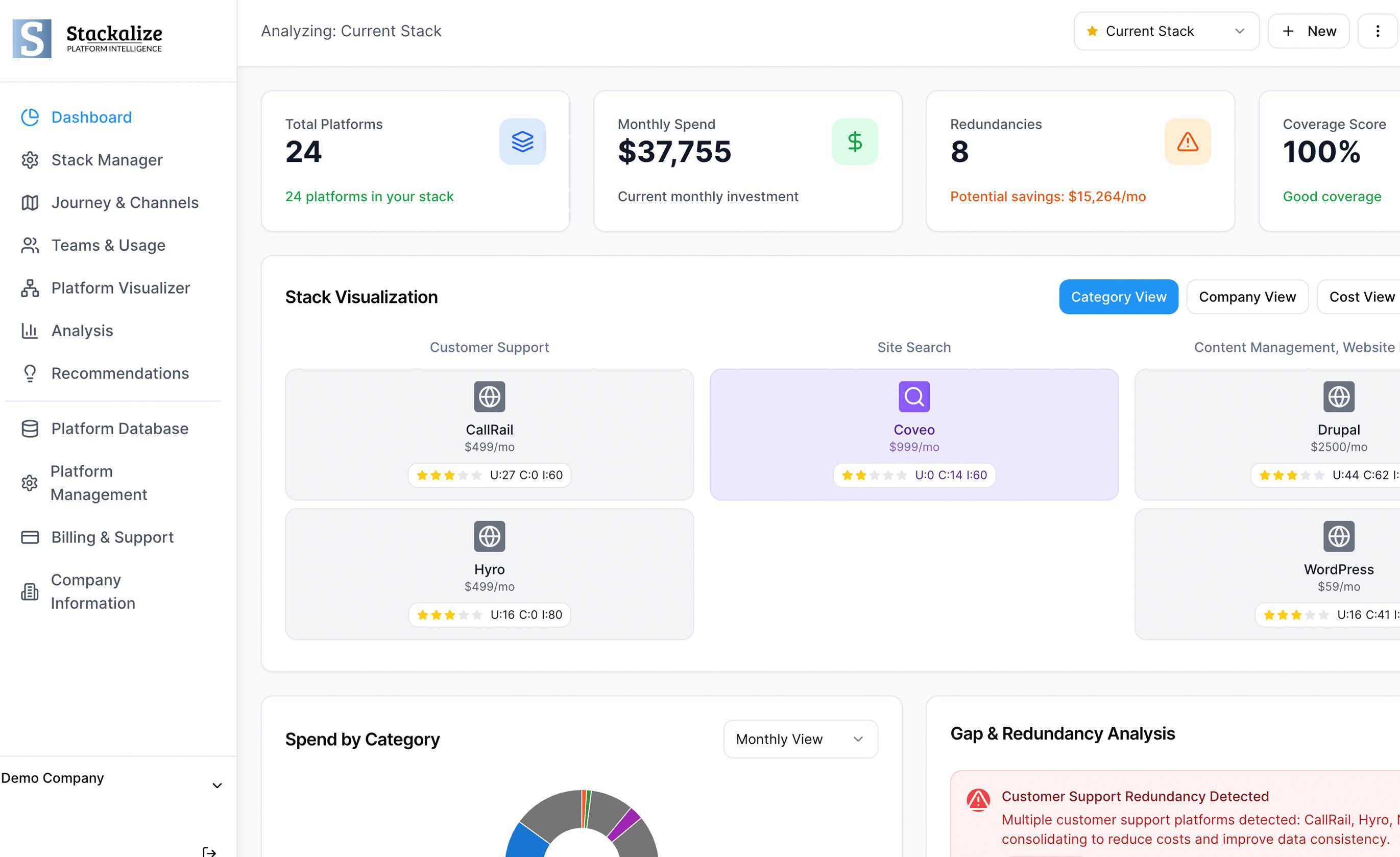
Eventually, businesses can end up with a martech stack that is expensive, complicated, and difficult to manage.
In 2026, many teams are taking a closer look at what they already have.
Before adding another platform, they are asking:
- Do we already have this capability?
- Are we actually using our existing tools?
- Can our platforms integrate properly?
- Are we paying for features nobody uses?
- Is another tool going to solve a real problem?
A smaller, well-connected martech stack can often be more useful than a huge collection of disconnected tools.
10. Marketing Teams Are Paying More Attention to ROI
Marketing technology is an investment.
Eventually, someone will ask:
“What did we actually get from it?”
That question is becoming increasingly important.
Marketing teams are looking beyond basic engagement metrics and trying to connect technology with meaningful business outcomes.
Depending on the business, that could include:
- Qualified leads
- Sales pipeline
- Conversion rates
- Customer acquisition cost
- Revenue
- Customer retention
- Customer lifetime value
- Marketing efficiency
This doesn’t mean clicks and impressions are useless.
It simply means they are only part of the picture.
A good martech strategy connects marketing activity with the business results that leadership actually cares about.
11. Privacy and Responsible AI Are Becoming Essential
AI can work with enormous amounts of information, which creates both opportunities and responsibilities.
Businesses need to think carefully about how customer information is collected, stored, shared, and used.
They also need clear rules around AI-generated content, automated decisions, customer profiling, and access to sensitive business data.
Trust matters.
Customers may appreciate personalized experiences, but they don’t want businesses to misuse their information.
That’s why privacy, security, transparency, and human oversight should be considered part of the martech strategy—not something added after the technology has already been implemented.
12. Human Creativity Still Has a Place in Martech
With all the attention around AI, it can sometimes sound as though marketers will simply hand everything over to machines.
That’s unlikely to be the best approach.
AI is excellent at processing information, finding patterns, generating ideas, and handling repetitive work.
But marketing still needs people.
People understand emotions. They build brands. They create original ideas. They understand cultural context. They make difficult decisions when the data doesn’t tell the whole story.
The strongest marketing teams in 2026 won’t choose between humans and AI.
They will figure out how to make the two work together.
How to Prepare for Martech Trends 2026
Businesses don’t need to adopt every new technology they hear about.
In fact, trying to follow every trend can create more problems than it solves.
A better approach is to start with the business.
Start With Your Current Martech Stack
Make a list of the platforms your team uses. Look for duplicate functionality, unused subscriptions, integration problems, and unnecessary complexity.
Improve Your Data
Clean your customer records and make sure important information can move between the systems that need it.
Find Practical AI Opportunities
Look for repetitive marketing tasks where AI can save time or help your team make better decisions.
Connect Marketing With Revenue
Don’t measure technology only through clicks or engagement. Where possible, connect marketing activity with leads, pipeline, sales, retention, and revenue.
Test Before You Scale
A small, measurable AI or automation project can teach your team much more than a large technology rollout with no clear objective.
Keep Humans Involved
Automation should support your marketing team, not remove the judgment and creativity that make your brand different.
Final Thoughts
The biggest Martech Trends 2026 aren’t really about buying the newest tools.
They’re about making the tools you already have smarter and more useful.
AI is changing how marketers work. First-party data is becoming more valuable. Automation is becoming more intelligent. Personalization is becoming more relevant. Search is evolving. And businesses are paying closer attention to whether their technology investments actually produce results.
At the same time, marketers are learning an important lesson: technology works best when it solves a real problem.
The companies that perform well won’t necessarily be the ones with the biggest martech stacks.
They’ll be the ones that know which technology to use, how to connect it, when to automate, and where human judgment still matters.
That is what smarter martech looks like in 2026.