









Marketing technology is changing faster than many businesses expected. What once looked like a collection of separate tools for email, analytics, CRM, advertising, automation, and customer engagement is gradually becoming a connected technology ecosystem.
Artificial intelligence is accelerating this change. In 2026, AI is moving beyond content generation and simple recommendations into workflows where AI agents can analyze information, make decisions, and carry out selected marketing tasks. At the same time, marketers are facing growing expectations around privacy, data quality, personalization, measurement, and customer trust.
Looking toward 2030, the future of MarTech will not simply be about having more software. It will be about connecting the right technologies, customer data, automation, and human decision-making into a system that can adapt quickly.
What Will MarTech Look Like in 2030?
By 2030, marketing technology is likely to become more intelligent, connected, and automated.
Instead of marketers manually moving between multiple platforms, future MarTech environments will increasingly connect customer data, campaign management, analytics, content, CRM, advertising, and AI-powered workflows.
AI agents may handle more repetitive operational activities, while marketers focus on strategy, creativity, customer understanding, brand decisions, and governance.
This does not mean humans disappear from marketing. In fact, human oversight becomes more important as automated systems gain greater access to customer information and marketing platforms.
Current industry research already points toward this shift. Gartner identifies agentic AI, AI-ready data, content governance, and changing customer discovery behavior as important elements of marketing’s near-term evolution.
1. AI Agents Will Become Part of Everyday Marketing
One of the biggest changes heading toward 2030 is the growth of agentic AI.
Traditional automation follows predefined rules. An AI agent can work toward a defined objective by interpreting information, selecting actions, and completing multiple steps within a workflow.
For example, a marketing AI agent could potentially:
- Analyze campaign performance
- Identify an underperforming audience segment
- Recommend a budget adjustment
- Generate campaign variations
- Coordinate content distribution
- Monitor customer responses
- Summarize performance for the marketing team
The important change is the movement from automation that follows instructions toward systems that can manage parts of a workflow.
Research from BCG in 2026 found that 96% of surveyed CMOs said AI is driving end-to-end transformation in marketing, although only about one-third said their organizations had actually completed the necessary transformation work.
For businesses preparing for 2030, the lesson is straightforward: experiment with AI agents, but build clear rules around what they can access, decide, and execute.
2. Customer Data Will Become the Foundation of MarTech
AI can only produce useful marketing outcomes when it has reliable information.
Many organizations still have customer information distributed across CRM systems, websites, advertising platforms, analytics tools, customer-service systems, and commerce platforms.
This fragmentation makes it difficult to understand the complete customer journey.
By 2030, connected customer data will become even more important because AI systems will need accurate context to personalize experiences and make useful decisions.
A 2026 Salesforce study found that 81% of surveyed marketers in India had adopted AI, while fragmented or irrelevant data remained a major barrier to scaling customer engagement.
This makes data unification a practical MarTech priority.
Companies should focus on:
- Cleaning customer records
- Connecting important data sources
- Improving identity resolution
- Creating consistent customer profiles
- Establishing clear data ownership
- Improving data accessibility
- Maintaining consent and privacy controls
A sophisticated AI platform cannot compensate for unreliable customer data.
3. First-Party Data Will Become More Valuable
The future of marketing will place greater emphasis on information that businesses collect directly through legitimate customer interactions.
First-party data can include website behavior, purchase history, account information, customer preferences, subscription activity, and interactions with owned channels.
Businesses can also use voluntary information, sometimes called zero-party data, when customers directly provide preferences or interests.
The goal is not simply to collect more information. It is to collect useful information transparently and use it responsibly.
Experian’s 2026 digital trends research highlights first-party data activation as a foundational capability as marketers connect data, activation, and measurement more closely.
By 2030, strong first-party data systems can help organizations create more relevant experiences while reducing dependence on uncertain external signals.
4. Personalization Will Become More Contextual
Personalization has traditionally meant showing different content to different customer segments.
The next stage is more dynamic.
Instead of creating one experience for an entire segment, AI systems can use customer context to determine which message, offer, content format, or interaction is appropriate at a particular moment.
For example, a B2B visitor researching CRM software might receive educational content during the research stage, while an existing customer could receive onboarding guidance or product recommendations.
However, personalization should not become excessive or intrusive.
Customers still expect transparency and control over how their information is used.
The future of personalization will therefore involve a balance between relevance, timing, privacy, and customer choice.
5. AI Search Will Change Content Discovery
Search behavior is also becoming more complex.
People increasingly use AI-powered interfaces to research products, compare options, ask questions, summarize information, and discover brands.
This means businesses cannot rely exclusively on traditional search rankings.
Content needs to be useful enough to appear across multiple discovery environments, including search engines, AI-powered answers, social platforms, communities, and brand-owned channels.
For MarTech teams, this means investing in:
- Helpful original content
- Clear answers to customer questions
- Strong topical coverage
- Structured information
- Reliable sources
- First-hand expertise
- Consistent brand information
Kantar’s 2026 marketing trends research highlights the growing importance of making products, services, guides, experiences, and content easily discoverable by AI-driven systems.
6. Marketing Automation Will Become More Intelligent
Marketing automation is not going away. It is becoming more sophisticated.
Earlier automation systems mainly depended on workflows such as:
“If this happens, send this email.”
Future systems can combine behavioral data, customer context, predictive analytics, and AI decision-making.
A future workflow could look more like:
Customer behavior → AI analysis → next-best action → automated execution → real-time measurement
This can reduce manual work while allowing marketing teams to respond more quickly.
However, organizations should avoid automating every possible activity simply because the technology allows it.
Automation should support a clearly defined business objective.
7. Measurement Will Move Closer to Real-Time Decision-Making
Marketing measurement has often been treated as something that happens after a campaign ends.
That approach is changing.
Modern MarTech systems increasingly connect activation and measurement so teams can understand performance while campaigns are running.
Instead of simply reporting that a campaign generated results, marketers can use live signals to identify what is changing and adjust their strategy.
Future measurement will likely place greater emphasis on:
- Customer lifetime value
- Incrementality
- Attribution
- Conversion quality
- Customer journey performance
- Revenue contribution
- Retention
- Cross-channel performance
This shift matters because more automation means marketing systems need reliable feedback loops.
8. Privacy and Governance Will Become Core MarTech Functions
As AI receives greater access to customer data, privacy cannot remain an afterthought.
Marketing teams will increasingly need clear rules around:
- Data collection
- Customer consent
- Data retention
- AI access
- Personalization
- Automated decisions
- Third-party platforms
- Security
- Data sharing
Adobe’s 2026 MarTech research identifies data integration and quality as major barriers to agentic AI adoption, reinforcing the importance of building strong data foundations before scaling autonomous workflows.
By 2030, governance will likely become part of everyday MarTech operations rather than a separate compliance exercise.
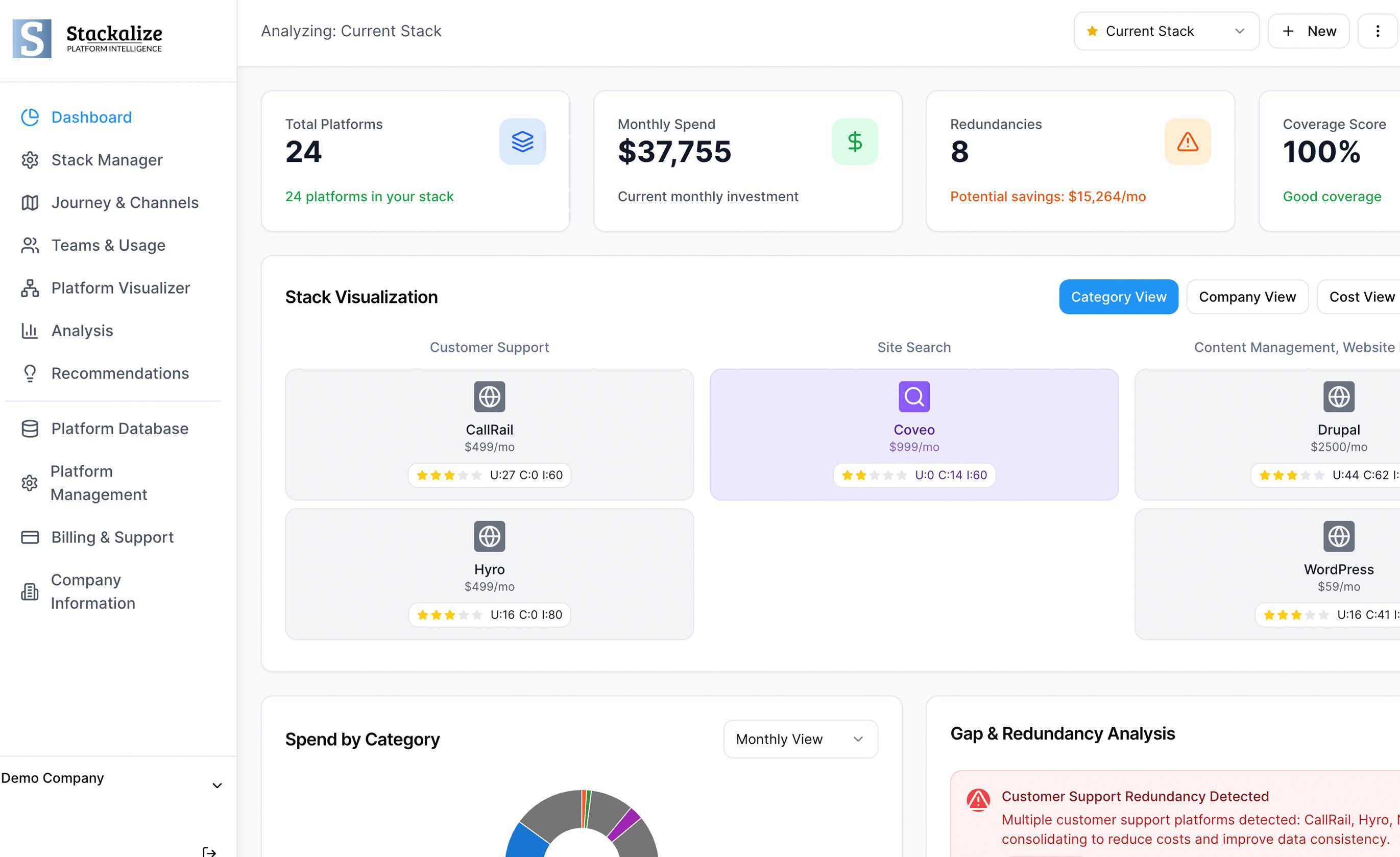
9. MarTech Stacks Will Become More Connected
Businesses have accumulated large numbers of marketing tools over the years.
The problem is not always a lack of technology. It is often the lack of connection between technologies.
A disconnected stack can create:
- Duplicate customer records
- Inconsistent reporting
- Repeated manual work
- Poor personalization
- Data quality problems
- Higher technology costs
Future MarTech strategies will therefore focus more on interoperability and connected workflows.
The goal will be a technology ecosystem where CRM, CDP, analytics, advertising, content, automation, and AI systems can exchange useful information securely.
Snowflake’s 2026 marketing data stack research describes this movement toward governed data, composability, trust, and control as organizations redesign their stacks around AI-enabled workflows.
10. Human Skills Will Still Matter
Technology may automate more marketing activities, but human judgment remains important.
AI can process large amounts of information quickly, but marketing still involves questions about brand identity, emotional connection, ethics, positioning, customer needs, and business priorities.
Marketing professionals will increasingly need skills in:
- AI literacy
- Data interpretation
- Strategic thinking
- Customer research
- Creative direction
- Technology evaluation
- Privacy awareness
- Experimentation
- Cross-functional collaboration
The marketer of 2030 may spend less time manually executing repetitive tasks and more time deciding what the technology should accomplish.
Proven Strategies to Prepare for Martech 2030
Businesses do not need to rebuild their entire MarTech stack overnight.
A practical approach is to start with the fundamentals.
1. Audit Your Existing MarTech Stack
Identify every platform currently used for marketing.
Determine which tools overlap, which systems are disconnected, and which platforms are actually contributing to business objectives.
2. Improve Data Quality
Before adding advanced AI tools, clean and organize the data those tools will use.
Poor data can create poor personalization, unreliable analytics, and incorrect automated decisions.
3. Start With Practical AI Use Cases
Begin with clearly defined activities such as content assistance, campaign analysis, customer-service support, reporting, or workflow optimization.
Measure the results before expanding AI access.
4. Create AI Governance Rules
Define who can use AI, what data can be accessed, which actions require approval, and how automated decisions are monitored.
5. Build First-Party Data Capabilities
Strengthen relationships through owned channels such as websites, apps, CRM systems, communities, subscriptions, and direct customer interactions.
6. Connect Marketing and Measurement
Make sure campaign execution and performance data can communicate with each other.
The faster teams can learn from results, the faster they can improve campaigns.
7. Keep the Customer at the Center
Technology should solve customer problems rather than simply add more complexity.
Every new MarTech capability should have a clear connection to customer experience or business objectives.
The Biggest MarTech Shift by 2030
The biggest change may not be a single new technology.
It will be the way multiple technologies work together.
AI, customer data, automation, analytics, CRM, personalization, content platforms, advertising technology, and privacy systems are increasingly becoming connected parts of one marketing ecosystem.
IDC’s 2026 outlook for AdTech describes a longer-term move toward agentic systems, privacy-enhancing technologies, and AI-mediated discovery. These are projections rather than guaranteed outcomes, but they illustrate the direction in which the industry is being discussed today.
For marketers, preparing for 2030 is therefore less about predicting one exact future and more about building a flexible foundation.
Final Thoughts
The future of MarTech will be shaped by intelligent automation, connected data, privacy-aware personalization, AI-driven discovery, and better measurement.
But technology alone will not determine the success of a marketing strategy.
Organizations that prepare for the next stage should focus on the fundamentals first: reliable data, connected systems, responsible AI usage, strong customer understanding, and measurable business goals.
MarTech in 2030 may look very different from the technology stack businesses use today. The companies preparing now can build systems that are flexible enough to adapt as customer expectations and technology continue to change.
Frequently Asked Questions
1. What will MarTech look like in 2030?
MarTech in 2030 is expected to be more connected, automated, and AI-driven, with CRM, analytics, customer data, personalization, and marketing automation working together.
2. How will AI change marketing technology?
AI will help marketers analyze data, personalize customer experiences, automate workflows, optimize campaigns, and support faster marketing decisions.
3. Why will first-party data matter for future MarTech?
First-party data can help businesses understand customer behavior directly while supporting personalization, measurement, and more responsible data-driven marketing.
4. How can businesses prepare for MarTech 2030?
Businesses can prepare by improving data quality, connecting their MarTech stack, adopting practical AI use cases, strengthening governance, and focusing on measurable customer outcomes.