








In today’s digital landscape, businesses compete not only through products and services but also through the value of the information they provide. Customers expect quick answers, educational resources, and trustworthy guidance before making purchasing decisions. This shift has made content a strategic business asset rather than just a marketing tool.
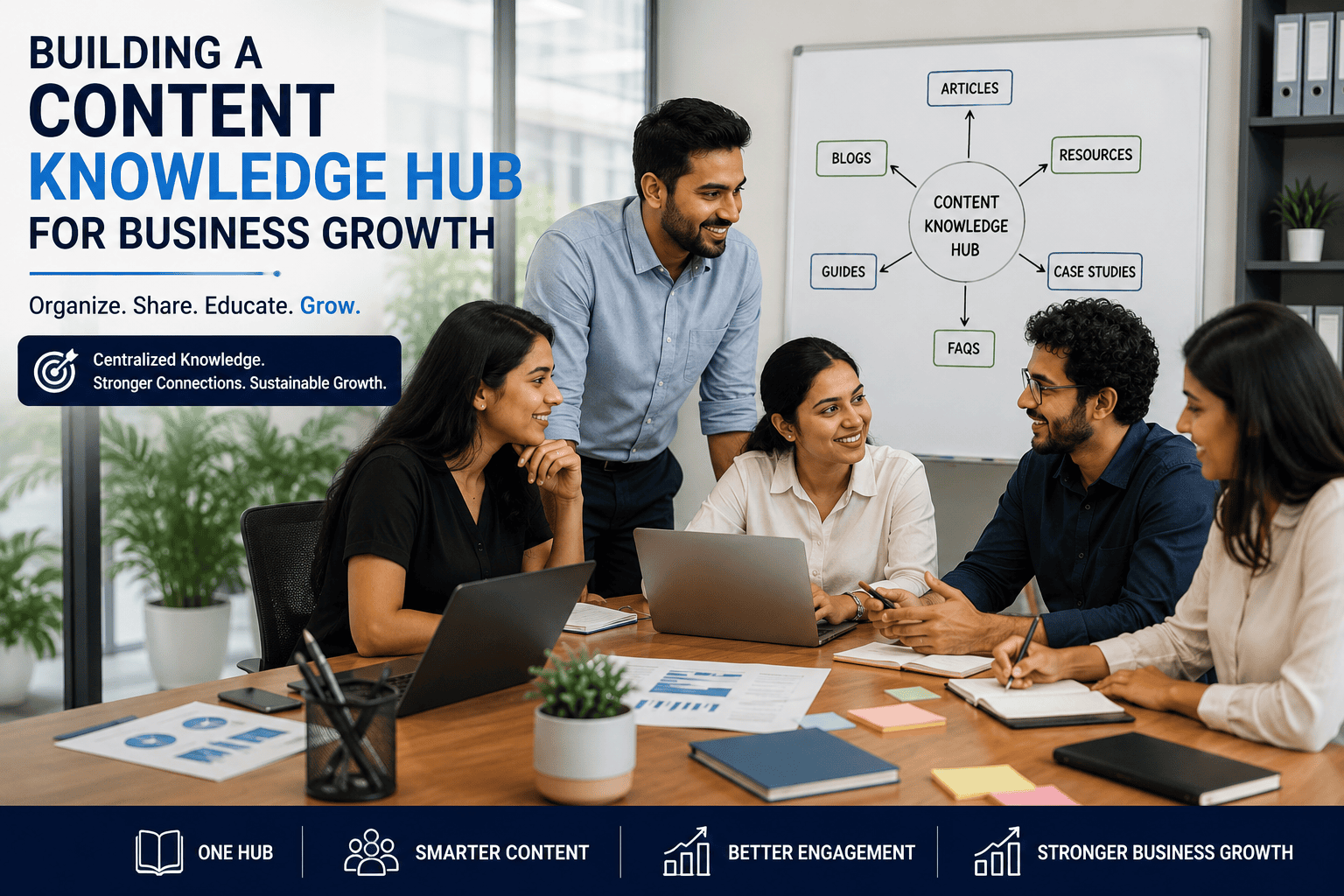
A content knowledge hub is a centralized collection of valuable resources that helps customers, prospects, and stakeholders find accurate information in one place. Instead of publishing disconnected blog posts, businesses organize related content into a structured ecosystem that supports learning, decision-making, and customer engagement.
For organizations investing in marketing technology (Martech), a content knowledge hub strengthens search visibility, improves customer experience, and establishes long-term authority within the industry.
What Is a Content Knowledge Hub?
A content knowledge hub is a well-organized digital resource center that contains educational and informative content related to a business’s expertise.
Unlike a traditional blog where articles appear in chronological order, a knowledge hub groups related content into categories, making it easier for users to navigate and discover relevant information.
A typical knowledge hub may include:
- Educational blog articles
- Industry guides
- Whitepapers
- Case studies
- Research reports
- Templates
- Checklists
- FAQs
- Glossaries
- Videos
- Infographics
- Product documentation
The objective is simple: help users solve problems while positioning your business as a trusted source of expertise.
Why Businesses Need a Content Knowledge Hub
Modern buyers complete much of their research before contacting a sales team. They compare products, read guides, evaluate competitors, and search for answers online.
A knowledge hub supports every stage of this journey.
Key business benefits include:
- Improved organic search visibility
- Better customer education
- Higher website engagement
- Increased lead generation
- Stronger brand credibility
- Lower customer support workload
- Enhanced customer retention
Instead of repeatedly answering the same questions, businesses can direct users to comprehensive educational resources.
Essential Components of a Successful Knowledge Hub
1. Pillar Content
Pillar pages provide comprehensive coverage of major business topics.
Examples include:
- Marketing Technology
- Customer Data Platforms
- Marketing Automation
- AI in Marketing
- SEO Strategy
- CRM Solutions
These pages serve as central resources that link to supporting articles.
2. Supporting Articles
Each pillar should connect to detailed articles that answer specific questions.
For example, a Marketing Automation pillar could link to content covering:
- Email automation
- Lead nurturing
- Customer segmentation
- Workflow optimization
- Marketing analytics
This structure creates a strong internal linking strategy that benefits both users and search engines.
3. Resource Library
A modern knowledge hub should offer downloadable resources such as:
- Templates
- eBooks
- Checklists
- Industry reports
- Implementation guides
These assets also help generate qualified leads through optional form submissions.
4. FAQ Section
Frequently asked questions improve user experience and support AI-powered search by addressing common queries in a concise format.
5. Search Functionality
As content grows, users should be able to quickly search for information across the entire knowledge base.
Benefits for SEO
Search engines increasingly reward websites that demonstrate topical authority rather than isolated keyword optimization.
A content knowledge hub contributes to SEO by:
Improving Internal Linking
Every article supports related resources, helping search engines understand content relationships.
Building Topical Authority
Publishing comprehensive content around a subject signals expertise.
Increasing User Engagement
Visitors spend more time exploring related resources, improving engagement metrics.
Supporting AI Search
Well-structured content is easier for AI-powered search experiences to interpret and reference.
Expanding Keyword Coverage
Instead of targeting one keyword, businesses naturally rank for numerous related search queries.
How Martech Enhances a Knowledge Hub
Marketing technology enables businesses to manage, personalize, and optimize their knowledge hubs more effectively.
Useful Martech capabilities include:
- Content management systems
- Marketing automation
- CRM integration
- Customer behavior analytics
- Personalized recommendations
- AI-powered search
- Content performance reporting
These tools help marketers understand which topics attract visitors, generate leads, and influence conversions.
Best Practices for Building a Content Knowledge Hub
Define Your Audience
Understand your readers’ needs, challenges, and search intent before creating content.
Organize Content by Topics
Group related resources into logical categories rather than publishing isolated articles.
Create Evergreen Content
Focus on resources that remain valuable over time while updating them regularly.
Use Clear Navigation
Help visitors discover related content through menus, categories, and internal links.
Maintain Content Quality
Prioritize accuracy, originality, and practical insights over publishing large volumes of low-value content.
Measure Performance
Track metrics such as:
- Organic traffic
- Time on page
- Bounce rate
- Conversion rate
- Returning visitors
- Content engagement
These insights help identify opportunities for improvement.
Common Mistakes to Avoid
Many organizations fail to realize the full value of a knowledge hub because they:
- Publish without a content strategy.
- Ignore internal linking.
- Create duplicate or outdated content.
- Focus only on promotional material.
- Neglect user experience.
- Fail to update existing resources.
- Overlook search intent.
A successful knowledge hub prioritizes education and problem-solving before promotion.
The Future of Content Knowledge Hubs
The rise of AI-powered search, conversational assistants, and personalized digital experiences is changing how users discover information. Businesses that organize their expertise into structured, interconnected knowledge hubs are better positioned to remain visible across both traditional search engines and AI-driven discovery platforms.
As customer expectations evolve, knowledge hubs will continue to serve as foundational assets for building trust, supporting self-service learning, and enabling data-driven marketing strategies.
Conclusion
A content knowledge hub is more than a collection of blog posts—it is a strategic resource that helps businesses educate audiences, improve search visibility, and strengthen customer relationships. By organizing valuable content around key topics, implementing strong internal linking, and leveraging Martech tools for optimization, organizations can create a scalable foundation for sustainable business growth.
Investing in a well-structured knowledge hub today prepares your business for the future of search, customer engagement, and digital marketing.
Frequently Asked Questions
1. What is a content knowledge hub?
A content knowledge hub is a centralized collection of useful articles, guides, insights, research, and resources that helps businesses organize information and make it easier for audiences to find relevant knowledge.
2. How can a knowledge hub support business growth?
A well-structured knowledge hub can attract organic traffic, answer customer questions, build trust, support the buyer journey, and create more opportunities for meaningful engagement with a brand.
3. What content should a business include in its knowledge hub?
Businesses can include educational blog posts, industry insights, how-to guides, case studies, research reports, FAQs, trend articles, expert perspectives, and other resources that address their audience’s needs.
4. How can businesses keep a content knowledge hub effective?
Businesses should regularly update older content, organize resources by topic, use clear internal links, monitor search performance, and create new content based on audience questions and changing industry trends.