









Artificial intelligence is no longer just an experimental technology for marketing teams. In 2026, AI is becoming part of the infrastructure that powers customer data, campaign execution, personalization, analytics, content creation, and customer engagement.
The biggest shift is happening in the way marketing technology works. Instead of marketers manually moving between dozens of disconnected tools, AI-powered systems are increasingly able to analyze information, recommend actions, automate workflows, and coordinate activities across the customer journey.
This evolution is also changing what marketers expect from their technology stack. According to Salesforce’s 2026 India marketing research, 81% of marketers in India have adopted AI, while disconnected customer data remains a major obstacle to scaling AI-powered engagement.
So, what AI-powered martech innovations should businesses pay attention to in 2026?
1. Agentic AI for Marketing Automation
One of the most important martech developments in 2026 is the rise of agentic AI.
Traditional automation follows predefined rules. Agentic AI can take a more active role by interpreting goals, deciding which actions are appropriate, and executing multi-step workflows with limited human intervention.
For marketing teams, this could mean AI agents that:
- Monitor campaign performance
- Identify high-intent prospects
- Recommend next-best actions
- Adjust customer journeys
- Generate campaign variations
- Coordinate follow-up activities
- Summarize customer interactions
Gartner identifies agentic AI as a major force in marketing, predicting that brands will increasingly use AI agents to deliver more individualized customer interactions.
The important change is that marketers are moving from simply automating tasks to supervising intelligent systems.
2. AI-Powered Customer Data Platforms
Customer data remains the foundation of modern martech, but collecting data is not enough. Businesses need data that is unified, accurate, accessible, and usable in real time.
AI-powered customer data platforms can help organizations identify patterns across CRM records, website activity, campaign engagement, transactions, and other customer signals.
Instead of viewing each interaction separately, marketers can develop a more complete understanding of customer behavior.
This matters because AI recommendations are only as reliable as the information behind them. Adobe’s 2026 martech research similarly highlights data unification, quality, and accessibility as priorities before organizations scale agentic AI.
3. Hyper-Personalization at Scale
Personalization is moving beyond simply adding a customer’s first name to an email.
AI can analyze customer behavior, preferences, context, purchase history, and engagement signals to help marketers create more relevant experiences.
In 2026, personalization can influence:
- Website experiences
- Email campaigns
- Product recommendations
- Advertising
- Landing pages
- Offers
- Customer support
- Content recommendations
The goal is not to create thousands of campaigns manually. Instead, AI helps marketers dynamically adapt experiences to different audiences.
McKinsey describes personalization, insights, orchestration, creativity, and agentic commerce as important pillars of the evolving AI-driven marketing model.
4. AI Content Intelligence and Content Generation
Generative AI has already changed content production, but its role in martech is becoming broader.
Modern AI-powered content systems can assist with research, ideation, drafting, repurposing, optimization, and performance analysis.
For example, one long-form article could be transformed into:
- Social media posts
- Email content
- Short-form video scripts
- Ad variations
- Sales enablement content
- FAQ content
- Landing-page copy
However, successful brands will not simply publish large amounts of AI-generated content. Human creativity, editorial judgment, brand positioning, and fact-checking remain important.
The strongest approach is likely to be AI-assisted marketing rather than completely AI-generated marketing.
5. AI-Powered Marketing Analytics
Marketing analytics is also becoming more intelligent.
Traditional dashboards tell marketers what happened. AI-powered analytics can help explain why something happened and what could happen next.
For example, an AI analytics platform might identify that:
A campaign’s conversion rate dropped because high-intent visitors were reaching a landing page with weaker engagement.
From there, the system could recommend an experiment or suggest a different customer journey.
Predictive analytics can also help marketers identify potential churn, forecast demand, score leads, and prioritize opportunities.
This moves analytics from passive reporting toward decision support.
6. AI-Driven Customer Journey Orchestration
Customer journeys are becoming increasingly complex.
A prospect may discover a company through search, interact with social content, visit a website, download a resource, receive an email, speak with a salesperson, and return through another channel.
AI-powered journey orchestration can connect these interactions and determine what should happen next.
For example:
Website visit → intent signal → lead scoring → personalized content → sales notification → follow-up
Instead of manually creating every possible journey, marketers can use AI to identify patterns and recommend appropriate next steps.
McKinsey notes that marketing is increasingly becoming a continuous system connecting insights, content, commerce, and performance rather than a collection of isolated campaigns.
7. AI-Powered Conversational Marketing
Chatbots are evolving into more capable conversational systems.
Modern AI assistants can understand context, answer questions, recommend products or resources, qualify leads, and support customers throughout the buying process.
For B2B companies, conversational AI can also help visitors find:
- Product information
- Pricing details
- Case studies
- Technical documentation
- Webinars
- Relevant resources
- Sales contacts
The next stage is moving from simple question-and-answer bots toward assistants that can understand customer intent and connect conversations with CRM and marketing workflows.
8. AI for Predictive Lead Scoring
Lead scoring has traditionally relied on predefined rules.
For example:
- Website visit = 5 points
- Content download = 10 points
- Demo request = 25 points
AI-powered lead scoring can consider a much broader range of behavioral and contextual signals.
It can identify patterns associated with customers who are more likely to convert and help sales teams prioritize leads accordingly.
This can be particularly useful for B2B organizations with large numbers of prospects and long sales cycles.
Instead of asking only, “Who interacted with us?”, marketers can ask, “Which accounts are showing meaningful buying signals?”
9. AI-Powered Experimentation and Optimization
A/B testing is becoming more sophisticated as AI enters the experimentation process.
AI can help marketers generate variations, identify promising combinations, analyze results, and recommend future tests.
Emerging research in 2026 is even exploring whether AI agents can simulate potential A/B-test outcomes before companies commit significant live traffic to an experiment.
This does not mean marketers should eliminate real-world testing. Instead, AI can potentially help teams prioritize which experiments are worth running.
10. AI for Search, AEO, and AI Discovery
Search is changing as consumers increasingly use AI systems to discover information, products, and brands.
This means marketers need to think beyond traditional search-engine rankings.
Content must increasingly be:
- Clear
- Structured
- Trustworthy
- Contextually relevant
- Easy for AI systems to understand
- Supported by credible information
Gartner’s 2026 marketing outlook highlights the importance of maintaining brand trust as AI changes search and social discovery.
For marketers, this creates a growing opportunity around Answer Engine Optimization (AEO) and broader optimization for AI-mediated discovery.
11. AI-Powered Marketing Automation Platforms
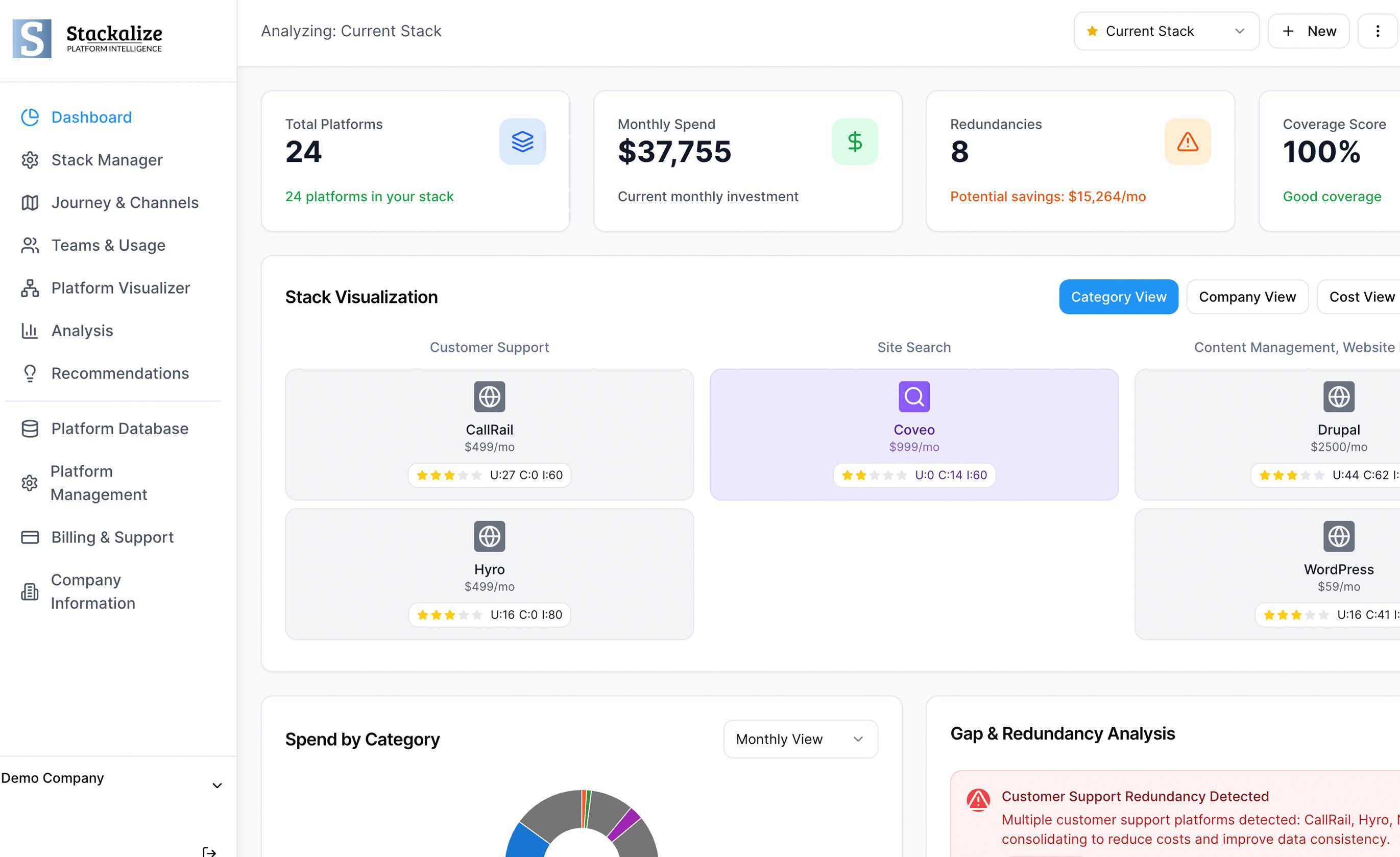
Marketing automation platforms are becoming more intelligent by combining workflows with AI.
Instead of simply scheduling an email sequence, an AI-enhanced platform could potentially determine:
- Which customer should receive the message
- Which content is most relevant
- When the message should be sent
- Which channel should be used
- Whether another action is more appropriate
This can make marketing automation more adaptive and less dependent on rigid workflows.
The result is a shift from rule-based automation to intelligent orchestration.
12. AI-Powered Revenue Intelligence
AI is also bringing marketing, sales, and revenue operations closer together.
Revenue intelligence platforms can combine customer interactions, CRM information, engagement signals, pipeline activity, and marketing data to identify opportunities.
This helps teams answer questions such as:
- Which accounts are most engaged?
- Which leads are becoming sales-ready?
- Where are opportunities getting stuck?
- Which campaigns influence pipeline?
- Which customers may be at risk?
This creates a stronger connection between marketing activity and measurable business outcomes.
13. AI Governance and Martech Security
As AI becomes embedded across marketing systems, governance is becoming just as important as innovation.
Marketing teams need clear rules around:
- Customer data
- Privacy
- AI-generated content
- Access permissions
- Model usage
- Brand safety
- Human oversight
- Regulatory compliance
The rapid expansion of AI is also creating concerns around fragmented systems, uncontrolled AI adoption, data leakage, and governance gaps.
Organizations should therefore build governance into their martech strategy rather than treating it as an afterthought.
14. AI-Powered Omnichannel Marketing
Customers do not think in terms of separate marketing channels. They simply interact with a brand.
AI can help connect experiences across:
Email → Website → Social → Mobile → Chat → Sales → Customer Support
The major opportunity is maintaining context between these interactions.
For example, if a customer has already explained a problem through chat, they should not have to repeat the same information when they move to another channel.
This kind of continuity is becoming a defining part of AI-ready customer experience.
15. AI-Powered Martech Stacks
The martech stack itself is changing.
Companies are increasingly looking for connected systems rather than large collections of standalone tools.
A modern AI-enabled martech stack may include:
- CRM
- Customer data platform
- Marketing automation
- AI content tools
- Analytics
- Personalization
- Conversational AI
- Advertising platforms
- Journey orchestration
- AI agents
The objective should not be to purchase every new AI tool available.
Instead, businesses should build a stack where data can move reliably between systems and AI can operate within clear business rules.
Why AI-Powered Martech Matters in 2026
The biggest opportunity is not simply doing marketing faster.
It is creating a marketing operation that can sense, understand, decide, act, and learn continuously.
BCG’s 2026 CMO research found a significant gap between organizations that say AI is transforming marketing and those that have actually built the capabilities needed to make that transformation work.
This suggests that the competitive advantage will not necessarily belong to companies using the most AI tools.
It may belong to companies that integrate AI into the right workflows, connect their data properly, and establish strong measurement and governance.
How Businesses Can Prepare for AI-Powered Martech
Businesses preparing for the next phase of martech should focus on the fundamentals first.
Start With Data
Clean, connected customer data should come before advanced AI deployments.
Identify High-Value Use Cases
Do not introduce AI simply because it is popular. Start with measurable problems such as lead qualification, personalization, content production, or customer support.
Connect Your Martech Stack
AI delivers more value when CRM, analytics, customer data, automation, and content systems can work together.
Keep Humans in the Loop
AI can accelerate decisions, but marketers still need to provide strategy, creativity, judgment, and oversight.
Measure Business Outcomes
Track metrics such as:
- Conversion rate
- Customer acquisition cost
- Marketing-qualified leads
- Pipeline contribution
- Customer lifetime value
- Retention
- Revenue generated
These metrics provide a clearer picture of whether AI investments are creating real business value.
Final Thoughts
AI-powered martech is moving from experimentation toward operational transformation.
In 2026, agentic AI, intelligent customer data platforms, hyper-personalization, predictive analytics, conversational marketing, AI-powered experimentation, and AI discovery are reshaping how marketing teams operate.
But technology alone will not create better marketing.
The real advantage comes from combining AI + quality data + connected technology + human judgment.
Businesses that build this foundation can move beyond simply automating marketing tasks and create customer experiences that are more relevant, responsive, and measurable.
The future of martech is not about replacing marketers. It is about giving marketing teams intelligent systems that help them make better decisions and create stronger customer relationships at scale.
Frequently Asked Questions
1. What are the most important AI-powered martech innovations in 2026?
The major AI-powered martech innovations in 2026 include agentic AI, AI-powered customer data platforms, hyper-personalization, predictive analytics, conversational AI, intelligent marketing automation, and AI-powered search and discovery.
2. How is AI changing marketing automation in 2026?
AI is making marketing automation more intelligent by analyzing customer behavior, identifying intent, personalizing content, recommending actions, and helping marketers optimize campaigns and customer journeys.
3. Why is customer data important for AI-powered martech?
High-quality customer data helps AI understand customers more accurately. Connected and reliable data can improve personalization, lead scoring, segmentation, analytics, and automated marketing decisions.
4. Will AI replace marketing teams?
AI is more likely to support marketing teams than completely replace them. It can automate repetitive tasks and assist with analysis, while marketers continue to handle strategy, creativity, decision-making, and human oversight.