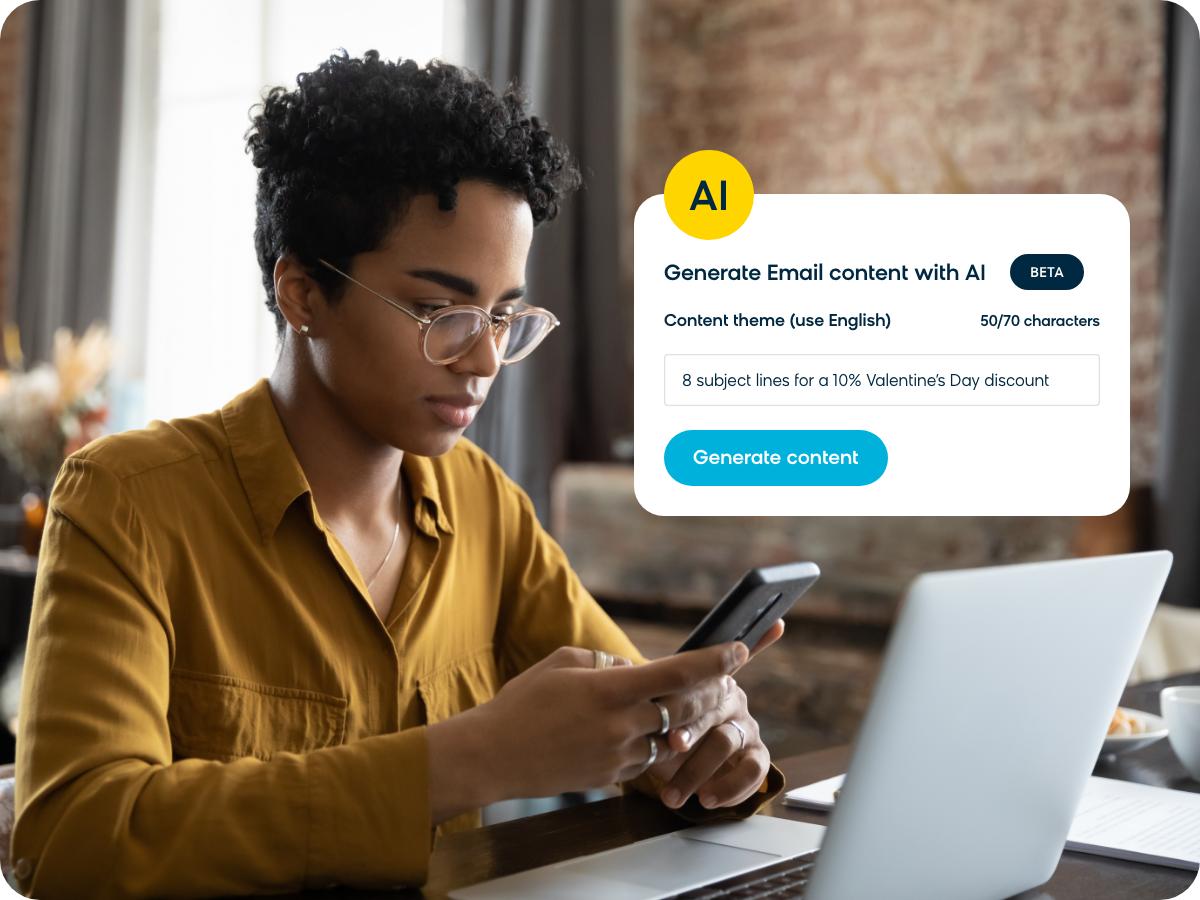










Modern marketing teams are under constant pressure to produce more content, manage multiple campaigns, and reach customers across different platforms. AI tools have made these responsibilities easier by reducing the time required for research, writing, analysis, and campaign management.
For many businesses, this has become a practical way to handle growing marketing demands without increasing the size of their teams.
However, there is a difference between making marketing more efficient and making it more meaningful.
When marketers focus only on how quickly a campaign can be created, they may overlook whether the communication actually connects with the audience. A campaign can be completed in less time, but that does not automatically mean customers will find it useful.
This is where the human side of marketing becomes important.
Customers do not interact with brands simply because a company has published another email or advertisement. They pay attention when the communication addresses something they care about.
AI can help businesses deliver messages more efficiently, but marketers still need to understand what makes those messages worth receiving.
The Problem With Marketing Content That Has No Real Experience Behind It
One reason AI-generated marketing content can feel less human is that it may lack the experiences that give writing its depth.
A marketer who has spoken with customers, handled objections, or observed a campaign’s performance can bring valuable details into an article or email.
For example, a sales team may notice that potential customers are not rejecting a service because of its price. They may be struggling to understand how the service fits into their existing workflow.
This insight can lead to a much more useful marketing article than a general discussion about the benefits of the service.
AI can help organize and explain this information, but the original insight often comes from real business experience.
Without that input, content may contain accurate information while still feeling disconnected from the problems customers face every day.
Why Customers May Stop Paying Attention to Familiar Messages
Customers receive marketing communication from many businesses throughout the day. They see promotional emails, social media advertisements, product recommendations, newsletters, and automated notifications.
Over time, they become familiar with common marketing language.
Phrases such as “take your business to the next level,” “unlock new opportunities,” and “transform your digital strategy” may sound attractive, but they do not always explain what a customer will actually gain.
When AI tools repeatedly generate similar expressions, marketing communication can become predictable.
Customers may begin scanning messages without reading them carefully. They may ignore emails that look familiar or move past advertisements that do not immediately explain their value.
This does not necessarily mean customers dislike AI-generated content. It means they are looking for something more useful than another general promotional message.
A clear explanation of a specific problem can often be more engaging than a paragraph filled with impressive but vague language.
How AI Can Create a Gap Between Marketing and Sales
Marketing and sales teams often depend on each other to understand customer needs.
Marketing identifies potential customers, creates awareness, and generates interest. Sales teams then speak directly with prospects to understand their requirements and help them make decisions.
AI can support both teams by analyzing data, preparing communication, and identifying possible opportunities.
But problems can arise when marketing messages are created without considering what sales teams are hearing from customers.
For example, an AI-powered campaign may identify a group of prospects as highly interested because they have visited a website several times.
However, those prospects may be researching competitors, comparing solutions, or simply gathering information for a future project.
If the campaign immediately treats them as ready-to-buy customers, the communication may feel too aggressive.
The result can be a disconnect between what marketing believes about a prospect and what the prospect actually needs.
Regular communication between marketing and sales helps reduce this gap. Customer feedback can provide context that improves campaign messaging, lead qualification, and follow-up timing.
The Risk of Treating Every Customer Like a Data Pattern
AI systems often work by identifying similarities between customer behaviours.
They may group people according to their interests, browsing activity, previous purchases, or responses to campaigns.
This information can help marketers make better decisions, but customers are not always as predictable as their data suggests.
Two people may visit the same product page for completely different reasons. One may be preparing to purchase, while the other may be researching options for a future project.
If both receive the same communication simply because their behaviour looks similar, the campaign may miss the difference between their needs.
Customer data should help marketers understand people, not reduce them to a collection of predictable actions.
The more businesses recognize this distinction, the more effectively they can use AI without making customer experiences feel mechanical.
Why Human Judgment Still Matters in Marketing Decisions
AI can analyze large amounts of information and suggest possible actions. It can identify trends, compare campaign results, and recommend changes based on available data.
However, marketing decisions often involve factors that are difficult to measure directly.
A customer may respond positively to a message because it arrives at the right moment. A campaign may perform well because its tone feels reassuring during a difficult decision. A brand may earn trust because it admits when its product is not suitable for a particular customer.
These situations require more than numerical analysis.
Human judgment helps marketers understand context, recognize emotional responses, and decide when a recommendation should not be followed.
AI can provide useful direction, but it should not become the only authority behind marketing decisions.
How AI-Generated Content Can Affect Customer Trust
Trust is built through repeated experiences.
When customers receive useful information, clear explanations, and relevant communication, they gradually develop confidence in a brand.
But when marketing messages feel overly automated, customers may begin questioning whether the business understands their needs.
For instance, a customer who has already explained a problem to a support team may become frustrated if the next marketing email promotes a solution that does not address that problem.
The issue is not necessarily the technology behind the email. It is the feeling that the business has not paid attention.
This is why customer trust depends on more than personalization.
It also depends on whether a company remembers relevant interactions, responds appropriately, and communicates with consistency.
AI can help manage these interactions, but businesses must ensure that the information being used is accurate and that the resulting communication makes sense from the customer’s perspective.
A Better Way to Use AI in Content Marketing
AI can be particularly useful when marketers treat it as a working partner rather than a complete replacement for their own thinking.
A practical content creation process might begin with customer questions, sales conversations, industry observations, or campaign insights.
Marketers can then use AI to organize these ideas, explore different structures, improve readability, and identify areas that need further explanation.
Before publishing, the content should be reviewed for accuracy, originality, relevance, and brand voice.
This process allows businesses to benefit from AI’s speed while retaining the experience and perspective that make their content valuable.
The strongest marketing content often comes from combining useful information with a clear understanding of the audience.
What Businesses Should Review Before Automating More Marketing
Before introducing additional AI-powered marketing workflows, businesses should consider a few important questions.
- Are our campaigns addressing real customer needs or simply following a predefined schedule?
- Does our content explain specific problems, or does it rely on broad marketing statements?
- Are we using customer data to improve relevance or only to increase the number of messages we send?
- Do sales and support teams have opportunities to share customer feedback with marketing?
- Can customers easily understand why they are receiving a particular message?
- Are we reviewing automated communication when customer behaviour or circumstances change?
These questions can help businesses identify areas where automation may be creating unnecessary distance between the brand and its audience.
The objective is not to reduce automation. It is to make sure that automation continues to serve a meaningful purpose.
Final Thoughts
Artificial intelligence is becoming an important part of modern marketing, and its influence will continue to grow as businesses look for better ways to manage content, customer data, and campaign performance.
But the value of marketing cannot be measured only by the number of messages created, the speed of campaign execution, or the amount of work automated.
A successful marketing experience should help customers understand something, solve a problem, or make a more confident decision.
AI can support these goals when it is guided by real customer insights and thoughtful human judgment.
The challenge for marketers is to recognize when technology is improving communication and when it is simply making communication easier to produce.
Because customers may not always notice how much AI is involved in a campaign, but they can notice when a brand stops understanding them.
The businesses that use AI responsibly will be the ones that remember an important principle: technology can help deliver the message, but meaningful marketing still begins with understanding the person receiving it.
Frequently Asked Questions
1. How can AI make marketing feel less human?
AI can make marketing feel less human when businesses rely too heavily on automated content, generic messaging, and data-driven decisions without considering customer emotions, preferences, and real needs.
2. Can AI-generated marketing content affect customer trust?
Yes, AI-generated marketing content can affect customer trust when messages feel repetitive, irrelevant, or overly promotional. Businesses can maintain trust by reviewing content and adding genuine customer insights.
3. How can marketers maintain a human touch while using AI?
Marketers can maintain a human touch by understanding customer needs, using real experiences, personalizing communication thoughtfully, and reviewing AI-generated content before publishing it.
4. Is AI replacing the human role in marketing?
AI helps marketers automate repetitive tasks and analyze customer data. However, human creativity, emotional understanding, and strategic thinking remain important for building meaningful customer relationships.