







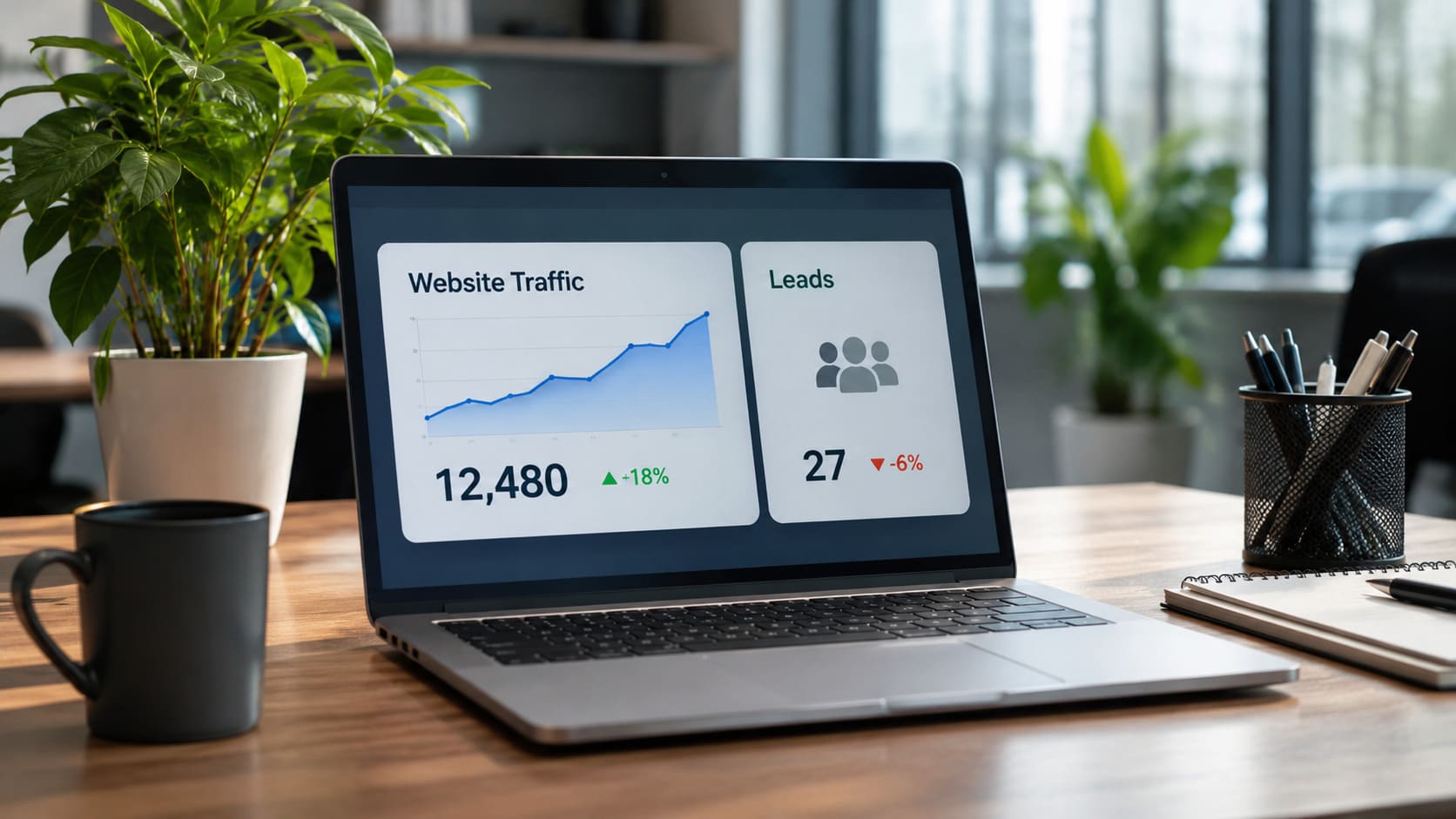
A website can attract hundreds or even thousands of visitors every month and still struggle to generate meaningful business enquiries. The traffic may look encouraging in analytics, but when those visits do not turn into contact form submissions, demo requests, consultation bookings, or sales conversations, businesses often begin questioning their marketing efforts.
At first, the problem may seem simple. Perhaps the website needs more visitors, a better advertising campaign, or stronger search engine rankings. However, increasing traffic does not always solve the underlying issue.
Sometimes, the real problem is what happens after someone arrives on the website.
People visit business websites for different reasons. Some are searching for information, some are comparing available solutions, and others are trying to understand whether a company can solve their particular problem. If a website does not meet their expectations, provide enough useful information, or make the next step clear, visitors may leave without taking any action.
This creates a frustrating situation for businesses. Their marketing campaigns appear to be working because people are visiting the website, but the traffic is not producing the results they expected.
Understanding this gap between website traffic and lead generation can help businesses improve their digital marketing performance without depending entirely on increasing their advertising budget.
Website Traffic Does Not Always Mean Business Interest
One of the most common mistakes businesses make is assuming that every website visitor has the potential to become a customer.
In reality, people arrive through different channels and with different intentions. A visitor who clicks on an educational blog may simply want to understand a topic. Someone who searches for a service comparison may be closer to making a purchasing decision. Another person may visit a website only to check the company’s background before contacting its sales team.
These visitors are not at the same stage of the buying journey.
When businesses treat every visitor in the same way, they may struggle to convert the right audience. A strong sales message might work for someone who is ready to purchase, but it may feel unnecessary to a person who is still researching.
For example, someone reading an article about marketing automation may not be ready to request a product demonstration. They might still be learning about the available options and trying to understand whether automation is suitable for their business.
A better approach is to understand the purpose behind each page and provide a relevant next step based on what visitors are likely looking for.
The Page May Not Answer the Visitor’s Real Question
People usually visit a website because they expect to find something useful. When the content does not answer their question clearly, they have little reason to continue exploring.
A service page might explain what a company offers but fail to describe how the service helps customers. A product page may list features without explaining why those features matter in everyday business situations.
Visitors should not have to search through several sections to understand the basic value of an offer.
For example, a company providing marketing services might describe its campaign management process in detail but never explain how that process helps businesses reach the right audience or improve campaign efficiency.
The information may be technically correct, but it does not answer the question that matters most to the visitor: how will this solution help me?
Businesses can improve their pages by answering a few important questions naturally:
- What problem does this service solve?
- Who can benefit from it?
- How does the solution work?
- What makes the offer useful?
- What results or improvements can customers reasonably expect?
- What should the visitor do next?
When these answers are easy to find, visitors can understand the offer more confidently.
The Website Attracts the Wrong Audience
Sometimes a page receives traffic because it ranks for a popular search term, but the people visiting it are not the right audience for the business.
For instance, a company offering enterprise marketing services may attract visitors searching for free marketing templates. Although the keyword may bring traffic, those visitors may not be interested in purchasing professional services.
This does not necessarily mean the content is unsuccessful. It may still be useful for awareness or educational purposes. However, the business should not expect every informational visit to produce an immediate enquiry.
The problem becomes more noticeable when businesses evaluate all website traffic using the same conversion expectations.
A blog article, a service page, and a pricing page serve different purposes. Their visitors may behave differently because they are looking for different types of information.
A more effective strategy is to connect educational content with relevant service pages and create opportunities for interested readers to explore further.
Businesses should also review the search terms bringing visitors to important landing pages. If the traffic does not match the intended audience, the content and keyword strategy may need adjustment.
The Website Does Not Build a Clear Connection Between Content and Services
A business blog can attract visitors through useful information, but that traffic may not generate enquiries if readers cannot easily discover the company’s relevant services.
This often happens when blog articles are published as separate pieces of content without a clear connection to the rest of the website.
Imagine a visitor reading an article about improving customer engagement. The article provides helpful information, but it does not link to related services, explain how the company supports businesses, or suggest a useful next step.
The visitor may finish reading and leave without discovering anything else.
Internal linking can help create a more connected experience. Relevant links allow readers to move naturally from an informational article to a related service page, case study, or resource.
The purpose is not to add links everywhere. Each link should provide additional value and help the reader continue exploring a subject.
When content and services are connected thoughtfully, a website can support visitors throughout different stages of their decision-making process.
Visitors Cannot Find a Clear Next Step
Imagine visiting a website, reading about a service, and becoming interested in learning more. However, there is no visible contact option, the enquiry button is difficult to locate, or the page ends without suggesting what to do next.
This creates unnecessary uncertainty.
A website should make the next step easy to understand. Depending on the page, that step could be requesting a consultation, downloading a useful resource, exploring a related service, or contacting the business.
The call to action should also match the visitor’s level of interest.
Someone who is still researching may prefer a helpful guide, while a visitor comparing service providers may be ready to schedule a discussion.
Instead of placing the same sales button everywhere, businesses can use relevant calls to action that support the purpose of each page.
A clear call to action does not need to sound aggressive. It simply needs to explain what the visitor can do and what they will receive by taking that action.
Too Much Information Can Make Decisions Difficult
Providing detailed information is important, but presenting everything at once can overwhelm visitors.
Some websites include long paragraphs, multiple offers, repeated service descriptions, and several competing buttons on a single page. Visitors may find it difficult to identify the most important information.
A page should guide people through the decision rather than make them work to understand it.
This can be achieved by organizing content into clear sections, using descriptive headings, and placing important information where visitors naturally expect to find it.
For example, a service page can begin with the customer’s problem, explain the solution, describe the benefits, and then provide supporting information such as the process, pricing details, or frequently asked questions.
The goal is not to remove useful details. It is to present them in a way that makes the decision easier.
Businesses should also consider whether the page contains information that belongs somewhere else. If every service, feature, and company detail is placed on one page, visitors may struggle to focus on the offer that matters to them.
Slow or Difficult Websites Can Discourage Enquiries
A visitor may be interested in a service but lose patience if the website takes too long to load or does not work properly on their device.
This becomes especially important when people browse from mobile phones. Small buttons, difficult navigation, forms that require excessive scrolling, and poorly displayed content can make the experience frustrating.
Even a well-written page may fail to generate enquiries if visitors cannot interact with it comfortably.
Businesses should regularly test their important landing pages on desktop and mobile devices. They should also check page loading performance, broken links, form functionality, and whether contact options remain easy to access.
Images should be optimized without sacrificing their visual quality. Unnecessary scripts and heavy page elements should also be reviewed because they may affect loading performance.
A smooth website experience helps visitors focus on the information rather than the technical problems.
Enquiry Forms May Ask for Too Much Information
Contact forms are often the final step between a visitor and a business enquiry. However, a form that requests too much information can discourage people from completing it.
A visitor who only wants to ask a basic question may hesitate when asked to provide their company size, annual revenue, job title, phone number, and several other details.
Businesses should review whether every form field is genuinely necessary at the initial stage.
A shorter form with a few relevant questions may be more comfortable for visitors. Additional information can be collected later when the conversation develops.
It is also important to make the form easy to use. Clear field labels, helpful error messages, and a confirmation message after submission can improve the experience.
The confirmation message should explain what happens next. For example, visitors may want to know whether someone will contact them, when they can expect a response, or where they can find additional information.
This small detail can reduce uncertainty after the form has been submitted.
Visitors May Not Trust the Website Enough
People are careful about sharing their personal and professional information online. Before submitting an enquiry, they may want to know whether the company is credible and whether their information will be handled responsibly.
A website that provides little information about the business may leave visitors uncertain.
Trust can be strengthened through clear company information, genuine customer testimonials, relevant case studies, transparent service details, and accessible contact information.
Businesses should avoid exaggerated claims or promises that cannot be supported. Specific and honest explanations often create more confidence than broad statements about being the best in the industry.
For example, instead of claiming that a service guarantees extraordinary results, a company can explain its process, describe the type of businesses it works with, and share relevant examples of its experience.
When visitors understand who they are dealing with and what they can reasonably expect, they may feel more comfortable starting a conversation.
The Page Does Not Match the Marketing Message
Another reason website pages fail to generate leads is the gap between the message that attracts visitors and the content they find after clicking.
For example, an advertisement may promise a solution to a specific business challenge. If the landing page only displays a general company introduction, visitors may feel that the page is unrelated to what they expected.
This disconnect can cause people to leave before exploring the offer.
Businesses should maintain consistency between advertisements, email campaigns, search results, and landing pages. The page should continue the conversation that began in the marketing message.
If an advertisement promotes a specific service, the landing page should clearly explain that service rather than forcing visitors to search through the entire website.
When visitors see information that matches their expectations, they can understand the offer more quickly and decide whether it is relevant to them.
Visitors May Need More Time Before Contacting the Business
Not every potential customer is ready to make an enquiry during their first visit.
In many B2B industries, purchasing decisions involve several people, budget discussions, internal approvals, and comparisons between different providers.
A visitor may find a website useful today but return several weeks later when the business is ready to move forward.
If a company evaluates success only through immediate form submissions, it may overlook the value of these early interactions.
Businesses can support visitors who are not ready to contact the sales team by providing useful resources, relevant email updates, educational content, and clear ways to return to the website.
This approach allows the company to remain helpful without pushing visitors into a decision before they are ready.
It is also important to recognize returning visitors and understand how their behaviour changes over time. A person who visits several related service pages may be showing stronger interest than someone who visits a single article once.
Marketing and Sales Teams May Not Agree on Lead Quality
Sometimes, a website generates enquiries, but the sales team does not consider them useful.
This can happen when marketing and sales teams have different expectations about what qualifies as a lead.
Marketing may focus on the number of form submissions, while sales may be more concerned about whether those enquiries come from suitable businesses, relevant job roles, or prospects with a genuine need.
When these expectations are not aligned, businesses may believe their website is underperforming even when it is attracting interested visitors.
A unified lead qualification process can help both teams understand what a valuable enquiry looks like.
Businesses should define their target audience, identify the information needed to qualify leads, and regularly review the quality of enquiries generated by important landing pages.
This makes it easier to improve website content and marketing campaigns based on business outcomes rather than form submission numbers alone.
Why Website Analytics Need More Than Traffic Numbers
Website analytics can help businesses understand how visitors interact with their pages, but traffic numbers alone do not provide a complete picture.
A page receiving a large number of visits may have a different purpose from a page receiving fewer visits but generating qualified enquiries.
Businesses should look at several indicators together, including:
- Traffic sources and search intent
- Engagement with important page sections
- Clicks on relevant calls to action
- Form starts and completed submissions
- Returning visitors
- Enquiries generated by individual pages
- Lead quality and sales outcomes
These measurements help businesses identify whether the problem is related to audience relevance, page content, visitor experience, or the conversion process.
For example, if visitors spend time reading a service page but rarely click the contact button, the page may need a clearer next step.
If visitors leave quickly after arriving from a particular advertising campaign, the marketing message and landing page may not be aligned.
Analytics should be used to identify questions worth investigating rather than simply producing reports about website activity.
How Businesses Can Improve Pages That Receive Traffic but Generate Few Leads
Improving website conversions does not always require a complete redesign. In many cases, small and thoughtful changes can make a meaningful difference.
Businesses can begin by reviewing their most visited pages and identifying where visitors may be experiencing difficulty.
Understand the purpose of each page
Decide whether the page is intended to educate, build trust, compare solutions, or generate enquiries. Its content and call to action should support that purpose.
A blog article should not necessarily have the same conversion goal as a pricing page. Understanding this difference helps businesses evaluate performance more realistically.
Review visitor behaviour
Look at engagement, traffic sources, form submissions, and the paths visitors take before leaving.
These details can help identify areas that need attention. A page with strong traffic but very few interactions may require a different approach from a page that receives fewer visits but generates relevant enquiries.
Improve the value proposition
Explain the benefits of the service in simple language and connect them with the problems customers are trying to solve.
Visitors should be able to understand what the company offers without needing to interpret complicated marketing statements.
Make the next step relevant
Offer an action that fits the visitor’s interest instead of relying on a generic sales message.
A useful resource, service consultation, or detailed product explanation may be more appropriate depending on the page and the visitor’s needs.
Improve the mobile experience
Check whether visitors can read the content, navigate between sections, and complete forms comfortably on mobile devices.
A page should remain easy to use even when someone is browsing on a smaller screen or with limited time.
Test changes gradually
Update one important element at a time, such as the headline, form length, page structure, or call to action.
This makes it easier to understand which changes are helping and prevents businesses from making several adjustments without knowing their impact.
Measure meaningful results
Traffic is useful, but businesses should also monitor qualified enquiries, conversion rates, and the quality of leads generated by individual pages.
A successful website should support business goals rather than focus only on increasing the number of visits.
A Practical Example of Improving a Low-Converting Service Page
Consider a company that provides marketing services and receives consistent traffic to one of its service pages.
The page explains the company’s background, lists several services, and includes a contact form at the bottom. Despite receiving regular visits, the page generates very few enquiries.
Instead of immediately increasing advertising spend, the company reviews the page and identifies several possible problems.
The main heading describes the service but does not explain the customer benefit. The content contains long paragraphs, and the contact form requests several details that are not necessary for an initial conversation.
The company decides to make a few changes.
First, it rewrites the opening section to explain the business problem the service addresses. Next, it reorganizes the content into shorter sections that describe the process and benefits. It also adds a relevant case study and places a clear consultation option near the main service explanation.
Finally, the company simplifies the enquiry form and makes sure it works properly on mobile devices.
After making these changes, the company monitors visitor behaviour and enquiry quality over time.
The important lesson is that the improvement comes from understanding the visitor’s experience, not simply from trying to attract more traffic.
Conclusion
A website page can attract visitors without generating leads for many different reasons. The audience may not be ready to buy, the content may not answer their questions, or the page may make it difficult to understand what to do next.
In other situations, the problem may be related to website performance, trust, confusing forms, or a mismatch between the marketing message and the landing page.
Businesses should also consider whether their content supports the entire customer journey and whether marketing and sales teams share the same expectations about lead quality.
The important thing is to look beyond traffic numbers and understand the experience visitors have after reaching the website.
When businesses provide useful information, communicate their value clearly, and make the next step simple, their website becomes more than a source of traffic. It becomes a more effective part of the customer journey and a stronger opportunity to build meaningful business relationships.
Frequently Asked Questions
1. Why does my website get traffic but no leads?
Visitors may not find relevant information, clear offers, or an easy way to contact your business.
2. How can I turn website visitors into leads?
Provide useful content, build trust, and make your call to action easy to understand.
3. Does website design affect lead generation?
Yes. Slow loading, confusing navigation, and difficult forms can discourage visitors.
4. How can I improve a landing page with low conversions?
Improve page content, simplify forms, and provide a clear next step.