







Marketing is becoming harder to ignore and easier to ignore at the same time.
Consumers see advertisements everywhere – on social media, websites, streaming platforms, mobile apps, and even inside the products and services they already use. As a result, simply putting another polished advertisement in front of someone does not guarantee attention.
Brands need to give people a reason to stop, interact, and remember them.
That is where AR and VR marketing can make a difference.
Augmented reality (AR) and virtual reality (VR) allow businesses to move beyond traditional advertising and create experiences that customers can actually participate in. Instead of telling people what a product can do, a brand can give them a chance to see it, explore it, or experience it for themselves.
This does not mean every company needs a complicated virtual world or an expensive VR campaign. In many cases, a simple AR experience can be much more useful than a flashy technology demonstration.
The real opportunity is using immersive technology where it genuinely improves the customer experience.
What Are AR and VR Marketing?
Before looking at strategies, it helps to understand the difference between the two.
Augmented reality adds digital elements to the physical world. Customers can use a smartphone or another compatible device to see virtual objects, information, animations, or effects over their real surroundings.
You may have already used AR without thinking much about it. Virtual makeup, furniture visualization, social media effects, and virtual product try-ons are all examples.
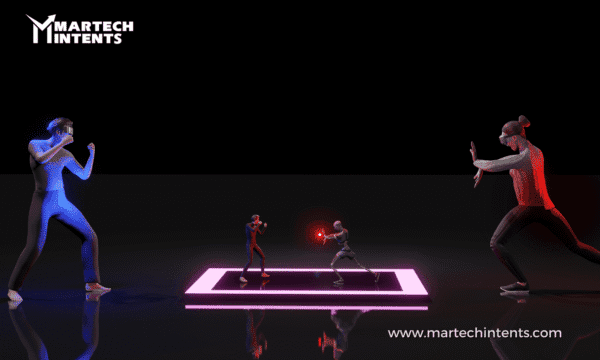
Virtual reality creates a completely digital environment. Instead of adding something to the real world, VR takes the user into another environment where they can explore and interact with digital content.
For marketers, this creates an important distinction.
AR can fit naturally into everyday activities such as shopping and social media. VR is better suited to situations where deeper immersion adds real value.
Why AR and VR Are Becoming Interesting to Marketers
The biggest advantage of immersive marketing is not that it looks futuristic.
It is that it can make customers active participants.
Consider the difference between these two experiences.
A furniture company shows you a picture of a sofa and tells you it will look great in your home.
Another company lets you use your phone to place a virtual version of that sofa in your living room.
The second experience answers a question the customer actually has: Will this work in my space?
That is where AR and VR become useful.
Forrester’s 2026 research on brand experience emphasizes that the experiences people have with a company influence how they perceive and engage with that brand.
Immersive technology can become part of that experience—but only when it serves a clear purpose.
AR Marketing Strategies Brands Can Actually Use
1. Give Customers a Virtual Product Try-On
Virtual try-ons are one of the easiest ways to understand the practical value of AR.
A beauty brand could let shoppers see how a particular shade of lipstick might look. An eyewear company could allow customers to preview different frames. A fashion retailer could experiment with virtual clothing previews.
The benefit is simple: customers get more information before making a purchase.
That extra confidence can be particularly valuable when people are shopping online and cannot physically touch or try a product.
2. Let Customers See Products in Their Own Space
This is especially useful for home-related products.
Imagine buying a lamp online. You know its dimensions, but it is still difficult to picture how it will look beside your sofa.
An AR tool can place a digital version of the lamp into the customer’s actual room.
The same idea can work for furniture, home appliances, artwork, décor, and other products where size and appearance matter.
It turns product discovery from something customers read about into something they can visualize.
3. Turn Product Packaging Into a Digital Experience
Packaging can do more than protect a product.
With AR, a customer could scan packaging and access a tutorial, recipe, product story, loyalty offer, or interactive experience.
For example, a food company could use AR to show customers different ways to prepare a product. A technology brand could provide a setup guide through an interactive experience.
The important part is that the digital content should add value.
If customers scan a package and simply see another advertisement, there is little reason to do it again.
4. Create AR Experiences for Social Media
Social media is already highly visual, which makes it a natural environment for AR.
Brands can create interactive filters, effects, product experiences, and other features that encourage people to participate.
But there is a difference between an AR campaign that people actually want to use and one that feels like an advertisement disguised as a filter.
The best experiences usually have something enjoyable, useful, surprising, or shareable about them.
Give people a reason to participate, and the marketing becomes part of the experience rather than an interruption.
5. Use AR to Explain Complicated Products
Some products are difficult to understand through photographs and text.
AR can help explain them visually.
A manufacturer could show how different components fit together. A technology company could demonstrate how a device works. A B2B company could use 3D visualization to explain complex equipment.
This can make technical information easier to understand, particularly for customers who prefer seeing something in action rather than reading a long explanation.
VR Marketing Strategies for Brands
VR has a different strength: immersion.
Instead of adding digital content to the customer’s environment, it creates an environment of its own.
1. Build Virtual Showrooms
A virtual showroom can give customers the opportunity to explore products without physically visiting a store.
This could work well for automotive companies, real-estate businesses, furniture brands, travel companies, and other businesses with products or environments that benefit from exploration.
A customer could move through a virtual space, examine different options, and learn about products at their own pace.
The experience does not have to replace physical shopping. It can simply help customers become more informed before they take the next step.
2. Offer Virtual Property and Destination Tours
Travel and real estate are obvious examples.
A potential traveler could explore a hotel room before booking. A property buyer could take a virtual walkthrough before scheduling an in-person visit.
The advantage is that customers get a better sense of the experience before committing their time or money.
It can also help businesses reach people who are not physically close to the location.
3. Create Virtual Product Demonstrations
Some products are easier to understand when customers can experience them.
A car manufacturer could create a virtual driving experience. An industrial company could demonstrate equipment inside a simulated environment. A technology business could let potential customers explore a complex system.
The experience becomes a demonstration rather than a traditional sales pitch.
That difference can make the message more memorable.
4. Use VR for Events and Brand Experiences
Brands can also use VR to create experiences around launches, conferences, exhibitions, and other events.
People who cannot attend physically may still be able to experience selected parts of the event digitally.
However, accessibility matters.
Google’s research into VR marketing has highlighted the importance of giving audiences multiple ways to enter an immersive experience rather than making a headset mandatory.
That principle remains useful: do not make the technology itself the barrier to experiencing the campaign.
AR vs. VR: Which Is Better for Marketing?
Neither technology is automatically better.
It depends on what you are trying to achieve.
| AR | VR |
|---|---|
| Adds digital content to the real world | Creates a completely virtual environment |
| Often accessible through smartphones | Usually requires dedicated hardware |
| Useful for product visualization | Useful for deep immersion |
| Strong for retail and social campaigns | Strong for simulations and virtual tours |
| Easier to introduce to larger audiences | Better suited to specific immersive experiences |
If your customers need to see how something looks, AR may be the better choice.
If they need to experience an environment, VR may make more sense.
Don’t Start With Technology—Start With the Customer
This is probably the most important point for brands considering AR or VR.
Do not begin with:
“We need an AR campaign.”
Begin with:
“What is frustrating our customers?”
Maybe they cannot visualize the product.
Maybe they do not understand how something works.
Maybe they want to explore a location before visiting.
Maybe your traditional product demonstration is not engaging enough.
Once you understand the problem, you can decide whether AR, VR, or a completely different solution makes sense.
This approach also helps prevent one of the most common mistakes in emerging-technology marketing: building something impressive that nobody actually needs.
Make the Experience Easy to Use
A great concept can fail because the execution is frustrating.
If customers have to download an unfamiliar application, create an account, scan several codes, and follow complicated instructions just to see the experience, many will leave before reaching the interesting part.
Keep the journey simple.
The customer should quickly understand:
- What the experience is
- How to access it
- What they can do
- Why it is worth their time
The more effortless the experience feels, the more likely people are to use it.
Connect Immersive Experiences With Your Marketing Funnel
AR and VR should not sit separately from your other marketing activities.
Think about the complete customer journey.
For example:
Social media post → AR experience → Product page → Purchase
Or:
Digital advertisement → Virtual experience → Lead form → Sales conversation
This makes the campaign easier to measure and gives customers a clear next step.
An immersive experience should not leave people wondering, “What am I supposed to do now?”
Personalization Can Add More Value
Personalization is another area where AR and VR can become interesting.
Instead of showing every customer the same experience, brands can use available customer information to make experiences more relevant.
A furniture retailer might recommend products based on a customer’s preferences.
A travel company could create destination experiences based on the type of trip someone is considering.
A retailer could guide shoppers toward products that fit their previous interests.
But personalization should be useful rather than intrusive.
Customers should feel that the experience understands what they need—not that the brand is simply collecting information about them.
How Should Brands Measure AR and VR Campaigns?
It is tempting to judge an immersive campaign by how many people tried it.
That is useful, but it is not enough.
Depending on the campaign, brands can measure:
- Number of users
- Experience completion rate
- Interaction time
- Product interactions
- Website visits
- Shares
- Leads
- Add-to-cart activity
- Purchases
- Repeat engagement
- Customer feedback
The right metric depends on the goal.
If the campaign is designed to increase awareness, engagement may be important.
If it is designed to support ecommerce, product interactions and conversions matter more.
The key is to decide what success looks like before launching the experience.
The Challenges Brands Should Not Ignore
AR and VR can be powerful, but they are not without challenges.
Cost
High-quality 3D assets, applications, and immersive experiences can require considerable investment.
Accessibility
Not every customer owns a VR headset or has a device capable of running advanced experiences.
Technical Performance
Slow loading, poor tracking, or compatibility problems can quickly damage the customer experience.
Adoption
People will not automatically use an immersive campaign simply because it exists.
The experience needs a clear reason for customers to participate.
Privacy
Brands should also think carefully about the information collected through immersive experiences, particularly when location, behavior, or interaction data is involved.
What Does the Future of AR and VR Marketing Look Like?
The future of immersive marketing is unlikely to be about technology for technology’s sake.
That approach may generate attention for a short time, but it does not necessarily create lasting value.
The stronger direction is toward useful immersion.
Customers may increasingly use AR to make purchasing decisions, visualize products, access information, and interact with brands in physical spaces.
VR can continue to play a role in virtual tours, training, demonstrations, events, simulations, and experiences that benefit from deeper immersion.
At the same time, brands will need to think about how these experiences fit with their broader customer journey.
Forrester’s 2026 research makes a similar broader point about experience: brands perform better when brand and customer experiences work together rather than becoming disconnected touchpoints.
That is an important lesson for immersive marketing too.
AR or VR should not become a separate “cool technology” project sitting outside the rest of the marketing strategy.
It should have a job to do.
Final Thoughts
AR and VR are giving brands a different way to communicate with customers.
Instead of asking people to simply look at an advertisement, businesses can invite them to try, explore, visualize, and experience.
That can be powerful – but only when the experience has a purpose.
A simple AR tool that helps someone choose the right sofa may create more value than an elaborate virtual world that customers visit once and forget.
The smartest brands will focus less on showing off the technology and more on understanding what their customers actually need.
The future of AR and VR marketing is not about making marketing more complicated. It is about making the customer experience more useful, engaging, and memorable.
Frequently Asked Questions
1. What is AR and VR marketing?
AR and VR marketing uses augmented reality and virtual reality to create interactive brand experiences. AR adds digital elements to the real world, while VR creates a fully digital environment that customers can explore.
2. How can brands use AR for marketing?
Brands can use AR for virtual product try-ons, product visualization, interactive packaging, social media experiences, and product demonstrations. These experiences can help customers understand and evaluate products before making a purchase.
3. How can VR improve customer engagement?
VR can place customers inside immersive experiences such as virtual showrooms, property tours, product demonstrations, events, and interactive brand stories. This can make complex products and brand messages easier to experience and remember.
4. Is AR or VR better for marketing?
Neither technology is automatically better. AR is often useful for accessible experiences such as product visualization and social media, while VR works well for immersive tours, simulations, demonstrations, and virtual experiences. The best option depends on the brand’s audience, goals, and customer journey.