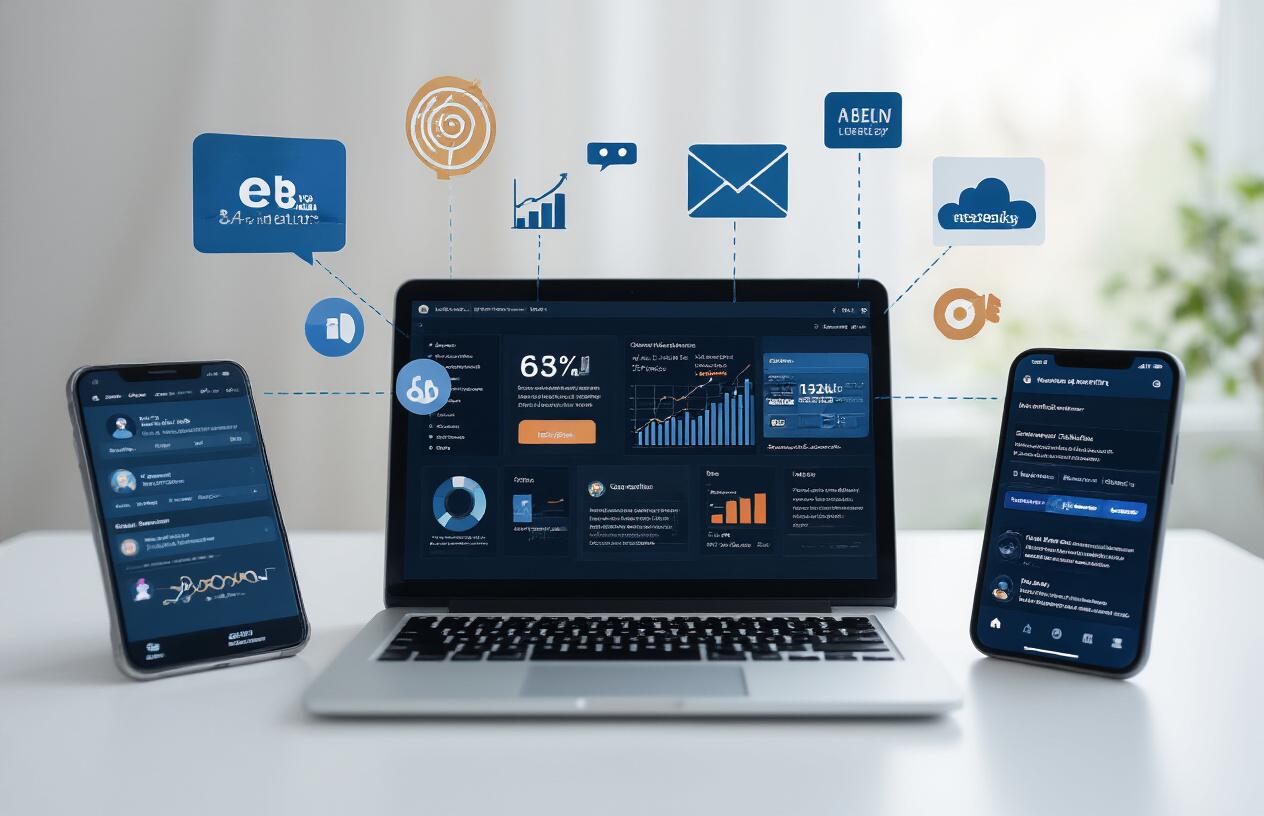









Customers no longer follow a single path when deciding what to buy. A person may discover a brand through Google, visit its website later, see an Instagram post a few days afterward, open an email, and finally speak with a sales representative before making a decision.
For marketers, this creates both an opportunity and a challenge.
Being present on multiple channels is no longer enough. Customers expect those channels to work together. They want relevant communication, consistent information, and a smooth experience whenever they interact with a brand.
This is where omnichannel marketing becomes important.
An effective omnichannel strategy connects marketing channels and customer data to create a more consistent journey. When customers can move naturally between channels without feeling like they are starting from scratch, businesses have a better chance of turning interest into action.
What Is Omnichannel Marketing?
Omnichannel marketing is a customer-focused approach that connects different marketing and communication channels into a unified experience.
These channels may include:
- Search engines
- Websites
- Social media
- Mobile apps
- SMS and messaging platforms
- Paid advertising
- Customer service
- Sales teams
- Physical stores
The goal isn’t simply to use all of these channels.
The goal is to make them work together.
For example, imagine that a potential customer discovers your company through a Google search and reads one of your articles. Later, that person downloads a guide from your website. Instead of sending the same introductory advertisement repeatedly, your marketing system can recognize the interaction and provide more relevant information.
The customer gets a smoother experience, while the business gets a better understanding of where that person is in the buying journey.
Omnichannel Marketing vs. Multichannel Marketing
Multichannel and omnichannel marketing may sound similar, but there is an important difference.
With multichannel marketing, a company communicates through several channels, but those channels may operate independently.
With omnichannel marketing, the channels are connected around the customer journey.
For example, a business might run separate campaigns on Google, Instagram, email, and its website. That is multichannel marketing.
An omnichannel approach connects these interactions. A customer’s activity on one channel can influence what they see or receive on another.
In simple terms, multichannel marketing focuses on where you communicate.
Omnichannel marketing focuses on how those interactions work together.
Why Omnichannel Marketing Can Improve Conversions
A customer doesn’t always convert during their first interaction with a brand. They may need time to research, compare options, ask questions, and build confidence.
Omnichannel marketing helps businesses stay relevant throughout that process.
1. It Creates a More Consistent Experience
Imagine seeing one offer on a company’s website and a completely different message in its email campaign. Then you contact the sales team and receive another explanation.
That kind of inconsistency can create doubt.
An omnichannel strategy keeps important messages, offers, branding, and customer information aligned across different touchpoints.
Consistency doesn’t mean every channel needs identical content. Instead, every channel should support the same overall customer experience.
2. It Makes Marketing More Relevant
Customers are more likely to respond when marketing reflects their interests.
Someone who has just discovered your brand probably needs educational content. Someone who has compared products may need a detailed comparison. A returning customer may be interested in an upgrade or related service.
Using customer behavior and engagement data allows marketers to adjust communication according to the customer’s situation.
That can make campaigns feel more useful and less like generic advertising.
3. It Reduces Friction
Small obstacles can cause customers to abandon a purchase or leave a website.
Maybe a form asks for information the company already has. Perhaps a customer receives an irrelevant email after completing a purchase. Or a person has to explain the same issue to several customer service representatives.
Connecting customer information across channels can reduce these problems.
A smoother experience means fewer unnecessary steps between interest and conversion.
4. It Builds Trust Over Time
People usually don’t trust a company simply because they saw one advertisement.
Trust develops through repeated experiences.
A useful blog post, helpful email, clear website, responsive support team, and relevant follow-up can gradually strengthen that relationship.
Omnichannel marketing gives businesses a framework for making those experiences feel connected rather than random.
The Main Building Blocks of Omnichannel Marketing
A successful strategy requires more than simply adding more communication channels.
Several foundations need to work together.
Customer Data
Customer data helps marketers understand what people have done and what they may need next.
Useful information can include:
- Website activity
- Email engagement
- Previous purchases
- Content downloads
- Product interests
- Customer support interactions
- Lead status
- Communication preferences
The more reliable and connected this information is, the easier it becomes to create relevant experiences.
CRM Systems
A CRM can help marketing and sales teams maintain a shared view of customer interactions.
Instead of keeping customer information in disconnected spreadsheets and platforms, teams can use a central system to understand previous conversations, activities, and opportunities.
This becomes particularly valuable for B2B businesses where the buying journey can involve several people and multiple interactions.
Marketing Automation
Marketing automation helps businesses respond to customer actions without manually handling every step.
For example:
Website visit → Content download → Email follow-up → Lead qualification → Sales notification
Automation can make these journeys faster and more consistent.
However, automation should have a purpose. Sending more messages isn’t the same as creating a better customer experience.
Analytics
Analytics helps marketers understand whether their omnichannel strategy is actually working.
Instead of looking only at individual channel metrics, businesses should examine the complete journey.
Important metrics may include:
- Conversion rate
- Customer acquisition cost
- Lead-to-customer rate
- Customer lifetime value
- Return on marketing investment
- Engagement rate
- Repeat purchase rate
- Customer retention
Looking at the full journey can reveal which interactions are contributing to conversions.
How to Build an Omnichannel Marketing Strategy
Creating an omnichannel strategy doesn’t mean changing everything at once.
A practical approach is to start with the customer and build from there.
Step 1: Understand Your Customer Journey
Start by identifying how customers actually discover, research, evaluate, and purchase from your business.
Ask:
- Where do customers first find us?
- What information do they need before purchasing?
- Which channels influence their decisions?
- Where do potential customers usually leave?
- What happens after someone becomes a customer?
The answers can reveal gaps that aren’t obvious when looking at individual campaigns.
Step 2: Choose the Channels That Matter
You don’t need to be everywhere.
A B2B company might get stronger results from search, LinkedIn, email, content marketing, and sales outreach.
An ecommerce company may depend more heavily on social media, search, email, mobile experiences, and retargeting.
Choose channels based on customer behavior rather than chasing every new platform.
Step 3: Connect Your Data
Your website, CRM, email platform, advertising tools, and analytics systems should ideally share useful customer information.
Connected data helps marketers understand the complete picture.
It also reduces the chance of sending customers messages that don’t match their previous interactions.
Step 4: Create Audience Segments
Not every customer should receive the same message.
You can create segments based on factors such as:
- New visitors
- Returning visitors
- Existing customers
- High-value customers
- Trial users
- Product interests
- Engagement level
- Buying stage
Segmentation allows you to make communication more relevant without creating completely different campaigns for every individual.
Step 5: Develop Connected Campaigns
Think about campaigns as journeys rather than isolated messages.
For example:
A customer sees a social media post → visits a landing page → downloads an ebook → receives a helpful follow-up email → attends a webinar → speaks with sales.
Each interaction should make the next step easier.
That’s the real strength of omnichannel marketing.
Common Omnichannel Marketing Mistakes
Even well-funded marketing teams can get omnichannel strategies wrong.
Trying to Be Everywhere
More channels don’t automatically produce better results.
If your team cannot maintain quality and consistency, adding another platform may create more problems than opportunities.
Sending the Same Message Everywhere
Customers don’t want to see the same advertisement repeated across every platform.
Adapt the message to the channel and the customer’s stage in the journey.
Ignoring Customer Preferences
Some customers prefer email. Others may respond better to SMS, social media, or direct communication.
Respecting communication preferences can improve the overall experience.
Focusing Only on New Customers
Acquiring customers is important, but existing customers can also create significant long-term value.
Retention campaigns, loyalty programs, useful educational content, and personalized recommendations can help businesses maintain relationships after the initial purchase.
Measuring Channels in Isolation
A customer may discover your brand through social media but convert several days later through a branded Google search.
If you only credit the final interaction, you may underestimate the value of earlier touchpoints.
How AI Is Changing Omnichannel Marketing
Artificial intelligence is adding another layer to omnichannel marketing.
AI can help marketers identify patterns in customer behavior, predict potential actions, personalize recommendations, analyze large datasets, and automate parts of the customer journey.
For example, an AI system could identify customers who are showing strong purchase intent and help marketers prioritize relevant content or follow-up communication.
AI can also help businesses analyze customer interactions at a scale that would be difficult to manage manually.
Still, technology should not become the strategy.
Customers don’t care how sophisticated your marketing software is. They care whether your communication is useful, timely, and easy to understand.
The strongest results come when technology supports good marketing decisions rather than replacing them.
How to Improve Omnichannel Conversion Rates
If your primary goal is better conversions, start by improving the experience around the moments where customers make decisions.
Make Calls to Action Clear
Customers should know what they can do next.
Whether it’s downloading a guide, requesting a demo, starting a trial, or completing a purchase, the next step should be obvious.
Remove Unnecessary Steps
Review your forms, checkout process, landing pages, and communication flows.
Ask yourself:
Does this step genuinely help the customer, or is it creating unnecessary work?
Removing even one unnecessary step can make an experience easier.
Follow Up at the Right Time
Timing matters.
A customer who has just requested pricing may need a different follow-up from someone who casually read a blog post.
Use customer behavior to determine when and how to communicate.
Test and Improve
Omnichannel marketing shouldn’t be treated as a one-time project.
Test different:
- Messages
- Offers
- Landing pages
- Email sequences
- Calls to action
- Follow-up timing
- Audience segments
Then use the results to improve the next campaign.
The Future of Omnichannel Marketing
Customers will continue to move between websites, search engines, social platforms, mobile devices, apps, stores, and customer support channels.
As these journeys become more complex, businesses will need to focus less on individual channels and more on the experience connecting them.
Better data integration, AI-powered insights, automation, personalization, and real-time analytics will make this possible.
But the basic principle will remain the same:
Understand the customer, connect the experience, and make every next step easier.
Omnichannel marketing isn’t about communicating with customers everywhere just for the sake of being visible.
It’s about creating a journey where each interaction has a purpose.
When your marketing channels work together, customers spend less time dealing with friction and more time engaging with your brand. That can lead to stronger relationships, higher conversion opportunities, and better long-term business results.
Final Thoughts
Mastering omnichannel marketing requires more than adding another social media account or purchasing another marketing platform.
It starts with understanding how customers behave.
Once you know where customers come from, what they need, what influences their decisions, and where they experience problems, you can build a connected journey around those insights.
Start small. Connect the channels that matter most. Use customer data responsibly. Measure the complete journey. Then keep improving.
The goal isn’t to make marketing more complicated.
The goal is to make the customer’s journey simpler.
And when the customer journey becomes easier, better conversions often follow.
Frequently Asked Questions
1. What is omnichannel marketing?
Omnichannel marketing connects different marketing and communication channels to create a consistent customer experience. It allows customers to move between channels such as search, email, social media, websites, and sales without losing context.
2. How does omnichannel marketing improve conversions?
Omnichannel marketing can improve conversions by making customer interactions more relevant and reducing friction during the buying journey. When customers receive consistent information and useful follow-ups, it becomes easier for them to take the next step.
3. What channels can be included in an omnichannel strategy?
An omnichannel strategy can include websites, search engines, email, social media, paid advertising, SMS, mobile apps, sales teams, and customer support. The important part is connecting these channels rather than managing each one completely separately.
4. How can a business start using omnichannel marketing?
Start by understanding your customer journey and identifying the channels that have the biggest influence on purchasing decisions. Then connect customer data, create relevant audience segments, develop coordinated campaigns, and measure the complete journey to identify areas for improvement.