








The trading industry is becoming increasingly digital, competitive, and data-driven. Traders, financial platforms, fintech companies, and investment brands are using technology to improve customer experiences, understand audience behavior, automate communication, and make better use of marketing data.
This is where Martech becomes valuable.
Marketing technology, commonly known as Martech, connects tools for customer relationship management, analytics, automation, content, personalization, and campaign measurement. When these technologies are used strategically, trading-focused businesses can create more relevant customer journeys while improving operational efficiency.
In 2026, the connection between marketing technology, artificial intelligence, automation, and financial services is becoming even stronger. Financial organizations are increasingly looking for measurable business value from AI and technology investments rather than simply experimenting with new tools.
What Is Martech in Trading?
Martech refers to the collection of digital technologies used to plan, execute, automate, measure, and improve marketing activities.
For trading and financial platforms, Martech can support areas such as:
- Customer acquisition
- Lead management
- Email marketing
- Customer segmentation
- Marketing automation
- Website analytics
- Personalized communication
- Customer retention
- Campaign attribution
- Customer journey management
For example, a trading platform could use a CRM to organize leads, analytics to understand website behavior, and automation to send relevant educational content based on a user’s interests.
The objective is not simply to collect more data. The real goal is to turn useful data into better customer experiences and measurable marketing outcomes.
Why Martech Matters for Trading Businesses in 2026
The financial services sector is dealing with fragmented data, legacy systems, regulatory requirements, and increasing expectations for personalized experiences. These challenges make an integrated marketing technology strategy increasingly important.
A strong Martech strategy can help trading-focused organizations:
1. Understand Customer Behavior
Analytics platforms can reveal how visitors interact with websites, landing pages, educational resources, and campaigns.
This information can help marketers identify which content attracts attention and where potential customers leave the journey.
2. Improve Lead Management
A CRM can bring prospect information into one centralized system.
Marketing teams can then organize prospects according to factors such as:
- Interests
- Engagement
- Content interactions
- Previous communications
- Funnel stage
This creates a more organized approach to lead nurturing.
3. Automate Repetitive Marketing Tasks
Marketing automation can reduce repetitive manual work.
For example, businesses can create automated workflows for:
- Welcome emails
- Educational content
- Lead nurturing
- Event reminders
- Product updates
- Customer engagement campaigns
Automation is particularly useful when communication needs to happen consistently across large audiences.
4. Deliver More Personalized Experiences
Personalization is becoming an important expectation in financial services. Recent industry research highlights personalized recommendations and communications as major priorities for financial organizations.
Martech allows marketers to create different experiences based on customer interests and interactions.
Instead of sending the same message to everyone, a company can provide more relevant content to different audience segments.
Key Martech Technologies for Trading
A successful Martech ecosystem does not necessarily require dozens of platforms. The priority should be selecting technologies that work together and support clear business objectives.
CRM
A CRM acts as a central place for managing customer and prospect relationships.
It can help marketing and sales teams understand:
- Who the customer is
- How they interacted with the brand
- Which campaigns influenced them
- What stage they are in
- What communication they have received
Marketing Automation
Marketing automation allows teams to create repeatable customer journeys.
For example:
Website Visit → Content Interaction → Lead Capture → Email Nurturing → Sales Follow-Up
This process can reduce manual work while keeping communication consistent.
Analytics
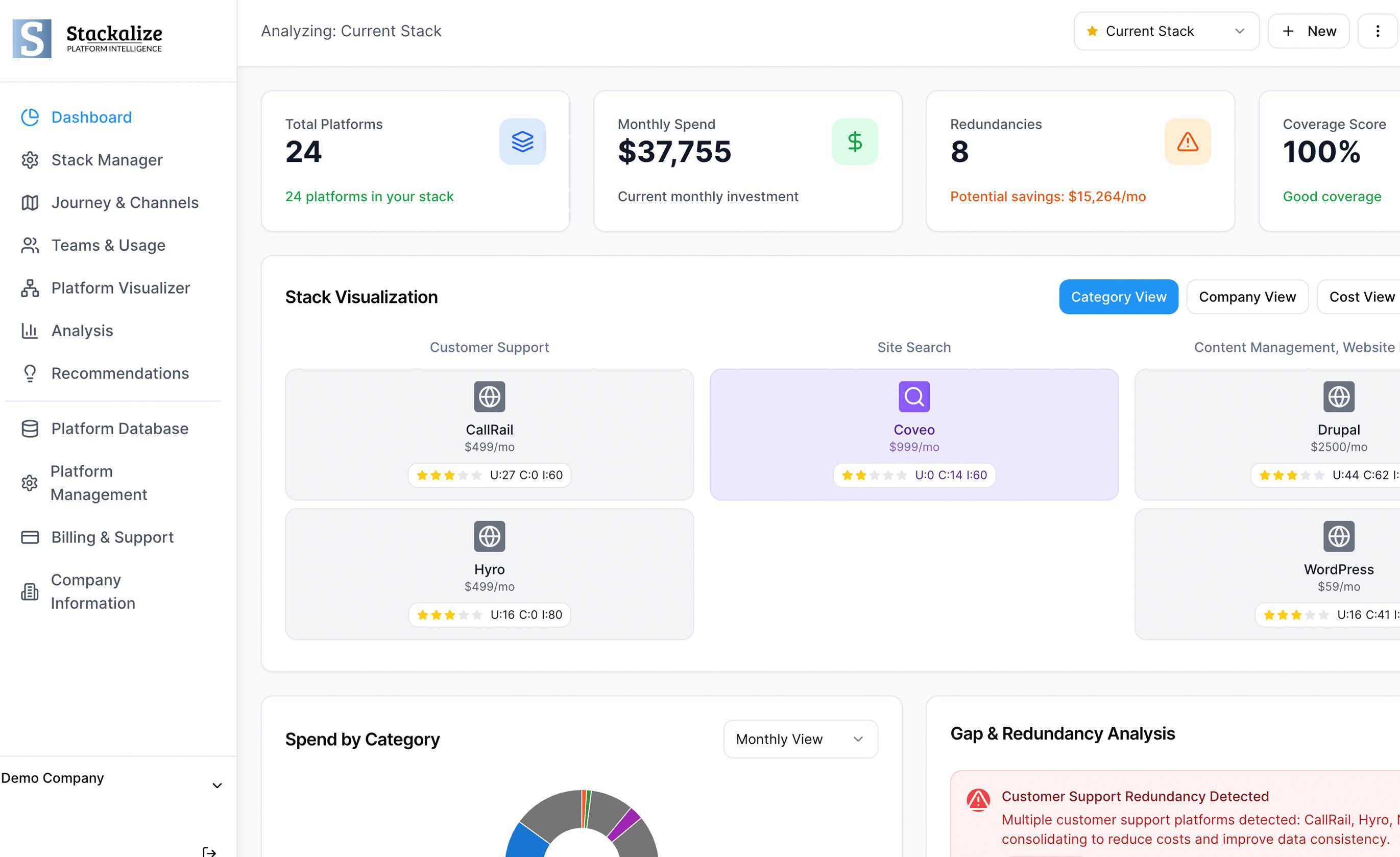
Analytics provides visibility into marketing performance.
Important metrics can include:
- Website traffic
- Conversion rate
- Cost per acquisition
- Engagement rate
- Lead quality
- Customer lifetime value
- Campaign performance
Customer Data Platforms
A customer data platform can help bring customer information from different sources into a more unified environment.
This can become particularly valuable when organizations have data spread across websites, CRM systems, applications, email platforms, and other channels.
AI-Powered Martech
Artificial intelligence is becoming an important component of modern marketing technology.
AI can assist with:
- Audience segmentation
- Content creation
- Predictive analysis
- Campaign optimization
- Personalization
- Customer support
- Lead scoring
However, AI should support a well-defined marketing strategy rather than replace strategic decision-making.
How to Build a Martech Strategy for Trading
Simply purchasing marketing tools will not automatically improve performance.
A better approach is to build the technology stack around specific objectives.
Step 1: Define Your Marketing Goals
Start by identifying what you want Martech to accomplish.
Possible goals include:
- Increasing qualified leads
- Improving customer retention
- Increasing engagement
- Reducing manual marketing work
- Improving campaign measurement
- Creating better customer journeys
Clear goals make technology selection easier.
Step 2: Map the Customer Journey
Understand what happens from the first interaction to conversion and ongoing engagement.
For example:
Awareness → Education → Consideration → Conversion → Engagement → Retention
Once the journey is clear, marketers can identify where automation, analytics, CRM, or personalization can add value.
Step 3: Connect Your Data
Disconnected data can make marketing decisions difficult.
Modern financial marketing strategies increasingly emphasize first-party data, data integration, and coordinated customer experiences.
Make sure important systems can exchange relevant information securely and appropriately.
Step 4: Automate Carefully
Start with repetitive processes that have clear rules.
For example, an automated workflow could send educational content after a user downloads a market-related guide.
Avoid automating every customer interaction. Human oversight remains important, particularly in financial environments.
Step 5: Measure Results
Technology investments should be connected to measurable outcomes.
Track metrics such as:
Traffic → Engagement → Leads → Conversions → Retention
This makes it easier to determine which marketing activities are contributing to business objectives.
Using AI and Automation Responsibly
AI can make Martech more powerful, but financial and trading-related marketing requires additional care.
Customer data should be handled responsibly, and organizations need appropriate privacy, security, compliance, and governance processes.
This is especially important because financial marketing automation increasingly involves customer data, personalization, omnichannel communication, and automated decision support.
AI should therefore be treated as an enhancement to a controlled marketing process rather than an uncontrolled replacement for human judgment.
Common Martech Mistakes to Avoid
Buying Too Many Tools
A large technology stack does not automatically create better marketing.
Too many disconnected platforms can increase complexity and create data silos.
Ignoring Integration
If your CRM, analytics, automation, and customer data systems cannot communicate properly, marketers may struggle to create a complete view of the customer journey.
Focusing Only on Traffic
High website traffic does not necessarily mean successful marketing.
Look beyond visitors and evaluate engagement, qualified leads, conversions, retention, and revenue influence.
Automating Without Strategy
Automation should follow a clear customer journey.
Automating a poorly designed process simply makes the poor process happen faster.
Neglecting Data Governance
Trading and financial businesses may handle sensitive customer information. Privacy, security, consent, and access controls should therefore be considered when designing Martech workflows.
The Future of Martech and Trading
The future of Martech will likely involve deeper integration between AI, automation, analytics, CRM, customer data, and real-time engagement.
Financial organizations are already moving toward broader AI implementation, while automation is becoming an important part of technology strategies.
For trading-focused businesses, the opportunity is not simply to adopt more technology. It is to create a connected system where data supports better marketing decisions and customers receive more relevant experiences.
Final Thoughts
Martech can become an important part of a modern trading-focused marketing strategy.
CRM, analytics, automation, AI, personalization, and customer data technologies can work together to improve marketing efficiency and customer engagement.
The key is to start with the customer journey and business objectives rather than the technology itself.
In 2026, successful Martech strategies will be less about collecting the largest number of tools and more about creating a connected, measurable, secure, and customer-focused marketing ecosystem.