







Every customer follows a unique path before deciding to purchase a product or service. They may discover your business through a search engine, explore your website, read blog articles, engage with your social media posts, subscribe to your newsletter, and compare your offerings before making a final decision.
Understanding these interactions is essential for businesses that want to improve customer satisfaction and marketing performance. This is where Customer Journey Mapping becomes valuable.
Customer journey mapping helps businesses visualize every stage of the customer experience, identify pain points, and discover opportunities to deliver more meaningful interactions. Instead of relying on assumptions, marketers can use customer data and insights to optimize each touchpoint and create a smoother path to conversion.
What Is Customer Journey Mapping?
Customer journey mapping is the process of creating a visual representation of every interaction a customer has with a business. It tracks the customer’s experience from the first point of contact to post-purchase engagement.
The goal is to understand how customers interact with your brand, what challenges they face, and how you can improve their overall experience.
A typical customer journey includes:
- Awareness
- Consideration
- Decision
- Purchase
- Onboarding
- Retention
- Advocacy
By understanding each stage, businesses can design marketing strategies that meet customer needs at the right time.
Why Customer Journey Mapping Matters
Customers expect seamless experiences across websites, email, social media, mobile apps, and customer support channels. Without understanding their journey, businesses may lose potential customers due to poor communication or inconsistent experiences.
Customer journey mapping helps organizations:
- Improve customer experience
- Identify gaps in the buying process
- Increase customer satisfaction
- Build stronger customer relationships
- Improve marketing campaign performance
- Increase conversion rates
- Support long-term customer loyalty
Key Stages of the Customer Journey
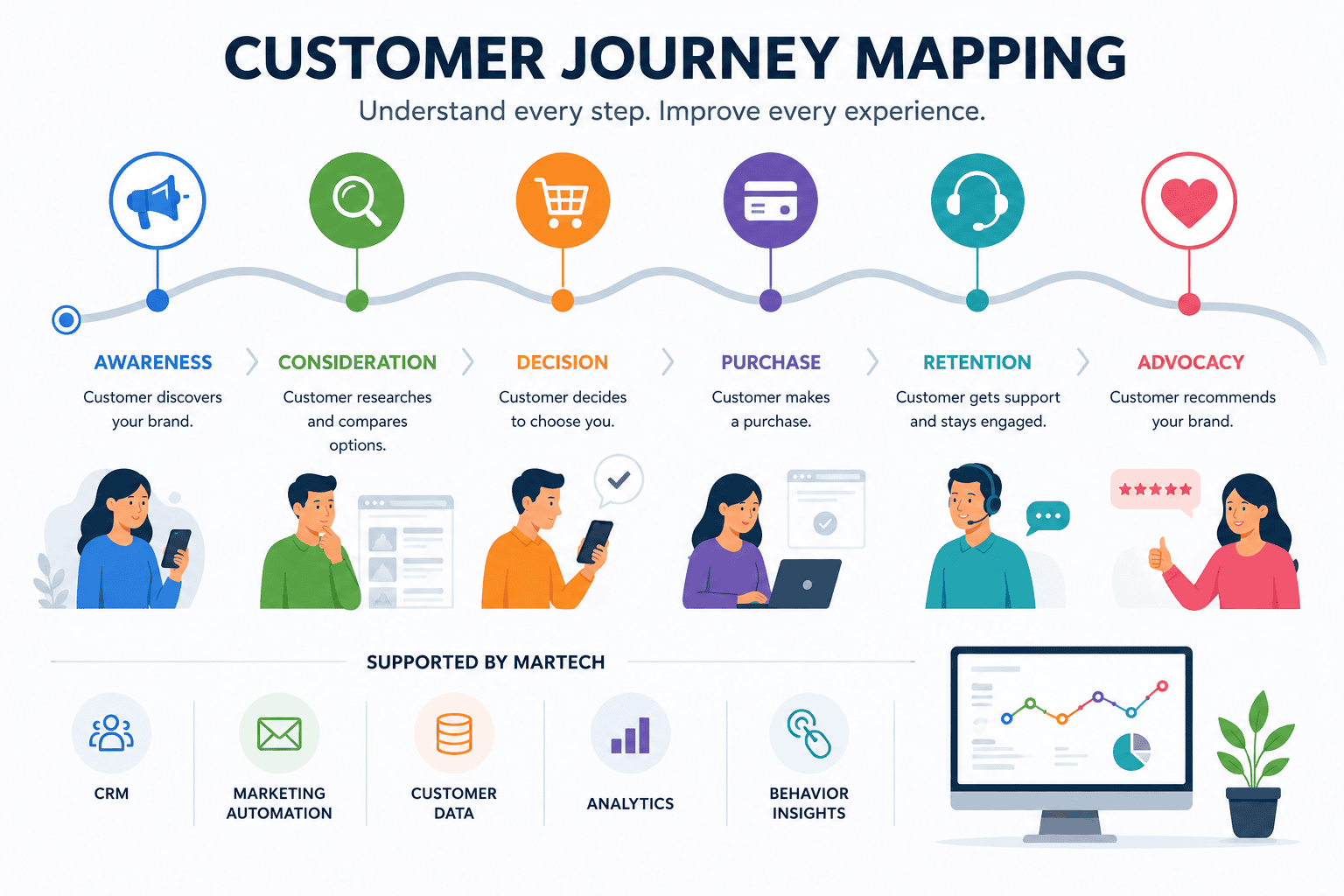
1. Awareness
The customer becomes aware of your brand through channels such as search engines, blog content, social media, advertisements, or referrals.
2. Consideration
The customer researches your products or services, compares competitors, and evaluates different options.
3. Decision
After gathering enough information, the customer decides to make a purchase or contact your business.
4. Purchase
A positive buying experience, clear communication, and a simple checkout process help build trust.
5. Retention
The relationship does not end after the sale. Follow-up emails, helpful resources, and customer support encourage repeat business.
6. Advocacy
Satisfied customers may recommend your business through reviews, testimonials, referrals, or social media.
How Martech Supports Customer Journey Mapping
Modern marketing technology makes it easier to understand customer behavior by collecting and analyzing data across multiple touchpoints.
Some of the most valuable Martech tools include:
- Customer Relationship Management (CRM) platforms
- Marketing Automation software
- Customer Data Platforms (CDPs)
- Web Analytics tools
- Heatmap and behavior analysis software
- Customer feedback platforms
These technologies provide businesses with valuable insights into customer interactions and help create more personalized experiences.
Best Practices for Effective Customer Journey Mapping
To create a successful customer journey map:
- Define your target audience and buyer personas.
- Identify every customer touchpoint.
- Collect feedback from real customers.
- Use analytics to understand customer behavior.
- Focus on solving customer pain points.
- Update journey maps regularly as customer expectations change.
Customer journey mapping should be an ongoing process rather than a one-time project.
Common Challenges
Businesses often face several challenges when creating customer journey maps:
- Incomplete customer data
- Disconnected marketing systems
- Lack of collaboration between departments
- Limited understanding of customer behavior
- Outdated customer personas
Using integrated Martech solutions can help overcome these obstacles and provide a more accurate view of the customer journey.
The Future of Customer Journey Mapping
As artificial intelligence and marketing analytics continue to evolve, customer journey mapping is becoming more intelligent and data-driven.
Future developments include:
- AI-powered customer insights
- Predictive customer behavior analysis
- Real-time personalization
- Cross-channel journey tracking
- Automated journey optimization
Businesses that embrace these technologies will be better positioned to meet changing customer expectations and deliver exceptional experiences.
Conclusion
Customer journey mapping is more than a marketing exercise – it is a strategic approach to understanding customers and improving every interaction they have with your business.
By combining customer insights with modern Martech tools such as CRM systems, marketing automation, analytics, and customer data platforms, businesses can create more personalized experiences, improve customer satisfaction, and achieve stronger marketing results.
Organizations that continuously analyze and optimize the customer journey will be better equipped to build lasting customer relationships and drive sustainable business growth.
Frequently Asked Questions (FAQs)
1. What is customer journey mapping?
Customer journey mapping is the process of visualizing every interaction a customer has with a business, from initial awareness to long-term loyalty.
2. Why is customer journey mapping important?
It helps businesses understand customer behavior, improve experiences, identify pain points, and increase conversions.
3. What are the stages of a customer journey?
The main stages are Awareness, Consideration, Decision, Purchase, Retention, and Advocacy.
4. Which Martech tools support customer journey mapping?
CRM platforms, Customer Data Platforms (CDPs), marketing automation tools, analytics platforms, and customer feedback software all support customer journey mapping.
5. How often should businesses update their customer journey maps?
Businesses should review and update journey maps regularly to reflect changes in customer behavior, market trends, and business goals.
6. Can small businesses benefit from customer journey mapping?
Yes. Even small businesses can improve customer satisfaction and marketing performance by understanding how customers interact with their brand.
7. How does customer journey mapping improve marketing?
It helps marketers deliver the right message at the right stage of the customer journey, leading to better engagement and higher conversion rates.
8. What is the difference between a customer journey and a buyer journey?
A buyer journey focuses on the purchasing process, while a customer journey includes the entire relationship with the brand, including post-purchase interactions.