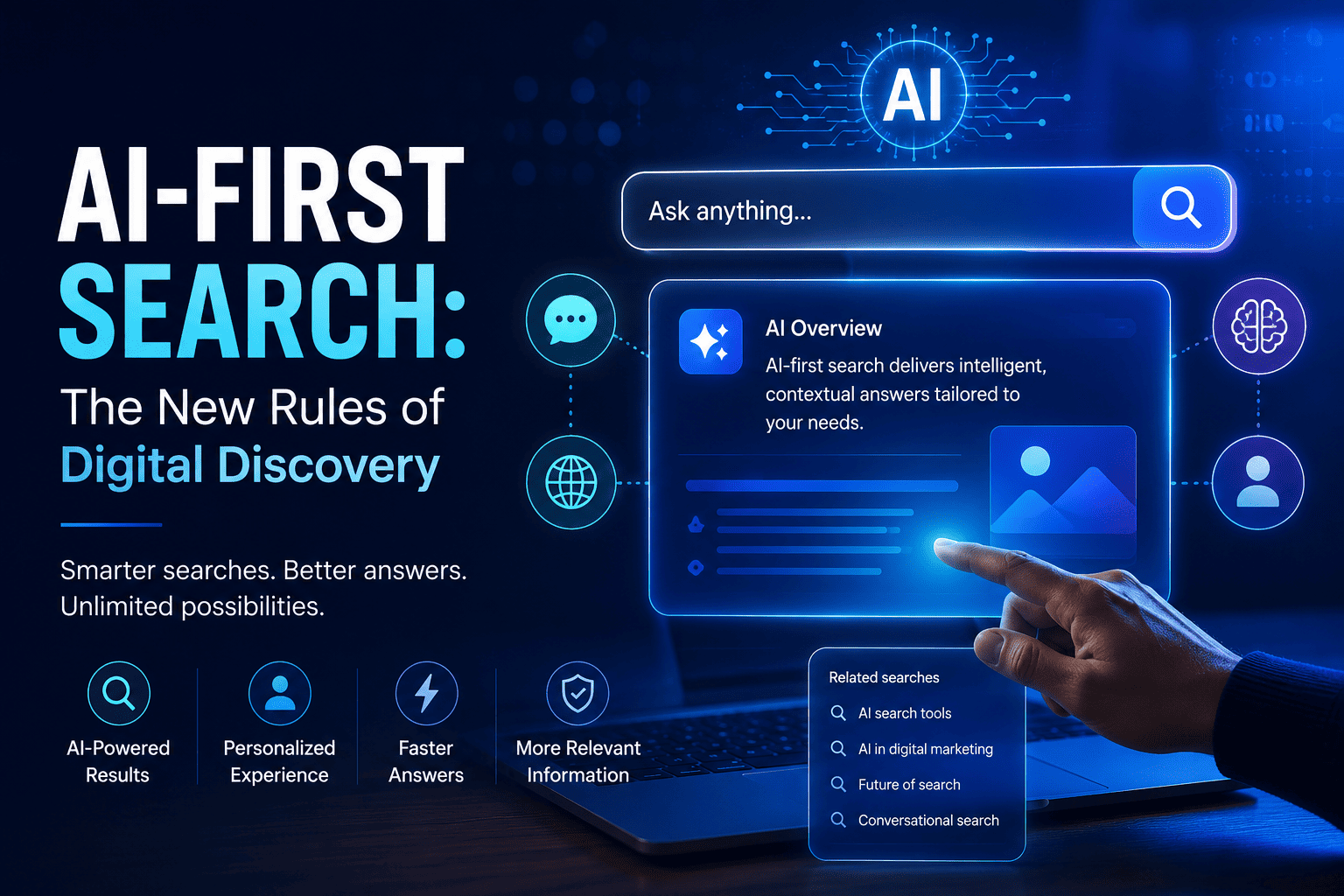








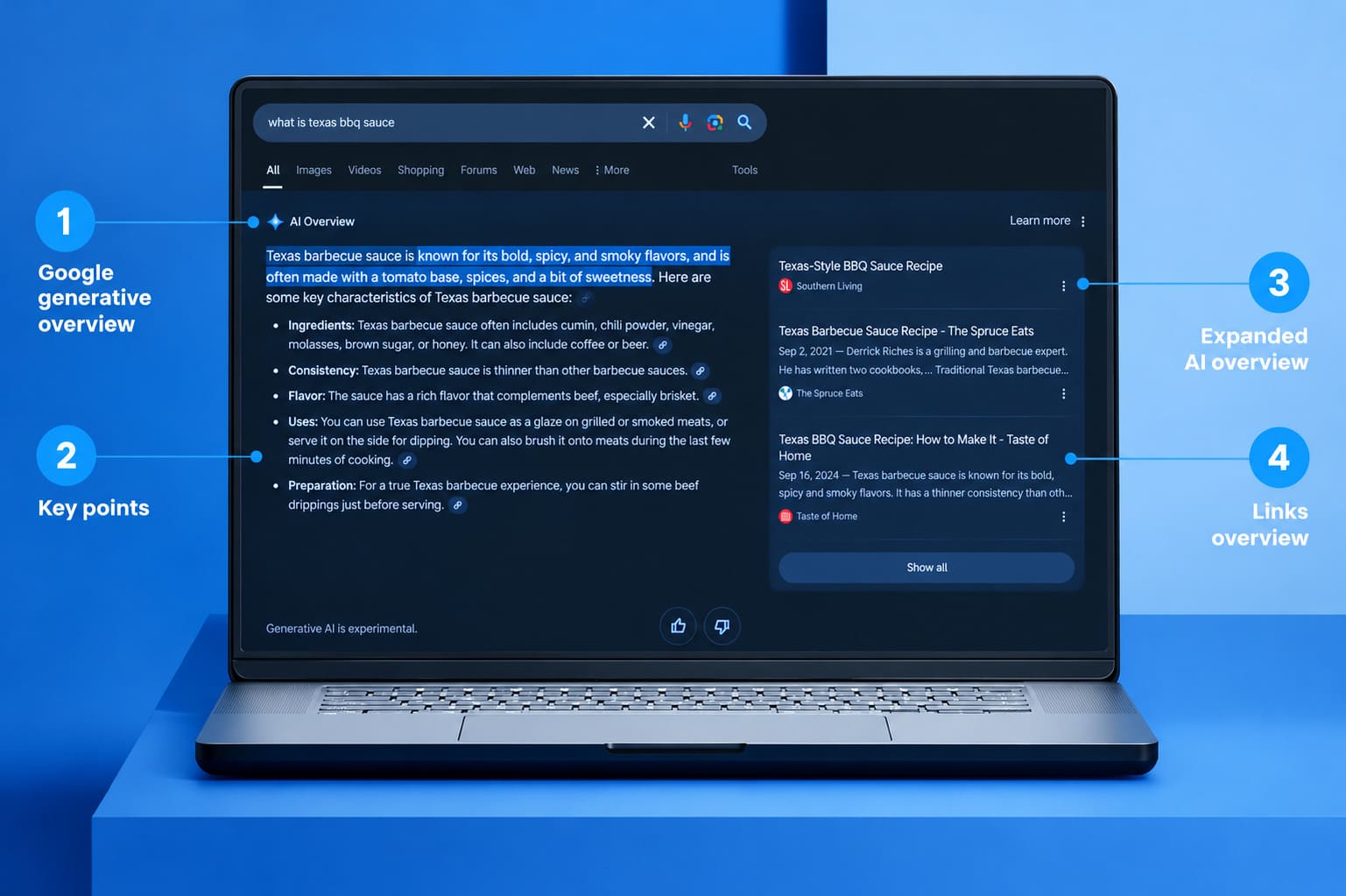
Search is no longer just about typing a few keywords into Google and clicking one of the first links. People are increasingly asking AI-powered platforms questions, comparing recommendations, researching products, and looking for clear answers without visiting multiple websites.
For brands, this change creates an important question: How can your business stay visible when customers discover information through AI search instead of traditional search results?
Traditional SEO still matters, but marketers also need to think about how their content is discovered, understood, and referenced by AI-powered search experiences. A strong online presence now depends on more than ranking for a particular keyword. It also requires useful content, consistent brand information, credible sources, and a website that search systems can understand.
In this guide, we will explore how brands can strengthen their visibility in AI search while building a sustainable search strategy for the future.
What Is AI Search, and Why Does It Matter for Brands?
AI search uses artificial intelligence to understand questions, interpret context, and provide answers or recommendations. Instead of presenting only a list of links, some search experiences generate summaries, combine information from multiple sources, and provide links to relevant websites.
For example, someone searching for marketing automation software might once have searched for “best marketing automation tools.” Today, that person may ask an AI-powered search platform, “Which marketing automation platform is suitable for a small B2B company with a limited budget?”
The second question gives more context. The user is looking for a recommendation that considers business size, industry, and budget.
This creates a different opportunity for brands. Content that explains specific use cases, compares approaches fairly, and answers detailed questions can help potential customers understand what a business offers.
However, appearing in an AI-generated answer is not guaranteed. Each platform uses its own systems, and inclusion can vary depending on the query and available information.
Why Google Rankings Alone Are No Longer the Whole Story
Google rankings remain valuable because people continue to use traditional search results to discover websites, products, and information. However, they are only one part of a broader digital discovery journey.
Customers may encounter a brand through several channels before making a decision, including:
- Traditional search engine results
- AI-generated answers and search summaries
- Industry publications and research reports
- Social media discussions and professional communities
- Customer reviews and comparison websites
- Brand websites and educational resources
Imagine a company that publishes helpful articles about customer data platforms. A potential buyer might discover one article through Google, encounter the company in an AI-generated comparison, and later visit its website to explore a detailed guide.
Each interaction can contribute to brand awareness and trust.
That is why businesses should avoid depending entirely on one keyword, one search engine, or one source of website traffic. A broader visibility strategy creates more opportunities for people to discover the brand.
1. Create Content That Answers Real Customer Questions
One of the most effective ways to improve your search visibility is to understand what your audience genuinely wants to know.
Many websites publish articles around popular keywords without answering the questions behind those searches. This often results in content that looks optimized but offers little practical value.
Instead, start with the problems your customers are trying to solve.
For example, a marketing technology company could publish content addressing questions such as:
- How can a business improve lead quality with marketing automation?
- What is the difference between a CRM and a customer data platform?
- How can marketers measure the return on marketing technology investments?
- Which customer engagement metrics should a B2B company track?
Each question gives you an opportunity to create a focused, useful resource.
Answer the main question early in the article, explain the important details, and provide examples where they help readers understand the subject.
This approach makes content more useful for people and easier for search systems to interpret. It does not guarantee AI visibility, but it gives your content a stronger purpose than simply repeating keywords.
2. Write Naturally Instead of Stuffing Keywords
Keywords remain useful for understanding search intent, but repeating the same phrase in every paragraph can make an article sound unnatural.
Modern content should reflect the way people actually discuss a subject.
Suppose your target keyword is “AI search visibility.” Instead of inserting that exact phrase repeatedly, you can naturally discuss related concepts such as AI-generated answers, brand mentions, search discovery, content credibility, and website optimization.
These related ideas help readers understand the topic in greater depth.
A useful article should have a clear heading structure, descriptive subheadings, short paragraphs, and direct explanations. Lists and tables can also make complex information easier to navigate.
The goal is not to write for an algorithm at the expense of your audience. It is to make valuable information easy to find, understand, and use.
3. Build Brand Credibility Beyond Your Website
Your website is important, but it is not the only place where people learn about your brand.
Potential customers may also encounter your business through industry publications, independent reviews, professional communities, partner websites, and credible third-party resources.
Consistent information across these channels helps people understand who you are, what you do, and which subjects your brand specializes in.
For example, a company that provides marketing analytics software should explain its capabilities clearly on its website. Its product documentation, business profiles, industry articles, and other legitimate public references should communicate the same core information.
Brands can strengthen credibility by:
- Publishing original research and useful industry insights.
- Providing accurate company and product information.
- Earning relevant editorial mentions and citations.
- Sharing genuine customer experiences where appropriate.
- Contributing meaningful expertise to industry discussions.
- Keeping important website information current.
Avoid treating brand mentions or backlinks as a numbers game. Relevance, accuracy, and the quality of the information matter more than simply collecting as many links as possible.
4. Make Your Website Easy for Search Systems to Understand
Even excellent content can struggle to reach its audience if search engines cannot access or interpret the page properly.
Technical SEO therefore remains an important foundation for AI search visibility.
Start by checking whether important pages can be crawled and indexed. Review your robots.txt file, XML sitemap, canonical tags, internal links, and page-loading performance. Make sure the content you want search engines to discover is accessible and that important pages are not unintentionally blocked.
Your website structure also matters.
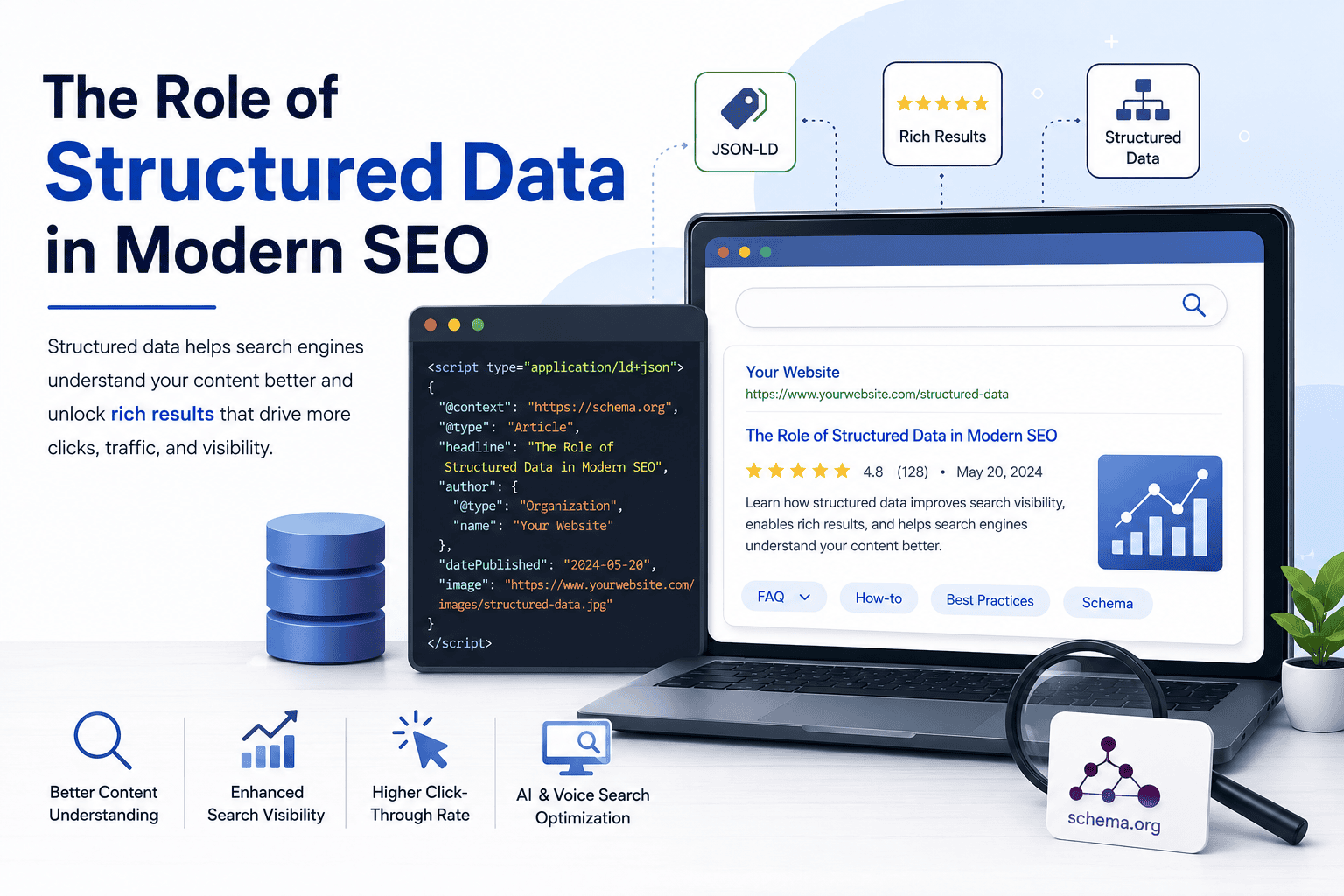
Use descriptive page titles, meaningful headings, informative link text, and logical internal links. Where appropriate, implement accurate structured data that reflects the information visible on the page.
For example, an article about marketing analytics should have a descriptive title, a clear introduction, relevant sections, and links to related resources. Readers should be able to understand its purpose without having to work through unnecessary jargon.
Google’s guidance on AI features emphasizes that established SEO fundamentals still apply. There is no special markup that guarantees inclusion in Google’s AI-generated search experiences.
For additional guidance, review the official Google Search documentation on AI features.
5. Demonstrate Firsthand Knowledge and Original Insights
AI-generated content is becoming easier to produce, which means generic articles are increasingly easy to find. Brands need to give readers a reason to choose their information over dozens of similar pages.
Original insights can provide that reason.
Instead of publishing another general article explaining marketing automation, consider examining a specific business problem. Discuss common implementation mistakes, explain how different approaches compare, or present lessons from a documented project.
For example, an article about marketing campaign performance could explain how inconsistent tracking affects conversion reporting and why teams should verify their data before reallocating budgets.
Useful ways to demonstrate expertise include:
- Adding practical examples and clearly explained scenarios.
- Publishing original survey findings or data analysis.
- Citing reliable sources for factual claims.
- Explaining the limitations of a recommended approach.
- Providing transparent author information and relevant experience.
- Updating articles when important facts or recommendations change.
Do not invent statistics, customer results, case studies, or expert credentials. Trust is easier to establish when readers can distinguish verified evidence from illustrative examples.
6. Organize Content Around Topics, Not Just Individual Keywords
A website becomes more useful when its articles work together to explain a subject comprehensively.
Rather than publishing isolated posts targeting unrelated keywords, develop a connected group of resources around the topics your audience cares about.
For example, a marketing technology website could build a content cluster around AI-powered marketing:
Main guide: AI in Marketing: Strategies, Applications, and Challenges
Supporting articles:
- AI-Powered Campaign Optimization
- How AI Is Changing Search Behavior
- Marketing Automation and Customer Engagement
- Measuring the Performance of AI Marketing Campaigns
- Data Quality for AI-Ready Marketing
Link these pages together wherever the connection genuinely helps readers. The main guide can introduce the subject, while supporting articles explore individual questions in more detail.
This structure gives visitors a clear path to related information and helps search engines understand the relationships between your pages.
It also supports a more consistent editorial strategy, allowing your brand to develop depth in its chosen areas instead of publishing disconnected articles.
7. Improve Your Visibility Across Multiple Discovery Channels
A brand’s online presence should not depend exclusively on organic search traffic.
Different channels help audiences discover, evaluate, and remember a business in different ways. A useful industry report might attract attention from professionals, while a detailed blog post helps someone understand a complex concept.
A balanced strategy can include:
Website content: Publish original articles, detailed guides, research, and product information.
Professional platforms: Share useful insights on relevant professional networks and participate in meaningful discussions.
Industry publications: Contribute expert commentary or research to reputable publications where your audience already spends time.
Video and visual content: Explain complex subjects through demonstrations, short educational videos, or informative diagrams.
Email and customer communication: With appropriate consent, share useful resources with people who have chosen to hear from your brand.
The purpose is not to publish the same material everywhere without a plan. Adapt the format and message to each channel while maintaining consistent, accurate brand information.
8. Measure AI Search Visibility With the Right Metrics
Traditional SEO reporting often focuses on impressions, clicks, keyword positions, and organic traffic. These metrics remain useful, but they may not reveal the entire picture of how people discover your brand through AI-powered experiences.
Where reliable reporting is available, combine traditional SEO metrics with additional visibility indicators.
Consider monitoring:
- Organic search performance: Track impressions, clicks, click-through rates, and search queries in Google Search Console.
- Referral traffic: Identify visits from AI-powered platforms in your analytics reports where the source is available.
- Brand search demand: Monitor whether more people search for your company or products by name.
- Qualified engagement: Evaluate whether visitors read relevant pages, explore related content, or take meaningful actions.
- AI answer presence: Periodically test a consistent set of relevant customer questions on selected platforms and record whether your brand or content appears.
- Lead quality: Assess whether organic and referral visitors contribute to relevant enquiries or business outcomes.
Manual checks of AI-generated answers are snapshots, not comprehensive measurement. Results can change between queries, users, and platforms. Third-party visibility tools can also have coverage limitations.
Do not assume that every AI-generated answer can be tracked or that a mention automatically creates website traffic. Use several indicators to understand whether your broader visibility strategy is producing useful results.
Common Mistakes That Can Weaken AI Search Visibility
Businesses often make the following mistakes when adapting to AI-powered search.
Publishing Large Amounts of Generic Content
Producing more articles does not automatically improve visibility. Every article should answer a meaningful question or offer a useful perspective.
Relying on Keywords Alone
Keywords help define a topic, but they cannot replace accurate information, clear explanations, and a strong understanding of the audience.
Ignoring Technical SEO
If important pages cannot be crawled or indexed properly, publishing additional content may not solve the underlying problem.
Using Unverified Claims
Unsupported statistics and exaggerated product claims can damage credibility. Check facts and cite trustworthy sources whenever necessary.
Expecting Immediate Results
Search visibility develops over time, and AI-powered platforms do not guarantee that a particular website will be mentioned. Review progress consistently rather than expecting every optimization to produce an immediate change.
Chasing AI Mentions Without a Business Goal
A brand mention can increase awareness, but it does not automatically mean more qualified visitors, leads, or sales. Connect visibility efforts to the outcomes that matter to your organization.
A Practical Action Plan for Brands
You do not need to rebuild your entire marketing strategy to start preparing for AI search. Begin with a few manageable improvements.
Week 1: Audit your existing content. Identify pages that receive search impressions, articles that answer important customer questions, and resources that need factual updates.
Week 2: Improve high-value pages. Strengthen introductions, clarify headings, add useful examples, verify sources, and connect related articles with internal links.
Week 3: Review your technical foundation. Check indexing, crawling, mobile usability, page performance, and structured data where relevant.
Week 4: Establish a measurement baseline. Record current organic performance, brand search activity, referral traffic, and visibility across a selected set of AI search platforms. Repeat the checks regularly and compare results over time.
After the first month, prioritize improvements based on evidence. Focus on content that helps your audience and supports your business objectives rather than making changes solely to follow the latest search trend.
The Future of Brand Visibility in AI Search
AI-powered search is changing how people discover information, but the fundamentals of a strong digital presence remain familiar: useful content, reliable information, technical accessibility, and a clear understanding of customer needs.
Brands should continue investing in traditional SEO while making their content more comprehensive, credible, and easy to understand. They should also build a broader online presence so that customers can discover them through multiple relevant channels.
There is no guaranteed formula for appearing in every AI-generated answer. However, businesses that consistently publish meaningful information, maintain accurate brand details, and measure performance carefully will be better prepared to adapt as search behavior evolves.
The goal is not simply to rank on Google or appear in an AI answer. It is to become a useful, trustworthy source that people can discover when they need information.
As AI search continues to develop, that principle can help brands build visibility that extends beyond any single platform.
Frequently Asked Questions
1. What is AI search visibility?
AI search visibility refers to how often a brand’s content, website, or information appears in AI-powered search results and generated answers. Brands can improve their chances by publishing helpful, accurate content and maintaining a technically accessible website.
2. How can brands improve visibility in AI search?
Brands can strengthen AI search visibility by answering customer questions clearly, creating original and trustworthy content, improving technical SEO, earning relevant mentions from credible sources, and keeping business information consistent across online platforms.
3. Is traditional SEO still important for AI search?
Yes, traditional SEO remains important. Search engine accessibility, useful content, clear website structure, relevant internal links, and accurate metadata help search systems understand a website. However, following SEO best practices does not guarantee inclusion in AI-generated answers.
4. How can businesses measure their AI search performance?
Businesses can monitor organic search impressions and clicks, referral traffic from AI platforms where available, brand mentions, relevant customer queries, and qualified leads. Regularly reviewing these metrics helps marketers understand how their visibility changes over time.