








Marketing technology is evolving quickly. Businesses today use multiple platforms to manage customer data, automation, content, analytics, advertising, and customer experiences. As these requirements grow, relying on one large platform for everything can make a marketing stack difficult to adapt.
This is where Composable Martech is gaining attention.
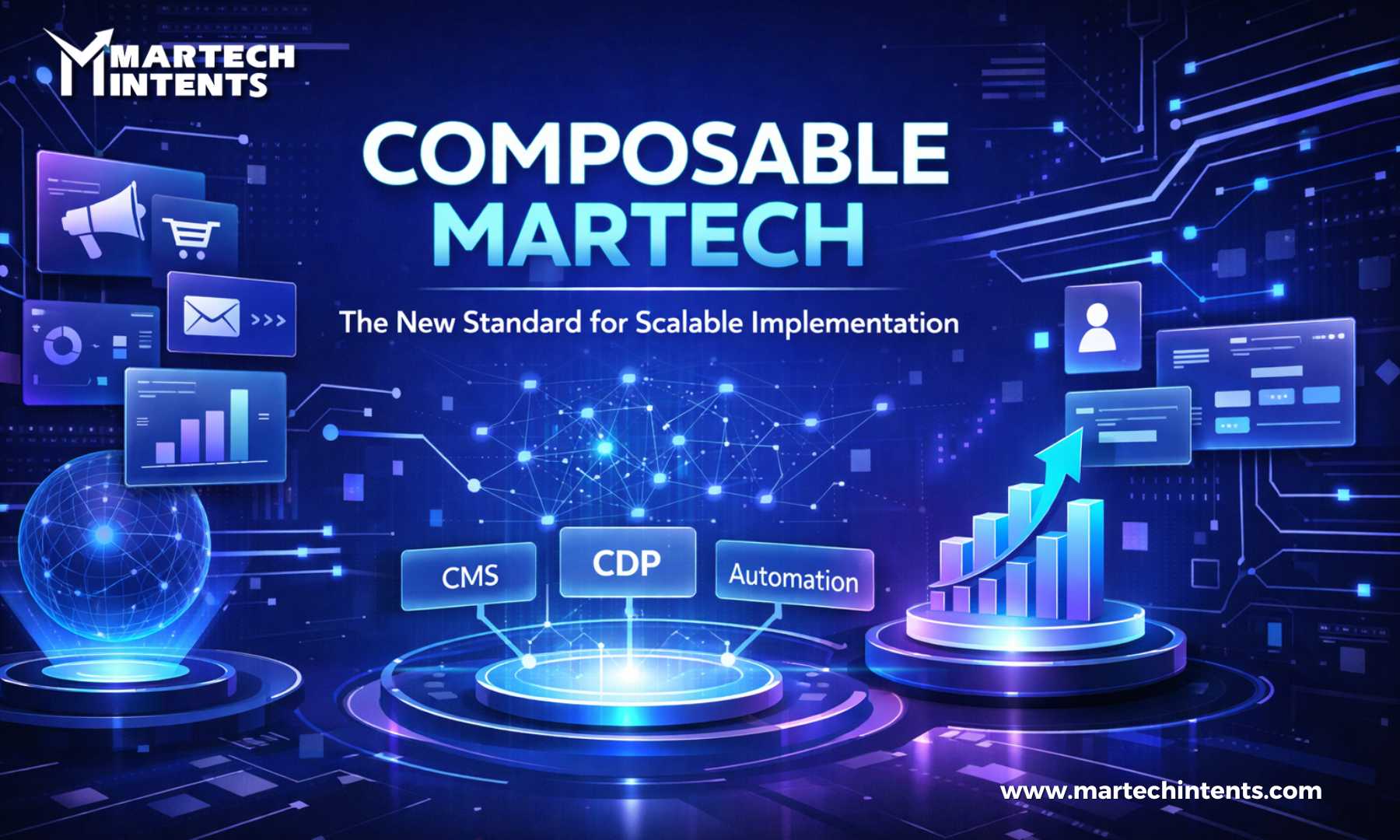
Composable Martech is an approach that allows businesses to build their technology environment from separate, specialized components. Instead of replacing an entire marketing system when one capability becomes outdated, organizations can update or replace individual components while keeping the rest of the stack connected.
For companies looking for flexibility, scalability, and better control over their marketing technology, this approach offers a different way to think about MarTech implementation.
What Is Composable Martech?
Composable Martech is a modular approach to building and managing a marketing technology stack.
In a traditional setup, businesses may depend heavily on a single platform that provides several marketing functions. This can make implementation easier at the beginning, but the organization may eventually become dependent on that platform’s features, integrations, pricing, and development roadmap.
A composable approach separates different marketing capabilities into individual components.
For example, a business could use:
- A CRM for managing customer and prospect information
- A CDP for organizing customer data
- A marketing automation platform for campaign workflows
- A CMS for managing digital content
- An analytics platform for measuring performance
- Specialized AI or personalization tools for specific use cases
These technologies can be connected through APIs and integrations to create one coordinated marketing environment.
Why Is Composable Martech Becoming Important?
Marketing teams need to respond quickly to changes in customer behavior and technology.
New AI applications, analytics platforms, personalization technologies, and customer engagement channels are constantly being introduced. A marketing team may want to adopt one of these technologies without replacing its entire existing stack.
Composable Martech makes this possible by treating the technology stack as a collection of connected building blocks.
Instead of asking, “Which platform can do everything?” businesses can ask, “Which technology is best suited for each specific requirement?”
This change can give marketing and technology teams greater flexibility when planning future implementations.
Key Components of a Composable Martech Stack
A composable stack does not have a fixed structure. Each business can create an architecture based on its marketing goals and technical requirements.
Customer Relationship Management
A CRM manages information about customers, leads, prospects, and sales activities.
In a composable environment, the CRM can remain focused on customer and sales management while other platforms handle automation, analytics, content, or customer data.
Customer Data Platform
A customer data platform can help collect and organize information from different customer touchpoints.
This can include website interactions, campaign engagement, transactions, applications, and other sources. A well-designed data layer can help different marketing systems work with more consistent customer information.
Marketing Automation
Marketing automation supports recurring workflows such as lead nurturing, email campaigns, segmentation, and customer communications.
Keeping automation as a separate component gives businesses more freedom to select or change their automation technology without rebuilding the complete marketing stack.
Content Management System
A CMS manages the content published across websites and other digital experiences.
When connected to other MarTech components, the CMS can become part of a broader ecosystem rather than operating as an isolated platform.
Analytics and Reporting
Analytics platforms help marketers understand campaign performance, customer behavior, conversions, and other business metrics.
A composable approach allows organizations to select analytics capabilities based on their reporting requirements instead of depending entirely on the analytics features offered by a single vendor.
Benefits of Composable Martech
1. Greater Flexibility
Flexibility is one of the main reasons organizations consider a composable approach.
Businesses can select technologies according to their specific requirements and make changes to individual components as those requirements evolve.
This can be particularly useful for companies operating in fast-changing markets.
2. Easier Technology Expansion
Marketing stacks rarely remain unchanged for long.
A company may begin with a CRM and email platform and later introduce customer data, personalization, AI, advanced analytics, or additional engagement channels.
A modular architecture can make it easier to add these capabilities without redesigning the entire technology environment.
3. Better Scalability
Growth often creates new technology requirements.
More customers can mean more data, additional channels, larger campaign volumes, and more complex reporting needs.
A composable stack can be expanded by adding or upgrading specific components rather than replacing the entire architecture.
4. More Choice
Businesses are not limited to a single vendor for every marketing function.
They can evaluate different technologies based on functionality, integration capabilities, security, cost, scalability, and business requirements.
This can help organizations build a stack that is more closely aligned with their actual needs.
5. Reduced Dependence on One Platform
A business that relies heavily on one platform may face challenges if that platform changes its pricing, functionality, integrations, or product direction.
Composable Martech can distribute capabilities across multiple technologies.
Although this does not remove vendor dependency completely, it can give organizations more control over individual parts of their stack.
The Role of APIs in Composable Martech
APIs are an important part of a composable architecture.
They allow different applications to exchange information and communicate with one another. This makes it possible to connect systems that were developed by different technology providers.
For example, customer information from a CRM can be connected with a marketing automation platform. Campaign activity can then be sent to an analytics system for measurement.
However, APIs alone do not create a successful composable stack.
Businesses also need:
- Consistent data structures
- Secure authentication
- Integration monitoring
- Clear documentation
- Data governance
- Defined ownership of systems and data
Without these foundations, a collection of connected tools can become difficult to manage.
Challenges of Implementing Composable Martech
Composable Martech offers flexibility, but it also requires careful planning.
Technology Complexity
Managing multiple platforms can create additional technical complexity.
Teams need to understand how each system works, how information moves between platforms, and what happens when one component changes.
Integration Maintenance
Integrations require ongoing attention.
Changes to APIs, authentication methods, data formats, or platform functionality can affect connected systems.
Regular monitoring and maintenance are therefore important.
Data Quality
Multiple systems can sometimes create duplicate, outdated, or inconsistent customer information.
Businesses need clear rules for data ownership, synchronization, storage, and quality management.
Technical Skills
A composable environment may require stronger technical capabilities than a simple single-platform setup.
Marketing teams may need support from developers, data specialists, integration experts, or MarTech professionals.
Governance
More flexibility can also mean more opportunities for unnecessary technology purchases.
Without governance, organizations can end up with too many overlapping tools.
A clear technology selection and management process can help prevent this problem.
How to Implement a Composable Martech Strategy
Businesses do not need to rebuild their entire MarTech stack immediately.
A structured approach can make implementation easier.
Step 1: Understand Your Business Requirements
Start by identifying the marketing capabilities the organization actually needs.
Consider areas such as:
- Customer data
- CRM
- Marketing automation
- Content management
- Analytics
- Personalization
- Advertising
- Customer engagement
The objective is to identify business requirements before selecting technology.
Step 2: Audit the Existing Martech Stack
Review the platforms already being used.
Identify:
- Duplicate functionality
- Unused features
- Integration problems
- Data gaps
- Manual processes
- Platforms that are difficult to scale
This helps determine where changes will provide the most value.
Step 3: Create a Data and Integration Plan
Map how information moves between different systems.
Determine where customer information originates, which system owns it, and which platforms need access to it.
This step can prevent disconnected data from becoming a major problem later.
Step 4: Select the Right Components
Evaluate potential technologies based on business needs.
Important considerations can include:
- Integration capabilities
- Security
- Scalability
- Cost
- Ease of management
- Data compatibility
- Vendor support
The goal should not be to collect as many tools as possible. Each component should have a clear purpose.
Step 5: Start With a Focused Use Case
Instead of changing everything simultaneously, begin with one area of the marketing operation.
For example, a business could first improve customer data integration or marketing automation.
Once the process works effectively, the same approach can be expanded to other parts of the stack.
Composable Martech vs. Traditional Martech
The primary difference between these approaches is architectural philosophy.
Traditional MarTech often emphasizes platform consolidation. Businesses may select a large platform that provides several capabilities within one ecosystem.
Composable Martech emphasizes modularity and interoperability.
| Traditional Martech | Composable Martech |
|---|---|
| More centralized | More modular |
| Often based around a large platform | Built from multiple components |
| Fewer primary vendors may be involved | Multiple specialized vendors may be used |
| Platform roadmap can influence capabilities | Individual components can be changed |
| Simpler architecture in some cases | Greater flexibility with added integration needs |
Neither approach automatically fits every business.
The right model depends on factors such as company size, technical resources, marketing complexity, budget, data requirements, and long-term technology strategy.
How Composable Martech Supports Scalable Implementation
Scalability is not simply about handling more customers.
A scalable marketing technology environment should also accommodate new channels, applications, data sources, campaigns, and business requirements.
For example, a company might initially use a CRM, email platform, and website analytics. As the business grows, it may introduce a CDP, personalization, advertising technology, AI applications, and advanced analytics.
A composable architecture can allow these capabilities to be introduced progressively.
This makes the MarTech stack more adaptable as the organization’s requirements change.
The Future of Composable Martech
The continued development of AI, automation, customer data platforms, analytics, and digital experiences is likely to create new requirements for marketing teams.
Organizations may need to connect new AI services with existing customer data, CRM, automation, and analytics systems.
This makes interoperability increasingly important.
Composable Martech provides a framework for connecting these technologies while allowing individual components to evolve independently.
However, flexibility should not mean unnecessary complexity. A successful architecture should remain understandable, secure, well-governed, and aligned with business objectives.
Final Thoughts
Composable Martech represents a shift toward a more flexible way of building marketing technology environments.
Instead of depending entirely on one platform, businesses can combine specialized technologies and connect them into a coordinated ecosystem.
This approach can provide greater flexibility, support gradual technology upgrades, and make it easier to adapt the MarTech stack as business requirements change.
At the same time, composability requires strong integration management, data governance, security, technical expertise, and careful technology selection.
For organizations preparing their marketing technology strategy for continued change, a well-planned composable architecture can provide a foundation that is designed to evolve rather than remain fixed.
Frequently Asked Questions
What is Composable Martech?
Composable Martech is a modular approach that combines specialized marketing technologies into a connected ecosystem. Businesses can add, replace, or upgrade individual components without rebuilding the entire MarTech stack.
What are the main benefits of Composable Martech?
Composable Martech can provide greater flexibility, easier technology expansion, improved scalability, and more choice when selecting marketing platforms. It can also reduce reliance on a single technology provider.
How does Composable Martech support scalability?
Composable Martech allows businesses to introduce new technologies and capabilities as their requirements grow. New components can be connected to existing systems instead of replacing the complete marketing technology environment.
What challenges can businesses face with Composable Martech?
Common challenges include integration management, data consistency, technology complexity, governance, security, and the need for technical expertise. A clear implementation and data strategy can help manage these challenges.