
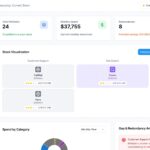










Customers today interact with brands through more channels than ever before. They may discover a company through Google, visit its website, engage with social media content, receive an email, speak with a sales representative, and later contact customer support.
Every one of these interactions contributes to the overall customer experience.
The challenge for businesses is keeping these interactions connected. When customer information is spread across different systems, teams may struggle to understand what customers actually need. This can lead to repetitive communication, missed opportunities, and inconsistent experiences.
This is why customer experience platforms are becoming an important part of the modern MarTech ecosystem.
What Is a Customer Experience Platform?
A customer experience platform is a technology solution that helps businesses understand and manage interactions with customers across different touchpoints.
Depending on the platform, it may connect information from CRM systems, websites, marketing campaigns, customer service tools, ecommerce platforms, analytics systems, and other sources.
The purpose is simple: give businesses a clearer understanding of their customers and help teams create more connected experiences.
Instead of looking at every interaction separately, businesses can use connected data to understand the broader customer journey.
Why Customer Experience Matters for Growth
Business growth is not only about getting more people through the door. Companies also need to give customers reasons to stay, return, purchase again, and recommend the brand.
A poor experience can create friction even when the underlying product or service is strong. On the other hand, a smooth and relevant experience can make it easier for customers to continue their relationship with a brand.
Customer experience platforms can support this process by bringing customer information, interactions, and insights closer together.
1. Build a More Complete Customer View
One of the biggest challenges businesses face is fragmented customer data.
Marketing teams may know which campaigns a customer interacted with. Sales teams may know about previous conversations. Customer service may have information about support requests.
If these details remain separated, no single team may have the full picture.
A customer experience platform can connect relevant information from different sources. This allows teams to understand customer behavior in a broader context and make interactions more informed.
2. Make Personalization More Meaningful
Customers receive countless marketing messages every day. Generic communication can easily get ignored.
Personalization helps businesses make their messages more relevant by considering factors such as previous interactions, interests, preferences, and behavior.
For example, someone who has already downloaded a detailed product guide may not need another introductory message. They may be more interested in a product comparison, case study, or demonstration.
Customer experience technology can help businesses recognize these signals and create more relevant communication.
3. Understand the Complete Customer Journey
The customer journey rarely follows a straight line.
Someone might discover a brand through search, leave the website, return several days later, interact with an email, speak with sales, and eventually become a customer.
Looking at only one of these interactions does not provide the full story.
Customer experience platforms can help teams examine different stages of the journey and identify areas where customers may be losing interest or experiencing unnecessary friction.
This can help businesses improve important moments instead of making changes based only on assumptions.
4. Connect Marketing, Sales, and Customer Support
Customers do not think in terms of company departments.
They simply expect the brand to understand their situation.
If marketing sends one message, sales provides different information, and customer support has no visibility into previous interactions, the customer may experience the organization as disconnected.
Connecting relevant data across teams can help create greater consistency.
Marketing can understand previous engagement. Sales can see relevant campaign activity. Support teams can access useful customer context.
This creates a more coordinated experience across the organization.
5. Improve Response Times
Customers often expect quick answers and convenient interactions.
Technology can help businesses automate routine activities and respond to common customer needs more efficiently.
For example, businesses can use automated workflows for:
- Follow-up communication
- Welcome journeys
- Appointment reminders
- Customer surveys
- Renewal notifications
- Support updates
- Product recommendations
Automation does not mean removing the human element from customer experience. Instead, it can reduce repetitive work and allow employees to spend more time handling situations that require human judgment.
6. Turn Customer Feedback Into Action
Customer feedback contains valuable information about what is working and what needs improvement.
Businesses can collect feedback through surveys, support interactions, reviews, forms, and other channels.
A customer experience platform can help bring this information together with other customer data.
Teams can then look at metrics such as:
- Customer Satisfaction Score
- Net Promoter Score
- Customer Effort Score
- Retention rate
- Repeat purchase rate
- Churn rate
- Customer lifetime value
The important step is not simply collecting these numbers. Businesses need to identify patterns and use those insights to improve the customer journey.
7. Create Consistent Experiences Across Channels
Modern customers move between channels throughout their relationship with a brand.
They may use a mobile device in the morning, visit a website later, respond to an email in the afternoon, and contact customer support the next day.
If every channel operates independently, the experience can feel disconnected.
Customer experience platforms can help businesses coordinate relevant customer information and interactions across channels.
The result can be a more consistent experience without requiring customers to repeatedly explain who they are or what they need.
8. Support Data-Driven Marketing Decisions
Good customer experience depends on understanding what customers are actually doing.
Data can reveal which campaigns generate engagement, where customers leave a journey, which content receives attention, and which interactions contribute to conversions.
With these insights, marketing teams can make decisions based on customer behavior rather than relying entirely on assumptions.
This can also help organizations identify areas where their MarTech investments are delivering value and where processes may need improvement.
Important Features of a Customer Experience Platform
Businesses should not select a platform simply because it has a long list of features. The right capabilities depend on the organization’s goals, customers, existing technology, and operational needs.
Some commonly useful capabilities include:
Customer Data Integration
The platform should connect relevant information from systems that already support marketing, sales, commerce, and customer service.
Customer Journey Analytics
Journey analytics can help teams understand how customers move between different touchpoints and identify potential friction.
Personalization
Personalization features can help businesses deliver content and communication based on relevant customer information.
Marketing and Workflow Automation
Automation can reduce repetitive manual activities and support timely customer communication.
Omnichannel Support
A platform should help businesses coordinate experiences across the channels that their customers actually use.
Reporting and Analytics
Useful dashboards and reports allow teams to monitor customer behavior and measure experience-related performance.
MarTech Integration
Integration with CRM, marketing automation, analytics, ecommerce, and other MarTech systems can help create a more connected technology environment.
How Customer Experience Platforms Can Support Business Growth
A customer experience platform is not a magic solution for increasing revenue.
Its value comes from how a business uses the technology.
When customer data is connected and teams can act on useful insights, businesses may be better positioned to improve several areas of the customer relationship.
These can include:
Retention: Understanding customer needs can help businesses identify potential experience problems earlier.
Engagement: Relevant communication can encourage customers to interact with the brand.
Efficiency: Automation can reduce repetitive processes and improve workflow management.
Customer loyalty: Consistent experiences can contribute to stronger long-term relationships.
Decision-making: Connected data can give teams better context when planning marketing and customer strategies.
The actual results will depend on factors such as data quality, implementation, team adoption, customer expectations, and the overall business strategy.
How to Choose a Customer Experience Platform
Before investing in a platform, businesses should understand the problems they are trying to solve.
Start by asking:
What customer problems are we trying to fix?
Identify specific issues rather than choosing technology first.
Where is our customer data currently stored?
Map the systems that contain important customer information and determine whether they can be integrated.
Which customer touchpoints matter most?
Focus on the channels customers actually use instead of trying to manage every possible channel.
What level of personalization do we need?
Determine whether basic segmentation is enough or whether the business requires more advanced personalization capabilities.
Can the platform integrate with our existing MarTech stack?
Integration is critical. A powerful platform that cannot work effectively with existing systems can create additional complexity.
How will we measure success?
Define measurable indicators before implementation. This could include engagement, retention, customer satisfaction, conversion rates, or operational efficiency.
Common Mistakes Businesses Should Avoid
Implementing a customer experience platform without a clear strategy can create more problems than it solves.
Some common mistakes include:
- Collecting customer data without defining how it will be used
- Buying technology before identifying the business problem
- Ignoring data quality
- Creating too many automated communications
- Failing to connect important systems
- Measuring activity instead of meaningful outcomes
- Not training teams properly
- Treating technology as a replacement for customer understanding
Technology should support the customer experience strategy rather than become the strategy itself.
The Future of Customer Experience Platforms
Customer experience technology is continuing to evolve as businesses adopt artificial intelligence, automation, real-time analytics, and increasingly connected MarTech ecosystems.
AI can help teams identify patterns, summarize customer information, support personalization, and automate selected tasks.
At the same time, customers continue to expect experiences that are convenient, relevant, and consistent.
This means future customer experience strategies will likely depend not only on collecting more data, but on making better use of the information businesses already have.
Organizations that connect their technology, data, people, and processes can create a stronger foundation for managing changing customer expectations.
Conclusion
Customer experience has become closely connected with how businesses attract, engage, and retain customers.
A customer experience platform can help organizations connect customer data, understand journeys, personalize communication, coordinate teams, and identify opportunities for improvement.
However, successful CX does not come from technology alone. Businesses need clear objectives, reliable data, well-designed processes, and teams that understand how to use customer insights.
When these elements work together, customer experience platforms can become a valuable part of a modern MarTech strategy and help businesses build more connected relationships with their customers.
Frequently Asked Questions
1. What is a customer experience platform?
A customer experience platform is a technology solution that helps businesses connect customer data, understand interactions, and manage experiences across different touchpoints.
2. How can customer experience platforms support business growth?
These platforms can help businesses improve personalization, understand customer journeys, coordinate teams, automate repetitive tasks, and identify opportunities to improve customer retention and engagement.
3. What features should businesses look for in a customer experience platform?
Important capabilities can include customer data integration, journey analytics, personalization, automation, omnichannel engagement, reporting, and integration with CRM and other MarTech systems.
4. Can a customer experience platform replace human customer support?
No. A customer experience platform can automate routine activities and provide useful customer insights, but human support remains important for complex situations, relationship building, and decisions that require judgment.