









Marketing has always changed with technology. From email and search engines to social media and marketing automation, every major shift has changed the way businesses connect with customers.
But today’s change feels different.
The marketing technology landscape is evolving at a much faster pace. Artificial intelligence is moving into everyday marketing tasks, customer data is becoming more valuable, advertising platforms are making more decisions automatically, and businesses are rethinking how their technology stacks are built.
For marketing teams, this creates an interesting challenge.
There are more tools available than ever, but having more tools doesn’t necessarily mean having better marketing.
The real opportunity lies in choosing the right technologies, connecting them properly, and using them to solve genuine business problems.
That is what makes the future of MarTech so important.
Why the MarTech Landscape Is Changing
A modern customer rarely follows a simple path.
Someone might discover a brand through Google, see its content on social media, compare products using an AI tool, visit the website, receive an email, and finally make a purchase weeks later.
Every interaction creates another piece of information.
Marketing teams are expected to understand those interactions and turn them into useful experiences.
At the same time, businesses are under pressure to work faster and prove that marketing investments are contributing to revenue.
This is where MarTech is changing.
Technology is moving from being a collection of separate tools toward becoming a connected system for understanding customers and supporting decisions.
Artificial intelligence is accelerating that transition.
AI Is Becoming Part of Everyday Marketing
Artificial intelligence is no longer something marketing teams discuss only as a future possibility.
It is already being used for research, content creation, customer analysis, campaign optimization, forecasting, reporting, and automation.
However, the most interesting development isn’t simply AI generating content.
It is AI becoming involved in the marketing process itself.
Consider a simple lead-generation campaign.
Previously, a marketer might manually review leads, create audience segments, prepare emails, monitor performance, and adjust campaigns.
AI can increasingly assist with each of these steps.
It can identify patterns in customer behavior, suggest audiences, recommend content variations, summarize campaign performance, and highlight areas that need attention.
That gives marketers more time to focus on strategy and creative decisions.
The technology handles more of the repetitive work, while people remain responsible for the bigger picture.
Agentic AI Could Take Automation Further
The next major development is agentic AI.
Traditional automation usually follows predefined rules:
If this happens, perform that action.
Agentic systems are designed to work toward a broader objective and determine the steps required to achieve it.
Imagine telling a marketing system:
“Increase qualified leads from this customer segment.”
Instead of simply running one predefined workflow, an AI agent could potentially analyze customer behavior, identify opportunities, recommend messaging, coordinate activities across connected platforms, and monitor the results.
This doesn’t mean marketers hand over complete control.
Quite the opposite.
As AI becomes capable of taking more actions, marketers will need to establish clearer boundaries around approvals, brand standards, customer data, and decision-making.
The future is likely to be less about humans versus AI and more about humans working with AI systems.
The Biggest MarTech Stack May Not Be the Best One
There was a time when adding another platform to the marketing stack felt like progress.
Today, many businesses are discovering the downside of that approach.
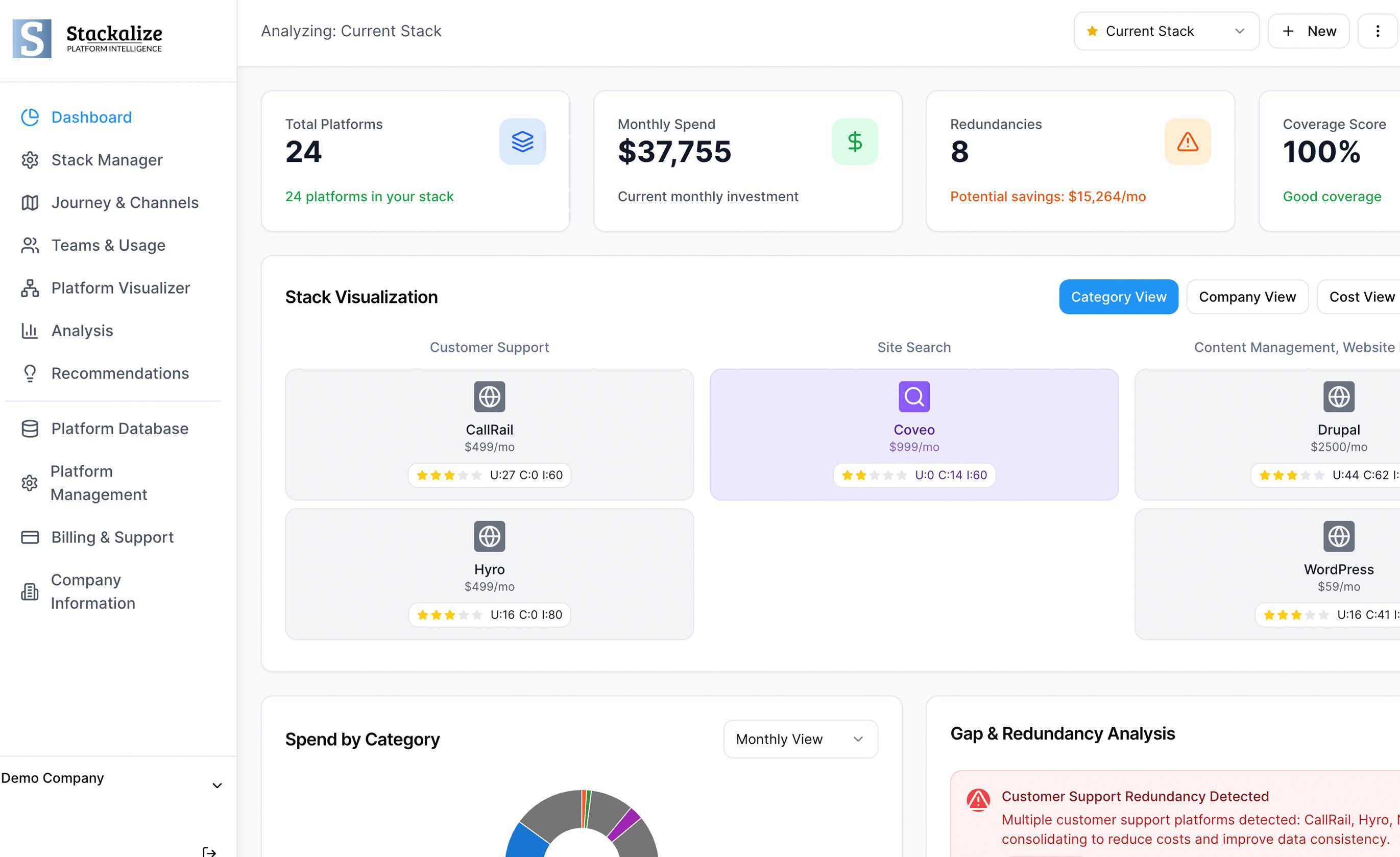
A typical organization can have separate tools for CRM, email marketing, analytics, content management, advertising, customer data, personalization, and automation.
The problem isn’t necessarily the number of tools.
It’s what happens when those tools don’t work well together.
Data becomes fragmented. Teams switch between platforms. Reports don’t match. Customer information gets duplicated.
This is why composable MarTech is gaining attention.
Instead of depending on one enormous platform, businesses can connect specialized technologies and replace individual components when their needs change.
That creates something much more valuable than a large stack:
flexibility.
Customer Data Will Become Even More Important
AI may be getting all the attention, but good data remains the foundation of effective marketing.
Think about a company that has thousands of customer records but doesn’t know which records belong to the same person.
Or an email system that doesn’t know what customers have purchased.
Or an advertising platform working with outdated information.
The company may have a huge amount of data, but the data isn’t helping much.
Future MarTech strategies will therefore put more emphasis on data quality, first-party information, customer identity, integration, and governance.
Businesses don’t need to collect every possible piece of information.
They need to understand which information helps them make better decisions.
Personalization Will Become More Contextual
Personalization has been around for years.
Adding a customer’s first name to an email was once considered impressive.
It isn’t anymore.
Customers now expect brands to understand context.
A new visitor should not necessarily receive the same experience as a long-term customer. Someone who has just purchased a product may need onboarding information rather than another sales message.
With connected customer data and AI, marketers can create experiences that respond to these differences.
Personalization could influence:
- Website content
- Email recommendations
- Product suggestions
- Advertising
- Offers
- Lead nurturing
- Customer service
But there is a catch.
Too much personalization can feel intrusive.
The best marketing technology should make an interaction feel helpful, not uncomfortable.
AI Will Change Digital Advertising
Advertising is another area where automation is becoming increasingly important.
Modern advertising platforms already use algorithms to determine audience targeting, bidding, placements, and campaign delivery.
AI is taking that automation further.
Instead of marketers manually adjusting every campaign setting, platforms can analyze enormous amounts of information and make optimization decisions automatically.
That can save time.
But it also creates a measurement challenge.
When more decisions happen inside automated systems, marketers need reliable ways to determine whether those decisions are actually producing business results.
A campaign might generate thousands of clicks.
That doesn’t necessarily mean it generated valuable customers.
Future-focused marketing teams will increasingly connect advertising performance with meaningful outcomes such as revenue, customer lifetime value, and retention.
Search Is Becoming a Different Experience
Search is also changing.
People aren’t relying only on traditional search results to find information anymore. AI-powered search and conversational tools are becoming another way people research brands, products, services, and solutions.
For marketers, this changes the definition of visibility.
It is no longer enough to ask:
“Are we ranking?”
A better question is:
“Are we providing information that people — and the systems helping them search — can trust?”
That makes useful content increasingly important.
Brands need to publish information that answers real questions, demonstrates expertise, and provides genuine value.
SEO isn’t disappearing.
It is becoming part of a broader discovery strategy.
Privacy Will Become a Bigger Part of MarTech Strategy
The smarter marketing technology becomes, the more carefully businesses need to think about privacy.
Modern systems can combine information from multiple sources and identify patterns that may not be obvious to people.
That creates useful opportunities, but it also introduces responsibility.
Companies need to understand:
- What information they collect
- Why they collect it
- How it is used
- Who can access it
- How long it is retained
- How AI systems use customer information
- How automated decisions are reviewed
Privacy should not be something a business thinks about after implementing a new technology.
It should be part of the design from the beginning.
Trust is becoming an important part of the customer relationship, and companies that handle data responsibly will have an advantage.
Marketing Teams Will Need New Skills
The future of MarTech will also change the people working with it.
Marketers won’t necessarily spend their careers learning one platform after another.
Instead, they will need a broader understanding of data, AI, automation, customer behavior, analytics, and technology strategy.
Some traditional tasks will become faster or partly automated.
That gives marketers an opportunity to spend more time on work that requires human judgment.
AI can help with:
- Research
- Reporting
- Data analysis
- Content variations
- Campaign monitoring
- Routine automation
People remain essential for:
- Brand strategy
- Creative thinking
- Customer understanding
- Decision-making
- Positioning
- Ethical judgment
The marketer of the future won’t need to compete with AI.
They’ll need to know how to work effectively with it.
Marketing and IT Will Become More Connected
Marketing technology is no longer isolated from the rest of the business.
A modern MarTech environment depends on data infrastructure, APIs, cloud platforms, security, analytics, and software integrations.
That means marketing teams will need stronger collaboration with IT and data teams.
A new marketing platform can affect customer information, security policies, reporting, sales processes, and business operations.
Technology decisions therefore need to be made with the wider organization in mind.
This is one reason why MarTech strategy is becoming a business issue rather than simply a marketing issue.
From Campaigns to Continuous Customer Experiences
Traditional marketing has often been organized around campaigns.
A campaign starts.
It runs.
The results are measured.
Then the next campaign begins.
But connected data and AI make another model possible.
Marketing can become more continuous.
A customer’s interaction today can influence the experience they receive tomorrow.
For example, someone who reads several educational articles about a particular product category might receive different content from someone who is already close to making a purchase.
The experience becomes more responsive.
Instead of treating every customer interaction as a separate campaign, businesses can begin thinking about the entire customer relationship.
The MarTech Disruptions Worth Watching
Several technologies are likely to have a lasting influence on marketing:
| Technology | What It Could Change |
|---|---|
| Agentic AI | Multi-step marketing automation |
| Generative AI | Content and creative production |
| AI advertising | Media buying and optimization |
| Composable MarTech | Technology-stack flexibility |
| Customer data platforms | Customer information management |
| AI-powered search | Brand discovery |
| Predictive analytics | Marketing forecasting |
| Real-time personalization | Customer experiences |
| Connected devices | New interaction channels |
| Privacy technology | Data protection and trust |
The important thing to remember is that these technologies won’t develop independently.
They will increasingly work together.
How Businesses Can Prepare
Companies don’t need to replace their entire MarTech stack every time a new technology appears.
A more practical approach is to build a foundation that can adapt.
1. Look at Your Current Stack
Identify the platforms your team actually uses and the ones that aren’t providing enough value.
2. Focus on Business Problems
Don’t buy a technology simply because it is popular.
Start with the problem you want to solve.
3. Strengthen Your Data
Clean and connected customer data will make almost every future MarTech investment more effective.
4. Experiment With AI
Start with practical use cases where the results can be measured.
5. Keep Humans in the Loop
Not every decision should be automated. Define where human approval is necessary.
6. Prepare Your Team
Give marketers opportunities to develop AI, analytics, data, and technology skills.
7. Make Privacy a Priority
Create clear policies for customer data, AI usage, access, and automated decision-making.
The Future of MarTech Is About Adaptability
It is tempting to look at every new MarTech development and ask which technology will become the next big thing.
But that may not be the most useful question.
Technology changes too quickly for businesses to predict everything accurately.
A better strategy is to build an organization that can adapt.
That means having clean data, flexible technology, skilled people, clear goals, and a willingness to experiment.
AI will continue to evolve. New advertising models will appear. Search will keep changing. Some MarTech platforms will disappear while new ones take their place.
That’s simply how the industry works.
The companies that are best prepared won’t necessarily be the ones with the biggest technology budgets.
They will be the ones that know how to turn technology into better customer experiences and measurable business results.
Frequently Asked Questions
1. What is the future of MarTech?
The future of MarTech will focus on artificial intelligence, automation, connected customer data, personalization, flexible technology stacks, and better customer experiences.
2. How will AI change MarTech?
AI will help marketers automate repetitive tasks, understand customer behavior, personalize campaigns, optimize marketing activities, and make faster data-driven decisions.
3. Why is composable MarTech important?
Composable MarTech gives businesses more flexibility by allowing them to connect different specialized tools instead of depending entirely on one large marketing platform.
4. How can businesses prepare for MarTech disruption?
Businesses can prepare by improving data quality, reviewing their existing technology stack, testing practical AI use cases, developing employee skills, and creating clear AI and data governance policies.