








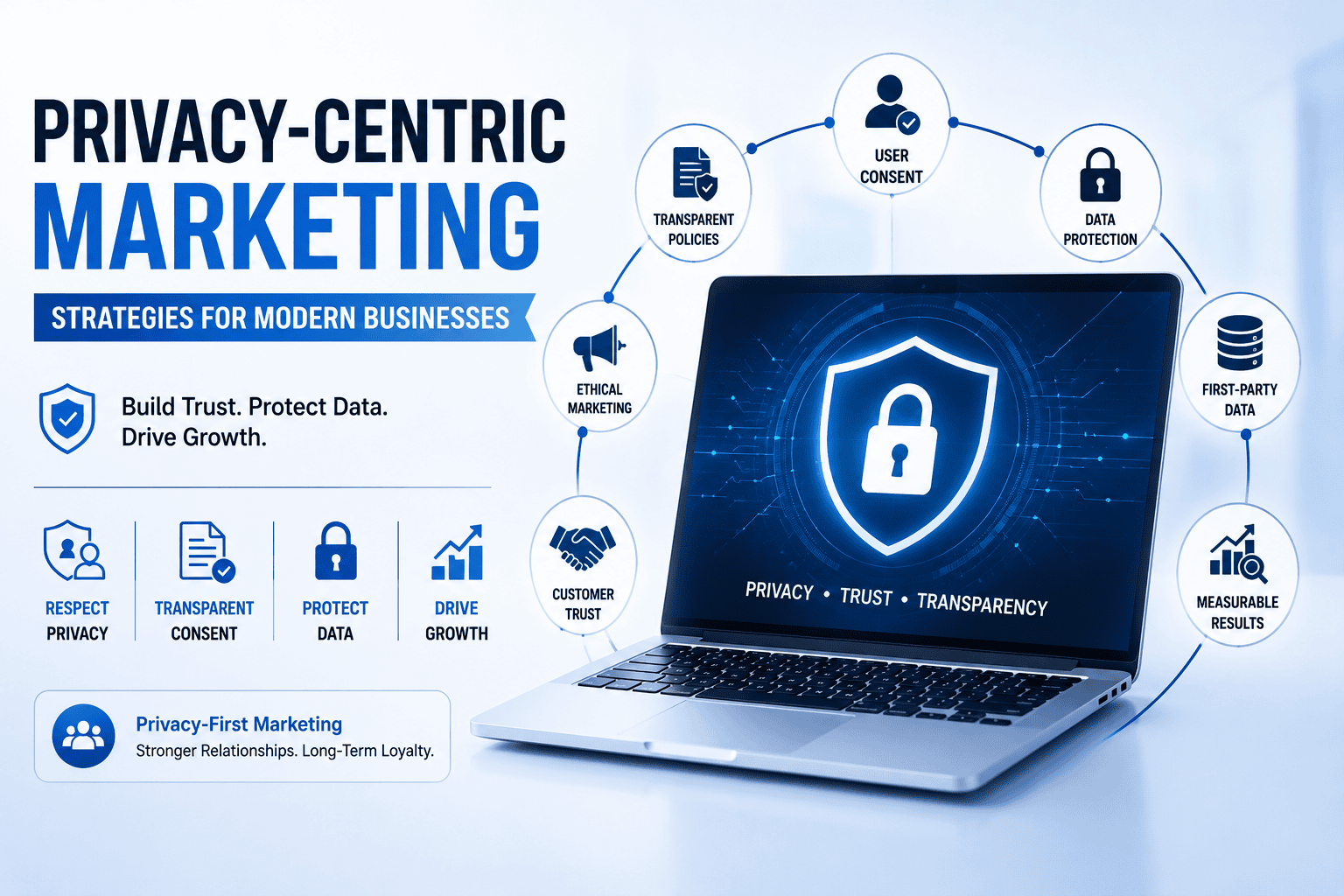
Digital marketing has become increasingly data-driven, enabling businesses to create personalized customer experiences through analytics, artificial intelligence, automation, and customer data platforms. However, as privacy regulations become stricter and consumers become more aware of how their personal information is collected and used, organizations must rethink their marketing strategies.
Privacy is no longer simply a legal requirement—it has become a competitive advantage. Modern customers expect transparency, control over their personal information, and responsible data practices. Businesses that prioritize privacy can strengthen customer relationships, improve brand credibility, and build long-term loyalty.
In this guide, we’ll explore what privacy-centric marketing means, why it matters, and the best strategies businesses can implement to remain competitive while respecting customer privacy. The shift toward first-party data, transparent consent, and ethical personalization is increasingly viewed as essential for sustainable marketing.
What Is Privacy-Centric Marketing?
Privacy-centric marketing is a customer-first approach that collects, manages, and uses customer information responsibly while giving users full transparency and control over their data.
Instead of relying heavily on third-party tracking, businesses focus on:
- First-party data
- Zero-party data
- Consent-based marketing
- Transparent communication
- Ethical personalization
This approach allows companies to deliver relevant experiences without compromising customer trust.
Why Privacy Matters More Than Ever
Today’s consumers are increasingly cautious about sharing personal information. They want to understand:
- Why data is collected
- How it will be used
- Who has access to it
- How long it will be stored
- How they can delete or modify their information
Privacy regulations around the world continue to evolve, encouraging organizations to adopt responsible data governance and consent-driven marketing.
Benefits of Privacy-Centric Marketing
1. Builds Customer Trust
Transparent businesses create stronger relationships with customers.
Customers appreciate brands that:
- Explain data usage clearly
- Offer easy consent options
- Respect communication preferences
- Protect sensitive information
Trust often leads to higher engagement and repeat business.
2. Higher Quality Customer Data
Privacy-focused businesses collect information directly from customers through:
- Newsletter subscriptions
- Contact forms
- Surveys
- Webinars
- Account registrations
- Resource downloads
Because customers willingly provide this information, it is generally more accurate and useful than third-party data.
3. Better Marketing Performance
When customers voluntarily share their preferences, marketers can create:
- Personalized email campaigns
- Relevant product recommendations
- Improved customer journeys
- Better lead nurturing
- Higher conversion rates
4. Stronger Brand Reputation
Companies that openly communicate their privacy practices stand out from competitors.
A privacy-first reputation helps attract:
- New customers
- Business partners
- Enterprise clients
- Long-term subscribers
Key Privacy-Centric Marketing Strategies
Focus on First-Party Data
First-party data has become one of the most valuable marketing assets.
Examples include:
- Website registrations
- CRM data
- Purchase history
- Customer feedback
- Email engagement
- Loyalty programs
Since this information comes directly from customers, it is generally more reliable and privacy-friendly than third-party tracking.
Collect Zero-Party Data
Zero-party data refers to information customers intentionally share.
Examples:
- Product preferences
- Communication preferences
- Interests
- Goals
- Industry selection
- Budget information
This enables better personalization while maintaining transparency.
Use Clear Consent Forms
Every data collection form should explain:
- Why information is collected
- How it will be used
- Marketing preferences
- Privacy policy access
- Opt-out options
Simple, easy-to-understand consent builds confidence.
Improve Privacy Policies
Avoid complicated legal language.
Instead:
- Use simple explanations
- Organize content with headings
- Highlight key points
- Make policies easy to locate
Clear communication increases customer confidence.
Practice Ethical Personalization
Customers appreciate relevant recommendations—but not intrusive tracking.
Good personalization includes:
- Relevant content suggestions
- Helpful product recommendations
- Customized email journeys
- Industry-specific resources
Avoid excessive behavioral tracking that can reduce customer trust.
Secure Customer Information
Marketing teams should work closely with IT departments to protect customer data through:
- Secure databases
- Encryption
- Access controls
- Regular security audits
- Multi-factor authentication
Security is an essential part of customer trust.
Use AI Responsibly
Artificial Intelligence can improve marketing by:
- Predicting customer interests
- Optimizing campaigns
- Segmenting audiences
- Automating workflows
However, AI should always operate with transparency, fairness, and respect for customer privacy.
Privacy-Friendly Marketing Channels
Businesses can continue growing using privacy-conscious channels:
- Email Marketing
- Content Marketing
- SEO
- Organic Social Media
- Webinars
- Community Building
- Referral Marketing
- Customer Loyalty Programs
These channels depend more on customer relationships than third-party tracking.
Common Mistakes to Avoid
Many businesses still make privacy-related mistakes, including:
- Collecting unnecessary customer information
- Using confusing privacy notices
- Sending emails without permission
- Ignoring unsubscribe requests
- Overusing personalized advertising
- Sharing customer information without transparency
Avoiding these mistakes strengthens long-term trust.
The Future of Privacy-Centric Marketing
Marketing is shifting toward a future built on:
- AI-powered personalization
- First-party data ecosystems
- Customer Data Platforms (CDPs)
- Consent management
- Ethical automation
- Transparent analytics
Organizations that embrace privacy as part of their brand strategy will be better positioned for sustainable growth.
Conclusion
Privacy-centric marketing is no longer just about regulatory compliance—it is about creating stronger relationships with customers through transparency, ethical data practices, and responsible personalization.
By investing in first-party data, clear communication, secure technologies, and customer-first experiences, businesses can improve marketing performance while building lasting trust. As the digital landscape evolves, organizations that prioritize privacy will be better equipped to adapt, innovate, and grow in an increasingly data-conscious world.
Frequently Asked Questions (FAQ)
1. What is privacy-centric marketing?
Privacy-centric marketing is a strategy that prioritizes customer privacy by collecting and using data transparently, ethically, and with user consent.
2. Why is first-party data important?
First-party data comes directly from customers, making it more accurate, trustworthy, and compliant with modern privacy expectations.
3. Can businesses personalize marketing without third-party cookies?
Yes. Businesses can use first-party data, zero-party data, contextual targeting, and AI-driven insights to create personalized experiences while respecting customer privacy.
4. What are the benefits of privacy-first marketing?
It helps build customer trust, improves data quality, increases engagement, strengthens brand reputation, and supports long-term business growth.