








Artificial intelligence has quietly become one of the most important technologies shaping modern marketing. Many marketers already use AI for writing content, analyzing customer data, creating campaigns, or automating repetitive tasks. But AI in marketing technology goes much further than generating a social media caption or writing an email.
Today, AI can help marketing teams understand customer behavior, identify patterns in large datasets, personalize experiences, predict campaign outcomes, and improve how different marketing systems work together.
The interesting part is that many of these capabilities are happening behind the scenes. Businesses may already be using AI-powered features without realizing how much artificial intelligence is involved in their everyday marketing activities.
What Is AI in Marketing Technology?
AI in marketing technology refers to the use of artificial intelligence and machine learning within marketing platforms, tools, and processes.
These technologies can process large amounts of information and identify patterns that would be difficult for people to find manually. Marketing teams can then use those insights to make more informed decisions.
AI can support areas such as:
- Customer segmentation
- Content personalization
- Lead scoring
- Marketing automation
- Customer journey analysis
- Predictive analytics
- Campaign optimization
- Chatbots and conversational marketing
- Search and recommendation systems
- Marketing performance analysis
Instead of replacing marketers, AI is increasingly being used as a supporting technology that helps teams work with data faster and automate repetitive activities.
AI Is Not Just About Content Generation
One of the biggest misconceptions about AI in marketing is that it is mainly a content-generation technology.
Generative AI can certainly create drafts, ideas, summaries, and other content. However, marketing technology uses AI in many less visible ways.
For example, a marketing platform might analyze customer interactions and determine which users are more likely to respond to a campaign. Another system might identify unusual changes in campaign performance or recommend a different audience segment.
These applications do not always produce something visible to the customer. Instead, AI may be working in the background to support marketing decisions.
AI Can Analyze Customer Behavior at Scale
Understanding customers has always been important in marketing. The challenge is that modern businesses can collect huge amounts of customer information from websites, applications, emails, CRM systems, advertising platforms, and other channels.
Manually analyzing all this information can be time-consuming.
AI can help identify patterns across these interactions. For example, it may detect that customers who read certain content, visit specific pages, and interact with particular campaigns are more likely to take a certain action.
These insights can help marketers understand customer behavior without having to examine every interaction individually.
Personalization Can Become More Relevant
Customers increasingly expect digital experiences that feel relevant to their interests.
Traditional personalization might use simple information such as a customer’s name or location. AI can support more advanced personalization by analyzing multiple behavioral signals.
For example, an AI-powered system could consider:
- Previous website activity
- Content interactions
- Purchase history
- Email engagement
- Product interests
- Customer lifecycle stage
- Recent campaign interactions
The resulting experience can be more relevant because it is based on a combination of signals rather than one simple data point.
However, personalization also needs responsible data practices. Businesses should make sure that customer data is collected, stored, and used appropriately.
AI Can Improve Lead Scoring
Lead scoring is another area where AI can provide useful support.
Traditional lead scoring often relies on predefined rules. For example, a company might assign points when someone downloads an ebook, visits a pricing page, or opens an email.
AI-based lead scoring can analyze historical customer and lead behavior to identify patterns associated with conversion.
Instead of relying entirely on manually created rules, marketers can use these patterns to prioritize leads and focus attention where it may be more useful.
The quality of the result still depends heavily on the quality and relevance of the underlying data.
Predictive Marketing Can Help Teams Plan Ahead
Marketing analytics generally tells teams what happened. Predictive analytics attempts to estimate what may happen next based on historical patterns and available data.
AI can support predictive use cases such as:
- Identifying customers who may churn
- Estimating potential demand
- Predicting campaign engagement
- Finding likely high-value customers
- Forecasting marketing performance
- Identifying potential conversion patterns
These predictions should not be treated as guaranteed outcomes. They are estimates based on available information, so marketers still need human judgment when making decisions.
AI Can Connect Different Marketing Activities
Modern marketing teams often work with many technologies at the same time.
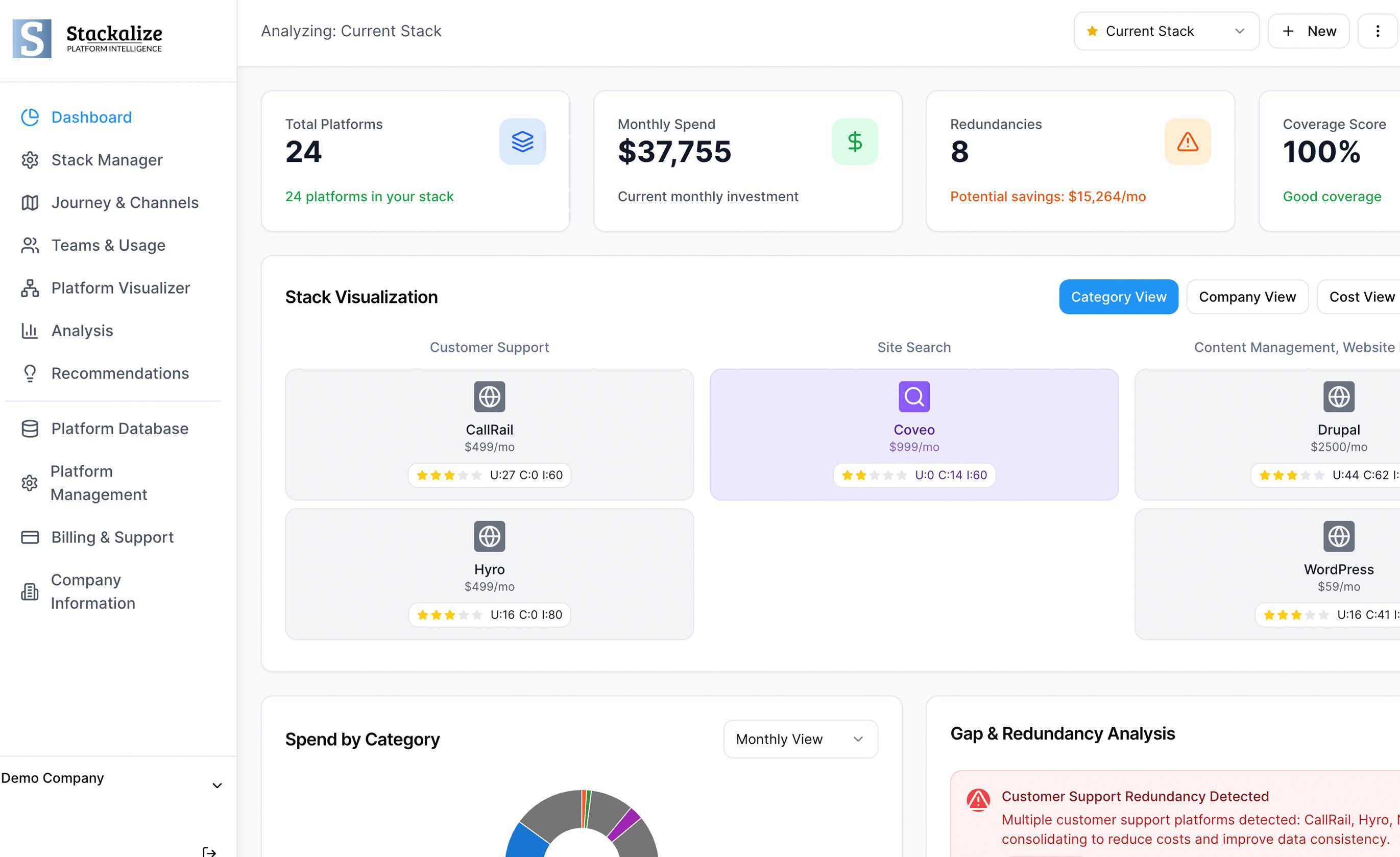
A typical marketing stack might include a CRM, customer data platform, analytics platform, advertising tools, email automation software, content systems, and customer support technology.
AI can help analyze information across these systems when the underlying data is properly connected.
This can give marketers a broader view of the customer journey and make it easier to identify relationships between different marketing activities.
The technology itself, however, does not automatically solve integration problems. Data quality, system compatibility, privacy requirements, and implementation decisions remain important.
AI Can Help Detect Changes in Campaign Performance
Marketers often monitor large numbers of metrics.
A sudden change in conversion rate, cost per acquisition, engagement, or traffic may be difficult to notice immediately, particularly when teams manage multiple campaigns.
AI-powered analytics systems can help identify unusual patterns and bring potentially important changes to a marketer’s attention.
For example, if a campaign suddenly begins performing differently from its historical pattern, an analytics system may flag the change for further investigation.
This can reduce the amount of time marketers spend manually checking every metric.
AI Is Changing Marketing Automation
Marketing automation has traditionally depended on predefined workflows.
For example:
- A customer fills out a form.
- The system adds the customer to a list.
- An email is sent.
- A follow-up email is triggered after a certain period.
AI can make these workflows more adaptive by using behavioral information to determine what action may be appropriate next.
Instead of every customer following exactly the same sequence, AI-supported automation can potentially adjust experiences based on engagement, interests, or other available signals.
This is one reason AI and marketing automation are becoming increasingly connected.
AI Does Not Remove the Need for Human Marketers
It is easy to assume that more AI means fewer people are needed in marketing. The reality is more complicated.
AI can process information quickly, generate ideas, identify patterns, and automate repetitive activities. But marketing decisions often involve context, creativity, brand understanding, ethics, and communication skills.
A human marketer still needs to ask important questions:
- Is the data reliable?
- Does the recommendation make business sense?
- Is the message appropriate for the audience?
- Could the personalization feel intrusive?
- Does the content reflect the brand?
- Are customers being treated fairly?
AI can support these decisions, but responsibility should remain with people.
Data Quality Is More Important Than Many People Realize
An AI system can only work effectively when it has useful information to work with.
If customer records are incomplete, duplicated, outdated, or inconsistent, AI-generated insights may also become unreliable.
For example, if the same customer appears as several different records across multiple systems, the business may have an inaccurate understanding of that customer’s journey.
This means businesses should not focus only on buying AI tools. They also need to pay attention to data governance, integration, accuracy, and consistency.
Privacy and Trust Matter
AI creates new opportunities for marketing, but it also creates new responsibilities.
Businesses may use AI to analyze customer information, personalize experiences, or automate communication. These activities should be handled with appropriate privacy and security practices.
Marketers should understand what data is being collected, why it is being used, where it is stored, and how customers may be affected.
Transparency can also help maintain customer trust. People are more likely to accept personalization when they understand how their information is being used and feel that the experience provides genuine value.
AI Can Support Better Customer Experiences
The goal of AI in marketing technology should not simply be to automate everything.
A more useful goal is to create better experiences for both customers and marketing teams.
For customers, AI can help deliver more relevant recommendations, faster responses, personalized content, and smoother interactions.
For marketing teams, it can reduce repetitive work, uncover patterns in data, and provide additional information for decision-making.
When these benefits work together, AI becomes more than another software feature. It becomes part of the broader marketing technology strategy.
The Future of AI in Marketing Technology
AI is likely to become increasingly integrated into marketing platforms rather than remaining a separate feature.
Marketing teams may interact with AI through CRM systems, analytics dashboards, automation platforms, customer data platforms, advertising tools, and content systems.
The focus is also likely to move beyond simply generating content. Businesses will increasingly explore how AI can help with decision support, customer journey analysis, predictive insights, automation, and cross-channel coordination.
At the same time, organizations will need to pay close attention to data quality, privacy, transparency, security, and human oversight.
Final Thoughts
AI in marketing technology is much bigger than content generation.
It can help marketers analyze customer behavior, improve personalization, support lead scoring, identify patterns, automate workflows, and understand campaign performance. Many of these capabilities may already be operating quietly inside the tools businesses use every day.
The most important step for marketers is not simply adopting every new AI feature. It is understanding where AI can genuinely improve marketing processes and where human judgment remains essential.
When combined with reliable data, thoughtful strategy, and responsible implementation, AI can become a valuable part of a modern marketing technology ecosystem.
Frequently Asked Questions
1. What is AI in marketing technology?
AI in marketing technology uses artificial intelligence to analyze customer data, identify patterns, personalize experiences, automate tasks, and support marketing decisions.
2. How does AI improve marketing automation?
AI can analyze customer behavior and engagement to help marketers create more adaptive workflows, personalize communication, and automate repetitive marketing activities.
3. Can AI help with customer personalization?
Yes. AI can analyze browsing activity, purchase history, content engagement, and customer interactions to help deliver more relevant marketing experiences.
4. Does AI replace human marketers?
No. AI can automate repetitive tasks and provide insights, but marketers still need strategy, creativity, context, judgment, and responsible oversight.