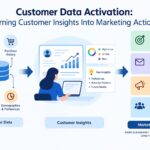








Businesses collect customer data every day. Website visits, email clicks, product searches, purchase histories, and social media interactions all provide valuable information about customer behavior. However, collecting this information is only the first step. The real value comes when businesses use these insights to make better marketing decisions.
This is where Customer Data Activation becomes important. It helps organizations transform customer information into meaningful marketing actions, such as personalized campaigns, relevant product recommendations, timely follow-up messages, and more consistent customer experiences.
Instead of allowing valuable data to remain stored in separate platforms, businesses can use it to understand what customers need and communicate with them more effectively. When implemented thoughtfully, customer data activation can help marketing teams improve engagement, reduce wasted effort, and build stronger customer relationships.
What Is Customer Data Activation?
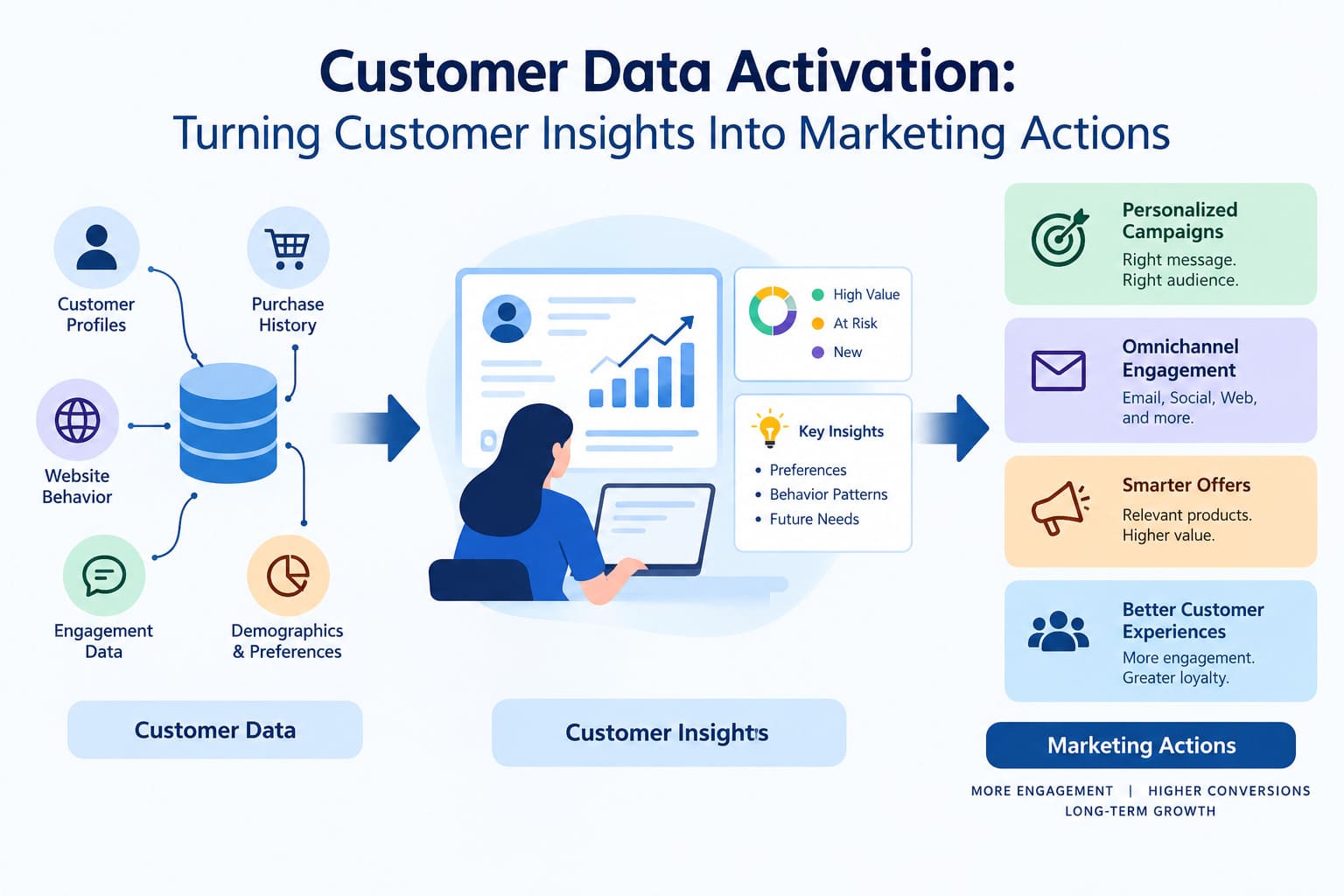
Customer data activation is the process of using collected customer information to deliver relevant experiences across marketing channels. It connects customer insights with the tools and systems that marketing teams use to communicate with their audiences.
For example, an online retailer may notice that a visitor repeatedly views a particular product but does not complete the purchase. With appropriate consent and suitable marketing permissions, the retailer can use this information to deliver a relevant reminder or recommend similar products.
The goal is not simply to collect more information. It is to make existing data useful at the right moment.
Customer data activation can support email marketing, website personalization, paid advertising, customer relationship management (CRM), marketing automation, and customer retention campaigns.
Why Customer Data Activation Matters in Modern Marketing
Customer expectations have changed. People increasingly expect businesses to understand their interests and provide information that matches their needs. Generic messages sent to every customer may fail to attract attention or encourage meaningful engagement.
Customer data activation helps marketing teams move beyond broad assumptions and make decisions based on customer behavior.
1. More Relevant Marketing Campaigns
Customer information can help marketers understand which products, services, or subjects interest different audience groups. This knowledge makes it easier to create campaigns that address specific needs rather than relying on the same message for everyone.
For example, a software company can send product education content to new users while sharing advanced feature updates with experienced customers.
2. Better Customer Experiences
Customers often interact with businesses through multiple channels, including websites, emails, mobile applications, and social media. When these interactions are connected appropriately, businesses can create a more consistent experience.
A customer who has already purchased a product, for instance, should ideally receive useful onboarding information rather than repeated messages encouraging them to buy the same product.
3. More Efficient Marketing Spending
Not every campaign produces the same results. By using customer insights to guide targeting and messaging, marketing teams can focus their resources on relevant audiences and reduce unnecessary communications.
This does not guarantee lower costs or higher returns, but it provides a stronger foundation for making informed campaign decisions.
4. Improved Customer Retention
Customer data can reveal patterns that suggest when people need additional support or may be losing interest in a product. Businesses can use these signals to provide helpful guidance, educational resources, or relevant offers.
When communication is timely and genuinely useful, it can contribute to stronger long-term customer relationships.
How Customer Data Activation Works
Successful activation requires more than connecting software platforms. Businesses need a clear process that turns reliable information into appropriate marketing activities.
Step 1: Collect Relevant Customer Data
The process begins with gathering useful information from sources such as website analytics, CRM systems, purchase records, email engagement, and customer feedback.
Businesses should focus on information that supports a defined marketing objective. Collecting unnecessary data can increase complexity without improving campaign performance.
Data should also be collected and processed in accordance with applicable privacy laws, consent requirements, and customer preferences.
Step 2: Organize and Unify Customer Information
Customer information often exists across disconnected systems. A CRM may contain contact details, an email platform may track campaign engagement, and an analytics platform may record website behavior.
Bringing these sources together, where appropriate and technically feasible, helps create a more complete understanding of customer interactions.
Customer Data Platforms (CDPs), CRM integrations, and data management solutions can support this process. Data quality remains essential because duplicated, outdated, or incorrectly matched records can lead to irrelevant communications.
Step 3: Identify Useful Customer Insights
Once the data is organized, marketers can identify meaningful patterns. These may include frequent product views, repeat purchases, abandoned shopping carts, declining engagement, or interest in a particular subject.
Segmentation allows businesses to group customers according to relevant characteristics or behaviors.
For instance, a marketing team might identify first-time buyers, repeat customers, inactive subscribers, and people who have shown interest in a specific product category.
Step 4: Activate Insights Across Marketing Channels
The next step is to connect these insights to marketing activities.
Depending on the available systems and customer permissions, a business might use customer data to personalize website content, trigger an email sequence, adjust an advertising audience, or notify a sales representative that a prospect has shown interest in a product.
The most effective action depends on the customer’s context. A useful message should feel relevant rather than intrusive.
Step 5: Measure Performance and Improve
Customer data activation should be treated as an ongoing process. Marketing teams need to measure whether their actions produce the intended results.
Useful metrics include email engagement, conversion rate, repeat purchases, customer retention, unsubscribe rate, and revenue generated by a campaign.
Testing different messages and audience segments can help marketers understand what works. Results should be compared against suitable benchmarks, and teams should avoid assuming that every improvement was caused by personalization alone.
Real-World Examples of Customer Data Activation
Customer data activation can support different marketing goals across industries.
E-Commerce
An online store identifies customers who frequently browse a product category. It can use this insight to present relevant recommendations or send product updates to customers who have agreed to receive them.
The objective is to make product discovery easier without overwhelming customers with repetitive promotions.
SaaS and Technology Companies
A software company can analyze product usage to understand which features customers use most often. If a new customer has not completed an important setup step, the company can send helpful onboarding instructions.
This approach connects behavioral information with customer education and product adoption.
B2B Marketing
Business-to-business marketers can combine information about content engagement, webinar attendance, and website activity to better understand a prospect’s interests.
With appropriate permissions and reliable data, these insights can help sales and marketing teams coordinate follow-ups and share more relevant resources.
Retail and Loyalty Programs
A retailer may use purchase history and loyalty program activity to identify customers who regularly buy certain product categories. Relevant recommendations or loyalty updates can then be tailored to those interests, subject to customer preferences.
The Role of MarTech Tools in Customer Data Activation
Marketing technology makes customer data activation easier to manage at scale. However, no single platform automatically solves every data or marketing challenge.
Different tools support different parts of the process.
- Customer Data Platforms: Help unify customer information from multiple sources and make suitable data available for activation.
- CRM Systems: Help manage customer relationships, sales activities, contact information, and communication history.
- Marketing Automation Platforms: Trigger workflows based on defined customer actions, attributes, and campaign rules.
- Analytics Tools: Help marketers understand behavior, evaluate campaign performance, and identify opportunities for improvement.
- Personalization Platforms: Support the delivery of relevant website content, product recommendations, and other tailored experiences.
The right combination depends on business size, existing technology, data quality, privacy requirements, and marketing objectives. Businesses should evaluate how well their tools integrate before adding more platforms to an already complex technology stack.
Common Challenges in Customer Data Activation
Although customer data activation offers useful opportunities, implementation can be difficult.
Fragmented Data
Customer records may be scattered across systems that do not communicate effectively. Without suitable integration and identity matching, marketing teams may struggle to understand the complete customer journey.
Poor Data Quality
Incorrect contact details, duplicate records, and outdated preferences can reduce the accuracy of targeting. Regular data maintenance and clear ownership are important for addressing these issues.
Privacy and Consent
Customers should understand how their information is used. Businesses need appropriate consent mechanisms, transparent privacy notices, access controls, and processes for respecting customer preferences.
Data activation should never be treated as permission to use every available piece of customer information for any marketing purpose.
Technology Integration
Connecting marketing platforms can require technical resources, careful planning, and ongoing maintenance. Teams should establish clear integration requirements and prioritize use cases that offer practical value.
Measuring the Right Outcomes
A campaign may increase clicks without producing more qualified leads or sales. Marketers should connect activation efforts to meaningful business outcomes instead of relying exclusively on surface-level engagement metrics.
Best Practices for Effective Customer Data Activation
Businesses can improve their approach by following a few practical principles.
- Start with a clear objective. Decide whether the goal is to improve conversion, support onboarding, increase retention, or deliver a more relevant customer experience.
- Use reliable, relevant data. Check data quality and avoid collecting information that does not support a legitimate business need.
- Build meaningful segments. Group customers around useful behaviors, preferences, or lifecycle stages rather than creating unnecessary complexity.
- Choose the right activation channel. Use email, websites, advertising, or CRM workflows according to the purpose of the communication and the customer’s preferences.
- Respect privacy. Apply appropriate consent, security, retention, and access policies throughout the process.
- Test and refine campaigns. Compare results, monitor negative signals such as unsubscribes, and adjust campaigns based on evidence.
- Coordinate marketing teams. Make sure marketing, sales, analytics, and technology teams share clear definitions and responsibilities.
A gradual approach is often more practical than attempting to connect every data source and marketing channel at once.
The Future of Customer Data Activation
Customer data activation is likely to become increasingly connected with artificial intelligence, predictive analytics, and real-time decision-making.
AI-powered marketing systems can help identify behavioral patterns, recommend audience segments, and suggest the next most relevant action. Real-time data processing can also make it possible to respond more quickly to customer interactions.
However, advanced technology does not eliminate the need for human judgment. Automated systems can produce inaccurate recommendations when the underlying data is incomplete or biased. Businesses must also ensure that automated decisions remain transparent, appropriate, and consistent with privacy requirements.
The strongest strategies will combine reliable data, suitable technology, thoughtful marketing decisions, and continuous measurement.
Conclusion
Customer Data Activation turns customer information into practical marketing actions. It helps businesses connect insights from customer behavior with personalized campaigns, useful recommendations, automated communication, and better customer experiences.
The process begins with reliable data and a clear objective. From there, organizations can unify relevant information, identify meaningful patterns, activate insights across suitable channels, and measure the results.
For businesses investing in marketing technology, the real opportunity is not simply collecting more data. It is using the right information responsibly to make every customer interaction more useful, relevant, and consistent.
As marketing platforms continue to evolve, customer data activation will remain an important part of building more informed and customer-focused marketing strategies.
Frequently Asked Questions
1. What is Customer Data Activation?
Customer Data Activation uses customer information to create relevant marketing campaigns, personalized experiences, and timely communications.
2. Why is Customer Data Activation important?
It helps businesses understand customer behavior, improve campaign relevance, make informed decisions, and build stronger customer relationships.
3. Which tools support Customer Data Activation?
Customer Data Platforms (CDPs), CRM systems, marketing automation platforms, analytics tools, and personalization software support data activation.
4. How can businesses improve Customer Data Activation?
Businesses can improve activation by maintaining accurate records, creating useful audience segments, respecting privacy preferences, and measuring campaign results.