

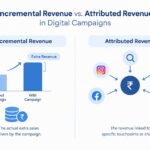









Marketing has become more complex than ever. A customer may discover a brand through Google, read a blog post, see a social media advertisement, open an email, visit the website again, and finally make a purchase after speaking with a sales representative.
So, which marketing activity deserves credit for that conversion?
That question is exactly why marketing attribution software has become important for modern marketing teams.
Attribution tools help marketers connect customer interactions with conversions, leads, sales, and revenue. Instead of looking at individual campaigns in isolation, marketers can use attribution data to understand how different touchpoints contribute to the customer journey.
In this guide, we explore 10 marketing attribution software tools that businesses can consider based on their marketing model, customer journey, data requirements, and reporting needs.
What Is Marketing Attribution Software?
Marketing attribution software helps marketers measure the contribution of different marketing touchpoints to a desired outcome.
For example, imagine a customer follows this journey:
Google Search → Blog → LinkedIn Ad → Email → Product Demo → Purchase
A simple attribution approach might give credit to only one interaction. A more advanced approach can analyze several touchpoints across the journey.
Depending on the platform, marketers may be able to examine:
- First-touch interactions
- Last-touch interactions
- Multiple customer touchpoints
- Campaign performance
- Lead generation
- Pipeline contribution
- Revenue influence
- Customer journeys
- Advertising performance
The purpose is not simply to collect more data. It is to help marketing teams understand how their activities connect to business outcomes.
Why Do Marketers Need Attribution Software?
Marketing teams often run several campaigns simultaneously. Search advertising, social media, email marketing, content, webinars, organic traffic, and sales activities can all influence the same customer.
Without attribution, it can be difficult to understand how these activities work together.
Marketing attribution software can help teams:
- Understand customer journeys
- Connect campaigns with conversions
- Identify important marketing touchpoints
- Analyze channel performance
- Measure campaign influence
- Connect marketing activity with revenue
- Improve marketing reporting
- Support data-driven budget decisions
Attribution should therefore be viewed as a measurement framework rather than simply another reporting dashboard.
Top 10 Marketing Attribution Software Tools
1. Dreamdata
Dreamdata is designed with B2B companies in mind and focuses on connecting marketing activity with customer journeys, pipeline, and revenue.
B2B buying journeys can involve multiple people, campaigns, and interactions before an opportunity becomes a customer. Dreamdata helps teams bring these interactions together to examine how marketing contributes throughout that journey.
Key features
- B2B customer journey analysis
- Revenue attribution
- Multi-touch attribution
- Account-level insights
- Marketing and sales data connections
Dreamdata can be particularly relevant for B2B organizations that want to connect marketing engagement with revenue outcomes.
2. HockeyStack
HockeyStack focuses on B2B buyer journeys and go-to-market analytics.
Instead of looking at individual campaign metrics alone, teams can use the platform to explore how prospects and accounts interact with marketing activities throughout their buying journey.
Key features
- Buyer journey tracking
- B2B marketing analytics
- Account-level insights
- Pipeline analysis
- Marketing attribution
For companies with complex B2B journeys, this type of visibility can make it easier to understand the relationship between marketing activity and pipeline.
3. Ruler Analytics
Ruler Analytics focuses on connecting marketing activity with leads, conversions, calls, and revenue.
This can be useful for businesses where a website conversion does not always represent the final business outcome. For example, a visitor may complete a form, speak with a sales representative, and eventually become a customer.
Key features
- Marketing attribution
- Lead tracking
- Revenue tracking
- Call tracking
- CRM connections
Ruler Analytics can help marketers follow the journey from initial marketing interaction toward a sales outcome.
4. HubSpot Marketing Hub
HubSpot Marketing Hub combines marketing tools with CRM data, making it a natural option for businesses already working within the HubSpot ecosystem.
Because marketing activity and customer information can be managed within the same environment, teams can examine campaign performance alongside contact, deal, and revenue information.
Key features
- Marketing attribution
- Campaign reporting
- CRM-connected analytics
- Customer journey data
- Revenue reporting
For existing HubSpot users, keeping attribution and marketing data within the same platform can simplify reporting workflows.
5. Adobe Marketo Measure
Adobe Marketo Measure is designed for organizations that need to understand how marketing programs contribute to revenue and opportunities.
It supports attribution approaches that allow teams to examine different touchpoints throughout the customer journey.
Key features
- First-touch attribution
- Multi-touch attribution
- Campaign influence
- Revenue measurement
- Marketing performance analysis
It can be useful for larger marketing organizations where campaign measurement involves multiple channels and complex sales processes.
6. Attribution
Attribution is focused on helping marketers understand how different marketing interactions contribute to conversions.
The platform can be used to examine customer journeys across advertising and other marketing touchpoints.
Key features
- Multi-touch attribution
- Conversion tracking
- Marketing performance analysis
- Customer journey measurement
- Advertising attribution
This type of platform can be useful when marketers want more detailed visibility than standard channel-level reporting provides.
7. Triple Whale
Triple Whale is strongly associated with e-commerce analytics and marketing measurement.
E-commerce businesses often have several advertising and customer acquisition channels running simultaneously. Attribution can help these brands understand how marketing activity connects with purchases and revenue.
Key features
- E-commerce analytics
- Marketing measurement
- Advertising performance
- Revenue insights
- Customer analysis
For online brands, attribution data can provide additional context around advertising and customer acquisition performance.
8. Northbeam
Northbeam focuses on marketing measurement and attribution, particularly for e-commerce and performance marketing teams.
Paid advertising can involve multiple platforms and customer interactions. Northbeam helps marketers analyze these activities in the context of customer acquisition and revenue.
Key features
- Marketing attribution
- Paid media measurement
- Customer journey analysis
- Revenue measurement
- Performance analytics
It can be considered by brands that depend heavily on digital advertising and want deeper visibility into marketing performance.
9. Google Analytics 4
Google Analytics 4 is widely used for website and customer journey analytics.
Although it is broader than a dedicated attribution platform, GA4 provides marketers with tools for understanding traffic sources, user interactions, conversions, and campaign performance.
Key features
- Event-based analytics
- Conversion tracking
- Campaign measurement
- User journey analysis
- Marketing reporting
GA4 can be an important part of a measurement strategy, particularly when combined with other marketing and CRM data.
10. Adobe Analytics
Adobe Analytics provides advanced analytics capabilities for organizations managing large volumes of customer and marketing data.
It can help businesses examine customer interactions, marketing performance, conversion behavior, and broader digital experiences.
Key features
- Customer journey analysis
- Marketing analytics
- Conversion measurement
- Advanced reporting
- Enterprise analytics
Organizations with complex data environments may use Adobe Analytics as part of a wider marketing measurement and analytics strategy.
Marketing Attribution Software Comparison
| Software | Common Use Case | Main Focus |
|---|---|---|
| Dreamdata | B2B companies | Revenue and customer journey attribution |
| HockeyStack | B2B teams | Buyer journey and GTM analytics |
| Ruler Analytics | Lead-driven businesses | Lead-to-revenue measurement |
| HubSpot | HubSpot users | CRM-connected attribution |
| Adobe Marketo Measure | Enterprise marketing | Campaign and revenue attribution |
| Attribution | Digital marketing | Multi-touch measurement |
| Triple Whale | E-commerce brands | Marketing and revenue analytics |
| Northbeam | Performance marketing | Paid media attribution |
| Google Analytics 4 | Websites and digital teams | Traffic and conversion analysis |
| Adobe Analytics | Enterprise organizations | Advanced customer analytics |
This comparison is intended to show the general focus of each platform. The capabilities, integrations, pricing, and availability of individual features can change over time, so businesses should verify current product details before making a purchase decision.
How to Choose the Right Marketing Attribution Software
Choosing an attribution platform is not only about finding the tool with the longest feature list. The right fit depends on how your organization collects data and how customers move through the buying process.
1. Understand Your Customer Journey
Start by mapping the actual journey customers take before converting.
For example:
Ad → Website → Content → Email → Demo → Sales → Customer
A B2B business with a long sales cycle may need different attribution capabilities from a direct-to-consumer store with a short purchase journey.
2. Identify the Data You Need to Connect
Look at your existing technology stack.
You may need to connect:
- CRM
- Website analytics
- Advertising platforms
- Email marketing
- Marketing automation
- Social media
- Sales data
- E-commerce platforms
The more disconnected your data is, the more important integrations become.
3. Decide What You Want to Measure
Before selecting software, define the business questions you want to answer.
For example:
- Which campaigns generate leads?
- Which channels influence revenue?
- Which touchpoints appear before conversion?
- Which campaigns contribute to pipeline?
- How much revenue is associated with marketing activity?
Having clear questions makes platform selection easier.
4. Examine Attribution Models
Different attribution models can produce different views of marketing performance.
Common approaches include:
First-touch attribution: Focuses on the initial interaction.
Last-touch attribution: Gives importance to the interaction closest to conversion.
Linear attribution: Distributes credit across multiple touchpoints.
Time-decay attribution: Gives greater weight to interactions closer to the conversion.
Multi-touch attribution: Considers several interactions across the customer journey.
No single model explains every customer journey perfectly. Teams should understand what each model measures before using the resulting data for business decisions.
5. Check Reporting and Usability
A powerful attribution platform is only useful when marketing teams can understand and use its data.
Look for reporting that makes it easy to examine:
- Campaign performance
- Channel contribution
- Customer journeys
- Conversion paths
- Pipeline
- Revenue
- Marketing costs
The reporting interface should match the skills and needs of the people who will actually use it.
Common Challenges With Marketing Attribution
Attribution software can provide valuable insights, but it does not automatically solve every measurement problem.
Incomplete Tracking
Missing tags, inconsistent campaign parameters, or broken tracking can create gaps in customer journey data.
Multiple Devices
A customer may interact with a company on a phone, laptop, and tablet before converting. Connecting those interactions can be difficult.
Offline Interactions
Sales calls, events, meetings, and other offline activities may not be captured automatically by digital analytics systems.
Long Buying Cycles
B2B customers can interact with a company many times over several months. Connecting all of those interactions requires reliable data and identity resolution.
Different Attribution Models
Two attribution models can assign different levels of credit to the same campaign. Marketers should therefore avoid treating an attribution number as an absolute measurement of causation.
Marketing Attribution vs. Marketing Analytics
These terms are sometimes used interchangeably, but they are not exactly the same.
Marketing analytics covers the broader process of collecting and analyzing marketing data.
Marketing attribution focuses more specifically on understanding how marketing touchpoints relate to conversions or other business outcomes.
For example, analytics might tell you that a campaign generated 10,000 visits.
Attribution analysis goes a step further by asking how those visits and related interactions contributed to leads, purchases, pipeline, or revenue.
Final Thoughts
Marketing attribution software can help teams make sense of increasingly complicated customer journeys.
From B2B-focused platforms such as Dreamdata and HockeyStack to e-commerce-oriented tools such as Triple Whale and Northbeam, different platforms are designed around different measurement needs. Broader analytics platforms such as Google Analytics 4 and Adobe Analytics can also play an important role in a company’s measurement strategy.
The important thing is to start with the questions your marketing team needs to answer.
Understand your customer journey, identify the data you need, check the integrations available, and choose an attribution approach that matches your measurement goals.
When attribution data is combined with clean tracking and reliable customer data, marketers can develop a clearer picture of how their campaigns and channels contribute to the overall customer journey.
Frequently Asked Questions
1. What does marketing attribution software help marketers measure?
Marketing attribution software helps marketers measure how different campaigns, channels, and customer touchpoints contribute to leads, conversions, pipeline, and revenue.
2. Which marketing attribution models are commonly used?
Common models include first-touch, last-touch, linear, time-decay, and multi-touch attribution. Each model provides a different perspective on how marketing interactions contribute to conversions.
3. Can marketing attribution software track the entire customer journey?
It can help connect many customer interactions across channels, but the level of visibility depends on tracking quality, integrations, identity matching, and whether online and offline interactions are captured.
4. What should businesses consider when choosing attribution software?
Businesses should consider their customer journey, data sources, CRM and marketing integrations, reporting requirements, attribution models, and the specific marketing outcomes they want to measure.