










Creating high-quality content consistently is no longer just a marketing goal—it’s a business necessity. Whether it’s blog posts, landing pages, email campaigns, case studies, or social media content, every piece plays a role in attracting potential customers and building brand credibility. However, producing content regularly without a clear process often leads to missed deadlines, inconsistent quality, and poor collaboration.
This is where Content Operations become essential. Content Operations provide a structured approach to planning, creating, publishing, and optimizing content. Instead of treating every project as a separate task, businesses establish repeatable workflows that improve efficiency, maintain quality, and support long-term marketing success.
This article explores the importance of Content Operations, the key elements of an efficient content workflow, and practical strategies that help marketing teams produce valuable content consistently.
What Is Content Operations?
Content Operations is the combination of people, processes, technology, and governance that manages the complete lifecycle of content. It ensures that every content project follows a structured workflow from planning and creation to publishing, promotion, and performance analysis.
Rather than focusing only on producing more content, Content Operations focus on producing better content through standardized processes. Every team member understands their role, deadlines are clearly defined, and quality standards remain consistent across all marketing channels.
An effective Content Operations strategy helps organizations:
- Improve collaboration between teams
- Maintain consistent brand messaging
- Reduce production delays
- Support SEO best practices
- Increase overall marketing efficiency
- Scale content production without sacrificing quality
Businesses with strong Content Operations can create content more strategically while delivering a better experience for both their teams and their audiences.
Why Content Operations Matter
Modern marketing requires businesses to publish content across multiple digital channels, including websites, blogs, email newsletters, social media, and video platforms. Managing all these assets without a structured workflow often creates operational challenges.
Some of the most common problems include:
- Missed publishing deadlines
- Unclear team responsibilities
- Multiple rounds of revisions
- Inconsistent content quality
- Poor communication between departments
- Difficulty tracking content performance
A well-defined content workflow eliminates these challenges by creating clear responsibilities and standardized processes. Instead of reacting to problems, teams work proactively, ensuring every content asset is delivered on time and meets quality expectations.
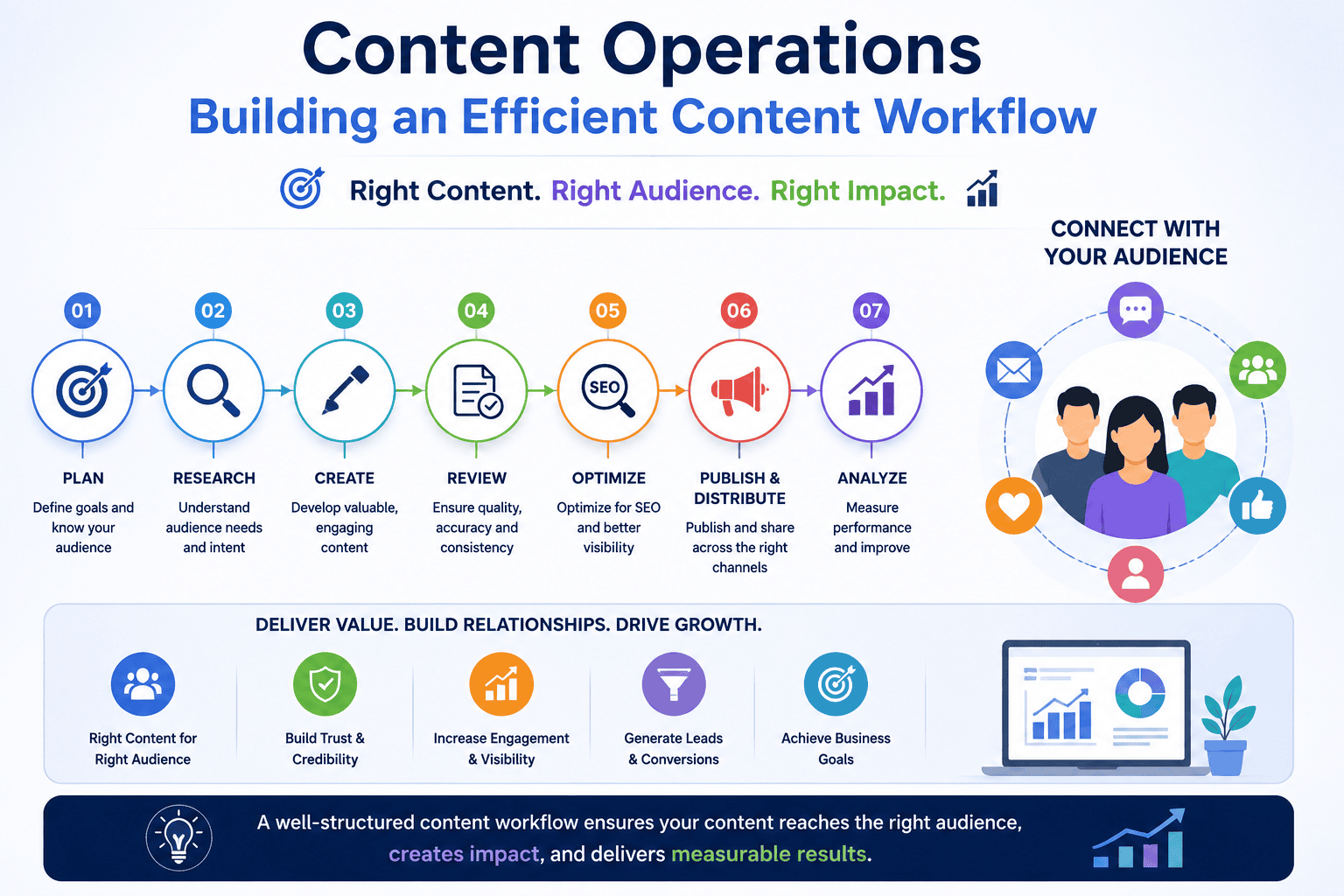
Key Elements of an Efficient Content Workflow
1. Strategic Planning
Every successful piece of content starts with a clear objective. Before creating any article or campaign, marketing teams should identify their target audience, understand customer pain points, perform keyword research, and define measurable goals.
A strong strategy ensures that every content asset supports business objectives rather than simply filling a publishing schedule.
2. Content Research and Planning
Research is the foundation of valuable content. Understanding industry trends, competitor strategies, and audience search intent helps marketers create content that answers real questions and solves genuine problems.
Creating a detailed content brief before writing also helps maintain consistency and reduces unnecessary revisions later in the process.
3. Content Creation
Content creation should focus on delivering value rather than simply promoting products or services. Writers should produce informative, engaging, and original content that reflects the organization’s expertise and brand voice.
High-quality content is accurate, easy to read, well-structured, and optimized for both users and search engines.
4. Editorial Review
Before publication, every piece of content should undergo a thorough editorial review. Editors should verify grammar, readability, formatting, factual accuracy, and consistency with brand guidelines.
A strong review process ensures that published content maintains professional standards and builds audience trust.
5. SEO Optimization
SEO should be integrated into every stage of the content workflow rather than treated as a final task. Proper keyword placement, optimized headings, compelling meta descriptions, internal linking, image optimization, and user-friendly URLs all contribute to better search visibility.
Well-optimized content is more likely to attract organic traffic and deliver long-term value.
6. Publishing and Distribution
Publishing content is only the beginning of the marketing process. After an article goes live, it should be promoted across relevant channels such as email newsletters, LinkedIn, X (formerly Twitter), Facebook, and industry communities.
A strong distribution strategy increases visibility and ensures the content reaches the right audience.
7. Performance Analysis
Successful Content Operations don’t end after publication. Marketing teams should regularly analyze content performance using metrics such as:
- Organic traffic
- Keyword rankings
- Time on page
- User engagement
- Conversion rate
- Social shares
- Lead generation
These insights help teams understand what works, identify areas for improvement, and make better decisions for future content.
Best Practices for Building an Efficient Content Workflow
Organizations looking to improve their Content Operations should follow these best practices:
- Document every stage of the content workflow.
- Define clear roles and responsibilities for each team member.
- Maintain an editorial calendar to plan content in advance.
- Create standardized templates for content briefs and reviews.
- Use collaboration tools to improve communication.
- Optimize every article for SEO before publishing.
- Measure performance regularly and refine workflows based on data.
- Update existing content to keep information accurate and relevant.
- Use AI responsibly to support research and efficiency while maintaining human creativity.
These practices help marketing teams work more efficiently while producing consistent, high-quality content.
Conclusion
Content Operations provide the structure that modern marketing teams need to create high-quality content efficiently and consistently. By combining strategic planning, standardized workflows, effective collaboration, SEO optimization, and continuous performance analysis, businesses can streamline their content production process and achieve better marketing results.
As content continues to play a vital role in customer engagement and business growth, investing in well-organized Content Operations is no longer optional. Organizations that establish efficient workflows today will be better prepared to scale their marketing efforts, strengthen their brand authority, and deliver valuable content that drives long-term success.
Frequently Asked Questions (FAQs)
1. What are Content Operations?
Content Operations are the people, processes, and technologies that manage the entire content lifecycle, from planning and creation to publishing, promotion, and performance analysis. They help marketing teams produce consistent, high-quality content efficiently.
2. Why is an efficient content workflow important?
An efficient content workflow improves collaboration, reduces production delays, maintains content quality, and ensures every piece of content aligns with business objectives and SEO best practices.
3. How do Content Operations improve SEO?
Content Operations integrate SEO throughout the content creation process by focusing on keyword research, optimized headings, internal linking, meta tags, image optimization, and regular performance analysis, helping improve organic search visibility.
4. What are the key stages of a content workflow?
A typical content workflow includes strategic planning, content research, writing, editorial review, SEO optimization, publishing, content promotion, and performance analysis. Following these stages helps teams create and manage content more effectively.