








Marketing technology is changing faster than ever. What worked for marketers a few years ago may no longer be enough to reach customers, understand their behavior, or deliver relevant experiences.
In 2026, the MarTech landscape is moving beyond simply adding more software to the marketing stack. Businesses are focusing on how artificial intelligence, customer data, automation, analytics, and connected platforms can work together to create faster and more personalized marketing experiences.
AI is becoming part of everyday marketing workflows, while first-party data and data governance are becoming increasingly important. At the same time, marketers are paying closer attention to trust, content quality, privacy, and the human side of customer engagement.
Here are the latest MarTech trends shaping marketing in 2026 and what they mean for modern marketing teams.
1. Agentic AI Is Moving Into Marketing Workflows
One of the biggest MarTech developments in 2026 is the growth of agentic AI.
Unlike traditional AI tools that mainly assist with individual tasks, AI agents can be designed to coordinate multiple steps in a workflow. For example, an agent could analyze campaign performance, identify an audience segment, recommend an action, and support the execution of that action.
Gartner predicts that 60% of brands will use agentic AI for streamlined one-to-one interactions by 2028.
For marketers, this can change how campaigns are planned and managed. Instead of manually moving between multiple platforms, teams can increasingly use connected AI systems to support repetitive marketing activities.
The important point is that agentic AI should not simply mean more automation. Organizations also need clear rules around data access, brand guidelines, approvals, and human oversight.
2. AI-Powered Personalization Is Becoming More Practical
Personalization is not a new idea, but AI is making it possible to create more relevant experiences at greater scale.
Modern marketing platforms can analyze customer behavior, preferences, interactions, and engagement signals to help marketers understand what different audiences may need.
Instead of showing exactly the same message to every visitor, businesses can create more contextual experiences across websites, email, advertising, and other channels.
However, personalization depends heavily on the quality of customer data. If information is incomplete or spread across disconnected systems, even advanced AI can produce weak recommendations.
3. First-Party Data Is Becoming More Important
First-party data continues to be a major part of modern MarTech strategies.
Businesses collect first-party data directly through interactions such as website visits, purchases, account activity, forms, customer conversations, and other owned channels.
Experian’s 2026 digital trends research reports that 70% of B2B marketers plan to increase their use of first-party data.
This shift gives marketing teams more control over the information they use for segmentation, personalization, analytics, and customer journeys.
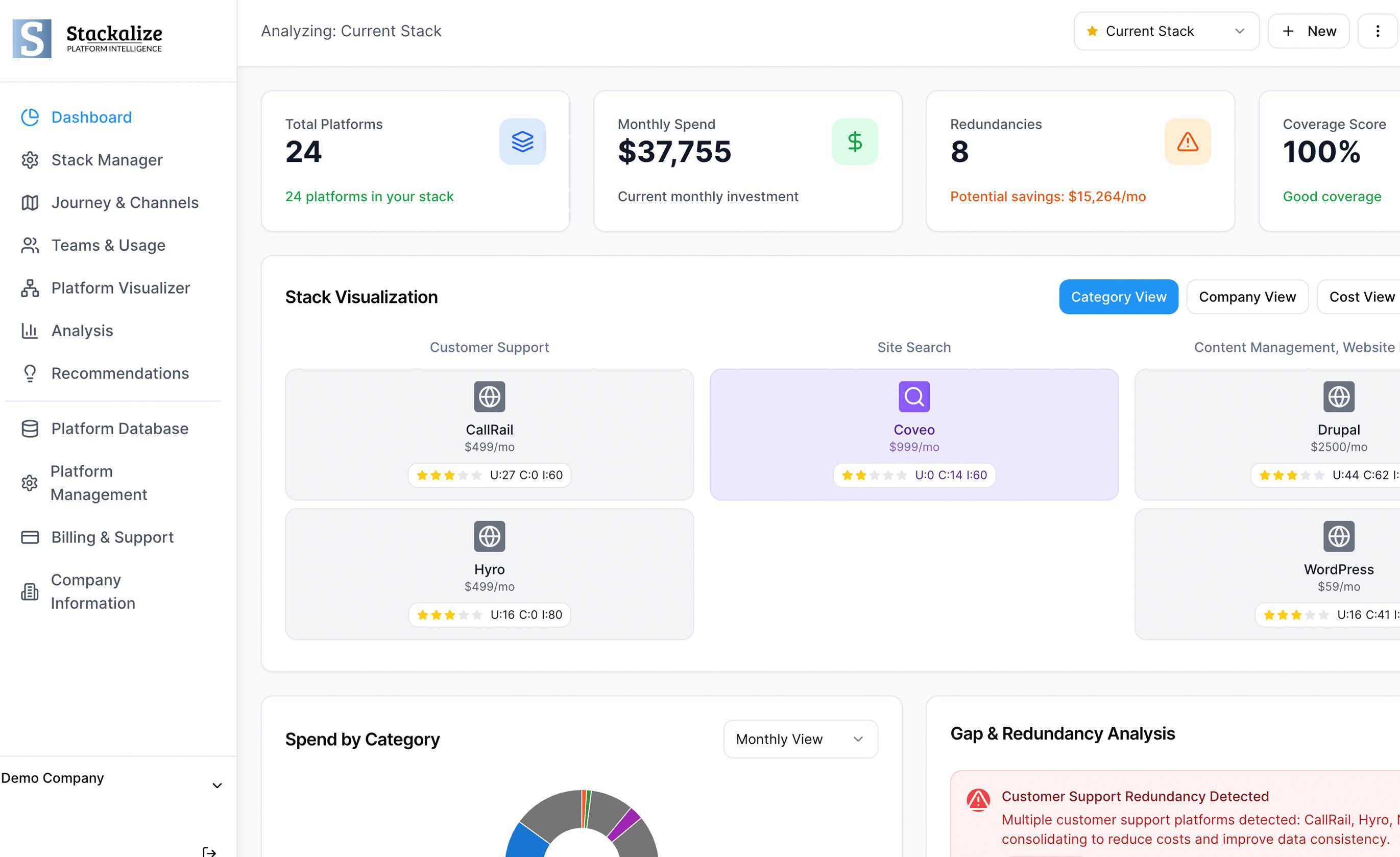
The focus is therefore moving from simply collecting more data to collecting useful, permission-based, and well-structured data.
4. Unified Customer Data Is Becoming a MarTech Priority
Marketing teams often use several platforms for CRM, email, advertising, analytics, customer support, and automation.
When these systems operate separately, customer information can become fragmented.
In 2026, businesses are increasingly looking for ways to connect these systems so marketers can build a more complete view of customer interactions.
Salesforce’s 2026 India marketing research found that 81% of surveyed marketers in India had adopted AI, while disconnected and poor-quality data remained important barriers to AI-driven engagement.
This makes data integration an important part of the modern MarTech stack.
5. Generative AI Is Becoming Part of Everyday Marketing
Generative AI has moved beyond experimentation.
Marketing teams are using it to support activities such as:
- Content ideation
- Campaign planning
- Email variations
- Customer research
- Creative development
- Data analysis
- Content personalization
- Marketing workflows
HubSpot’s 2026 State of Marketing report describes AI as a baseline capability for marketing teams rather than simply a new differentiator.
But using AI does not mean removing humans from marketing.
The strongest use cases combine machine efficiency with human judgment, creativity, editing, and brand understanding.
6. AI Search Is Changing How Customers Discover Brands
Search behavior is changing as people increasingly use AI-powered systems to research products, compare solutions, ask questions, and discover information.
This creates a new consideration for marketers: content needs to be useful not only for traditional search engines but also understandable and discoverable within AI-driven search experiences.
Clear explanations, structured information, original insights, trustworthy sources, and strong topical relevance can help brands build visibility across changing discovery environments.
This is contributing to growing interest in Generative Engine Optimization (GEO) alongside traditional SEO.
7. Marketing Automation Is Becoming More Intelligent
Marketing automation is evolving from simple rule-based workflows toward more intelligent systems.
Traditional automation might send an email when someone completes a form. Modern systems can combine behavioral signals, customer data, predictive insights, and AI to determine what action should happen next.
This can help marketers build more responsive customer journeys.
However, automation should have a clear purpose. Automating a poor process does not automatically create a better customer experience.
8. Martech Stacks Are Shifting Toward Connected Platforms
Many organizations have accumulated large numbers of marketing applications over time.
The challenge is no longer simply finding another tool. It is making existing systems work together.
In its 2026 marketing data stack research, Snowflake highlights a shift toward governed data, composable architectures, and systems that can coordinate AI-driven workflows across applications.
This means marketing teams may increasingly evaluate technology based on questions such as:
- Can the platform integrate with existing systems?
- Can customer data move securely between applications?
- Can teams measure outcomes across channels?
- Can AI access the right information?
- Can marketers control automated decisions?
9. Data Privacy and AI Governance Are Becoming Essential
As AI becomes more involved in marketing decisions, governance becomes increasingly important.
Marketers need to understand how customer data is collected, stored, shared, and used.
They also need clear guidelines for AI-generated content, automated decisions, customer information, and brand communication.
Privacy should not be treated as an obstacle to personalization. Instead, responsible data practices can help organizations build stronger customer trust.
10. Human-Centered Marketing Is Becoming More Valuable
One of the interesting developments in 2026 is that increased automation is making human creativity more important, not less.
When businesses can produce large amounts of AI-generated content, simply producing more content does not necessarily create differentiation.
Customers still respond to useful information, clear opinions, authentic stories, and meaningful experiences.
The American Marketing Association’s 2026 trends research highlights human creativity, cultural understanding, and authentic storytelling as important differentiators as AI automates more transactional marketing activities.
This means marketers should use technology to increase their capabilities rather than allowing technology to replace the human perspective behind the brand.
11. Predictive Analytics Is Supporting Faster Decisions
Marketing analytics is also becoming more forward-looking.
Instead of only asking what happened during a campaign, marketers increasingly want to understand what may happen next.
Predictive analytics can help teams identify patterns, estimate potential outcomes, segment audiences, and find opportunities for optimization.
When predictive capabilities are connected with automation, teams can potentially respond faster to changing customer behavior.
12. Customer Experience Is Becoming More Connected
Customers do not think about a company’s marketing stack as separate platforms.
They simply experience the brand.
They may discover a company through search, visit its website, receive an email, interact with a chatbot, speak with sales, and later receive a personalized recommendation.
MarTech systems therefore need to support consistent experiences across these interactions.
The goal is not simply to add more channels. It is to make those channels work together.
13. AI and Marketing Analytics Are Coming Closer Together
AI can help marketers process large amounts of marketing information faster.
Campaign results, customer behavior, website activity, conversion data, and engagement signals can be analyzed to identify patterns that might otherwise take significant manual effort.
This can help marketing teams move from reporting toward more informed decision-making.
The value comes from combining reliable data with the right business questions rather than using AI simply because it is available.
14. Creative Optimization Is Becoming More Data-Driven
Creative teams are also benefiting from MarTech innovation.
AI-powered systems can help marketers generate variations of advertisements, headlines, visuals, and messaging for testing.
Kantar’s 2026 marketing trends research highlights the growing role of AI in creative evaluation and optimization while emphasizing the continuing importance of human insight in brand storytelling.
This creates an opportunity to combine creative thinking with performance data without making every marketing decision purely algorithmic.
15. MarTech Is Moving Toward Outcome-Based Thinking
Perhaps the biggest change is the way businesses evaluate their marketing technology.
Instead of asking:
“How many tools do we have?”
Marketing teams are increasingly asking:
“What business outcome does our technology help us achieve?”
That could mean improving lead quality, increasing customer retention, reducing campaign execution time, improving personalization, or understanding customer behavior more effectively.
A larger MarTech stack is not automatically a better one. The technology needs to support measurable marketing objectives.
What These Martech Trends Mean for Marketers in 2026
The MarTech landscape is becoming more connected, intelligent, and automated. But adopting every new technology is not necessarily the right approach.
Marketing teams can start by evaluating their existing technology and identifying where the biggest gaps exist.
A practical approach is to:
- Audit the current MarTech stack.
- Identify disconnected customer data.
- Improve first-party data collection and governance.
- Find repetitive processes that can benefit from automation.
- Test AI in clearly defined marketing workflows.
- Strengthen SEO and AI-search visibility.
- Measure technology against business outcomes.
- Keep human review involved in important customer-facing decisions.
Final Thoughts
The latest MarTech trends in 2026 show that marketing technology is moving toward a more connected model.
Agentic AI, generative AI, first-party data, intelligent automation, unified customer data, AI-driven discovery, predictive analytics, and stronger governance are all influencing how marketing teams work.
But technology alone does not create better marketing.
The real opportunity is to combine data, technology, automation, creativity, and human understanding.
For businesses preparing for the next stage of digital marketing, the goal should not be to chase every new MarTech trend. It should be to build a flexible technology environment that helps teams understand customers better, act faster, and create experiences that remain useful and trustworthy.
That is what staying ahead of the MarTech curve in 2026 increasingly means.
Frequently Asked Questions
1. What are the latest Martech trends in 2026?
The latest Martech trends in 2026 include AI-powered marketing, marketing automation, advanced analytics, hyper-personalization, first-party data, and connected Martech platforms.
2. How is AI changing Martech in 2026?
AI is helping marketers automate repetitive tasks, analyze customer data, personalize campaigns, generate content, and improve marketing decisions across different channels.
3. Why is first-party data important for Martech in 2026?
First-party data helps businesses understand customer behavior using information collected directly from their audiences while supporting more relevant and privacy-conscious marketing.
4. How can businesses adapt to the latest Martech trends?
Businesses can adapt by improving their Martech stack, connecting marketing data, adopting useful AI and automation tools, strengthening analytics, and focusing on better customer experiences.