









Marketing has changed dramatically over the last few years. Brands are no longer relying only on emails, advertisements, and social media posts to reach customers. Behind many successful campaigns today is a growing collection of technology that helps marketers understand audiences, automate tasks, analyze results, and create more relevant experiences.
This technology ecosystem is commonly known as Martech, or marketing technology.
But Martech itself is changing.
New developments in artificial intelligence, automation, customer data, analytics, and personalization are changing the way marketing teams work. At the same time, businesses are dealing with increasing expectations around privacy, data security, and customer experience.
So, what should marketers pay attention to next?
Here are some of the major Martech trends shaping the future.
1. AI Is Becoming a Regular Marketing Tool
Artificial intelligence is quickly moving beyond the experimental stage.
Marketing teams are already using AI to brainstorm content, analyze customer behavior, automate workflows, identify patterns, and assist with customer interactions.
What is changing is how closely AI is becoming connected to everyday marketing platforms.
For example, instead of asking a marketer to manually analyze thousands of customer interactions, an AI-powered system can help identify common behaviors or unusual changes in engagement.
That does not mean marketers will simply hand everything over to AI. Human input is still important for brand voice, strategy, creativity, and decision-making.
The future is likely to be less about AI replacing marketers and more about marketers using AI to work more efficiently.
2. Automation Will Become More Context-Aware
Marketing automation has been around for years. Businesses use it to send emails, manage leads, schedule campaigns, and trigger follow-up actions.
However, basic “if this happens, do that” automation has its limitations.
Modern systems are becoming more capable of considering customer behavior and context before taking action.
Imagine a visitor reading several pages about a particular product. Instead of automatically sending a generic promotional email, an intelligent automation system could recognize the person’s interests and trigger a more relevant follow-up.
This kind of automation can make customer journeys feel less mechanical and more responsive.
3. First-Party Data Will Matter Even More
Customer data is one of the most valuable resources in modern marketing, but businesses cannot assume that they can collect or use every piece of information without restrictions.
This is making first-party data increasingly important.
First-party data is information a company collects directly through its own interactions with customers. It can come from website activity, purchases, account registrations, email engagement, forms, and other direct interactions.
The advantage is greater control over the source and context of the information.
For marketers, the challenge will be to collect useful data while being transparent with customers about how that information is being used.
4. CDPs Will Focus on More Than Data Storage
Customer Data Platforms, or CDPs, have become an important part of many Martech stacks.
Their basic purpose is to bring customer information from different sources together so businesses can develop a more unified customer profile.
But simply storing customer information is not enough.
Marketers increasingly want to turn that information into action.
Future CDP development is likely to place greater emphasis on real-time data, customer identity, analytics, AI, and activation. This could make CDPs more closely connected to campaign management, personalization, advertising, and customer journeys.
5. Personalization Will Become More Sophisticated
Personalization used to mean simple things such as adding a customer’s name to an email.
Customers now expect more relevant experiences.
A person who repeatedly visits a particular section of a website should not necessarily receive the same experience as someone visiting for the first time.
Modern Martech can use information such as browsing behavior, previous interactions, preferences, and purchase history to help create more relevant experiences.
However, there is an important line between useful personalization and personalization that feels intrusive.
Businesses will need to focus on relevance without making customers uncomfortable about how much information a brand knows about them.
6. Martech Integration Will Become a Bigger Priority
One of the biggest problems with modern marketing technology is not necessarily a lack of tools.
It is having too many disconnected tools.
A company might use one platform for CRM, another for email, another for analytics, another for advertising, and another for customer support. If these systems do not communicate properly, marketers may end up working with incomplete or inconsistent information.
That is why Martech integration will continue to receive attention.
Connecting important systems can reduce manual work, improve data flow, and give teams a clearer picture of customer activity.
The goal is not to connect every possible platform. It is to connect the systems that genuinely need to work together.
7. Predictive Analytics Will Help Marketers Plan Ahead
Traditional analytics mainly answers questions about the past.
How many people visited the website?
Which campaign generated the most clicks?
How many leads were created?
Predictive analytics approaches the problem differently. It uses existing data to identify patterns that may provide insight into what could happen next.
For example, marketers might use predictive models to identify customers who appear more likely to purchase or customers whose engagement is declining.
These predictions are not guarantees, but they can give marketing teams another source of information when planning campaigns and allocating resources.
8. Real-Time Marketing Will Become More Practical
Customers do not interact with brands according to a fixed schedule.
Someone may visit a website in the morning, open an email later in the day, and contact customer support in the evening.
Marketing technology is increasingly capable of responding to these interactions as they happen.
Real-time data can help marketers understand what a customer is doing now rather than relying entirely on yesterday’s or last month’s report.
This can be particularly useful for personalization, recommendations, lead management, and customer journey automation.
9. Marketing Analytics Will Look Beyond Clicks
Clicks, impressions, and website visits are easy to measure, but they do not always tell the complete story.
Marketing teams increasingly need to understand how their activities connect with actual business results.
That means looking at metrics such as:
- Lead quality
- Conversion rates
- Customer acquisition cost
- Revenue contribution
- Customer retention
- Customer lifetime value
- Marketing ROI
Better Martech integration can make this type of analysis easier because information from different stages of the customer journey can be connected.
10. Privacy Will Become Part of the Martech Strategy
Technology can give marketers powerful access to customer information. With that power comes responsibility.
Customers want to know what information companies collect and why they are collecting it.
Privacy should therefore not be treated as something that is considered only after a marketing platform has been selected.
Businesses should think about data collection, consent, security, access, storage, and retention when designing their Martech strategy.
A technology stack that is powerful but difficult to manage responsibly can create unnecessary problems.
11. Conversational AI Will Change Customer Experiences
Chatbots have been used by businesses for years, but conversational AI is making these interactions more flexible.
Instead of forcing customers to search through menus or repeat the same questions, conversational systems can help users find information through natural-language interactions.
The next step is deeper integration with business systems.
A conversational AI system connected with relevant customer information, knowledge bases, and workflows could potentially assist with everything from product questions to support requests.
The quality of the experience will depend heavily on the information and systems behind the AI.
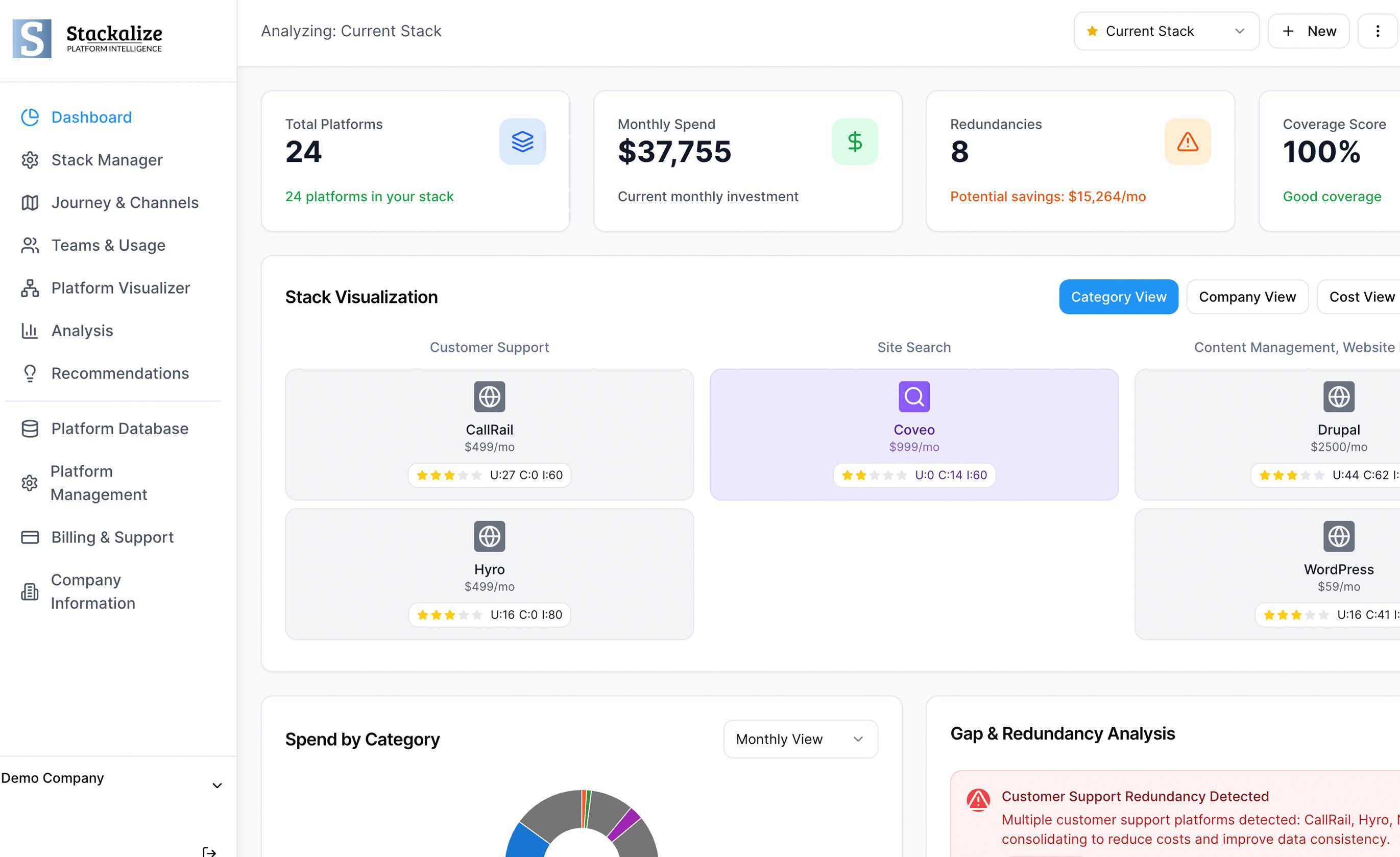
12. Martech Stacks Will Become More Intentional
There was a time when adding another marketing tool could feel like progress.
Today, many marketing teams are discovering that more software does not automatically mean better marketing.
Every new platform introduces another cost, another workflow, another integration, and another system for employees to learn.
Future Martech strategies are therefore likely to focus more on building purposeful technology stacks.
Before adding a tool, businesses should ask:
- What problem does it solve?
- Does another existing platform already provide this capability?
- Can it integrate with important systems?
- Is the data secure and manageable?
- Will the team actually use it?
- Can its impact be measured?
These questions can help prevent unnecessary Martech complexity.
How Marketers Can Prepare for the Future
Marketers do not need to adopt every new technology immediately.
A better approach is to understand where the biggest gaps exist in the current marketing operation.
Start by reviewing the existing Martech stack. Identify outdated tools, duplicate functionality, disconnected systems, and manual processes that consume unnecessary time.
Next, focus on data quality.
AI, automation, analytics, and personalization all depend on reliable information. If the underlying data is incomplete or inconsistent, adding more technology may simply make the problem harder to manage.
It is also worth experimenting with new technology on a smaller scale. A focused AI or automation project can provide useful lessons before a company makes a much larger investment.
Most importantly, keep the customer at the center of the strategy.
Technology should make marketing more useful, relevant, and efficient—not simply make the technology stack larger.
Final Thoughts
The future of Martech is not about one revolutionary platform taking over the entire marketing industry.
It is more likely to be a gradual shift toward technology that is more connected, intelligent, automated, personalized, and responsible.
AI will continue to develop. Automation will become more sophisticated. Customer data will remain important. Analytics will become increasingly connected to business outcomes, while privacy will play a larger role in technology decisions.
For marketers, the real challenge is knowing which developments are worth adopting and which are simply temporary trends.
The companies that approach Martech with a clear purpose—rather than collecting tools for the sake of having them—can build technology ecosystems that are easier to manage and more closely aligned with their marketing goals.
The future of Martech is already taking shape. The next step is learning how to use it thoughtfully.
Frequently Asked Questions
1) What is the future of Martech?
The future of Martech is centered around artificial intelligence, automation, customer data, personalization, analytics, and better integration between marketing platforms. These technologies are helping businesses create more connected and relevant customer experiences.
2) How will AI change Martech?
AI can help marketers analyze customer behavior, automate repetitive tasks, discover useful insights, improve personalization, and support customer interactions. It can make marketing operations more efficient while keeping human strategy and creativity important.
3) Why is Martech integration important?
Martech integration allows different marketing platforms to share data and work together. Better integration can reduce manual tasks, improve data accuracy, and give marketing teams a clearer view of customer activity across different channels.
4) How can businesses prepare for future Martech trends?
Businesses can prepare by reviewing their current Martech stack, improving data quality, connecting important platforms, testing useful AI and automation solutions, and strengthening privacy practices. The focus should remain on technology that solves real marketing needs.